Connect with us

Parliamentary News

National Assembly Unveils Sweeping Reforms in Electoral Act 2026 Ahead of 2027 Polls

Published

on

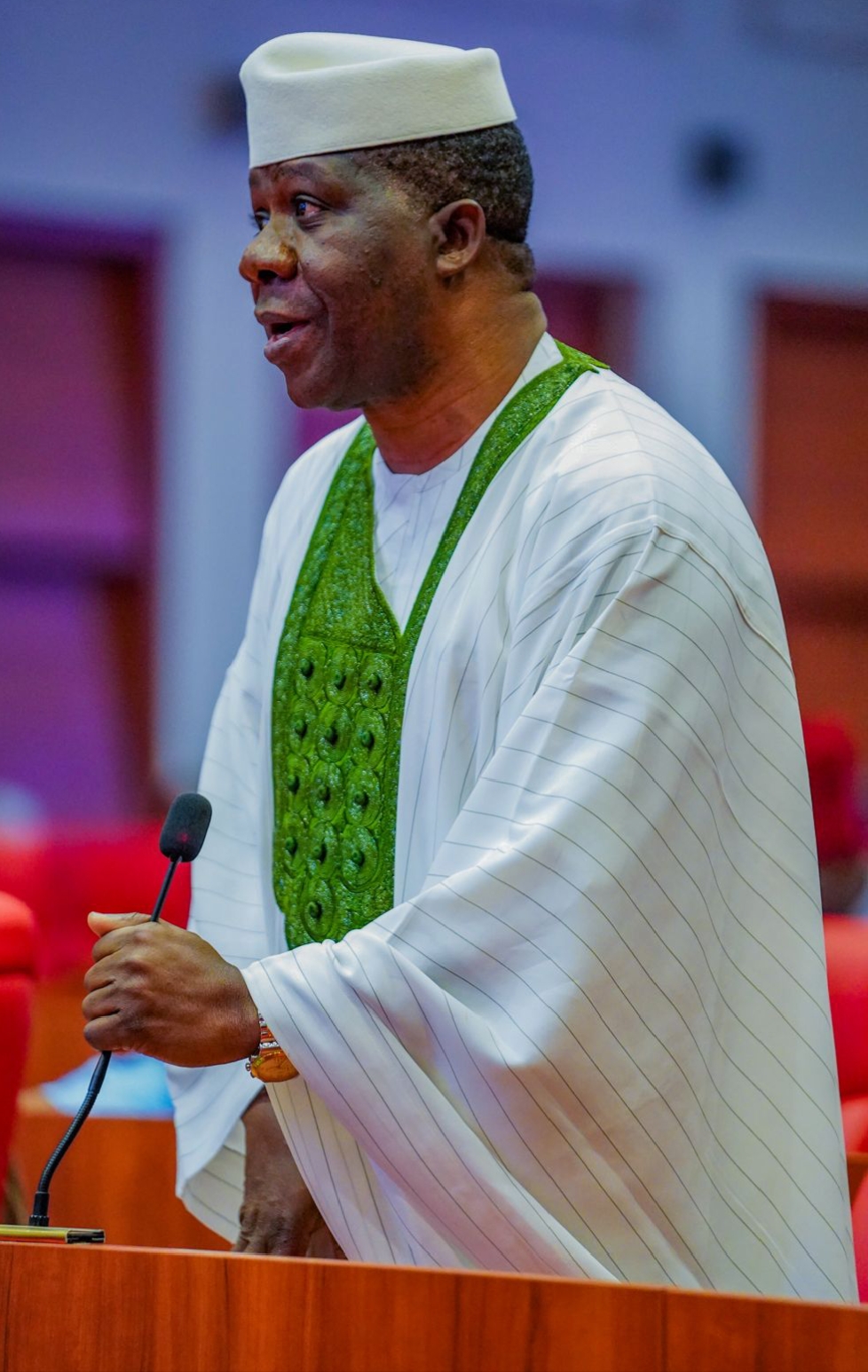
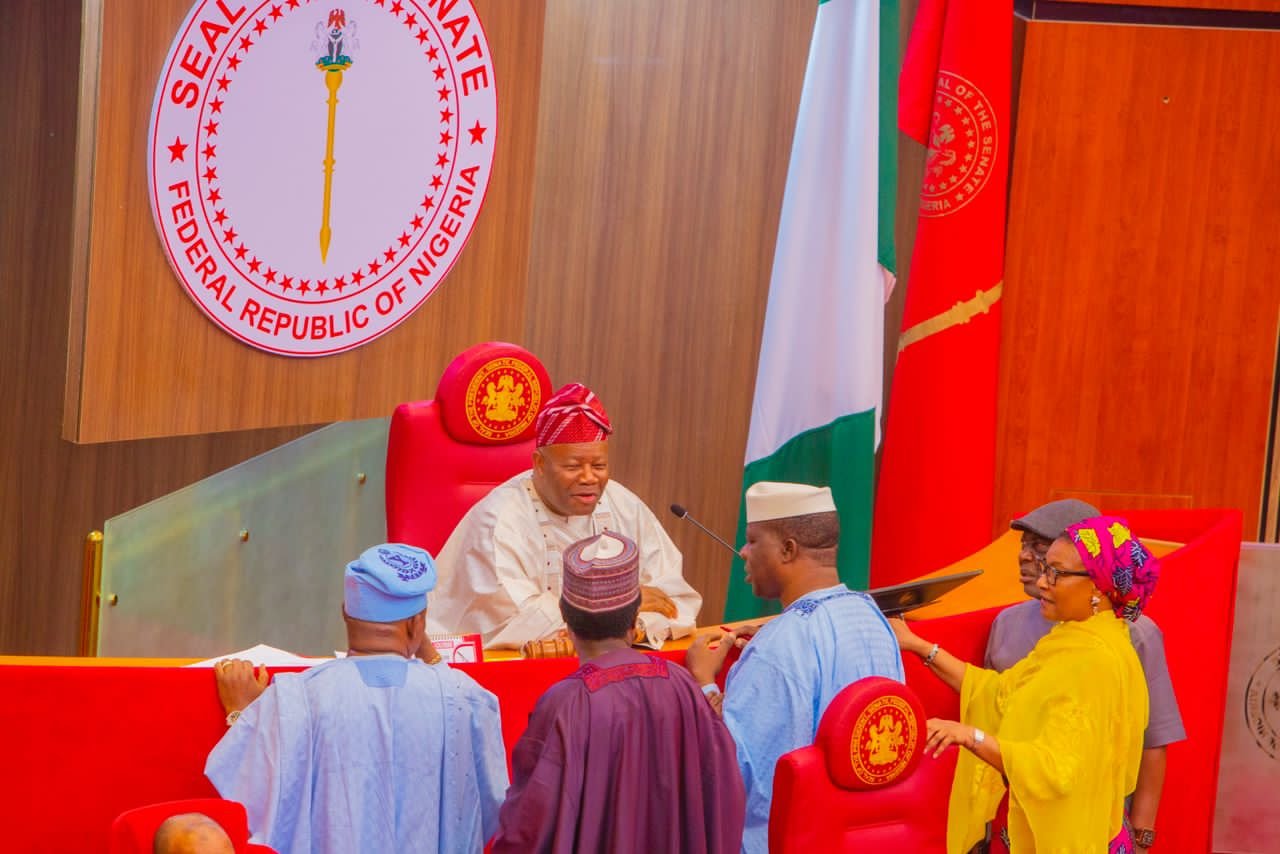
Senate Leader, Senator Michael Opeyemi Bamidele
Share

The National Assembly has rolled out far-reaching reforms under the Electoral Act 2026, describing the new legal framework as a decisive step toward strengthening transparency, accountability and institutional independence in Nigeria’s electoral system ahead of the 2027 general election.

The reforms, which culminated in the signing of the Electoral Bill 2026 into law by Bola Ahmed Tinubu within 24 hours of its transmission, followed two years of consultations involving the legislature, the Independent National Electoral Commission (INEC), the Office of the Attorney-General of the Federation (OAGF), civil society organisations (CSOs) and development partners.

Leader of the Senate, Senator Opeyemi Bamidele, in a statement issued by his Directorate of Media and Public Affairs on Sunday, outlined the key provisions of the Act and defended the speed of presidential assent, insisting that the law was the product of broad-based stakeholder engagement rather than unilateral legislative action.

Two Years of Stakeholder Engagement

According to Bamidele, the making of the Electoral Act 2026 was “a collective work” shaped by sustained input from critical institutions and civic actors.

The National Assembly harmonised different versions of the bill passed by both chambers — particularly on the contentious Clause 60(3) — before transmitting it to the president. Lawmakers said the urgency was necessary to avert any constitutional crisis that could jeopardise preparations for the 2027 elections.

While some CSOs raised concerns about the swift assent, the presidency maintained that democracy thrives on dialogue and consensus-building, noting that most stakeholders had already participated extensively in shaping the legislation.

Financial Autonomy for INEC

A cornerstone of the reform is the creation of a dedicated fund for INEC under Section 3 of the Act. The provision is designed to guarantee the commission’s financial autonomy, operational stability and administrative continuity.

Under the new law, election funds must be released at least six months before a general election. The commission is also empowered to review questionable result declarations made under duress or procedural violations, strengthening its corrective authority.

Lawmakers believe this financial restructuring will insulate INEC from bureaucratic bottlenecks and enhance its institutional independence.

Mandatory Electronic Accreditation and Transmission

The Act entrenches the use of technology in election management.

BVAS for Accreditation

Section 47 mandates presiding officers to deploy the Bimodal Voter Accreditation System (BVAS) or any technological device prescribed by INEC to verify and authenticate voters.

The provision removes ambiguity around voter accreditation and makes technological verification compulsory.

Electronic Transmission to IReV

Section 60(3) mandates the electronic transmission of election results from polling units to INEC’s Result Viewing Portal (IReV). Any presiding officer who willfully frustrates electronic transmission faces six months’ imprisonment or a ₦500,000 fine, or both.

However, Bamidele clarified that IReV remains a transparency portal, not a collation platform. Where electronic transmission fails due to communication breakdown, results may be transmitted using Form EC8A as prescribed by INEC.

Tougher Sanctions and Accountability Measures

The new law stiffens penalties for electoral malpractice:

Two-year imprisonment for Resident Electoral Commissioners (RECs) who withhold certified documents beyond 24 hours after payment (Section 74).

Court-declared winners can be sworn in with a Certified True Copy of judgment if INEC fails to issue a certificate of return (Section 72).

Two-year imprisonment or fines between ₦500,000 and ₦2 million for vote buying, impersonation and result manipulation (Section 125).

₦10 million fine for political parties that fail to submit accurate audited returns (Section 93).

These provisions are aimed at reinforcing accountability across the electoral value chain.

Overhaul of Party Primaries

The Act phases out indirect primaries, retaining only direct and consensus primaries under Section 84. Lawmakers say this will broaden participation among party members and curb excessive monetisation of delegate-based contests.

Crucially, Section 77 mandates political parties to:

Maintain a digital membership register;

Issue membership cards;

Submit the register to INEC at least 21 days before primaries, congresses or conventions.

Any party that fails to comply risks disqualification from fielding candidates.

According to Bamidele, these measures will “deepen internal democracy and reduce the monetisation of politics.”

Revised Campaign Spending Limits

The Act also reviews upward the campaign expenditure ceilings:

Presidential: ₦10 billion (up from ₦5 billion)

Governorship: ₦3 billion (up from ₦1 billion)

Senate: ₦500 million

House of Representatives: ₦250 million

State Assembly: ₦100 million

Area Council: ₦60 million

Councillorship: ₦10 million

Lawmakers argue that the revision reflects inflationary realities while maintaining regulatory oversight.

Inclusion and Electoral Access

The Act introduces additional social safeguards:

Separation of queues for men and women in areas where cultural norms require it (Section 49);

Enhanced support mechanisms for persons with visual impairment (Section 54).

A Consolidation of Electoral Governance

Describing the legislation as a consolidation and refinement of Nigeria’s electoral governance framework, Bamidele said the Act is structured around four pillars:

Financial and operational independence of INEC;

Technological integration with safeguards;

Transparency in collation and declaration;

Stricter penalties and stronger regulation of political parties.

With the Electoral Act 2026 now in force, attention shifts to its implementation. For lawmakers and stakeholders alike, the true test will be whether the reforms translate into more credible, transparent and dispute-resistant elections in 2027 and beyond.

Parliamentary News

Akpabio Reassures Senators After Primary Election Setbacks, Urges Unity Amid Political Tensions and Rising Security Concerns

Published

on

Senate President Godswill Akpabio
Share


Senate President, Godswill Akpabio, has moved to calm growing concerns among serving lawmakers who suffered defeats during their respective party primaries, assuring them that efforts are underway to mitigate the political consequences of the recent electoral exercises.

Speaking on Tuesday during the resumption of plenary after a three-week legislative recess and the Eid-el-Kabir holiday, Akpabio acknowledged the mixed fortunes recorded by politicians during the primary elections but expressed optimism that many affected senators would not be left politically stranded.

Addressing his colleagues at the Senate chamber, the Senate President congratulated political parties that had successfully concluded their primaries as well as aspirants who emerged victorious and secured tickets for the forthcoming elections. He, however, recognized that the process inevitably produced both winners and losers.

“I know that there will always be victories and disappointments,” Akpabio stated, noting that electoral contests are an integral part of democratic politics.

In what appeared to be a message of reassurance to senators who failed to secure renomination tickets, Akpabio disclosed that the Senate leadership was actively engaging in efforts aimed at reducing the fallout from the primary election outcomes.

“And in this Senate, we are promised that we will have very few disappointments. And I do know that the Senate Leader and the leadership of the Senate are working very hard towards that,” he said.

Although he did not provide details on the nature of the interventions being pursued, the remarks have sparked speculation about possible political negotiations and reconciliatory measures being explored within the ruling party and the National Assembly leadership.

Fourteen APC Senators Affected

Akpabio’s comments come against the backdrop of significant losses recorded by several serving senators during the recently concluded primaries of the ruling All Progressives Congress (APC).

Reports indicate that no fewer than fourteen serving APC senators failed to secure their party’s tickets across various states, creating uncertainty about their political futures ahead of the next general elections.

The development has generated concerns within political circles, especially among lawmakers who believe internal party dynamics and power struggles may have influenced the outcomes of the primaries.

One of the most notable reactions came from Ned Nwoko, who recently alleged that senior APC leaders, including former national chairman Abdullahi Ganduje, had assured him of an automatic ticket before he defected to the ruling party.

Nwoko’s claims added another dimension to ongoing debates surrounding the transparency and fairness of the primary election process.

Warning Against Political Defections

Despite the setbacks experienced by some lawmakers, Akpabio adopted a light-hearted tone while cautioning senators against abandoning their political parties in frustration.

His remarks come as several lawmakers who lost out during the primaries have already begun seeking alternative political platforms.

Among those who have reportedly left the APC following the primary elections are Shehu Buba and Garba Maidoki.

The Senate President nevertheless emphasized that political competition and electoral outcomes should be viewed as part of the democratic process rather than grounds for division.

According to him, while individual politicians may experience either success or disappointment, democracy ultimately remains the biggest beneficiary whenever credible electoral contests are conducted.

Security Concerns Take Centre Stage

Beyond partisan politics, Akpabio devoted part of his address to pressing national security issues, particularly the recent abduction of schoolchildren and teachers in Oyo State.

Describing the incident as a grave attack on the nation’s collective conscience, he condemned the kidnapping and called for intensified efforts to secure the release of the victims.

The Senate President characterized the abduction as “an assault on our collective humanity,” stressing that attacks on educational institutions threaten not only the safety of citizens but also the future of the nation.

He also warned politicians and political aspirants against exploiting national tragedies for political gain, insisting that security challenges should unite rather than divide Nigerians.

“At moments such as these, there is a temptation to divide, to accuse, and to seek advantage from tragedy. Politicians and aspirants must resist that temptation for such cheap publicity,” he cautioned.

Call for Stronger Security Measures

Akpabio further urged members of the National Assembly to continue supporting legislative and policy measures aimed at strengthening the country’s security architecture.

He emphasized the need for decisive action against banditry, kidnapping, and other violent crimes threatening communities across the country.

“Let us continue to support every lawful and necessary measure to strengthen security, protect our schools, safeguard our communities, and ensure that every bandit faces the full weight of justice,” he said.

His remarks underscore growing concerns over insecurity in several parts of Nigeria and highlight the Senate’s intention to prioritize security-related interventions alongside ongoing political developments.

As lawmakers settle back into legislative activities, attention is expected to remain focused on both the political repercussions of the primary elections and the urgent need to address escalating security challenges confronting the nation.

Continue Reading

Parliamentary News

Senate Reverses Controversial Rule Amendment on Leadership Elections

Published

on

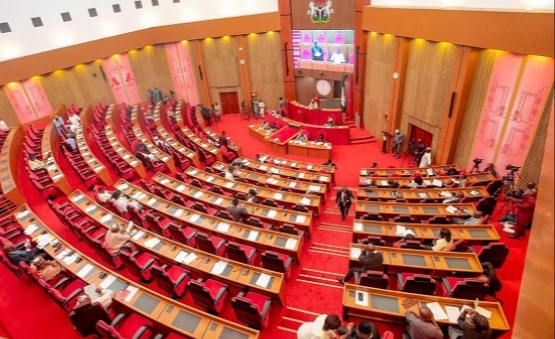
Senate in Session
Share


The Senate has reversed its recent amendment to the Standing Orders that sought to restrict participation in the election of Senate leaders to only senators who had already taken the Oath of Office and Allegiance.

The decision, taken during plenary on Thursday, effectively restores the previous procedure and allows all duly elected senators to participate in the election of presiding officers in the 11th National Assembly.

The motion for the reversal was moved by the Senate Leader, Opeyemi Bamidele, who explained that the amendment approved two days earlier could create constitutional conflicts and unnecessary political tension if allowed to stand.

According to Bamidele, further legislative and constitutional reviews showed that the amendment to Section 2, Subsection 2, and Section 3, Subsection 1 of the Senate Standing Orders might contradict constitutional provisions governing the rights and status of elected lawmakers.

The Senate subsequently adopted the motion and officially reversed the changes.

The plenary session was presided over by the Deputy Senate President, Jibrin Barau.

Before the reversal, the amended rules had stated that only senators-elect who had taken the oath contained in the Seventh Schedule of the Constitution would be permitted to participate in Senate proceedings, including voting for the offices of Senate President and Deputy Senate President.

The amendment had generated debate and political tension within the chamber, with some lawmakers expressing concern that the rule could be used to limit participation in future leadership contests, including the race for Senate President in 2027.

During Thursday’s sitting, Adams Oshiomhole raised a point of order to clarify his earlier remarks made during Wednesday’s proceedings. Oshiomhole insisted that lawmakers should not be prevented from expressing their opinions on issues before the Senate.

However, the Deputy Senate President ruled him out of order, stating that the matter had already been resolved following the reversal of the amendment.

Bamidele also reminded senators that concerns regarding Senate procedures should be presented through substantive motions in line with parliamentary rules.

He further cautioned Oshiomhole against what he described as unnecessary “drama” on the Senate floor, referencing the exchanges that occurred during the previous day’s plenary session.

The reversal is expected to ease tensions within the Red Chamber and preserve broader participation in future leadership elections of the Senate.

Continue Reading

Parliamentary News

Senate Delegation Holds Emergency Meeting with Tinubu Over Urgent National Issues

Published

on

President Bola Ahmed Tinubu in a handshake with Senate Leader, Opeyemi Bamidele during the visit.
Share

A high-level delegation of the Nigerian Senate on Wednesday, April 22, 2026, held an emergency strategic meeting with President Bola Ahmed Tinubu at the Presidential Villa in Abuja, shortly after adjourning plenary.

The meeting, which took place less than two hours after the Senate concluded its session, followed a resolution reached during a closed-door executive sitting of lawmakers earlier in the day.

Leading the delegation was Senate President Godswill Akpabio. He was accompanied by Deputy Senate President Jibrin Barau, Senate Leader Opeyemi Bamidele, and Senate Minority Leader Abba Moro.

Other senators present at the meeting included Danjuma Goje, Abdul Ningi, Adamu Aliero, and Orji Uzor Kalu.

Sources within the National Assembly described the engagement as critical, noting that it was convened to address pressing national concerns requiring immediate attention at the highest level of government.

While details of the deliberations were not made public, officials confirmed that discussions centred on matters of urgent national importance.

The lawmakers and the President were said to have taken far-reaching decisions aimed at safeguarding the overall interest of the country.

The urgency and duration of the meeting underscore the gravity of the issues considered, with indications that key policy actions or government decisions may follow in the coming days.

Continue Reading