Connect with us

Parliamentary News

Tinubu at 74: N’Assembly Moves to Establish State Police with Accountability Safeguards — Bamidele

Published

on

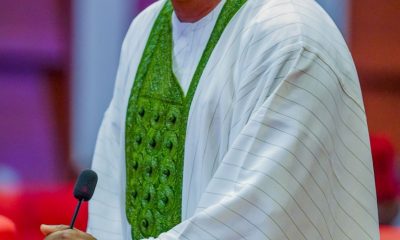
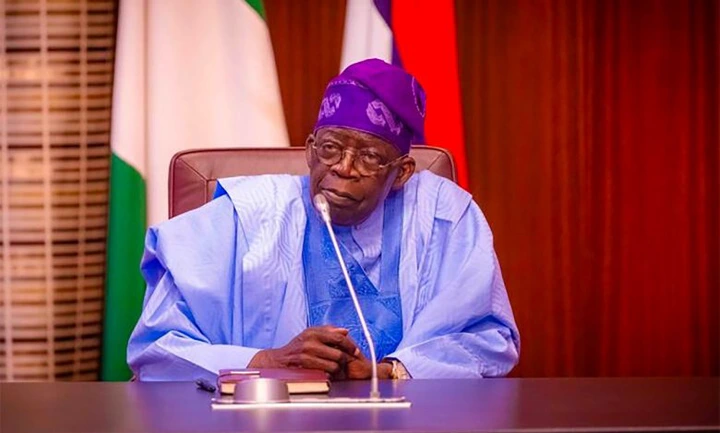
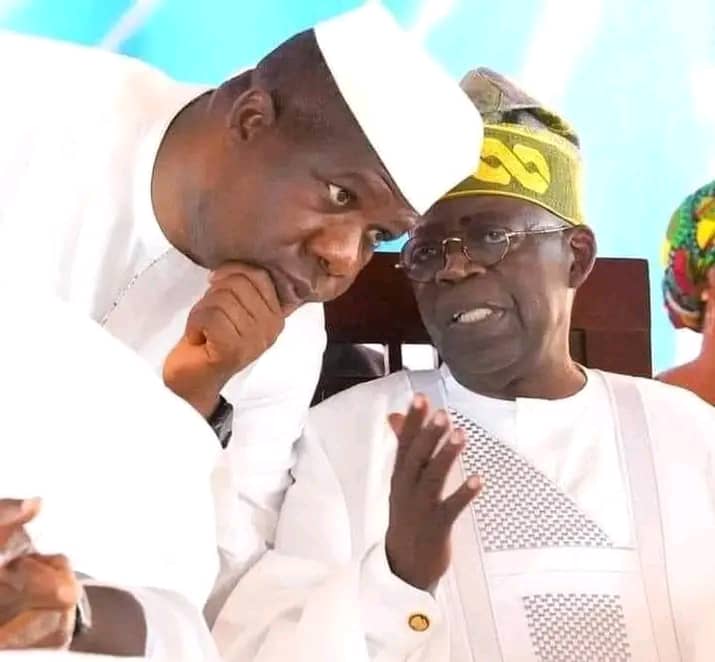
Senator Michael Opeyemi Bamidele and Asiwaju Bola Tinubu
Senate Leader, Senator Michael Opeyemi Bamidele and President Bola Tinubu
Share

The Senate Leader, Opeyemi Bamidele, has disclosed that the National Assembly is working on a decentralised police system aimed at strengthening accountability and preventing abuse by the political class.

Bamidele, who also serves as Vice Chairman of the Senate Committee on the Review of the 1999 Constitution, said the proposed framework would devolve policing powers to sub-national authorities while ensuring justice, protecting human rights, and discouraging impunity. He noted that the initiative is being treated as a priority amid growing calls for improved security across Nigeria.

The lawmaker made this known in a statement marking the 74th birthday of President Bola Ahmed Tinubu, whom he commended for supporting reforms to tackle insecurity. He said the President had backed the decentralised policing model as part of broader efforts to safeguard lives and property nationwide.

Bamidele added that the proposed system would be guided by global best practices and strong accountability mechanisms. According to him, the Presidency and the National Assembly are working together to deliver a more effective security structure for the country.

He also praised Tinubu’s leadership, citing economic and fiscal reforms, including increased foreign reserves and improved revenue for sub-national governments, as signs of progress under the current administration.

Parliamentary News

Senate Reverses Controversial Rule Amendment on Leadership Elections

Published

on

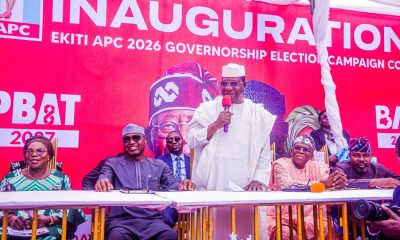
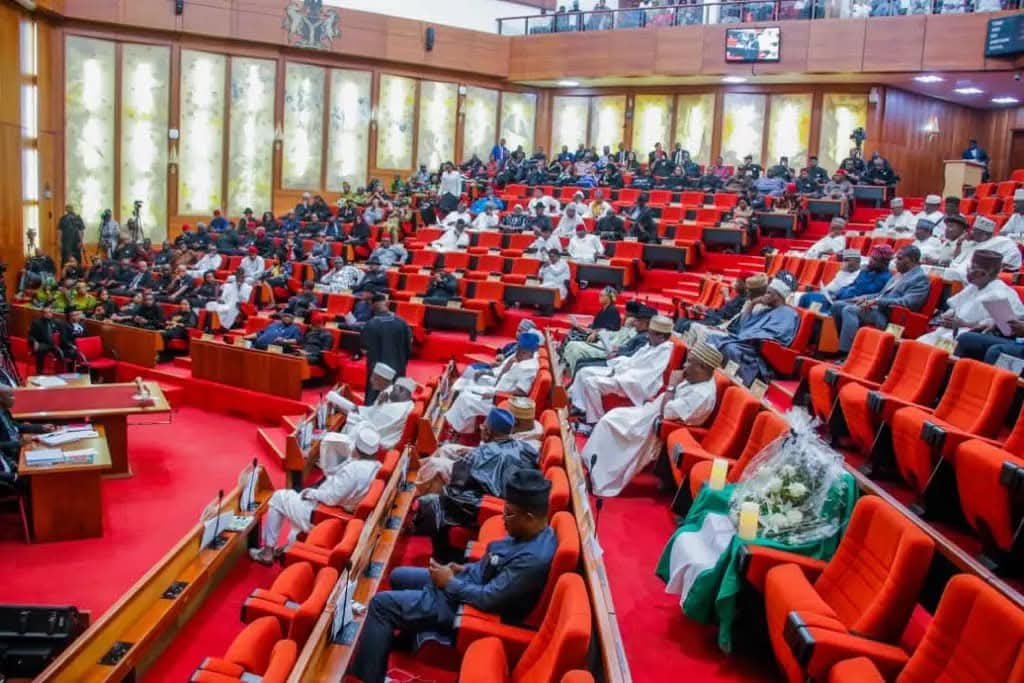
Senate in Session
Share


The Senate has reversed its recent amendment to the Standing Orders that sought to restrict participation in the election of Senate leaders to only senators who had already taken the Oath of Office and Allegiance.

The decision, taken during plenary on Thursday, effectively restores the previous procedure and allows all duly elected senators to participate in the election of presiding officers in the 11th National Assembly.

The motion for the reversal was moved by the Senate Leader, Opeyemi Bamidele, who explained that the amendment approved two days earlier could create constitutional conflicts and unnecessary political tension if allowed to stand.

According to Bamidele, further legislative and constitutional reviews showed that the amendment to Section 2, Subsection 2, and Section 3, Subsection 1 of the Senate Standing Orders might contradict constitutional provisions governing the rights and status of elected lawmakers.

The Senate subsequently adopted the motion and officially reversed the changes.

The plenary session was presided over by the Deputy Senate President, Jibrin Barau.

Before the reversal, the amended rules had stated that only senators-elect who had taken the oath contained in the Seventh Schedule of the Constitution would be permitted to participate in Senate proceedings, including voting for the offices of Senate President and Deputy Senate President.

The amendment had generated debate and political tension within the chamber, with some lawmakers expressing concern that the rule could be used to limit participation in future leadership contests, including the race for Senate President in 2027.

During Thursday’s sitting, Adams Oshiomhole raised a point of order to clarify his earlier remarks made during Wednesday’s proceedings. Oshiomhole insisted that lawmakers should not be prevented from expressing their opinions on issues before the Senate.

However, the Deputy Senate President ruled him out of order, stating that the matter had already been resolved following the reversal of the amendment.

Bamidele also reminded senators that concerns regarding Senate procedures should be presented through substantive motions in line with parliamentary rules.

He further cautioned Oshiomhole against what he described as unnecessary “drama” on the Senate floor, referencing the exchanges that occurred during the previous day’s plenary session.

The reversal is expected to ease tensions within the Red Chamber and preserve broader participation in future leadership elections of the Senate.

Continue Reading

Parliamentary News

Senate Delegation Holds Emergency Meeting with Tinubu Over Urgent National Issues

Published

on

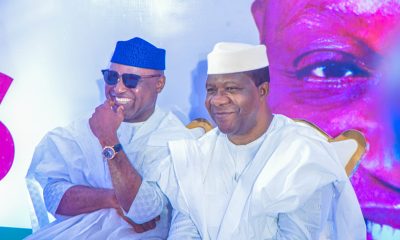
President Bola Ahmed Tinubu in a handshake with Senate Leader, Opeyemi Bamidele during the visit.
Share

A high-level delegation of the Nigerian Senate on Wednesday, April 22, 2026, held an emergency strategic meeting with President Bola Ahmed Tinubu at the Presidential Villa in Abuja, shortly after adjourning plenary.

The meeting, which took place less than two hours after the Senate concluded its session, followed a resolution reached during a closed-door executive sitting of lawmakers earlier in the day.

Leading the delegation was Senate President Godswill Akpabio. He was accompanied by Deputy Senate President Jibrin Barau, Senate Leader Opeyemi Bamidele, and Senate Minority Leader Abba Moro.

Other senators present at the meeting included Danjuma Goje, Abdul Ningi, Adamu Aliero, and Orji Uzor Kalu.

Sources within the National Assembly described the engagement as critical, noting that it was convened to address pressing national concerns requiring immediate attention at the highest level of government.

While details of the deliberations were not made public, officials confirmed that discussions centred on matters of urgent national importance.

The lawmakers and the President were said to have taken far-reaching decisions aimed at safeguarding the overall interest of the country.

The urgency and duration of the meeting underscore the gravity of the issues considered, with indications that key policy actions or government decisions may follow in the coming days.

Continue Reading

Parliamentary News

Nigeria’s Senate Passes ₦68.3tn 2026 Budget, Boosting Spending on Infrastructure, Health

Published

on

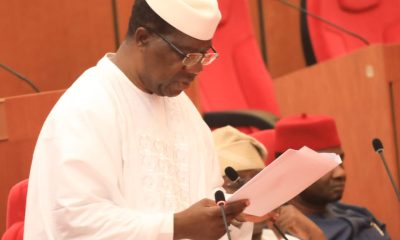
Senate in Session
Share


Nigeria’s Senate has approved a ₦68.3 trillion budget for the 2026 fiscal year, marking a significant increase from the ₦58.47 trillion initially proposed by President Bola Ahmed Tinubu.

The upward revision of over ₦9 trillion follows a supplementary request by the presidency aimed at accommodating legacy commitments, particularly in the transportation and health sectors, alongside new provisions including additional funding for the judiciary.

The approval came after lawmakers adopted the joint report on the 2026 Appropriation Bill presented by the National Assembly, signaling legislative backing for an expanded fiscal framework amid ongoing economic pressures.

Spending Breakdown

According to details of the approved budget:

₦4.799 trillion is allocated to statutory transfers

₦15.809 trillion for debt servicing

₦15.427 trillion for recurrent (non-debt) expenditure

₦32.287 trillion for capital expenditure

The capital component remains the largest share, underscoring the government’s focus on infrastructure development and long-term economic growth.

Additional Allocations

Of the increased spending:

₦5.71 trillion is designated for the regularisation of outstanding capital obligations carried over from the 2025 budget

₦2 trillion is earmarked for previously omitted projects across the country

Sector-specific allocations include:

₦482.758 billion for health

₦478.600 billion for the Ministry of Finance Incorporated (MoFI)

₦268 billion for the judiciary, including ₦36 billion for the Supreme Court and ₦98.513 million for the Court of Appeal

In addition, ₦8.960 billion has been approved for feasibility studies on major road projects, notably the Calabar–Maiduguri and Maiduguri–Sokoto corridors.

Extension of 2025 Capital Budget

In a related move, the Senate approved an extension of the capital component of the 2025 budget, shifting its implementation deadline from March 31 to June 30, 2026. The extension is intended to allow for the completion of ongoing infrastructure projects and improve budget execution.

Economic Context

The expanded 2026 budget reflects the administration’s attempt to balance fiscal consolidation with growth-focused spending, even as debt servicing continues to account for a substantial portion of government expenditure. Analysts say the success of the budget will depend largely on revenue performance and effective implementation.

Continue Reading