Connect with us

Parliamentary News

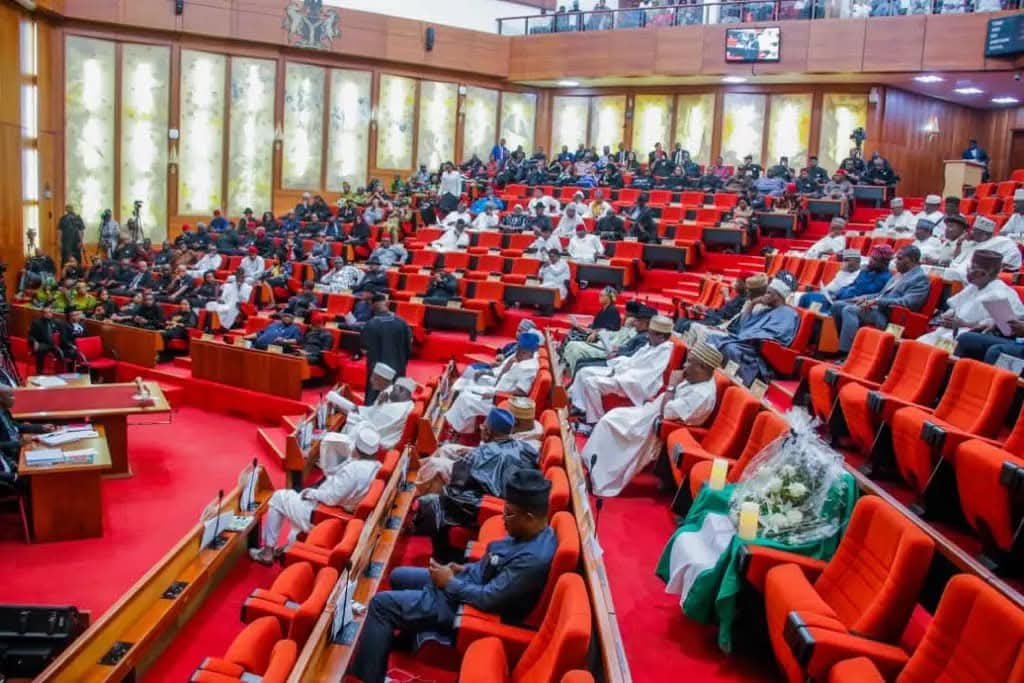
Senate Confirms Abayomi Fasina as Non-Career Ambassador Despite Heated Debate Over Sexual Misconduct Allegations

Published

on

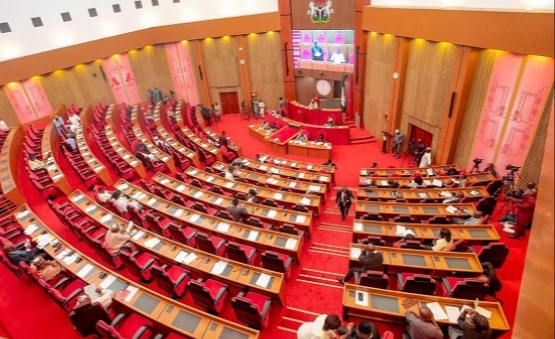
Senate in Session
Share


The Senate on Thursday confirmed the nomination of Professor Abayomi Sunday Fasina, former Vice-Chancellor of the Federal University Oye-Ekiti (FUOYE), as a Non-Career Ambassador of the Federal Republic of Nigeria, despite a heated debate over allegations of sexual misconduct previously levelled against him.

The confirmation followed the presentation and adoption of the report of the Senate Committee on Foreign Affairs, which recommended Fasina’s nomination after screening him and reviewing petitions submitted both in support of and against his appointment.

Presenting the committee’s report on behalf of its Chairman, Senator Sani Bello, Senator Simon Lalong (Plateau South) said the committee found no legal or constitutional grounds to reject the nominee.

According to Lalong, the committee carefully considered the petitions challenging Fasina’s nomination and noted that the allegations had already been investigated by the FUOYE Governing Council, the Nigeria Police Force and the Department of State Services (DSS).

He stated that all the relevant authorities cleared the nominee after finding the allegations to be unsubstantiated.

“The committee received petitions against the nominee as well as counter-petitions supporting his nomination. The accusations were investigated by competent authorities, including the University Governing Council and the Nigerian Police, which found the allegations to be false,” Lalong told the Senate.

He added that Fasina also received security clearance from the DSS and the police, while his record of service in academia further strengthened the committee’s recommendation.

“The committee had no doubt in recommending Professor Abayomi Sunday Fasina for confirmation as a Non-Career Ambassador of the Federal Republic of Nigeria,” he said.

However, the recommendation sparked strong opposition from some senators during plenary.

Senator Adams Oshiomhole (Edo North) urged the Senate to suspend consideration of the nomination until all allegations against Fasina were conclusively resolved by the courts.

While acknowledging the constitutional principle of presumption of innocence, Oshiomhole argued that confirming the nominee amid such allegations could undermine public confidence and send the wrong message, particularly to women.

“I am aware, and it is public knowledge, that this gentleman has been accused by two women. Nobody is saying he is guilty; he deserves to be presumed innocent until proven guilty. But, as a matter of sensitivity, I believe the Senate should allow him to clear himself before the courts before endorsing him,” Oshiomhole said.

Senator Cyril Fasuyi (Ekiti North), who represents the constituency where FUOYE is located and also serves on the Foreign Affairs Committee, also expressed reservations about the nomination.

Fasuyi said he was familiar with the controversy surrounding the case and insisted that justice had not been served.

“I know about this case. I also know about the woman involved. She did not get justice. This is a very sensitive issue that we cannot simply sweep under the carpet,” he said.

He subsequently called for further investigation by the Senate Committee on Rules and Business before any final decision on the nomination.

Responding to the concerns, Senator Lalong maintained that the committee had not been presented with any documentary evidence showing that Fasina was standing trial before any court.

He argued that allegations alone could not serve as sufficient grounds for rejecting a nominee who had been cleared by the relevant investigative authorities.

“It is not every allegation that will stop the proceedings of the Senate. Until a court of competent jurisdiction delivers judgment, an allegation does not amount to guilt. If a court eventually convicts him, appropriate action can then be taken,” he said.

Senate President Godswill Akpabio also defended the committee’s recommendation, stressing that the Senate was constitutionally bound by the principle of presumption of innocence enshrined in Section 36(5) of the 1999 Constitution.

Akpabio noted that the complainant at the centre of the allegations neither appeared before the committee nor submitted any evidence during the screening process.

“The report before us states that the nominee is highly qualified, articulate and recommended for confirmation. A man is presumed innocent until the contrary is proved. We cannot fail to discharge our constitutional responsibility merely because allegations have been made against him,” the Senate President said.

Supporting the committee’s recommendation, Senator Abdul Ningi (Bauchi Central) cautioned lawmakers against turning the Senate into a forum for determining matters beyond its constitutional mandate.

He explained that the responsibility of the screening committee was limited to assessing a nominee’s qualifications, competence and whether the individual had any criminal conviction, rather than adjudicating on unresolved allegations.

“The committee is not constitutionally empowered to investigate personal allegations outside its mandate. Matters of that nature remain within the jurisdiction of the courts and relevant investigative agencies,” Ningi stated.

As deliberations continued, Senator Fasuyi attempted to withdraw his signature from the committee’s report, but Akpabio ruled that such a move could not be made during plenary.

The Senate President advised him to follow the appropriate parliamentary procedure by presenting an affidavit when the Votes and Proceedings are considered.

Following the debate, Akpabio put the committee’s recommendation to a voice vote.

Although the initial response from lawmakers appeared divided, the Senate President ruled that the “ayes” had carried the motion. After repeating the vote, he again declared that the majority supported the confirmation.

He thereafter announced that the Senate had approved the nomination of Professor Abayomi Sunday Fasina as a Non-Career Ambassador and High Commissioner of the Federal Republic of Nigeria.

Parliamentary News

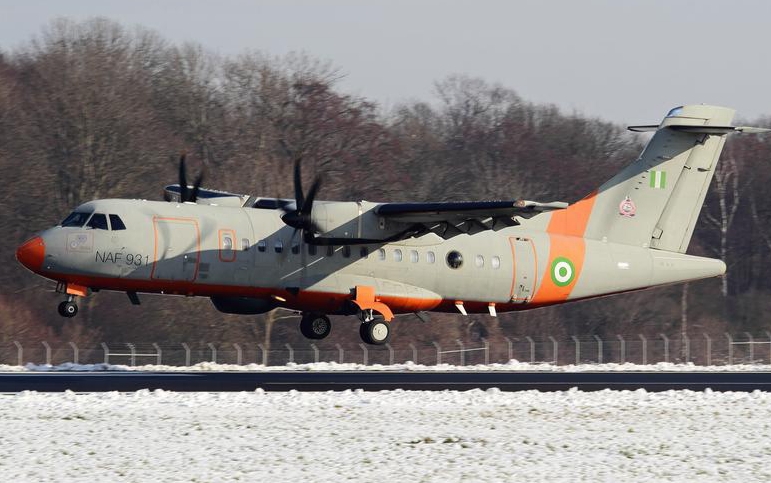
N’Assembly Demands NAF Aircraft Audit, Probe of Maintenance Funds After Ondo Crash

Published

on

Share

The National Assembly has called for a comprehensive audit of Nigerian Air Force (NAF) aircraft to determine their airworthiness and serviceability following a recent aircraft crash in Ondo State.

The Senate and House of Representatives made the call on Tuesday, expressing concern over recurring military aircraft accidents and the need to improve aircraft maintenance, safety procedures and oversight of ageing fleets.

At the Senate, the resolution followed a motion sponsored by Senator Osita Ngwu, representing Enugu West.

The lawmakers urged the Nigerian Air Force and the Nigerian Safety Investigation Bureau (NSIB) to conduct a thorough and transparent investigation into the immediate and underlying causes of the crash and make the findings public.

The Senate also mandated its committees on Air Force and Aviation to visit the crash site, engage with NAF authorities and carry out a comprehensive assessment of aircraft in the military and presidential fleets.

Senator Tahir Monguno, representing Borno North, supported the motion, stressing the need to establish the operational readiness and airworthiness of military aircraft to prevent future accidents.

Senator Adams Oshiomhole, representing Edo North, called for the Senate to obtain the NAF’s aircraft maintenance budget to determine the funds allocated for servicing its fleet.

His proposal, seconded by Senator Titus Zam of Benue North-West, also seeks to establish whether the funding provided for aircraft maintenance is adequate.

The Senate further urged the Federal Government to prioritise regular aircraft maintenance and the replacement of ageing military aircraft.

Meanwhile, the House of Representatives adopted a similar position following a motion moved by Alhassan Rurum.

The House urged the Nigerian Air Force to strengthen its maintenance systems, particularly for ageing aircraft, and ensure that only aircraft meeting required safety standards are deployed for operations.

A member of the House, Donald Ojogo, commended the pilot’s actions, noting that they helped reduce the potential damage that could have occurred if the aircraft had crashed in a densely populated area.

Also speaking, Babajimi Benson, Chairman of the House Committee on Army, described the incident as a painful reminder of the risks military personnel face while defending the country.

The National Assembly observed a minute’s silence in honour of the victims and extended condolences to President Bola Tinubu, the Chief of Air Staff, the Nigerian Air Force, the Ondo State Government and the families of those who died.

The lawmakers said a comprehensive investigation and improved aircraft maintenance oversight were necessary to prevent similar incidents in the future.

Continue Reading

Parliamentary News

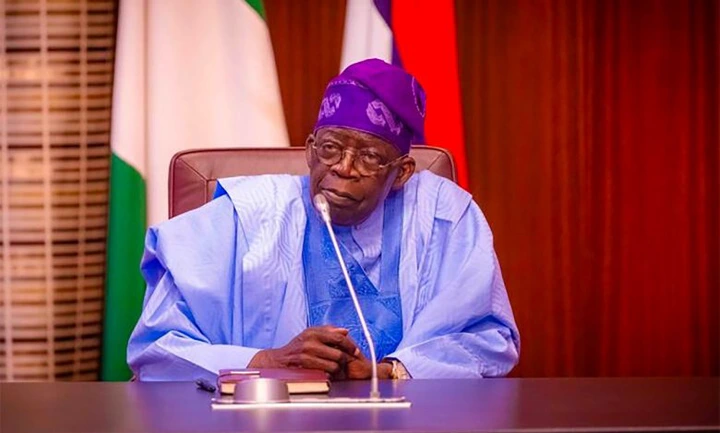
Tinubu Transmits NDLEA Reform, Safety Investigation, School of Government Bills to Senate

Published

on

President Bola Tinubu
President Bola Ahmed Tinubu
Share


President Bola Tinubu has transmitted several bills to the Senate for consideration, including proposals to reform the National Drug Law Enforcement Agency (NDLEA), amend the Nigerian Safety Investigation Bureau (NSIB) Act and establish a National School of Government.

The bills were conveyed to the Senate by Senate President Godswill Akpabio in accordance with the provisions of the 1999 Constitution, as amended.

One of the proposed legislations, the NDLEA Bill 2026, seeks to provide a consolidated legal framework for the agency’s operations and strengthen its enforcement powers, including its capacity to investigate persons suspected of involvement in illicit drug-related activities.

Also transmitted is the Nigerian Safety Investigation Bureau Amendment Bill 2026, which seeks to amend the existing 2022 Act to reposition the bureau as an independent authority and expand its mandate.

The proposed amendment further seeks to transfer supervisory oversight of the bureau to the Presidency and introduce changes to its administrative structure.

President Tinubu also forwarded the National School of Government Bill 2026, which seeks to repeal the Administrative Staff College of Nigeria (ASCON) Act and establish a National School of Government.

The proposed institution is expected to serve as a national centre for governance training, public sector capacity development and institutional strengthening.

In addition, the President transmitted a bill seeking to domesticate the four Geneva Conventions of 1949 and their two Additional Protocols of 1977, which provide protections for victims of armed conflicts.

The proposed legislation also seeks to incorporate the Rome Statute of the International Criminal Court into Nigeria’s domestic legal framework, providing for the prosecution and punishment of crimes including genocide, war crimes, crimes against humanity and aggression.

The bills are expected to undergo legislative consideration by the Senate as part of the Federal Government’s efforts to strengthen institutional frameworks, improve public sector governance and enhance the administration of justice.


Continue Reading

Parliamentary News

Senate Suspends National Security Summit Over Fatal NAF Crash, Mourns 32 Personnel

Published

on

Senate in Session
Senate in Session
Share

The Nigerian Senate has postponed its planned two-day National Security Summit indefinitely following the tragic crash of a Nigerian Air Force (NAF) aircraft in Igbokoda, Ilaje Local Government Area of Ondo State, which claimed the lives of 32 military personnel.

The summit, earlier scheduled for Monday, October 12, and Tuesday, October 13, 2026, was designed to bring together key stakeholders to examine Nigeria’s worsening security challenges and develop practical solutions to protect lives and property across the country.

However, the Senate said the programme had to be put on hold following the fatal crash of a NAF ATR-42 aircraft on Monday.

The decision was disclosed on Tuesday by the Leader of the Senate and Chairman of the Senate Ad-hoc Committee on the National Security Summit, Senator Opeyemi Bamidele, in a statement personally signed by him.

According to Bamidele, the postponement became necessary in view of the national tragedy and the three-day national mourning declared by President Bola Ahmed Tinubu in honour of the military personnel who lost their lives in the crash.

The aircraft crash, which occurred in Igbokoda, the headquarters of Ilaje Local Government Area, Ondo State, reportedly involved 25 officers and seven crew members, all of whom died in the incident.

The tragedy has thrown the nation into mourning, particularly the families, colleagues and loved ones of the military personnel who died while serving the country.

President Tinubu, in response to the tragedy, directed that the national flag be flown at half-mast across the country for three days as a mark of respect for the fallen personnel.

The Senate said it considered it inappropriate to proceed with a major national event at a time when the country is mourning the loss of members of the Armed Forces.

Bamidele said the postponement was therefore necessary to honour the memory of the deceased personnel and allow the nation to grieve with their families.

The National Security Summit was conceived by the Senate as a major platform for a comprehensive review of Nigeria’s persistent security challenges, including terrorism, insurgency and other threats to national peace and stability.

The Senate Ad-hoc Committee had already concluded arrangements for the summit following the completion of zonal public hearings designed to gather views and recommendations from Nigerians and other stakeholders across the country.

The postponement, however, does not mean the Senate has abandoned the initiative.

Rather, the summit will be rescheduled for a new date to be announced by the Senate after the period of national mourning.

The Senate also extended its condolences to President Tinubu, the Nigerian Armed Forces, particularly the Nigerian Air Force, and the families of the deceased personnel.

The upper chamber described the fallen officers and crew members as gallant Nigerians who paid the supreme price in active service to their fatherland.

The Senate urged all stakeholders who had been preparing to participate in the summit to bear with the decision, noting that the postponement was necessitated by the national disaster and the prevailing period of mourning.

A new date for the National Security Summit will be communicated in due course.

Continue Reading