ABUJA, Nigeria — The Federal Government says significant progress has been made toward the establishment of state police across Nigeria, with a constitutional amendment expected in the near future following months of consultations involving the Presidency, the National Assembly, and key security stakeholders.
The development was disclosed on Thursday by the Chief of Staff to the President, Femi Gbajabiamila, after a high-level consultative meeting on state policing convened by the Presidency at the State House in Abuja.
Addressing State House Correspondents after the meeting, Gbajabiamila revealed that deliberations on the proposed framework commenced several months ago on the directive of President Bola Ahmed Tinubu and have since recorded substantial progress.
According to him, while there is broad consensus on the necessity of state police, the process requires extensive constitutional and legal considerations before implementation can commence.
“We started deliberations in the last three or four months on how to go about the establishment of state police as directed by Mr President,” Gbajabiamila said.
“Establishing state police is not something that you do with the snap of the fingers. There is a lot involved in terms of constitutional provisions and legalities, and thank God we have now gained a lot of traction.”
He expressed optimism that the constitutional amendment required to create the legal foundation for state police would soon be presented, while further details regarding the proposed framework would be unveiled afterward.
Constitutional Amendment Takes Centre Stage
The Chief of Staff explained that current discussions are focused primarily on amending relevant sections of the Constitution to accommodate a decentralized policing structure. Once the constitutional amendments are secured, enabling legislation would then be introduced to provide operational guidelines for the new security arrangement.
“Right now, what we are looking at is the constitutional amendment itself, and then the enabling law would follow thereafter. That is what we have been deliberating on in the last couple of hours,” he stated.
The move marks one of the most significant security reform initiatives being pursued by the Tinubu administration since assuming office, as the government seeks innovative solutions to Nigeria’s growing security challenges, including banditry, kidnapping, communal violence, terrorism, and other forms of criminality.
National Consensus Emerging
Gbajabiamila noted that discussions have evolved beyond the question of whether Nigeria should establish state police. Instead, stakeholders are now concentrating on designing a framework that would ensure effectiveness, accountability, and constitutional compliance.
He emphasized that there appears to be widespread support across political and institutional lines for the initiative, reflecting a growing national consensus that a centralized policing structure alone may no longer be sufficient to address the country’s complex security realities.
According to him, President Tinubu, a longstanding advocate of state policing, will receive a comprehensive report detailing the outcome of the consultations and recommendations arising from the meeting.
Tinubu’s Push for Decentralized Security
For several months, President Tinubu has consistently argued that state police represents a necessary and practical response to Nigeria’s evolving security environment.
The President has maintained that empowering sub-national governments with policing responsibilities would strengthen grassroots security operations, improve intelligence gathering at the community level, and enhance the protection of lives and property across the federation.
Supporters of the initiative argue that state-controlled police forces would be more familiar with local terrains, cultures, and security dynamics, thereby enabling quicker responses to emerging threats and criminal activities.
High-Level Participation
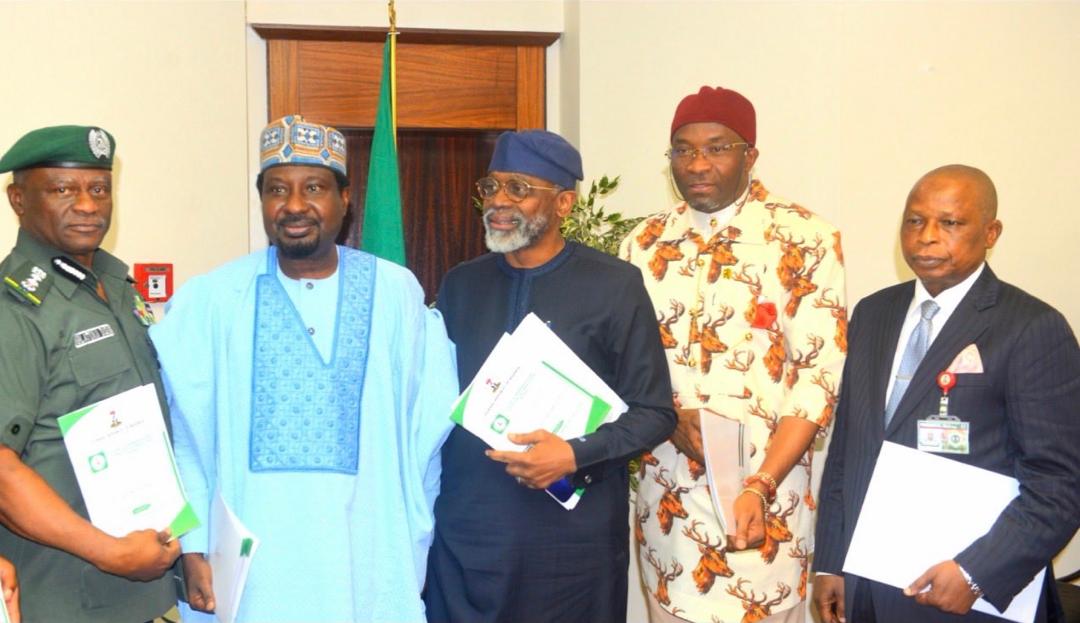
The consultative meeting brought together senior government officials and security leaders, underscoring the importance attached to the reform.
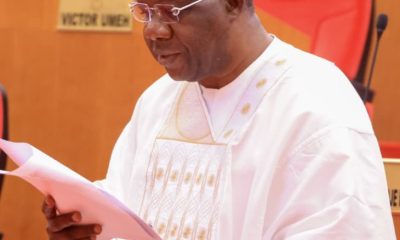
Among those in attendance were the Deputy President of the Senate, Jibrin Barau; the Deputy Speaker of the House of Representatives, Benjamin Kalu; and the Inspector-General of Police, Tunji Disu, alongside other top government officials and security stakeholders.
The meeting forms part of a series of consultations being undertaken by the Federal Government to develop a workable and sustainable framework for state police, a reform widely regarded as a major step toward restructuring Nigeria’s internal security architecture and enhancing the capacity of states to tackle security challenges within their jurisdictions.
If successfully implemented, the creation of state police would represent one of the most far-reaching constitutional and security reforms in Nigeria’s recent democratic history.