…National Assembly to set minimum standards for recruitment, discipline, accountability
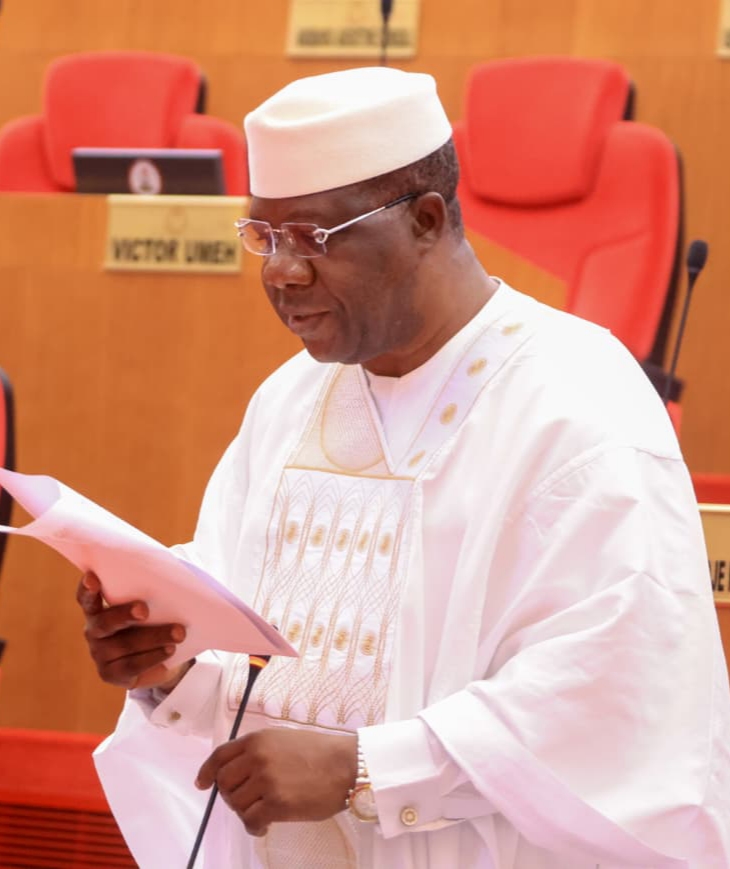
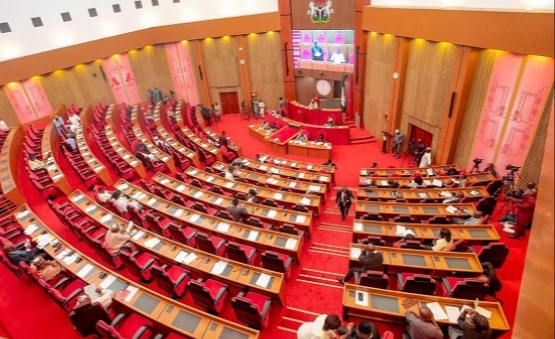
The Senate on Wednesday took a significant step toward restructuring Nigeria’s security architecture by adopting a comprehensive framework designed to prevent the abuse of state police powers by governors, as lawmakers considered a constitutional amendment bill seeking to establish state police across the federation.
The proposed legislation, which forms part of the ongoing review of the 1999 Constitution, contains extensive safeguards aimed at ensuring that state police services are not manipulated for partisan, ethnic, religious, sectional, or personal interests.
Leading debate on the Constitution of the Federal Republic of Nigeria Alteration (State Police) Bill, 2026, Senate Leader Senator Opeyemi Bamidele described the proposal as a carefully balanced reform intended to address Nigeria’s growing security challenges while preserving national unity, constitutional rights, and democratic accountability.
According to Bamidele, the bill seeks to create a decentralised policing structure capable of responding more effectively to local security threats without undermining federal authority or creating opportunities for political abuse.
He explained that the proposed constitutional amendment, submitted to the National Assembly by President Bola Ahmed Tinubu, would retain the Nigeria Police Force as the country’s federal policing institution while allowing states that choose to do so to establish and operate their own police services.
National Standards to Guide State Police Operations
One of the major highlights of the proposal is the constitutional empowerment of the National Assembly to prescribe minimum operational and professional standards that every state police service must comply with.
Under the framework, the federal legislature will establish nationwide benchmarks covering recruitment procedures, training requirements, personnel vetting, promotions, disciplinary mechanisms, use-of-force regulations, firearms management, complaints handling, accountability systems, data administration, and professional conduct.
The Senate believes these standards will help guarantee uniform professionalism across all state police formations while preventing the emergence of poorly regulated or politically controlled security outfits.
Bamidele noted that the proposal was carefully designed to strike a balance between local policing autonomy and national cohesion.
“The bill seeks to balance local policing autonomy with national cohesion, accountability with operational effectiveness, and federal oversight with state responsibility,” he said.
Clear Division of Security Responsibilities
To avoid jurisdictional conflicts, the bill establishes a clear separation of responsibilities between federal and state policing institutions.
According to the proposal, state police services will be responsible for enforcing state laws, maintaining public safety and order, preventing and detecting crimes within their territorial jurisdictions, protecting lives and property, and carrying out other local policing duties.
Conversely, the Nigeria Police Force will continue to exercise exclusive authority over matters relating to national security and federal interests.
These include protection of federal institutions, counter-terrorism operations, organised crime investigations, cybercrime enforcement, border security, arms trafficking, interstate criminal activities, and other threats with nationwide implications.
The framework is intended to create a complementary relationship between both policing structures rather than a competing security system.
Conditions for Federal Intervention
Addressing concerns that state police services could become ineffective or be exploited by political actors, Bamidele outlined specific constitutional conditions under which the federal police may intervene in state security affairs.
He stated that federal intervention would only be permissible in clearly defined situations, including:
Complete breakdown of public order within a state;
Inability of a state police service to function effectively;
Serious violations of constitutionally guaranteed fundamental rights;
Established cases of electoral intimidation or voter suppression; and
Situations where national security is under threat.
The Senate Leader stressed that such intervention would not be automatic or arbitrary.
According to him, any deployment of federal policing authority into a state jurisdiction must first receive written authorisation from the President and Commander-in-Chief of the Armed Forces.
In addition, such intervention would be limited in scope and duration, subjected to Senate oversight, and remain open to judicial review, thereby creating multiple layers of accountability.
Senate Rallies Support for Security Reform
The proposal attracted broad bipartisan support during debate.
Chairman of the Senate Committee on Power, Senator Enyinnaya Abaribe, disclosed that he was initially opposed to the concept of state police but had reconsidered his position in light of Nigeria’s worsening security challenges.
According to Abaribe, the realities of insecurity across the country now make decentralised policing an urgent necessity.
Similarly, former Governor of Sokoto State and Chairman of the Senate Committee on Housing, Senator Aminu Waziri Tambuwal, reiterated his longstanding support for state police, arguing that the reform represents a practical response to persistent security threats confronting communities nationwide.
Adding his voice, Chief Whip of the Senate, Senator Tahir Monguno, urged lawmakers to support the constitutional amendment, describing it as a critical mechanism for strengthening security governance at the subnational level.
Towards a New Security Architecture
The debate marks one of the most consequential discussions in Nigeria’s constitutional reform process, as policymakers seek solutions to escalating security concerns ranging from terrorism and banditry to kidnapping, communal conflicts, and organised criminal activities.
Supporters of the bill argue that state police will enhance intelligence gathering, improve community-based policing, accelerate emergency responses, and strengthen law enforcement presence in areas currently underserved by federal security agencies.
With the Senate now advancing deliberations on the proposal, attention will increasingly focus on how lawmakers balance the demand for local security control with the need to safeguard democratic institutions, human rights, and national stability.
If eventually passed and ratified, the amendment could usher in the most far-reaching transformation of Nigeria’s policing structure since independence, fundamentally reshaping the relationship between federal and state governments in the management of internal security.