Connect with us

Parliamentary News

Akpabio Urges Full Senate Attendance Ahead of Crucial State Police Constitutional Vote

Published

on

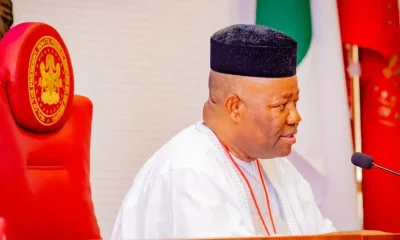
Senate President Godswill Akpabio
Share


President of the Senate, Godswill Akpabio, has called on all senators to be present at Wednesday’s plenary session as the National Assembly prepares to consider and vote on a proposed constitutional amendment bill seeking to establish state police across Nigeria.

Speaking during an emergency Senate session on Tuesday, Akpabio described the State Police Bill as a landmark reform capable of reshaping Nigeria’s security architecture and improving security management at the grassroots level.

He stressed that the proposed amendment is of national importance and requires the active participation of lawmakers, noting that constitutional amendments demand broad support from members of the Senate.

According to him, the establishment of state police would mark a historic shift in Nigeria’s policing structure.

“Since 1960, Nigeria has not had the courage to decentralise policing, and this is the first time,” Akpabio said.

“As we struggle to become senators, let us also remember the responsibilities of being a senator. It is not enough for us to look for tickets. And when we get them, we don’t come to the chambers.”

The Senate President explained that the constitutional amendment would provide the legal framework for the creation of state police services, while safeguards against abuse would be incorporated through subsequent legislation and regulatory mechanisms.

He noted that the reform would strengthen community policing by encouraging collaboration among local governments, traditional rulers, village heads, youth groups and other stakeholders in addressing security challenges within their communities.

Akpabio argued that local communities often possess valuable information about criminal activities in their areas and that decentralised policing would enhance intelligence gathering and enable quicker responses to security threats.

To ensure swift consideration of the proposal, he directed the Senate Committee on Constitution Review to submit its report on the State Police Bill on Wednesday for immediate legislative action.

Also speaking during the session, Senate Leader Opeyemi Bamidele underscored the importance of full attendance by senators, explaining that constitutional amendments require the support of at least two-thirds of the members of the Senate.

“We need a minimum of two-thirds of distinguished senators to be able to vote on constitutional alteration. That means it is important for all of us to be here,” Bamidele said.

He described the State Police Bill as a national issue that goes beyond political affiliations and regional interests, urging senators to encourage their absent colleagues to attend the crucial sitting.

The Senate subsequently adjourned plenary until 11:00 a.m. on Wednesday, June 24, 2026, when lawmakers are expected to debate and vote on the proposed constitutional amendment aimed at establishing state police across the country.

Parliamentary News

State Police Bill: Bamidele Urges Senators to Ensure Quorum for Crucial Debate

Published

on

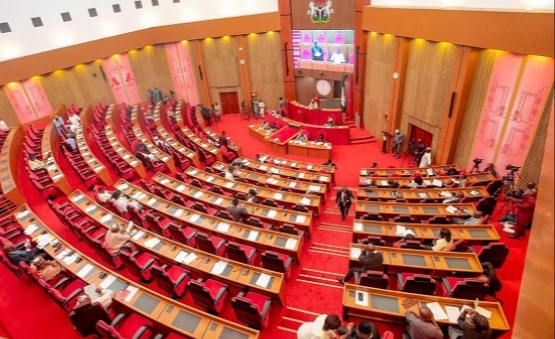
Senate in Session
Senate in Session
Share


The Leader of the Senate, Opeyemi Bamidele, has appealed to members of the upper chamber to ensure full attendance at Wednesday’s plenary session, June 24, 2026, as the Senate prepares to consider the highly anticipated bill seeking to establish State Police across Nigeria.

Bamidele made the appeal during Senate proceedings, stressing the importance of achieving the required quorum for deliberations on the proposed legislation, which is regarded as one of the most significant constitutional and security reforms currently before the National Assembly.

The State Police Bill seeks to create a framework for state-controlled policing as part of broader efforts to address the country’s security challenges. Proponents of the bill argue that decentralizing policing powers would strengthen local security responses, improve intelligence gathering, promote community-based policing, and enable state governments to tackle crime and insecurity more effectively.

The proposed legislation has generated widespread national interest, with stakeholders expressing varying opinions on its potential impact on security management, federalism, and governance. Supporters maintain that state policing will enhance operational efficiency and complement the efforts of existing federal security agencies, while critics have raised concerns about possible abuse and the need for adequate safeguards.

As lawmakers reconvene for Wednesday’s session, attention will be focused on the Senate’s deliberations and the outcome of discussions on the landmark proposal, which could reshape Nigeria’s security architecture if eventually passed and signed into law.

The consideration of the bill marks another important step in ongoing legislative efforts aimed at strengthening internal security, deepening democratic governance, and improving public safety across the federation.

Stay tuned for more updates from the National Assembly as developments unfold on the State Police Bill and other key legislative matters. Subscribe, like, and turn on notifications for comprehensive coverage of parliamentary proceedings and political developments in Nigeria.

Continue Reading

Parliamentary News

Senate Suspends Recess, Recalls Lawmakers Over Worsening Insecurity

Published

on

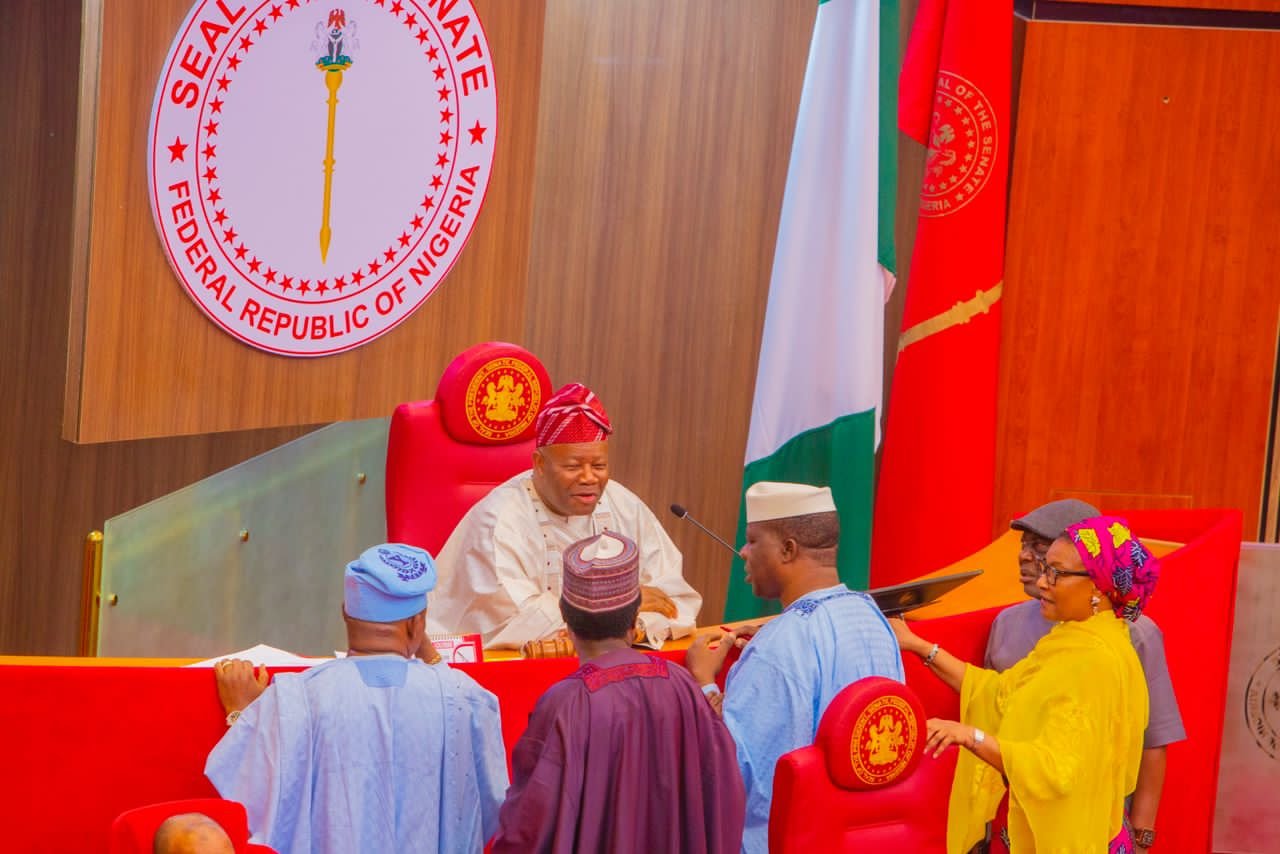
Senate Logo
Share


The Senate has suspended its ongoing legislative recess and recalled all senators for an emergency plenary session to address the growing security challenges facing the country.

According to a notice dated June 15, 2026, and signed by the Clerk of the Senate, Mr. Emmanuel Odo, lawmakers have been directed to reconvene at the National Assembly Complex in Abuja on Tuesday, June 23, 2026, at 11:00 a.m.

The notice stated that the emergency sitting was approved by Senate President Godswill Akpabio following concerns over matters of urgent national importance, particularly the escalating insecurity across several parts of Nigeria.

“The purpose of this emergency sitting is to enable the Senate to consider matters of urgent national importance, particularly issues relating to national security and other critical concerns that require immediate legislative attention,” the notice said.

The Senate leadership also expressed regret for any inconvenience the sudden recall may cause lawmakers and urged all senators to make the necessary arrangements to attend the session.

The decision represents a major departure from the National Assembly’s earlier legislative timetable. Both the Senate and the House of Representatives had only recently adjourned plenary and commenced a recess, with lawmakers originally scheduled to resume on July 7, 2026. The break was intended to allow members to participate in Democracy Day activities and carry out constituency engagements within their respective districts.

The emergency recall comes amid heightened concerns over the persistent threat posed by terrorism, banditry, kidnapping and other violent crimes across the country. Security challenges have continued to dominate public discourse, prompting renewed calls for stronger and more effective measures to safeguard lives and property.

Just days ago, President Bola Ahmed Tinubu reaffirmed his administration’s commitment to combating insecurity, declaring that terrorists, bandits, kidnappers and their sponsors would receive no mercy from the government. In his Democracy Day address, the President urged criminal elements to surrender or face the full force of the law.

President Tinubu disclosed that more than 13,000 terrorists had been neutralised over the past year and stated that terror-related deaths had declined significantly compared to previous years. However, he acknowledged that the continued captivity of some abducted schoolchildren in Oyo and Borno states remains a painful reminder of the security challenges confronting the nation.

The emergency Senate session is also expected to focus on ongoing efforts to reform Nigeria’s security architecture. Last week, the National Assembly advanced proposals for the establishment of state police as part of broader constitutional reforms aimed at strengthening internal security.

Both chambers of the National Assembly are currently considering amendments to the 1999 Constitution that would move policing from the Exclusive Legislative List to the Concurrent Legislative List, thereby empowering state governments to establish and control their own police formations.

The proposed constitutional amendment seeks changes to key provisions, including Sections 197, 214 and 215 of the Constitution. The Senate has already passed the bill for second reading, demonstrating lawmakers’ determination to explore long-term solutions to the country’s security challenges.

With insecurity remaining a major concern for Nigerians, the June 23 emergency sitting is expected to provide senators with an opportunity to deliberate on the nation’s security situation and consider further legislative interventions aimed at restoring peace and strengthening national security.

Continue Reading

Parliamentary News

Senate Panel, SEDC Clash Over N16.6bn Allocation as Lawmakers Query N153m Abuja Office, N2.5bn Contract Provision

Published

on

Senate in Session
Senate in Session
Share


The Senate Committee on the South East Development Commission (SEDC) and the management of the commission engaged in a heated exchange on Tuesday over the utilisation of N16.6 billion released to the agency, with lawmakers raising concerns over several expenditure items, including N153 million spent on an Abuja liaison office and a N2.5 billion provision listed as “implied expenditure.”

The disagreement unfolded during an investigative hearing convened by the Senate Committee on SEDC, chaired by Senator Orji Uzor Kalu, as part of its oversight responsibilities.

At the centre of the scrutiny was the commission’s financial report presented by the Managing Director of the SEDC, Mark Okoye, and other senior officials of the agency.

Lawmakers Demand Accountability

Members of the committee questioned how funds released to the commission had been utilised since the agency received its allocation in December 2025.

Senator Kalu disclosed that records available to the committee indicated that only about N13 billion remained from the N16.6 billion released to the commission, suggesting that approximately N3.6 billion had either been spent or committed.

Expressing dissatisfaction with the financial report submitted by the commission, Kalu described the document as inadequate and unacceptable, insisting that every expenditure must be fully justified.

The committee particularly queried the reported N153 million expenditure on an Abuja liaison office, with lawmakers arguing that the amount appeared excessive for the facility being occupied by the commission.

Other committee members, including Senator Enyinnaya Abaribe, Senator Victor Umeh and Senator Austin Akobundu, also challenged aspects of the report and demanded detailed explanations for several expenditure items.

The lawmakers maintained that as a newly established intervention agency, the SEDC must uphold the highest standards of transparency and accountability in managing public resources.

SEDC Defends Financial Decisions

Responding to the concerns, Okoye defended the commission’s spending pattern, insisting that all expenditures were lawful and aimed at building the institutional capacity of the agency while advancing developmental projects across the South-East region.

He explained that the commission had deliberately adopted a cautious financial strategy to avoid creating liabilities that could exceed available cash resources.

According to him, budgetary provisions should not be mistaken for actual cash available for spending, stressing that contract awards must be tied to funds that have been released rather than total budget estimates.

Okoye argued that awarding contracts based solely on approved budgets without corresponding cash backing could result in abandoned projects, financial deficits and unfunded obligations.

The SEDC chief said the commission’s approach was designed to ensure that projects are implemented within available resources while maintaining fiscal discipline.

Senate Orders Submission of Documents

Despite the explanations offered by the commission, the committee remained unsatisfied and directed the SEDC to submit comprehensive documentation detailing all expenditures and commitments.

The lawmakers requested procurement records, payment schedules, contract documents and other supporting financial records to enable the committee conduct a thorough review of the commission’s financial activities.

Senator Kalu subsequently directed the commission to provide all requested documents on or before June 23, after which the committee would determine the date for a subsequent appearance by the agency.

Commission Clarifies N153m Office Expenditure

Following the hearing, the SEDC issued a statement providing further clarification on the disputed expenditure items.

The commission explained that the N153 million cited by lawmakers was not solely for rent but covered the establishment and operation of its Abuja liaison office located at the Congress Building on Mississippi Street in Maitama, Abuja.

According to the agency, the office occupies the basement, ground floor and boardroom sections of the building under a duly executed lease agreement.

The commission stated that the expenditure includes rent, utility services, operational costs and office fit-out works carried out from February 2025 to date.

N2.5bn Yet to Be Disbursed, Says SEDC

The SEDC also addressed questions surrounding the N2.5 billion listed as “implied expenditure.”

According to the commission, the amount relates to a contract approved for the rehabilitation of its headquarters in Enugu and was awarded in compliance with the provisions of the Public Procurement Act.

The agency clarified that the funds have not been released to any contractor and remain in its accounts.

It explained that the amount was reflected as a financial commitment tied to an approved project rather than an actual disbursement.

Commitment to Transparency

The commission further stated that expenditures recorded so far were connected to institutional establishment, project development, stakeholder consultations, regional development programmes and other foundational activities necessary for the operation of the newly created agency.

Reaffirming its commitment to accountability, the SEDC pledged full cooperation with the Senate’s oversight process and assured lawmakers that all requested financial records and supporting documents would be submitted within the stipulated timeline.

The development sets the stage for further legislative scrutiny of the commission’s finances as the Senate seeks detailed explanations on how public funds allocated to the South East Development Commission have been managed since its establishment.

Continue Reading