Connect with us

Defence and Security

Tinubu Declares National Security Emergency, Orders Massive Recruitment into Armed Forces and Police

Published

on

President Bola Ahmed Tinubu
Share

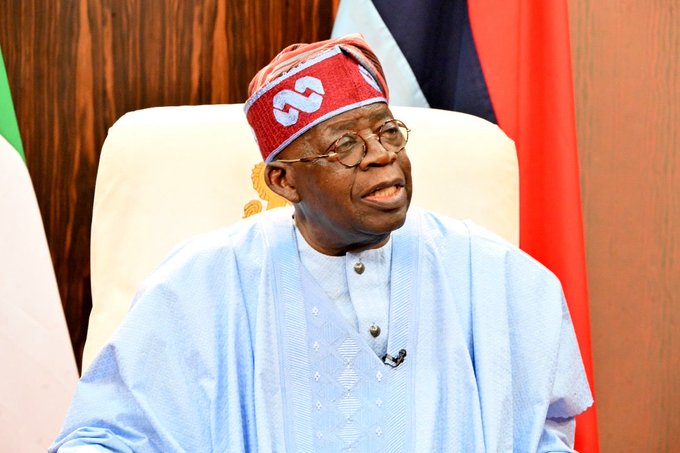
President Bola Ahmed Tinubu on Wednesday declared a nationwide security emergency in response to escalating security challenges across the country, directing the Armed Forces and the Nigeria Police Force to immediately begin large-scale recruitment to bolster national security operations.

In a statement issued from the State House, the President announced that the police have been authorised to recruit an additional 20,000 officers—raising their total recruitment figure to 50,000. He also approved the use of National Youth Service Corps (NYSC) camps as temporary training depots to fast-track capacity building, alongside previously approved upgrades to police training facilities nationwide.

Tinubu further directed that police officers withdrawn from VIP protection duties undergo urgent retraining before deployment to areas facing heightened security threats.

The President also empowered the Department of State Services (DSS) to immediately deploy trained forest guards to dislodge terrorists and bandits operating in forests across the country. He authorised the agency to recruit additional personnel to strengthen forest surveillance and nationwide counter-terrorism efforts.

“This is a national emergency, and we are responding by deploying more boots on the ground,” Tinubu said, urging Nigerians to support security agencies through vigilance and cooperation.

The President commended the military, police, and intelligence community for the recent rescue of 24 abducted schoolgirls in Kebbi State and 38 abducted worshippers in Kwara State. He reaffirmed the government’s commitment to securing the release of remaining abducted students in Niger State and others still in captivity.

Tinubu paid tribute to troops who have lost their lives, including Brigadier-General Musa Uba, describing their sacrifice as the ultimate expression of service to the nation.

He also called on state governments to strengthen local security initiatives and encouraged the National Assembly to begin reviewing laws to allow states that require state police formations to establish them.

Addressing recurrent conflicts between herders and farmers, the President urged herder associations to embrace ranching through the newly established Federal Ministry of Livestock, and to end open grazing while surrendering illegal weapons.

Tinubu advised states to avoid siting boarding schools in insecure remote locations and urged religious centres—churches and mosques alike—to engage security agencies for enhanced protection where necessary.

He extended condolences to families affected by recent attacks in Kebbi, Borno, Zamfara, Niger, Yobe, and Kwara States, assuring that the government will not tolerate terrorism or banditry.

“Those who want to test our resolve should never mistake our restraint for weakness,” he warned.

Calling for unity and resilience, Tinubu urged Nigerians to remain calm, vigilant, and collaborative with security authorities.

“Together we shall win,” he said.

The statement was signed by President Bola Ahmed Tinubu, GCFR, President and Commander-in-Chief of the Armed Forces of the Federal Republic of Nigeria, dated November 26, 2025.


Defence and Security

NSCDC Deploys Drones, Body Cameras to Strengthen Security Nationwide

Published

on

NSCDC Personnel
NSCDC Personnel
Share

The Nigeria Security and Civil Defence Corps (NSCDC) has begun deploying drones, body cameras, and other modern equipment across all states to improve security operations.

The Commandant-General, Ahmed Abubakar Audi, approved the rollout during the corps’ annual strategic meeting in Abuja, attended by state commanders from across the country.

He said the move is part of efforts to improve surveillance, intelligence gathering, and quick response to security threats.

The new equipment includes drones, GPS trackers, situation room kits, bulletproof vests, helmets, night-vision goggles, and body cameras. Officers also received backpacks with solar chargers and mini tablets.

Abubakar explained that the tools will help tackle issues like banditry, illegal mining, and infrastructure vandalism.

He warned officers to use the equipment strictly for official duties, adding that misuse would lead to serious punishment.

The NSCDC boss also noted that the corps has recently destroyed over 400 illegal refineries and arrested suspects involved in illegal activities.

He added that the new tools will support special units like Agro Rangers and improve cooperation with other security agencies.

Continue Reading

Defence and Security

Nigeria Climbs to 4th in 2025 Global Terrorism Index as Attacks Surge by 43%

Published

on

Islamic State West Africa Province
Share

Nigeria has risen to fourth place in the 2025 Global Terrorism Index (GTI), following a sharp escalation in terrorist activities across the country, according to a new report by the Institute for Economics & Peace.

The report indicates that terrorist attacks in Nigeria increased by 43 percent in 2025, with 171 incidents recorded compared to 120 in 2024. This surge has pushed the country up two places from its previous sixth position.

Nigeria now ranks behind Pakistan, Burkina Faso, and Niger Republic, which occupy the top three positions on the index.

According to the findings, the majority of attacks were carried out by Islamic State West Africa Province and Boko Haram, with both groups accounting for 80 percent of terrorism-related deaths in the country.

The report further highlights a growing human toll, with fatalities rising by 46 percent to 750 deaths in 2025—the highest level recorded since 2020. In addition, 243 people were injured in the attacks, bringing the total number of terrorism-related deaths in Nigeria since 2007 to 12,581.

Geographically, violence remained heavily concentrated in Borno State, which accounted for 67 percent of all attacks and 72 percent of total deaths recorded during the year.

Civilians continued to bear the brunt of the violence, representing 67 percent of those killed, while military personnel accounted for 19 percent. The report notes a sustained shift toward increased targeting of civilians over the past five years.

The GTI attributes the worsening security situation to ongoing internal instability and intensified clashes between ISWAP and Boko Haram, underscoring persistent challenges in counterterrorism efforts across Nigeria.

Continue Reading

Defence and Security

Nigeria Must Move Beyond Kinetic Approach to Defeat Terrorism – Senate Leader, Bamidele

Published

on

Senate Leader, Senator Michael Opeyemi Bamidele
Share


The Senate Leader, Opeyemi Bamidele, has called for a strategic shift in Nigeria’s fight against insecurity, urging authorities to complement military operations with sustained investments in human capital development and social cohesion.

In his Eid al-Fitr message to Muslims across the country, Bamidele congratulated Nigerians on the successful completion of Ramadan, describing the holy month as a period marked by sacrifice, reflection, charity, and devotion to God.

He noted that the lessons of Ramadan—tolerance, compassion, and self-discipline—should guide both individual conduct and government policies, particularly at a time of global uncertainty and domestic security challenges.

The Senate Leader referenced recent security incidents, including bomb explosions in Maiduguri, which resulted in loss of lives and injuries, stressing that such tragedies underscore the urgent need for a more comprehensive approach to national security.

While commending Nigeria’s defence, intelligence, and security agencies for their resilience, Bamidele emphasised that reliance on military force alone—often described as a kinetic approach—cannot guarantee lasting peace.

“Time and experience have shown that kinetic operations alone cannot guarantee the peace and stability of our nation,” he stated.

He therefore advocated a broader, multi-dimensional strategy that addresses the root causes of violent extremism.

According to him, religious leaders must promote tolerance and desist from teachings that could incite radicalisation, while socio-cultural leaders should prioritise dialogue in resolving inter-ethnic conflicts rather than resorting to violence.

Bamidele also highlighted the role of subnational governments, noting that the fight against insecurity is not solely the responsibility of the federal government. He urged state governments to prioritise human capital development by investing in education, healthcare, nutrition, and social protection systems.

He added that creating opportunities for innovation and creativity among young people would help reduce vulnerability to extremist ideologies.

At the legislative level, the Senate Leader disclosed that the National Assembly is pursuing a multi-pronged approach to strengthen national security and development.

He revealed that the Senate has constituted an ad-hoc committee on a National Security Summit aimed at identifying the root causes of insecurity across the country. He also pointed to the ongoing review of the 1999 Constitution, which he said would include amendments to grant subnational governments greater authority in managing security within their jurisdictions.

Bamidele reaffirmed the commitment of the National Assembly to enacting laws that support the fight against terrorism and violent extremism.

He concluded by extending warm Eid al-Fitr wishes to Muslims nationwide, urging Nigerians to embody the values of peace, unity, and mutual respect beyond the Ramadan season.

Continue Reading