Connect with us

Business & Economy

Profit Tax: NEITI to refer defaulting oil, gas firms to anti-corruption agencies

Published

on

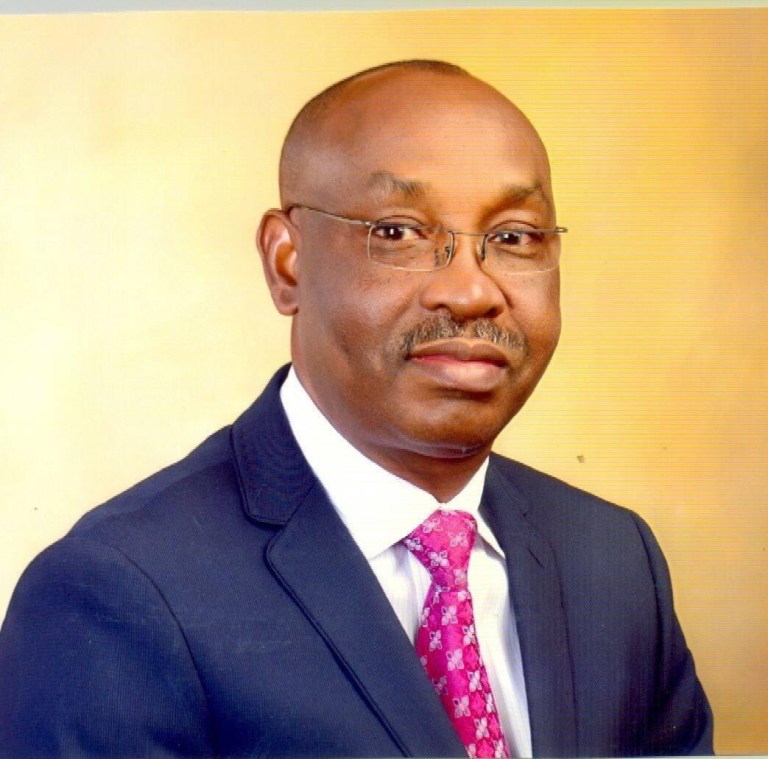
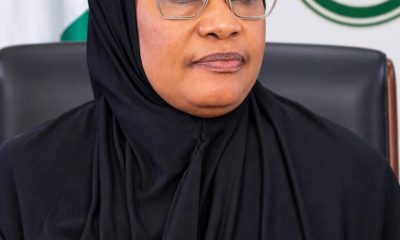
Orji Ogbonnaya Orji NEITI;s Executive Secretary
Share

The Nigeria Extractive Industries Transparency Initiative (NEITI) says it will report oil and gas companies that have defaulted in remittance of various profit taxes to the federation account.

Dr Orji Ogbonnaya Orji Executive Secretary of NEITI disclosed this while briefing newsmen on the 2019 oil and gas industry audit report and  Solid Mineral Industry audit report in Abuja, on Tuesday.

He said that 77 oil and gas companies operating in Nigeria were currently owing the  country 6.48 billion dollars  an equivalent of N2.659 trillion.

He noted the debts, which were identified in the Report, arose from failure of the companies to remit petroleum profit tax, company income tax, education tax, value added tax, withholding tax, royalty and concession on rentals to the Federation Account.

He explained that a total of 143.99 million dollars is owed as petroleum profit taxes; 1.089 billion dollars as company income taxes and 201.69 million dollars as education tax.

Others, he  added  included 18.46 million dollars and 972,000 pounds as Value Added Tax; 23.91 million dollars and 997,000 pounds as Withholding Tax; 4.357 billion  dollars as royalty oil and  292.44 million dollars as royalty gas.

Also, 270.187 million and 41.86 million dollars were unremitted gas flare penalties and concession rentals respectively.

The Executive Secretary noted that the disclosure was important and timely in view of government’s current search for revenues to address citizens’ demand for steady power, access to good roads, quality education, fight insurgency and creation of job opportunities for the country’s teeming youths.

He added that NEITI was determined to help the Federal Government recover the money from the 77 companies, and advised the affected companies to ensure they remit the various outstanding sums against them before the conclusion of the 2020 NEITI audit cycle to the relevant government agencies responsible for collection and remittances of such revenue.

Orji also warned that NEITI would no longer watch while these debts continue to remain in its reports unaddressed, stating that it would provide all necessary information and data to sister agencies saddled with the responsibilities of recovering the debts into government coffers.

He said that the agency would also share the information and data with partner anti-corruption agencies with whom it had signed memoranda of understanding (MoU).

“A comparative analysis of what this huge sum of N2.65 trillion can contribute to economic development shows that it could have covered the entire capital budget of the federal government in 2020 or even used to service the federal government’s debt of 2.68 billion dollars in 2020.

“In 2021, if the money is recovered the N2.659 trillion could fund about 46 per cent of Nigeria’s 2021 budget deficit of N5.6 trillion and is even higher than the entire projected oil revenue for 2021.

“This is why NEITI is set to work with the government to provide relevant information and data to support efforts at recovering this money.

“The disclosure of this information is in line with NEITI’s mandate to conduct audits, disseminate the findings to the public to enable the citizens, especially the media and civil society to use the information and data to hold government, companies and even society to account.

“ It is important that the process of recovering this humongous sum be set on course to support government in this period of dwindling revenues,” he said.

On NEITI’s achievements, he said that within the short period of  re-constitution and inauguration of the NEITI Board.

It  achieved commencement of process of reviewing of NEITI Act to strengthen its powers and functions; timely publication and presentation of the reports.

Also, secured permanent office accommodation for the agency after 17 years of squatting on rent; sustained and diversified partnerships with key stakeholders and partners.

Other achievements he listed were the appointment of NEITI into the implementation Committee of the Petroleum Industry Act, PIA; the beginning  of the development of a five-year NEITI Strategic Plan (2022-2026) and NEITI Audit Automation Project.

Also, Nigeria’s involvement in Opening Extractives programme; NEITI’s appointment to lead the global EITI Contract Transparency Network; Designing of a new, functional and Interactive website and reconstitution of the civil society and communication sub-committee among others.

Also speaking, Chairman of the Board of NEITI, Mr Olusegun Adekunle, welcomed the achievements so far recorded and assured that a lot more needs to be done in the EITI implementation in Nigeria.

“To effectively undertake this task of ensuring prudent management of extractive resources, there is need for effective oversight of the implementation of the EITI standard by all relevant frontline agencies of government and companies.

“NSWG looks up to you for you to effectively monitor these guidelines and to ensure that the standards are mainstreamed in the covered entities’ daily operations”, he said.

He reiterated the commitment of President Muhammadu Buhari-led administration to EITI implementation in Nigeria.

According to him, President Buhari’s administration is passionate about EITI process because it served two key agenda of the government on strategic economic development through extractive sector, and in achieving transparency and accountability in the management of our natural resources under the anti-corruption agenda.

The Chairman assured members of the civil society and the media that the NEITI Board under his watch would do all within its power to sustain the existing partnership and ensure a more robust and cordial relationship with civil society groups.

He added that every input from the civil society and the media would receive speedy and due attention.(NAN)(

Continue Reading
Click to comment

Leave a Reply

Your email address will not be published. Required fields are marked *

Business & Economy

Tinubu Tables ₦58.18trn 2026 Budget, Projects Sustained Economic Stability

Published

on

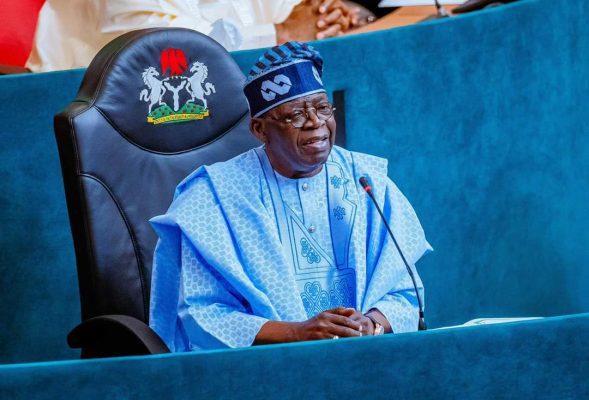
President Bola Ahmed Tinubu
Share

President Bola Tinubu on Friday presented a ₦58.18 trillion 2026 Appropriation Bill to a joint session of the National Assembly of Nigeria, declaring that Nigeria’s economy is showing measurable signs of stabilisation following years of structural pressure.

Tagged “Budget of Consolidation, Renewed Resilience and Shared Prosperity,” the 2026 fiscal plan is aimed at locking in recent macroeconomic gains while translating economic recovery into improved living standards for citizens.

According to the President, Nigeria’s economy expanded by 3.98 per cent in Q3 2025, while inflation moderated significantly, falling to 14.45 per cent in November 2025 from 24.23 per cent in March 2025.

“With stabilising food and energy prices, tighter monetary conditions, and improving supply responses, we expect the disinflationary trend to persist into 2026, barring major supply shocks,” Tinubu said during the presentation on December 19, 2025.

The President highlighted additional positive indicators, including improved crude oil production, rising non-oil revenues, renewed investor confidence, and external reserves climbing to a seven-year high of approximately $47 billion.

Under the proposal, the Federal Government projects ₦34.33 trillion in revenue against planned expenditure of ₦58.18 trillion, resulting in a budget deficit of ₦23.85 trillion, equivalent to 4.28 per cent of GDP. Tinubu emphasised that the fiscal framework is built on realism, prudence, and growth-driven assumptions.

He further assured lawmakers of tighter discipline in budget implementation, stressing that fiscal spending in 2026 would be more outcome-focused.

“Every naira spent or borrowed must deliver measurable public value,” the President said.

Continue Reading

Business & Economy

CBN Governor Reassures U.S. Investors on Nigeria’s Economic Reforms, Stability

Published

on

CBN Governor, Yemi Cardoso
Share

The Governor of the Central Bank of Nigeria (CBN), Mr. Olayemi Cardoso, has reassured United States investors of Nigeria’s commitment to macroeconomic stability and market-driven reforms, amid global economic uncertainty.

Cardoso gave the assurance during high-level engagements with U.S. business leaders and institutional investors in Washington, D.C., including the U.S.–Nigeria Executive Business Roundtable.

Speaking at the forum, the CBN governor said Nigeria remains focused on rules-based economic management, transparent markets, and predictable policy frameworks to restore investor confidence and drive sustainable economic growth.

He highlighted recent reforms in the foreign exchange market, the adoption of orthodox monetary policy measures, ongoing banking sector reforms, and the modernisation of the payments system. According to him, the reforms are aimed at stabilising the economy and supporting private-sector-led development.

The roundtable, convened by the U.S. Chamber of Commerce’s U.S.-Africa Business Center, focused on macroeconomic stabilisation, regulatory clarity, and opportunities to scale bankable projects across key sectors of the Nigerian economy. Discussions also emphasised efforts to deepen commercial and investment ties between Nigeria and the United States.

Commenting on the outcome of the engagement, President of the U.S.-Africa Business Center, Ms. Kendra Gaither, said investors are increasingly prioritising policy credibility and consistency.

She noted that clarity of rules, credible reforms, and disciplined economic management are critical factors driving investor interest, adding that Nigeria’s evolving message of discipline and opportunity is important in a global economy seeking stability and predictability.

Continue Reading

Business & Economy

Tinubu Welcomes Nigeria’s Removal from FATF Grey List, Pledges Continued Financial Reforms

Published

on

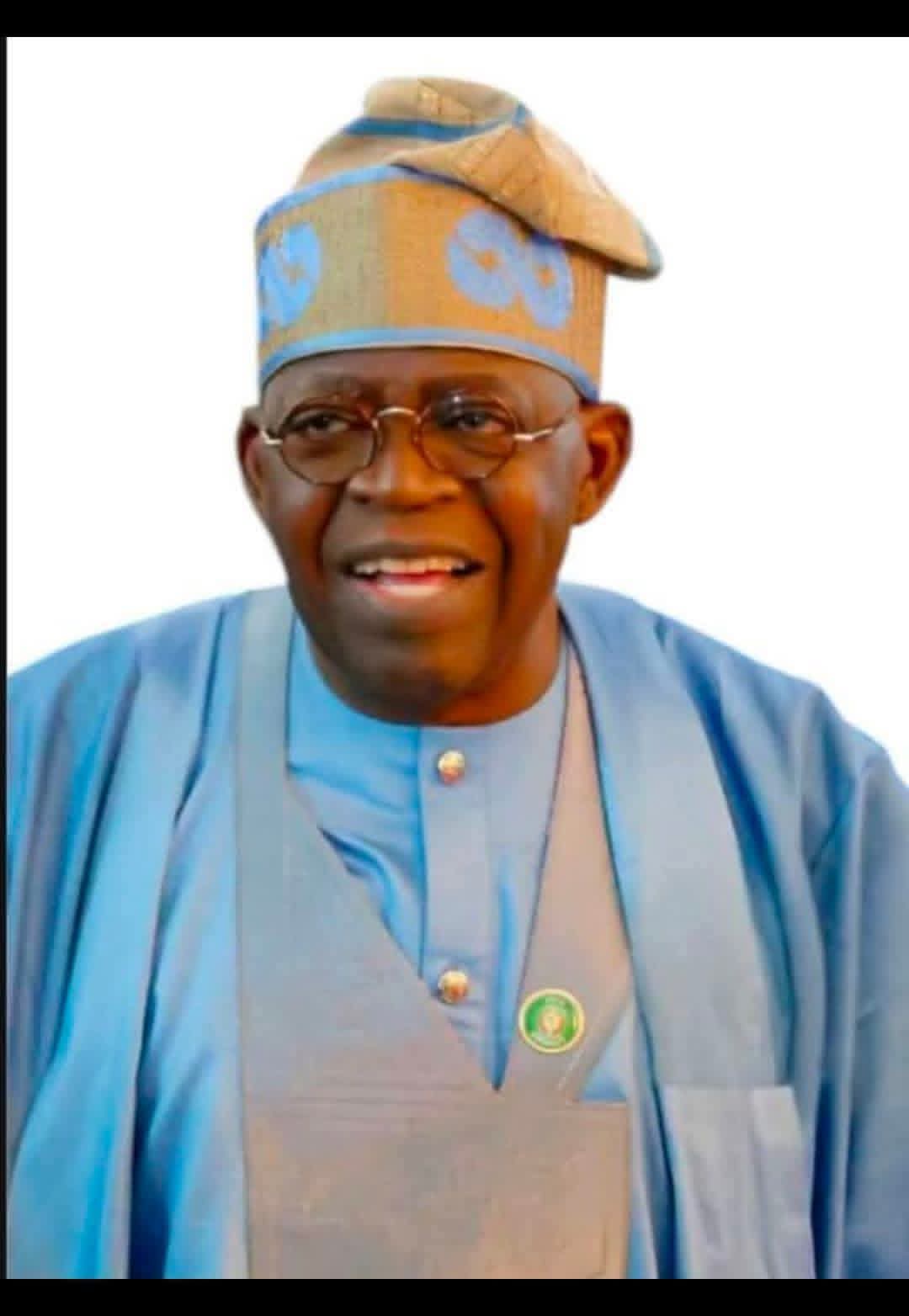
President Bola Tinubu
President Bola Ahmed Tinubu
Share

President Bola Ahmed Tinubu has welcomed the removal of Nigeria from the Financial Action Task Force (FATF) grey list, describing it as a major milestone in the nation’s economic reform and global credibility drive.

The FATF, the world’s foremost body for combating money laundering, terrorist financing, and proliferation financing, announced Nigeria’s delisting on Friday at its plenary session in Paris, France.

The decision formally removes Nigeria from the list of countries under increased monitoring, following the nation’s successful completion of its FATF Action Plan after over two years of sustained reforms and inter-agency coordination.

In a statement issued by his Special Adviser on Information and Strategy, Bayo Onanuga, President Tinubu said the development reflects Nigeria’s progress in strengthening its Anti-Money Laundering and Counter-Financing of Terrorism (AML/CFT) framework.

“Rather than treat our placement on the grey list in 2023 as a setback, we saw it as a call to action,” the President said. “This delisting is a strategic victory for our economy and a renewed vote of confidence in Nigeria’s financial governance.”

The President credited the achievement to far-reaching legal, institutional, and operational reforms implemented under his administration through the Nigerian Financial Intelligence Unit (NFIU), in collaboration with the Attorney-General of the Federation, the Minister of Finance and Coordinating Minister of the Economy, and other key ministries.

Tinubu commended the Director/CEO of the NFIU, Ms. Hafsat Abubakar Bakari, and her team for their diligence and professionalism, as well as the contributions of several ministries, agencies, and private sector representatives who participated in the National Task Force on AML/CFT.

He also acknowledged the support of international partners including France, Germany, the United Kingdom, the United States, the United Nations, and the European Commission, for their technical assistance throughout Nigeria’s reform process.

President Tinubu assured that his administration will sustain and deepen the reforms that led to the country’s delisting.

“This is not just a technical accomplishment,” he said. “It marks the beginning of a new chapter in our financial reform agenda as we continue building a system Nigerians and the world can trust.”

Continue Reading