Connect with us

Parliamentary News

National Assembly Unveils Sweeping Reforms in Electoral Act 2026 Ahead of 2027 Polls

Published

on

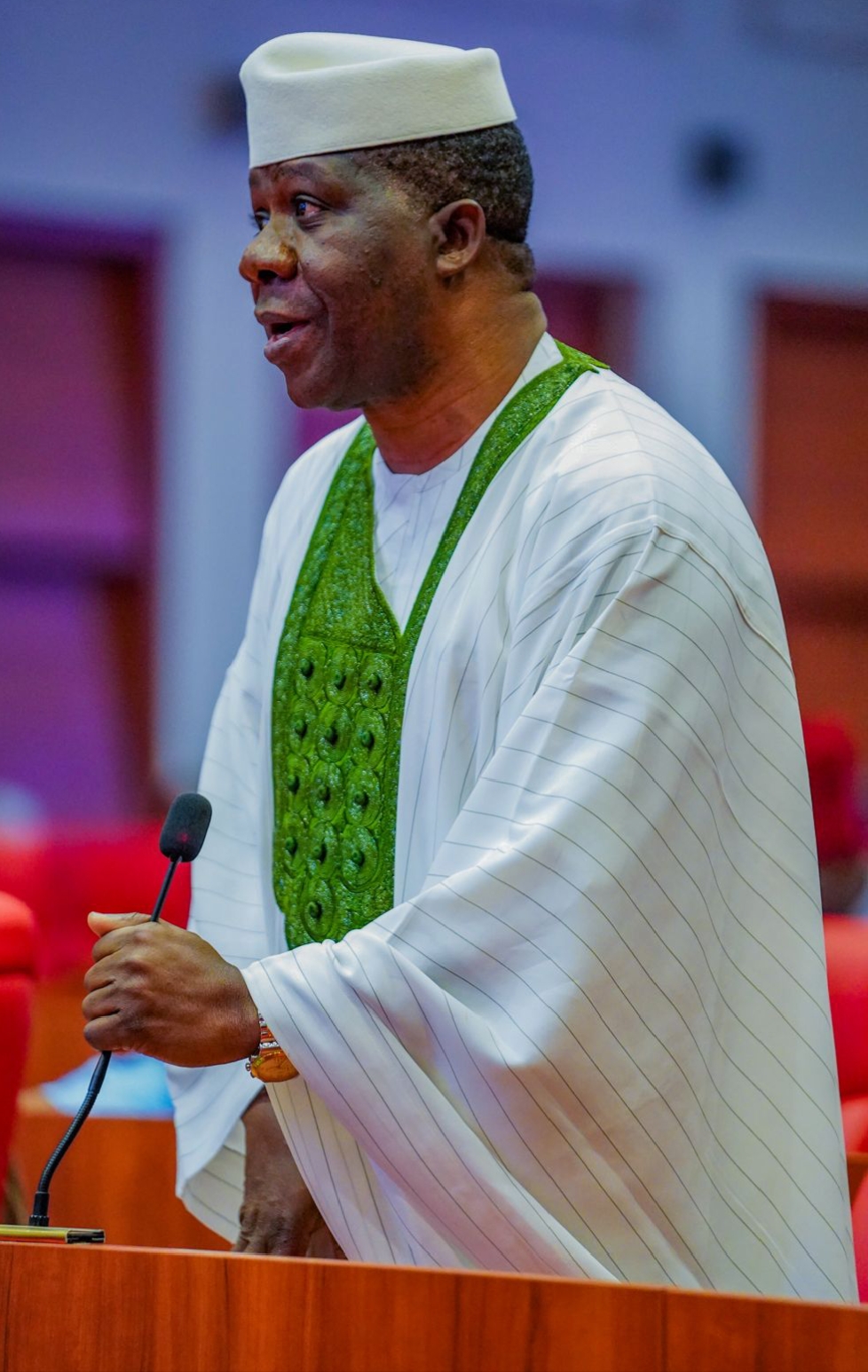
Senate Leader, Senator Michael Opeyemi Bamidele
Share

The National Assembly has rolled out far-reaching reforms under the Electoral Act 2026, describing the new legal framework as a decisive step toward strengthening transparency, accountability and institutional independence in Nigeria’s electoral system ahead of the 2027 general election.

The reforms, which culminated in the signing of the Electoral Bill 2026 into law by Bola Ahmed Tinubu within 24 hours of its transmission, followed two years of consultations involving the legislature, the Independent National Electoral Commission (INEC), the Office of the Attorney-General of the Federation (OAGF), civil society organisations (CSOs) and development partners.

Leader of the Senate, Senator Opeyemi Bamidele, in a statement issued by his Directorate of Media and Public Affairs on Sunday, outlined the key provisions of the Act and defended the speed of presidential assent, insisting that the law was the product of broad-based stakeholder engagement rather than unilateral legislative action.

Two Years of Stakeholder Engagement

According to Bamidele, the making of the Electoral Act 2026 was “a collective work” shaped by sustained input from critical institutions and civic actors.

The National Assembly harmonised different versions of the bill passed by both chambers — particularly on the contentious Clause 60(3) — before transmitting it to the president. Lawmakers said the urgency was necessary to avert any constitutional crisis that could jeopardise preparations for the 2027 elections.

While some CSOs raised concerns about the swift assent, the presidency maintained that democracy thrives on dialogue and consensus-building, noting that most stakeholders had already participated extensively in shaping the legislation.

Financial Autonomy for INEC

A cornerstone of the reform is the creation of a dedicated fund for INEC under Section 3 of the Act. The provision is designed to guarantee the commission’s financial autonomy, operational stability and administrative continuity.

Under the new law, election funds must be released at least six months before a general election. The commission is also empowered to review questionable result declarations made under duress or procedural violations, strengthening its corrective authority.

Lawmakers believe this financial restructuring will insulate INEC from bureaucratic bottlenecks and enhance its institutional independence.

Mandatory Electronic Accreditation and Transmission

The Act entrenches the use of technology in election management.

BVAS for Accreditation

Section 47 mandates presiding officers to deploy the Bimodal Voter Accreditation System (BVAS) or any technological device prescribed by INEC to verify and authenticate voters.

The provision removes ambiguity around voter accreditation and makes technological verification compulsory.

Electronic Transmission to IReV

Section 60(3) mandates the electronic transmission of election results from polling units to INEC’s Result Viewing Portal (IReV). Any presiding officer who willfully frustrates electronic transmission faces six months’ imprisonment or a ₦500,000 fine, or both.

However, Bamidele clarified that IReV remains a transparency portal, not a collation platform. Where electronic transmission fails due to communication breakdown, results may be transmitted using Form EC8A as prescribed by INEC.

Tougher Sanctions and Accountability Measures

The new law stiffens penalties for electoral malpractice:

Two-year imprisonment for Resident Electoral Commissioners (RECs) who withhold certified documents beyond 24 hours after payment (Section 74).

Court-declared winners can be sworn in with a Certified True Copy of judgment if INEC fails to issue a certificate of return (Section 72).

Two-year imprisonment or fines between ₦500,000 and ₦2 million for vote buying, impersonation and result manipulation (Section 125).

₦10 million fine for political parties that fail to submit accurate audited returns (Section 93).

These provisions are aimed at reinforcing accountability across the electoral value chain.

Overhaul of Party Primaries

The Act phases out indirect primaries, retaining only direct and consensus primaries under Section 84. Lawmakers say this will broaden participation among party members and curb excessive monetisation of delegate-based contests.

Crucially, Section 77 mandates political parties to:

Maintain a digital membership register;

Issue membership cards;

Submit the register to INEC at least 21 days before primaries, congresses or conventions.

Any party that fails to comply risks disqualification from fielding candidates.

According to Bamidele, these measures will “deepen internal democracy and reduce the monetisation of politics.”

Revised Campaign Spending Limits

The Act also reviews upward the campaign expenditure ceilings:

Presidential: ₦10 billion (up from ₦5 billion)

Governorship: ₦3 billion (up from ₦1 billion)

Senate: ₦500 million

House of Representatives: ₦250 million

State Assembly: ₦100 million

Area Council: ₦60 million

Councillorship: ₦10 million

Lawmakers argue that the revision reflects inflationary realities while maintaining regulatory oversight.

Inclusion and Electoral Access

The Act introduces additional social safeguards:

Separation of queues for men and women in areas where cultural norms require it (Section 49);

Enhanced support mechanisms for persons with visual impairment (Section 54).

A Consolidation of Electoral Governance

Describing the legislation as a consolidation and refinement of Nigeria’s electoral governance framework, Bamidele said the Act is structured around four pillars:

Financial and operational independence of INEC;

Technological integration with safeguards;

Transparency in collation and declaration;

Stricter penalties and stronger regulation of political parties.

With the Electoral Act 2026 now in force, attention shifts to its implementation. For lawmakers and stakeholders alike, the true test will be whether the reforms translate into more credible, transparent and dispute-resistant elections in 2027 and beyond.

Continue Reading
Click to comment

Leave a Reply

Your email address will not be published. Required fields are marked *

Parliamentary News

Senate Gives NNPCL, CBN, Others 72-Hour Deadline Over Audit Queries

Published

on

Share


The Senate Committee on Public Accounts has issued a 72-hour ultimatum to the Nigerian National Petroleum Company Limited (NNPCL), the Central Bank of Nigeria (CBN), the Niger Delta Development Commission (NDDC), the Nigerian Upstream Petroleum Regulatory Commission (NUPRC), and other agencies to appear before it over unresolved audit queries.

The directive was issued on Monday after officials of the invited agencies failed to honour the committee’s invitation and did not provide any explanation for their absence.

Chairman of the committee, Senator Ibrahim Dankwambo, said the invitations were part of the committee’s constitutional oversight functions and efforts to clear pending audit issues.

He expressed disappointment over the agencies’ failure to appear, noting that the committee had planned to reduce its workload by addressing the outstanding matters.

Committee member, Senator Babangida Hussaini, described the agencies’ absence as disrespectful to the National Assembly, warning that the Senate would not tolerate being taken for granted.

Also speaking, Senator Patrick Ndubueze called for sanctions against the defaulting agencies, arguing that they had no justification for ignoring the committee’s invitation without any formal explanation.

Following deliberations, the committee resolved to give the affected agencies a final 72-hour deadline to appear before it on August 6, warning that failure to comply could lead to further legislative action.

Continue Reading

Parliamentary News

Senate Confirms Abayomi Fasina as Non-Career Ambassador Despite Heated Debate Over Sexual Misconduct Allegations

Published

on

Senate in Session
Share


The Senate on Thursday confirmed the nomination of Professor Abayomi Sunday Fasina, former Vice-Chancellor of the Federal University Oye-Ekiti (FUOYE), as a Non-Career Ambassador of the Federal Republic of Nigeria, despite a heated debate over allegations of sexual misconduct previously levelled against him.

The confirmation followed the presentation and adoption of the report of the Senate Committee on Foreign Affairs, which recommended Fasina’s nomination after screening him and reviewing petitions submitted both in support of and against his appointment.

Presenting the committee’s report on behalf of its Chairman, Senator Sani Bello, Senator Simon Lalong (Plateau South) said the committee found no legal or constitutional grounds to reject the nominee.

According to Lalong, the committee carefully considered the petitions challenging Fasina’s nomination and noted that the allegations had already been investigated by the FUOYE Governing Council, the Nigeria Police Force and the Department of State Services (DSS).

He stated that all the relevant authorities cleared the nominee after finding the allegations to be unsubstantiated.

“The committee received petitions against the nominee as well as counter-petitions supporting his nomination. The accusations were investigated by competent authorities, including the University Governing Council and the Nigerian Police, which found the allegations to be false,” Lalong told the Senate.

He added that Fasina also received security clearance from the DSS and the police, while his record of service in academia further strengthened the committee’s recommendation.

“The committee had no doubt in recommending Professor Abayomi Sunday Fasina for confirmation as a Non-Career Ambassador of the Federal Republic of Nigeria,” he said.

However, the recommendation sparked strong opposition from some senators during plenary.

Senator Adams Oshiomhole (Edo North) urged the Senate to suspend consideration of the nomination until all allegations against Fasina were conclusively resolved by the courts.

While acknowledging the constitutional principle of presumption of innocence, Oshiomhole argued that confirming the nominee amid such allegations could undermine public confidence and send the wrong message, particularly to women.

“I am aware, and it is public knowledge, that this gentleman has been accused by two women. Nobody is saying he is guilty; he deserves to be presumed innocent until proven guilty. But, as a matter of sensitivity, I believe the Senate should allow him to clear himself before the courts before endorsing him,” Oshiomhole said.

Senator Cyril Fasuyi (Ekiti North), who represents the constituency where FUOYE is located and also serves on the Foreign Affairs Committee, also expressed reservations about the nomination.

Fasuyi said he was familiar with the controversy surrounding the case and insisted that justice had not been served.

“I know about this case. I also know about the woman involved. She did not get justice. This is a very sensitive issue that we cannot simply sweep under the carpet,” he said.

He subsequently called for further investigation by the Senate Committee on Rules and Business before any final decision on the nomination.

Responding to the concerns, Senator Lalong maintained that the committee had not been presented with any documentary evidence showing that Fasina was standing trial before any court.

He argued that allegations alone could not serve as sufficient grounds for rejecting a nominee who had been cleared by the relevant investigative authorities.

“It is not every allegation that will stop the proceedings of the Senate. Until a court of competent jurisdiction delivers judgment, an allegation does not amount to guilt. If a court eventually convicts him, appropriate action can then be taken,” he said.

Senate President Godswill Akpabio also defended the committee’s recommendation, stressing that the Senate was constitutionally bound by the principle of presumption of innocence enshrined in Section 36(5) of the 1999 Constitution.

Akpabio noted that the complainant at the centre of the allegations neither appeared before the committee nor submitted any evidence during the screening process.

“The report before us states that the nominee is highly qualified, articulate and recommended for confirmation. A man is presumed innocent until the contrary is proved. We cannot fail to discharge our constitutional responsibility merely because allegations have been made against him,” the Senate President said.

Supporting the committee’s recommendation, Senator Abdul Ningi (Bauchi Central) cautioned lawmakers against turning the Senate into a forum for determining matters beyond its constitutional mandate.

He explained that the responsibility of the screening committee was limited to assessing a nominee’s qualifications, competence and whether the individual had any criminal conviction, rather than adjudicating on unresolved allegations.

“The committee is not constitutionally empowered to investigate personal allegations outside its mandate. Matters of that nature remain within the jurisdiction of the courts and relevant investigative agencies,” Ningi stated.

As deliberations continued, Senator Fasuyi attempted to withdraw his signature from the committee’s report, but Akpabio ruled that such a move could not be made during plenary.

The Senate President advised him to follow the appropriate parliamentary procedure by presenting an affidavit when the Votes and Proceedings are considered.

Following the debate, Akpabio put the committee’s recommendation to a voice vote.

Although the initial response from lawmakers appeared divided, the Senate President ruled that the “ayes” had carried the motion. After repeating the vote, he again declared that the majority supported the confirmation.

He thereafter announced that the Senate had approved the nomination of Professor Abayomi Sunday Fasina as a Non-Career Ambassador and High Commissioner of the Federal Republic of Nigeria.

Continue Reading

Parliamentary News

Go After Other Bandits, Terrorists Nationwide, Senate Tells FG

Published

on

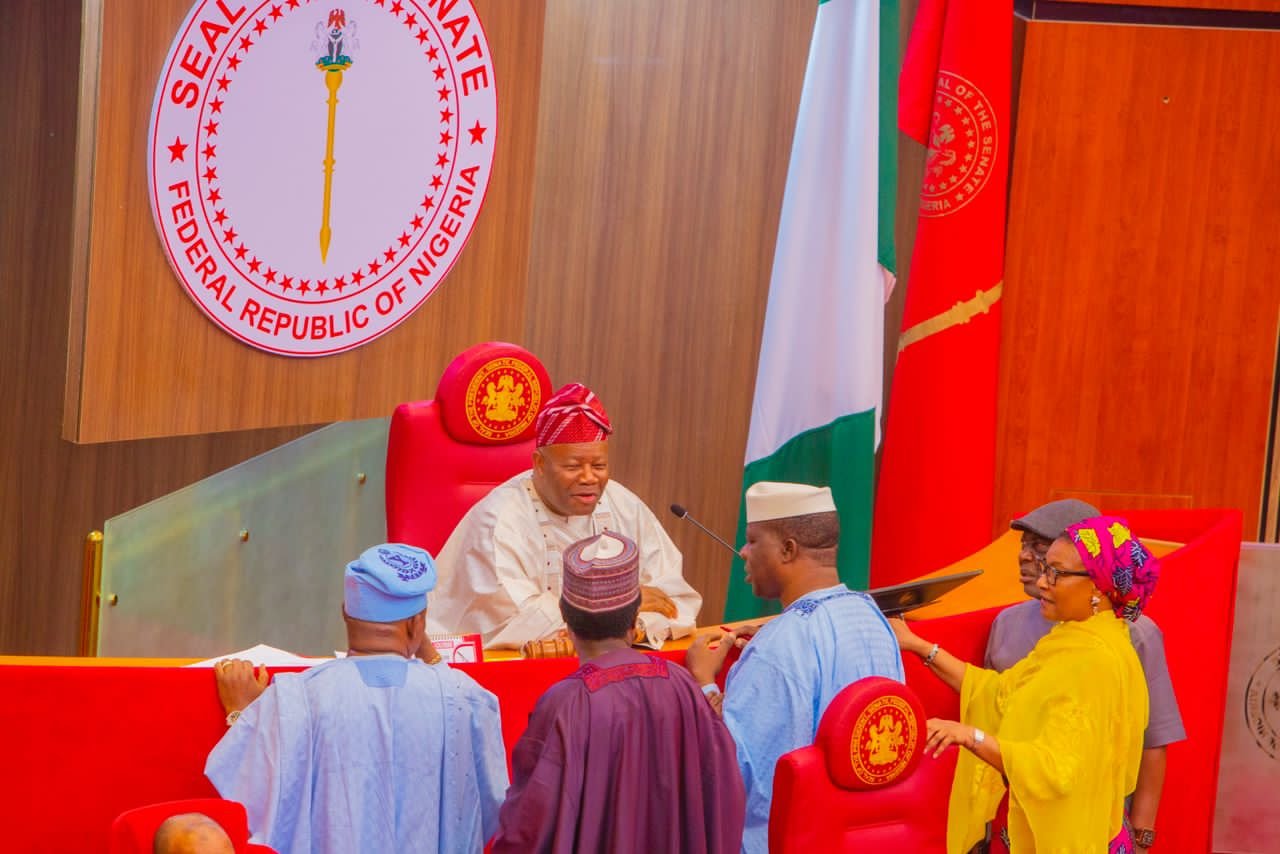
Senate President Gods will Akpabio and with Senate Leader Opeyemi Bamidele and Other Senators
Share

Challenges Federal Government to pay fallen heroes’ benefits, insurance claims and other entitlements;

Commends President Tinubu, Armed Forces and security agencies for successful rescue of abducted Oyo pupils and teachers


The Senate on Tuesday urged the Federal Government to sustain and intensify military and intelligence operations against terrorists, kidnappers, bandits and other criminal elements across the country, following the successful rescue of abducted pupils and teachers in Oriire Local Government Area of Oyo State.

The upper legislative chamber also called on the Federal Government to ensure the immediate payment of statutory death benefits, insurance claims, pensions and other welfare entitlements to the families of security personnel who lost their lives during the rescue operation.

The resolutions were adopted after the Senate considered a motion sponsored by the Leader of the Senate, Senator Opeyemi Bamidele, and co-sponsored by 108 other senators, commending President Bola Ahmed Tinubu for his leadership and commitment to strengthening Nigeria’s security architecture.

Leading the debate, Senator Bamidele recalled that terrorists invaded schools in Oriire Local Government Area, abducting 39 pupils and seven teachers, an incident that plunged the victims, their families and the nation into weeks of anxiety, fear and uncertainty.

He described the attack as a disturbing expansion of organised criminal activities into the South-West and a direct assault on every child’s constitutional right to education in a safe and secure environment.

According to him, President Tinubu immediately directed the Armed Forces and all relevant security and intelligence agencies to deploy every available lawful military asset to secure the unconditional release of the victims.

Bamidele explained that the Nigerian Armed Forces, working closely with intelligence and other security agencies, carried out a painstaking, intelligence-driven and highly coordinated rescue mission that lasted over 50 days before the victims were successfully rescued on Friday, July 10, bringing an end to 56 days of captivity.

He noted that the operation also led to the arrest of eight terrorists, while several others were neutralised during the military offensive.

The Senate Leader, however, disclosed that the operation came at a heavy cost, as Lieutenant F. A. Isaac of the Nigerian Army, Private Silas Musa of the 81 Battalion, Nigerian Army, and Sergeant Abena John Jerome of the Nigeria Police Force paid the supreme sacrifice while rescuing the abducted pupils and teachers.

He also revealed that Lance Corporal Adamu Hussain of the 81 Battalion sustained injuries during the operation.

Bamidele lamented that although one of the abducted teachers was killed during the period of captivity, the successful rescue of the remaining victims without further loss of life represented a remarkable achievement deserving national recognition.

He said the operation had restored hope and confidence among Nigerians, particularly parents and school communities, while sending a strong message that criminal elements would find no safe haven anywhere in Nigeria.

Chairman of the Senate Committee on Aviation, Senator Fatai Buhari, who seconded the motion, described the day of the abduction as a “Black Friday” for his senatorial district.

He recalled visiting the rescued pupils and teachers at the hospital immediately after their rescue, noting that while some of the victims were initially placed on oxygen support and intravenous drips, they showed remarkable improvement within 24 hours.

In its resolutions, the Senate urged the Federal Government to sustain and intensify military and intelligence operations against terrorists, kidnappers, bandits and other criminal groups by providing modern equipment, advanced surveillance technology, improved intelligence capabilities, better logistics and enhanced welfare packages for members of the Armed Forces and other security agencies.

The Senate also called for the prompt payment of all statutory death benefits, insurance claims, pensions and other welfare entitlements due to the families of the fallen security personnel, while urging the government to continue strengthening the training, equipment and operational capacity of security agencies.

The lawmakers further appealed to Nigerians to continue supporting the Armed Forces and other security agencies through timely intelligence, cooperation and patriotism in the collective fight against insecurity.

The Senate paid glowing tribute to Lieutenant F. A. Isaac, Private Silas Musa and Sergeant Abena John Jerome for making the ultimate sacrifice in defence of innocent Nigerians, and commended President Bola Ahmed Tinubu for what it described as his decisive leadership, strategic direction and unwavering commitment to improving Nigeria’s security architecture.

Continue Reading