…Adjourns till Nov. 9
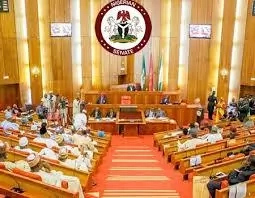
The Senate on Wednesday adjourned plenary till November 9, 2021, to enable its Committees begin budget defense sessions with Ministries, Departments and Agencies.
The upper chamber suspended sitting after concluding debate on the 2022 Appropriation Bill.
Lawan, in his remarks moments before the chamber adjourned, tasked committees to thoroughly scrutinize budget estimates in the 2022 Appropriation Bill before the National Assembly.
He said, “The Senate has hereby suspended plenary in order to consider the budget.
“There will be budget defense from Monday until November 9, when we resume plenary.
“Like we did before, we must remain very critical of the proposals presented to us by the executive arm of government.
“We must ensure equity in the distribution of projects. We must ensure economy in the application of funds. We must question any possible overpricing of items.
“[And] we should be able at the end of the day to have a budget that covers the interest of all the communities that we have in this and all parts of the country.”
Earlier, a total of 42 Senators took turns to make their contributions during the second and final day of debate on the 2022 Appropriation Bill.
Among those who spoke are Senators Aliyu Sabi Abdullahi, Adelere Oriolowo, Patrick Akinyelure, Ibrahim Gobir, Smart Adeyemi, Ibrahim Abdullahi, George Thompson Sekibo, Christopher Ekpenyong, Betty Apiafi, Mohammed Musa, Michael Opeyemi Bamidele, Michael Nnachi, and Yahaya Oloriegbe.
Others are: Matthew Urhoghide, Francis Fadahunsi, Mukhail Adetokunbo Abiru, Anayo Rochas Okorocha, Oyelola Ashiru, Jarigbe Agom Jarigbe, Hezekiah Dimka, Binos Dauda Yaroe, Chukwuma Frank Ibezim, Olalekan Mustapha, Chukwuka Utazi, Abba Patrick Moro, Danladi Sankara, and Isah Jibrin.
Contributing to the debate on the 2022 Appropriation Bill, Senator Ibrahim Danbaba (PDP, Sokoto South), underscored the need for the federal government to include Public-Private Partnership as a way to fund the provision of critical infrastructure needed for economic development.
Senator Smart Adeyemi (APC, Kogi West), called for the urgent diversification of the economy through mining, adding that there are abundant mineral resources yet to be exploited by the federal government.
Senator George Thompson Sekibo (PDP, River East) advised the Central Bank of Nigeria to come up with policies that would help stabilize the country’s exchange rate over a period of time.
He also lamented that the implementation of capital projects in the 2022 budget proposal were tied to borrowing.
Senator Christopher Ekpenyong (PDP, Akwa Ibom North West), called for the scrutiny and tinkering of the budget estimates by the National Assembly, to ensure that it reflects the needs and meets the expectations of Nigerians.
Senator Betty Apiafi (PDP, Rivers West), protested the exclusion of some states as beneficiaries of the loan to be sourced by the federal government.
According to the lawmaker, some states such as Rivers State do not stand to benefit from the loan through projects, but are among those to repay the loan obtained by Nigeria.
She also called on the federal government to give special attention to the power sector, adding that doing so would attract and promote private investments.
On his part, Senator Sani Musa (APC, Niger East) described the 2022 budget outlook as “good”, noting that “Nigeria’s debt level is sustainable”.
The lawmaker urged the federal government to ensure that borrowed funds are applied to critical projects.
According to him, focus must also be given to revenue generation, as well as the examination of the country’s tax framework.
He noted that doing so would ensure strict compliance by taxpayers and boost Nigeria’s revenue collection.
The Senate President, Ahmad Lawan, referred the 2022 Appropriation Bill after scaling second reading to the Committee on Appropriations for further work.
The Committee which is chaired by Senator Jibrin Barau was given four weeks to report back to the upper chamber.
The Senate President, in his concluding remarks said, “I want to join all those that have commended Mr. President for presenting the Appropriation Bill 2022 in good time.
“This is one of the very important reasons why we are able to have sufficient time to consider the budgets (2020 and 2021) before the 2022 Appropriation bill was presented.
“I want to also Senators for the sacrifice in processing, consideration and passage of the 2020 and 2021 Appropriation Acts.
“That devotion, commitment and dedication certainly saw us succeed in passing the previous bills.
“I’m sure that we are ready to repeat the feat of passing the appropriation bill 2022 before the end of December.
“Distinguished colleagues, I agree with those of us who raised the issue of revenue generation, collection and remittances to the coffers of the federal government.
“The agencies that are supposed to collect and remit revenues would have to be tasked, and this 2022 appropriation bill shows we have over 400 billion coming especially from these agencies as additional revenues. We need to do better.
“Government agencies must remit revenues that they generate. We need to also invest in our people, dedication for our youth particularly and, of course, health.
“Distinguished colleagues, borrowing like most of us here said, is not bad. What we need to do is to ensure that what we borrow is prudently deployed in those areas of capital infrastructural development.
“The two or three committees that are oil related – Petroleum Upstream and Petroleum Downstream and Gas – need to be very alert to the implementation of the Petroleum Industry Act.
“This is very important because this Act that we passed here is to transform the Petroleum Industry, and at this formative age of the transformation, there is need for us to be very vigilant and oversight very closely to ensure that the taking off is successful.
“Our oversight as Committees must be very purposeful and at all times for the sole reason of ensuring that government funds are properly and prudently applied to the projects appropriated for.
“Finally, I want to commend the entire National Assembly for ensuring that the previous budgets were passed in good time and, of course, the assent was also the same.
“The implementation of 2020 budget was 100 percent. Today, the implementation of the 2021 is about sixty percent. We want to see a repeat of the 2020 implementation, so that we also have 100 percent at the end of the day in December.
“This is very important because we know that Nigeria came out of recession, and in fact achieved a GDP growth of over five percent because of the implementation of the 2020 funds appropriated.”