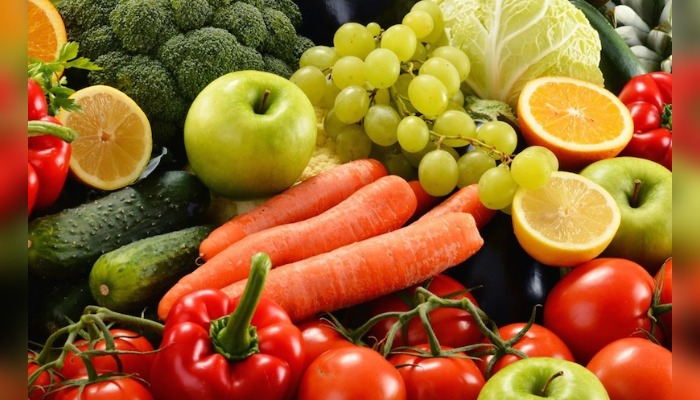
This will open your eyes to the full benefits of eating fruits!
*Prof Anugweje has been treating terminal ill Cancer patients by an *”unorthodox” way and many patients recover. He is also a sports medicine specialist.*
He insists that all athletes eat fruits on empty stomach.
Before he used solar energy to clear the illnesses of his patients, he believes on natural healing in the body against illnesses. See his article below.
It is one of the strategies to heal cancer. As of late, my success rate in curing Cancer is about 80%.
Cancer patients shouldn’t die. The cure for cancer is already found – it’s in the way we eat fruits.
It is whether you believe it or not.
I am sorry for the hundreds of Cancer patients who die under the conventional treatments.*
*EATING FRUITS*
We all think eating fruits means just buying fruits, cutting it and just popping it into our mouths.
It’s not as easy as you think. It’s important to know how and when to eat the fruits.
*What is the correct way of eating fruits?*
*IT MEANS NOT EATING FRUITS AFTER YOUR MEALS!*
FRUITS SHOULD BE EATEN ON AN EMPTY STOMACH:*
If you eat fruits on empty stomach, it will play a major role to detoxify your system, supplying you with a great deal of energy for weight loss and other life activities.*
*FRUIT IS THE MOST IMPORTANT FOOD.*
Let’s say you eat two slices of bread and then a slice of fruit.
*The slice of fruit is ready to go straight through the stomach into the intestines, but it is prevented from doing so due to the bread taken before the fruit.*
In the meantime, the whole meal of bread & fruit rots and ferments and turns to acid.
The minute the fruit comes into contact with the food in the stomach and digestive juices, the entire mass of food begins to spoil.
*So please eat your fruits on an empty stomach or before your meals!*
You have heard people complaining :
Every time I eat watermelon I burp, when I eat durian my stomach bloats up, when I eat a banana I feel like running to the toilet, etc.. etc..
*Actually all this will not arise if you eat the fruit on an empty stomach.*
The fruit mixes with the putrefying of other food and produces gas and hence you will bloat !
*Greying hair, balding, nervous outburst and dark circles under the eyes all these will NOT happen if you take fruits on an empty stomach.*
*There is no such thing as some fruits, like orange and lemon are acidic, because all fruits become alkaline in our body, according to Dr. Herbert Shelton who did research on this matter.*
If you have mastered the correct way of eating fruits, you have the SECRET of beauty, longevity, health, energy, happiness and normal weight.
When you need to drink fruit juice – drink only fresh fruit juice, NOT from the cans, packs or bottles.
*Don’t even drink juice that has been heated up.*
*Don’t eat cooked fruits because you don’t get the nutrients at all.*
You only get its taste.
Cooking destroys all the vitamins.
But eating a whole fruit is better than drinking the juice.
If you should drink the fresh fruit juice, drink it mouthful by mouthful slowly, because you must let it mix with your saliva before swallowing it.
*You can go on a 3-day fruit fast to cleanse or detoxify your body.*
*Just eat fruits and drink fresh fruit juice throughout the 3 days.*
And you will be surprised when your friends tell you how radiant you look !
*KIWI fruit:*
Tiny but mighty.
This is a good source of potassium, magnesium, vitamin E & fiber. Its vitamin C content is twice that of an orange.
*APPLE:*
An apple a day keeps the doctor away?
Although an apple has a low vitamin C content, it has antioxidants & flavonoids which enhances the activity of vitamin C thereby helping to lower the risks of colon cancer, heart attack & stroke.
*STRAWBERRY: Protective Fruit:*
Strawberries have the highest total antioxidant power among major fruits & protect the body from cancer-causing, blood vessel-clogging and free radicals.
*ORANGE: Sweetest medicine.*
Taking 2-4 oranges a day may help keep colds away, lower cholesterol, prevent & dissolve kidney stones as well as lessens the risk of colon cancer.
*WATERMELON:*
Coolest thirst quencher. Composed of 92% water, it is also packed with a giant dose of glutathione, which helps boost our immune system.
They are also a key source of lycopene the cancer fighting oxidant.
Other nutrients found in watermelon are vitamin C & Potassium.
*GUAVA & PAPAYA:*
Top awards for vitamin C. They are the clear winners for their high vitamin C content.
Guava is also rich in fiber, which helps prevent constipation.
Papaya (pawpaw) is rich in carotene; this is good for your eyes.
*Drinking COLD water or drinks after a meal = CANCER.*
Can you believe this ?
For those who like to drink cold water or cold drinks, this article is applicable to you.
It is not nice to have a cup of cold water or cold drinks after a meal.
However, the cold or drinks will solidify the oily stuff that you have just eaten.
It will slow down the digestion.
Once this ‘sludge’ reacts with the acid, it will break down and be absorbed by the intestine faster than the solid food.
It will line the intestine.
*Very soon, this will turn into FATS and lead to CANCER!*
*It is best to drink hot soup or warm water after a meal.*
*Let’s be careful and be aware. The more we know the better chance we could survive.*
Prof Ken Anugweje, University of Port Harcourt, Nigeria