
News
MIRACULOUS SANWO-OLU COMMISSIONS 150-CLASSROOM BLOCKS & HOSTELS IN 15 LAGOS SCHOOLS IN ONE DAY .










…Says Ekiti’ll take Tinubu’s re-election seriously
…As monarchs, youths pledge more support for governor
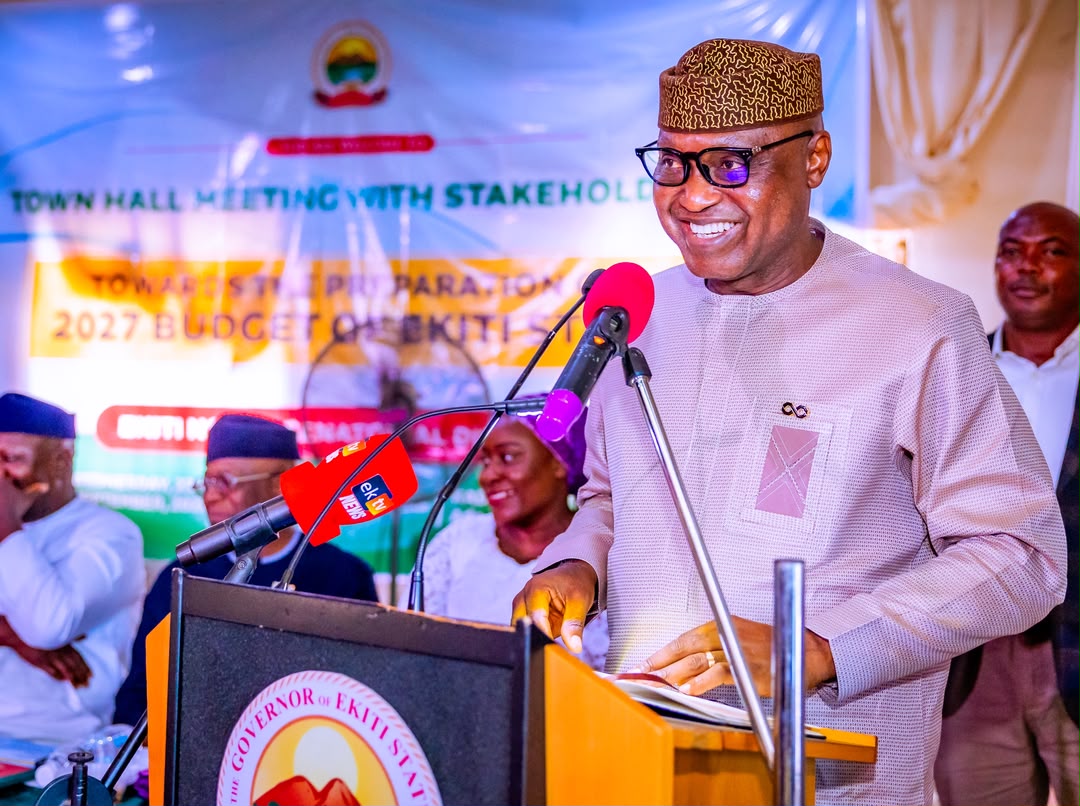
Ekiti State Governor, Mr Biodun Oyebanji, says projects to be executed during his second term will be strategically targeted at boosting commerce, enhancing productivity and stimulating sustainable business growth across the state.
The Governor also says Ekiti State will take the re-election bid of President Bola Ahmed Tinubu in the 2027 presidential election seriously, promising increased mobilisation to improve the President’s votes in the state.
Oyebanji spoke on Wednesday at a Town Hall Meeting with stakeholders from Ekiti North Senatorial District as part of consultations ahead of the 2027 Budget, held in Ifaki-Ekiti.
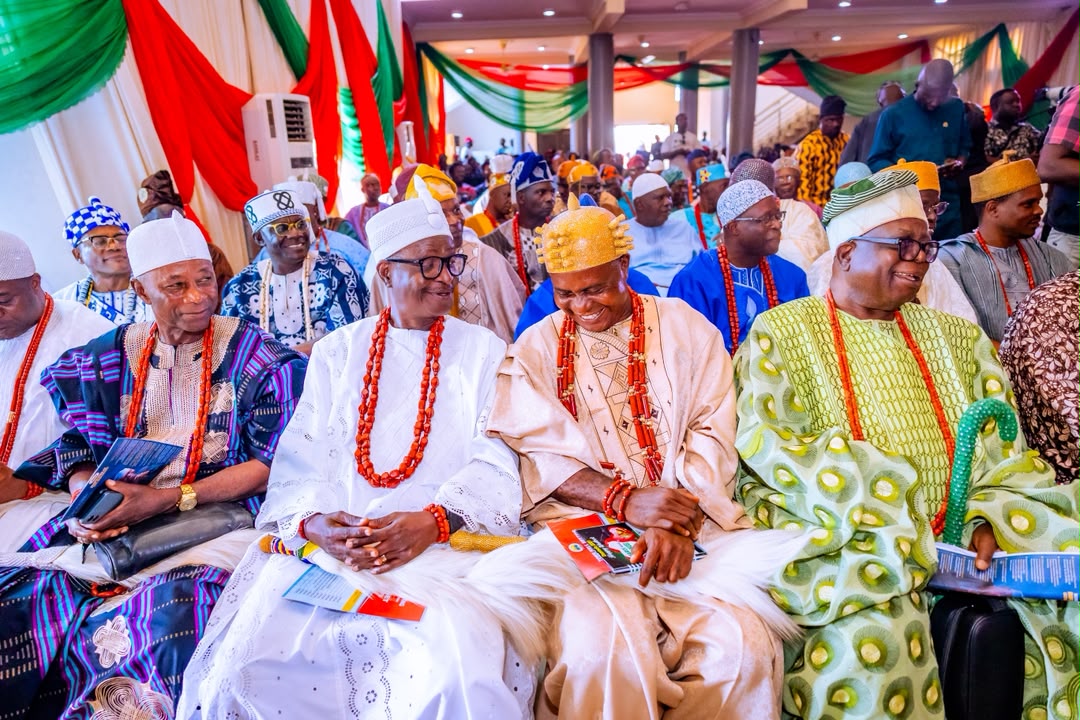
At the meeting, traditional rulers, community leaders, youths and other stakeholders pledged stronger support for the Governor’s second-term administration, which begins on October 16, 2026, to enable him to deliver on his shared prosperity agenda.
Oyebanji said his administration would sustain its consultative approach to governance in the second term, with greater emphasis on public participation and inclusive development.
He said government investments would be channelled strategically into critical sectors, including healthcare, electricity, roads and water supply, to improve living standards and enhance economic productivity.
The Governor said: “In our second term, whatever we are going to do must add value, because resources are limited. There must be value addition. We must catalyse productivity and ensure our people are productive.
“It is only when there is value that artisans like welders and auto mechanics can thrive and become prosperous.”
On electricity, Oyebanji said his administration had expanded access to power in some communities, but noted that existing legal provisions limiting states largely to electricity generation had affected efforts to fully address distribution challenges.
He reaffirmed his commitment to participatory governance, saying inputs from communities would continue to guide government’s decisions on project prioritisation.
“Governance is about the people. We are what we are today because of you. You gave us your mandate, and we must continue to seek your counsel in delivering good governance,” he said.
The Governor also commended traditional rulers for their support, particularly in intelligence gathering, which he said had contributed to improved security across the state.
He, however, urged residents to remain vigilant and continue to support security agencies with useful information.
On the 2027 presidential election, Oyebanji called on Ekiti voters to reciprocate what he described as President Tinubu’s support for the state by increasing the votes delivered to the President.
He cited federal appointments and infrastructure projects benefiting the state as evidence of the Federal Government’s attention to Ekiti.
“We must show appreciation. It will not be enough to repeat previous figures. We must do more in the next election,” he said.
On infrastructure, the Governor disclosed that collaboration with the Federal Government had facilitated the award of major road projects, including the Ado-Ijan-Ilumoba-Ikole and Ado-Aramoko-Ita-Ore roads.
He added that other critical roads across the state would be addressed subsequently.
Providing sectoral updates, the Commissioner for Health, Dr Oyebanji Filani, said more than 300 nurses and 1,500 health assistants had been recruited over the past four years.
He said the government had also upgraded several primary and secondary healthcare facilities, while three new general hospitals had been approved for Ipao, Ikogosi and Awo-Ekiti.
Also speaking, the Commissioner for Infrastructure and Public Utilities, Professor Bolaji Aluko, disclosed that more than 500 boreholes had been constructed across the state, while an additional 110 had been proposed to ensure equitable distribution of water.
In their remarks, traditional rulers and community representatives from Ekiti North Senatorial District commended the Governor for his development efforts and highlighted priority areas for consideration in the 2027 Budget.
Their requests included improved roads, electricity, water supply, healthcare and security.
Speaking on behalf of Ikole Local Government, the Alaaye of Oke Ayedun, Oba Femi Aribisala, appealed to the government to urgently intervene in the areas of roads, water and electricity.
He said poor road access and inadequate electricity supply were hindering economic activities and development in the area.
Representatives of Moba Local Government and the Obaleo of Erinmope, Oba Sunday Aniyi; Ido/Osi Local Government and the Olojudo of Ido-Ekiti, Oba Ayorinde Ilori-Faboro; as well as Oye Local Government and the Onisan of Isan-Ekiti, Oba Gabriel Adejuwon, also called for increased attention to roads, electricity, security and water supply in the 2027 Budget.
Dignitaries at the event included the Deputy Governor, Chief (Mrs) Monisade Afuye; Secretary to the State Government, Professor Habibat Adubiaro; Chief of Staff, Mr Oyeniyi Adebayo; Head of Service, Dr Folakemi Olomojobi; members of the State Executive Council; local government chairmen; traditional rulers; political leaders; and representatives of various community groups.



Benin-Asaba Road to Be Redesigned on Concrete Pavement
Share The Minister of Works, Dave Umahi, has said the 136-kilometre Benin-Asaba Road will be redesigned with reinforced concrete pavement...


NECO Releases 2026 SSCE Results, 58.67% Get Five Credits Including English, Maths
Share The National Examinations Council (NECO) has released the results of the 2026 Senior School Certificate Examination (SSCE) Internal, with...

Ogun, DP World Seal $7bn Port, Blue Marine SEZ Investment Deal
Share The Ogun State Government and DP World MEA FZE have signed Memoranda of Understanding (MoUs) for the development of...

FG Cuts Interest Rate on Late Tax Payments, New Order Takes Effect October 1
ShareThe Federal Government has introduced a new tax administration order reducing the interest rate charged on late payment of taxes....

Bamidele: Nigeria’s Full Potential Depends on Meaningful Gender Inclusion
Share The Leader of the Senate, Senator Opeyemi Bamidele, has called for greater and more meaningful inclusion of women in...