Connect with us

News

LASG LAUNCHES 20-YEAR TOURISM MASTER PLAN, POLICY

Published

on

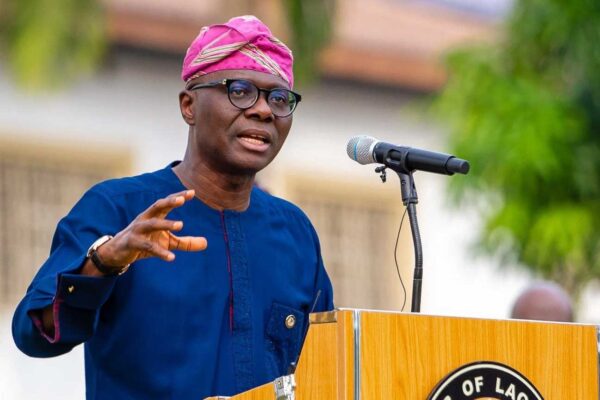
Lagos State Governor, Babajide Sanwo-Olu
Lagos State Governor Babajide Sanwo-Olu
Share


A Tourism Master Plan and Policy which seeks to make Lagos State one of the top-five tourism hubs in Africa has been presented to the public at the Adeyemi-Bero Auditorium, Alausa, Ikeja.

Speaking at the presentation, the State Governor, Mr. Babajide Sanwo-Olu, described the event as a critical step to further unlock aspects of Lagos towards becoming Africa’s tourism giant.
He said: “Since our assumption of office, over two years ago, we have taken decisive steps to explore the abundant possibilities in this very critical sector by giving the practitioners and key stakeholders an opportunity to be directly involved in each of our policies”.

Sanwo-Olu, represented at the event by his Deputy, Dr. Kadri Obafemi Hamzat, stated that the tourism potentials of the State are yet to be fully harnessed, as such the policy is an attempt to unlock these potentials.
Speaking further, the Governor disclosed that the event is evidence of his administration’s commitment to inclusiveness and stakeholder partnership since the tourism sector thrives on Public-Private Partnership and collaboration.

He disclosed that the policy was developed with the consent of relevant stakeholders in the tourism industry, noting that it was reviewed to reflect the policy thrust and plans for Entertainment and Tourism pillar of the T.H.E.M.E.S Agenda.

“The Launch speaks of our sincere intention to better the lot of Lagosians, promote ease of doing business, attract more tourists to our State and domestic tourism activities in the Centre of Excellence”, he said.

According to him, the policy document will direct efforts in the tourism sector in strategic areas, namely: Culture and Heritage; Film, Art and Entertainment; Business and Meetings, Incentives; Conferences and Entertainment; Beach and Leisure; Nature and Adventure, and Medical and Wellness.

Sanwo-Olu averred that the document will help in the attainment of a robust execution and implementation of short, medium and long-term plans in different areas and aspects of Tourism activities in alignment with the vision to revamp the tourism sector holistically, adding that the waterways and beaches as well as restaurants, recreational parks and relaxation centres will be exposed at home and abroad for tourism purposes.

While stating that the event signals a new narrative in the sector, the Governor expressed confidence that the public presentation of the Lagos Tourism Master Plan and Policy is one that all stakeholders in the sector have been yearning for and hoping to have for implementation.

Earlier in his goodwill message, the Minister for Information and Culture, Alhaji Lai Mohammed, who was represented at the event by the Director-General, Nigerian Tourism Development Corporation (NTDC), Mr. Folorunsho Coker said it is time for all tiers of government in the country to partner on issues relating to tourism.

He said, “This is the time for collaboration and not a competition between all tiers of government, if there is competition between members of the State and Federal Government on issues relating to tourism the progress will be distorted”.

While noting the need for alignment of policies in the area of taxation and legislation, the Minister stated that the Lagos economy can sustain local tourism, tasking journalists on responsible reportage so as not to devalue the State’s claims to a position of value.

He, however, urged the government to harness the tourism potentials of Lagos, being the heartbeat of Nigeria and Sub-Saharan Africa.

In her address, the Commissioner for Tourism, Arts and Culture, Pharm. Uzamat Akinbile-Yusuf, stated that the Master Plan will further transform Lagos into a major African tourism and entertainment hub by exploring and promoting the potentials that abound in the State, as well as integrating the thriving Entertainment and Arts industry as a viable platform to attract visitors and create jobs in Lagos State.

She added that the goal is to generate tourism revenue for business and government, which will lead to job creation, enhance the quality of life for Lagosians, align with the State’s development plans and domesticate tourism in Lagos.

The Special Adviser to the Governor, Mr. Solomon Bonu, remarked that the Master Plan and Policy are being conceived to provide a more holistic approach to the implementation of tourism activities across the State, such that there will be uniformity and orderliness in the sector.

He stated that in the course of the compilation, the Ministry of Tourism, Art and Culture had ensured that relevant stakeholders were involved from the inception of compilation and review of the documents up till the final stage.

Bonu further disclosed that there is a plan in place by the Ministry to train 500 youths from the five IBILE Divisions of the State as Tour Guides, adding that the Ministry is also training creative practitioners under its Lagos State Creative Industry Initiative (LACI) and members of Tourism Clubs to meet the needs of tourists in the sector.

Continue Reading
Click to comment

Leave a Reply

Your email address will not be published. Required fields are marked *

News

Bamidele: 2026 Electoral Act Reflects Stakeholders’ Consensus, Not Legislative Imposition

Published

on

Senate Leader, Senator Michael Opeyemi Bamidele
Share

The Leader of the Senate, Opeyemi Bamidele, has stated that the provisions of the 2026 Electoral Act were the outcome of broad consultations with stakeholders rather than unilateral decisions by the National Assembly.

In an Easter message issued on Sunday through his Directorate of Media and Public Affairs, Bamidele explained that the new electoral law aligns with global best practices and was not designed to serve any political interest. He urged political actors to adhere to the rules collectively established to ensure stability, peace, and order within Nigeria’s democratic system.

His remarks come amid criticisms from opposition parties, particularly the African Democratic Congress (ADC), which alleged that certain provisions—such as Sections 77 and 84 of the Act—were introduced to weaken their chances ahead of the 2027 general elections. However, Bamidele dismissed the claims, insisting that all sections of the law were products of consensus involving civil society groups, development partners, and other stakeholders.

He defended the requirement for political parties to submit a digital register of members to the Independent National Electoral Commission (INEC), describing it as a transparency measure aimed at preventing undue influence by individuals outside party structures. According to him, the reform is essential for strengthening internal democracy and ensuring that party decisions reflect the will of legitimate members.

Bamidele also justified the restriction of candidate nomination processes to either direct primaries or consensus arrangements, noting that the move is intended to eliminate the delegate system, which he said had been susceptible to manipulation by wealthy individuals. He added that the new system empowers party members and reinforces majority rule in line with democratic principles.

Beyond electoral matters, the Senate leader condemned recent violent attacks in Plateau and Kaduna states, describing them as unacceptable acts against innocent citizens. He assured that the National Assembly is collaborating with federal and state authorities to tackle insecurity and prevent further loss of lives.

He disclosed that ongoing legislative efforts, including amendments to the Terrorism (Prevention and Prohibition) Act, are aimed at introducing stricter penalties for kidnappers, their sponsors, and collaborators. Bamidele expressed confidence that these measures would help restore security and stability across the country.

Reflecting on Easter, Bamidele called on Nigerians, especially political leaders, to embrace the values of sacrifice, tolerance, and unity exemplified by the resurrection of Jesus Christ, urging a collective commitment to nation-building.

Continue Reading

News

FG to Deploy AI Cameras to Tackle Insecurity in Plateau — Tinubu

Published

on

President Bola Tinubu
President Bola Ahmed Tinubu
Share


President Bola Tinubu has announced that the Federal Government will deploy over 5,000 artificial intelligence-enabled digital cameras across Plateau State to help security agencies combat rising insecurity.

The President made this known on Thursday during a visit to Jos, following the March 29 gun attacks in Angwan Rukuba, Jos North Local Government Area, which claimed several lives. He assured residents that such incidents would not recur, pledging decisive action to bring perpetrators to justice.

Tinubu directed security chiefs, including the Minister of Defence, Chief of Army Staff, and Inspector General of Police, to track down those responsible for the killings. He also tasked the Minister of Communications and Digital Economy, Bosun Tijjani, with overseeing the immediate installation of the surveillance system, starting in Jos and later expanding across the state.

Expressing sympathy to affected families, the President said no compensation could replace lost lives but promised government support and justice. He also directed the Ministry of Humanitarian Affairs to compile data on victims to ensure fair distribution of relief.

Plateau State Governor Caleb Mutfwang described the incident as a temporary setback, noting that the state had previously enjoyed relative peace. He expressed confidence in ongoing security efforts and thanked the Federal Government for approving the recruitment of 1,000 forest guards to strengthen local security.

Stakeholders at the meeting, including former governors and political leaders, called for greater collaboration and dialogue among Plateau indigenes, stressing that lasting peace would require collective responsibility.

Continue Reading

News

El-Rufai Returned to ICPC Custody After Court Appearance in Kaduna

Published

on

Former Kaduna State Governor,Nasir El -Rufai
Share

Former Kaduna State governor, Nasir El-Rufai, has been returned to the custody of the Independent Corrupt Practices and Other Related Offences Commission (ICPC) following court proceedings in Kaduna.

El-Rufai, who had earlier left custody on March 27, 2026, due to the death of his mother, was re-arraigned on Tuesday.

He first appeared before the Kaduna State High Court over a separate charge filed by the ICPC. However, proceedings were stalled due to the absence of the second defendant, prompting the court to adjourn the case until April 10, 2026.

Following the adjournment, El-Rufai was taken to the Federal High Court in Kaduna, where his application for bail was scheduled to be heard.

The court had earlier fixed March 31, 2026, for the hearing of his bail application.

Continue Reading