Connect with us

Business & Economy

FAAC: FG, States, LGCs Share N966.1bn July Revenue

Published

on

Wale-Edun
Minister of Finance and Coordinating Minister Of Economy, Wale Edun
Share


The Federation Account Allocation Committee (FAAC) has shared N966.110 billion to the Federal Government, States and Local Government Councils as July 2023 Federation Account Revenue.

The communiqué stated that from the total distributable revenue of N966.110 billion; the Federal Government received N374.485 billion, the State Governments received N310.670 billion and the Local Government Councils received N229.409 billion.

A total sum of N51.545 billion was shared to the relevant States as 13% derivation revenue.

This was contained in a communiqué issued at the end of FAAC meeting for August 2023.

The meeting was chaired by the Minister of Finance and Coordinating Minister of the Economy, Wale Edun.

The N966.110 billion total distributable revenue comprised distributable statutory revenue of N397.419 billion, distributable Value Added Tax (VAT) revenue of N271.947 billion, Electronic Money Transfer Levy (EMTL) revenue of N12.840 billion and Exchange Difference revenue of N283.904 billion.

The total deductions for cost of collection was N62.419 billion and total deductions for savings, transfers, refunds and tax credit cancellation was N717.962 billion.

The balance in the Excess Crude Account (ECA) was $473,754.57

Gross statutory revenue of N1,150.424 billion was received for the month of July 2023. This was lower than the sum of N1,152.921 billion received in the month of June 2023 by N2.497 billion.

In a statement made available to The Star on Tuesday August 22 by Bawa Mokwa, Director (Press and Public Relations), Office of the Accountant General of the Federation, from the N397.419 billion distributable statutory revenue, the Federal Government received N190.489 billion, the State Governments received N96.619 billion and the Local Government Councils received N74.489 billion. The sum of N35.822 billion was shared to the relevant States as 13% derivation revenue.

For the month of July 2023, the gross revenue available from VAT was N298.789 billion.  This was higher than the N293.411 billion available in the month of June 2023 by N5.378 billion.

The Federal Government received N40.792 billion, the State Governments received N135.974 billion and the Local Government Councils received N95.181 billion from the N271.947 billion distributable VAT revenue.

The N12.840 billion Electronic Money Transfer Levy (EMTL) was shared as follows: the Federal Government received N1.926 billion, the State Governments received N6.420 billion and the Local Government Councils received N4.494 billion.

From the N283.904 billion Exchange Difference revenue, the Federal Government received N141.278 billion, the State Governments received N71.658 billion, the Local Government Councils received N55.245 billion and the sum of N15.723 billion was shared to the relevant States as 13 percent mineral revenue.

According to the communiqué, Import and Excise Duties and Electronic Money Transfer Levy (EMTL) increased considerably while VAT increased marginally.

Petroleum Profit Tax (PPT), Companies Income Tax (CIT) and Oil and Gas Royalties recorded significant decreases.

Continue Reading
Click to comment

Leave a Reply

Your email address will not be published. Required fields are marked *

Business & Economy

CBN Retains Interest Rate at 26.5% as MPC Prioritises Inflation Control, Economic Stability

Published

on

Share

Cbn

The Monetary Policy Committee (MPC) of the Central Bank of Nigeria (CBN) has retained the Monetary Policy Rate (MPR), the country’s benchmark interest rate, at 26.5 per cent, citing the need to sustain macroeconomic stability amid easing domestic inflation and growing global economic uncertainties.

The decision was announced on Tuesday by the Governor of the Central Bank of Nigeria and Chairman of the MPC, Olayemi Cardoso, at the end of the committee’s 306th meeting held in Abuja.

The latest decision marks the second consecutive meeting in 2026 in which the apex bank has maintained the benchmark lending rate, signalling a cautious approach to monetary policy while monitoring both domestic and international economic developments.

In addition to retaining the MPR at 26.5 per cent, the committee also left other key monetary policy parameters unchanged. The asymmetric corridor around the MPR was maintained at +500/-100 basis points, while the Cash Reserve Ratio (CRR) remained at 40.5 per cent for Deposit Money Banks and 16 per cent for Merchant Banks. The Liquidity Ratio was equally retained at 30 per cent.

Addressing journalists after the meeting, Cardoso explained that the committee’s decision followed a comprehensive assessment of prevailing economic conditions and the balance of risks facing the Nigerian economy.

According to him, although Nigeria’s headline inflation moderated slightly to 15.91 per cent in June 2026—its first decline in three months—the MPC considered it prudent to maintain its current monetary policy stance in view of heightened global uncertainties, particularly the renewed geopolitical tensions in the Middle East.

He noted that the committee believes holding rates steady would provide sufficient time to evaluate incoming economic data before considering any future policy adjustments.

Cardoso observed that despite increasing global risks, particularly those capable of triggering renewed inflationary pressures through higher energy and commodity prices, the Nigerian economy has continued to demonstrate resilience.

He attributed the country’s economic stability to the reforms implemented by both the Federal Government and the Central Bank, which, he said, have strengthened macroeconomic fundamentals and enhanced the economy’s capacity to withstand external shocks.

The CBN Governor further commended the growing coordination between fiscal and monetary authorities, describing the improved policy alignment as critical to achieving sustainable economic growth, price stability and overall macroeconomic objectives.

He also disclosed that the MPC welcomed the positive outcome of the ongoing banking sector recapitalisation programme, noting that Nigeria’s banking industry has continued to record stronger prudential and financial soundness indicators.

According to Cardoso, the committee expressed confidence that inflation would continue on a gradual downward path in the coming months but cautioned that any prolonged escalation of the Middle East conflict could reverse recent gains by exerting fresh pressure on global supply chains and commodity prices.

To safeguard financial system stability, the MPC urged the Central Bank to sustain robust supervision of financial institutions in order to preserve the resilience of the banking sector and mitigate emerging risks.

Reaffirming the committee’s commitment to maintaining price stability and ensuring a sound financial system, Cardoso assured that the MPC remains prepared to adjust monetary policy whenever evolving macroeconomic conditions require such action.

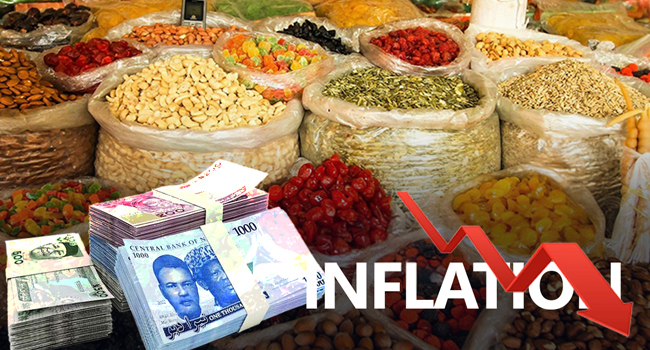
The latest policy decision comes on the heels of the National Bureau of Statistics’ report showing that Nigeria’s inflation rate declined to 15.91 per cent in June 2026, raising cautious optimism that the country’s tight monetary policy measures may be yielding positive results while supporting broader economic stability.

Continue Reading

Business & Economy

Market Patronage Declines as Rising Prices Hit Ekiti Traders

Published

on

Share


Traders in Ekiti State have appealed to governments at all levels to take urgent steps to address the rising cost of goods and ease the economic burden on citizens.


Our correspondent, Oluwaseun Adebolu, who visited Market places in Ado-Ekiti to assess the situation, said that many traders called for increased government support to improve business activities and enhance the welfare of residents.


The traders commended the Ekiti State Government for its efforts to promote local businesses but stressed that additional interventions targeted at traders and families would further improve their standard of living.


They expressed concern over the persistent increase in the prices of goods and commodities, attributing the trend to high transportation costs and the impact of the removal of fuel subsidy on the economy.


According to the traders, many essential items that were once affordable have become increasingly expensive, making it difficult for both traders and consumers to cope with current economic realities.


They also noted a shift in consumers’ buying habits, explaining that many customers now prefer shopping in markets closer to their homes to reduce transportation costs.


The traders further lamented a decline in market patronage, saying sales have dropped significantly compared to previous years due to reduced purchasing power.


They urged the government, relevant agencies, and other stakeholders to introduce measures such as palliatives, soft loans, and transportation subsidies for traders to cushion the effects of the economic hardship and stimulate commercial activities across markets in the state.

Continue Reading

Business & Economy

FG Dismisses Reports of New Telecoms and Fuel Taxes, Says No Such Plans Under Consideration

Published

on

President Bola Ahmed Tinubu
Share


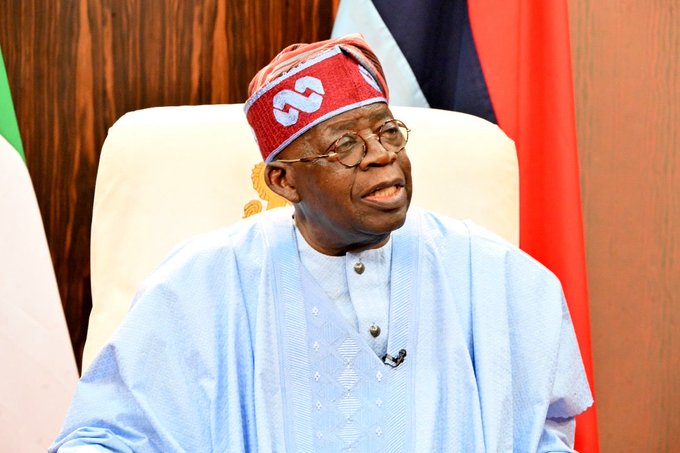
The Federal Government has dismissed reports claiming that it has introduced or is planning to introduce new taxes on telecommunications services and petroleum products.

The clarification came following media reports based on the recent International Monetary Fund (IMF) Article IV Consultation Report on Nigeria. The reports suggested that the IMF recommended extending Value Added Tax (VAT) to fuel products and introducing excise duties on telecommunications services as part of efforts to boost government revenue and fund development projects and social programmes.

However, in a statement issued on Wednesday by the Head of Information and Public Relations Unit of the Federal Ministry of Finance, Efe Ovuakporie, the government said the reports were misleading and did not reflect its current policy position.

According to the ministry, the IMF report merely contains the Fund’s assessment of Nigeria’s economy and recommendations for consideration by government authorities. It stressed that such recommendations are not binding and do not automatically become government policy.

The statement explained that all decisions relating to taxation in Nigeria are made through established constitutional and legislative processes and are guided by the country’s economic priorities and prevailing realities.

The Federal Government also clarified that the existing VAT waiver on petroleum products remains in force and has not been withdrawn.

It further explained that although current legislation provides for a fuel surcharge, such a charge can only be implemented through a ministerial order and official publication in the government gazette. The ministry stated that no such process is currently being considered.

According to the government, the continued suspension of these charges has helped reduce the impact of fluctuations in global energy prices on households and businesses while keeping domestic fuel prices relatively stable.

On telecommunications services, the government noted that the excise duty introduced before 2023 has already been repealed under the new tax laws and is no longer applicable.

The ministry therefore urged Nigerians to disregard reports suggesting that fresh taxes are being planned for either the telecommunications or petroleum sectors, describing such claims as inaccurate.

The government reiterated its commitment to economic reforms aimed at promoting growth, improving revenue collection, and creating a more attractive environment for investment and job creation.

It added that its focus remains on expanding economic activities, blocking revenue leakages, and improving efficiency in public finance management rather than imposing additional tax burdens on citizens.

The statement assured Nigerians that any future tax measures, if necessary, would be officially announced through appropriate government channels and implemented strictly in accordance with the law.

Continue Reading