Connect with us

Business & Economy

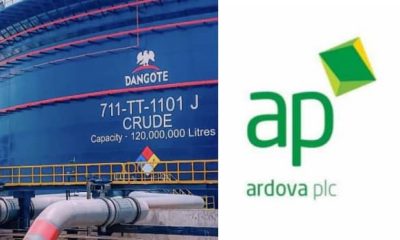
Dangote Refinery’s Free Fuel Delivery Reaches Kano, Imo, others

Published

on

Share

— Distribution burden removed for savings to reach consumers. — Dangote

–IPMAN applauds initiative

Free delivery of fuel to filling stations is expected to reduce distribution costs for independent petroleum marketers and create room for lower petrol prices.
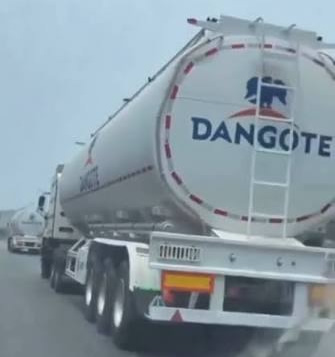
This objective explains why Dangote Petroleum Refinery and Petrochemicals has expanded its free petroleum product delivery initiative to Kano, Imo, Anambra and Nasarawa States.

The initiative, which initially covered Lagos, Ogun, Rivers, Kaduna, Abuja and Delta, is designed to take petroleum products closer to marketers and retailers while eliminating the cost of transporting products over long distances from the refinery.

By absorbing delivery costs, the refinery is removing a significant expense from the downstream distribution chain and giving marketers more room to operate at competitive prices.

Group Executive Director, Commercial Operations, Oil & Gas, WAEP and Fertiliser, Fatima Aliko Dangote, said the initiative was intended to ensure that the benefits of domestic refining translate into savings for businesses and consumers. In her words:

“The value of domestic refining must ultimately be felt beyond the refinery gate. By absorbing the cost of delivering petroleum products to our customers, we are removing a significant component of the distribution burden and creating room for those savings to flow through the value chain to consumers.

“Our goal is to make fuel distribution more efficient, reduce avoidable costs and support more competitive pump prices across Nigeria.”

The initiative has been welcomed by the Independent Petroleum Marketers Association of Nigeria (IPMAN), which said it would ease some of the financial and logistical pressures facing independent marketers.

National Publicity Secretary and Public Relations Officer of IPMAN, Chinedu Ukadike, said the initiative addresses a longstanding challenge in the petroleum products distribution chain, where marketers commit substantial funds to product purchases and may wait for days or weeks before their orders are loaded and transported. Ukadike said:

“This gesture, if sustained, will be able to alleviate the sufferings of independent marketers.

“There has been the issue of financial hold-up, whereby marketers pay for products and are not loaded for days and weeks, and they suffer unnecessary hardship bringing the product down.”

According to him, Dangote’s delivery arrangement would reduce the period marketers’ funds remain tied up, improve cash flow and allow them to deploy their capital more efficiently.

“This time around, Dangote has made it very, very easy for marketers. Marketers are jubilating, and you will see the return on investment as an independent marketer. Your money will not be tied down,” he said.
Ukadike said the initiative could also help moderate pump prices because transportation costs are ultimately reflected in the price consumers pay.

“You also have less risk, and you have petroleum products at your doorstep. Other consumers will also see that our pump price will not continue to go up. The more Dangote brings down its pump price, the more independent marketers will bring down theirs.”

The impact is expected to be particularly significant in markets located far from the refinery, where marketers traditionally incur substantial haulage, vehicle operating, insurance and other logistics costs.

Removing those expenses could improve the economics of supplying distant markets while reducing the risks associated with transporting large volumes of petroleum products over long distances.

Ukadike commended Dangote Refinery for the initiative and urged the company to extend the programme to more locations, particularly in the northern states.

He described the development as a practical demonstration of the benefits of competition and deregulation in Nigeria’s downstream petroleum sector.

“This is the beauty of deregulation and competition,” he said.

The expansion comes as Nigeria’s downstream petroleum market adjusts to rising domestic refining capacity and increased competition among suppliers.

The Dangote Petroleum Refinery, with a capacity of 700,000 barrels per day, has continued to supply refined petroleum products to the domestic market while expanding its presence in international markets.

The free delivery initiative adds a new dimension to the refinery’s role in the downstream sector by targeting not only product availability but also the cost of moving products from the refinery to end markets.

For consumers, the potential benefit is straightforward: lower distribution costs could give marketers greater room to reduce pump prices and improve the competitiveness of petroleum products across the country.

Continue Reading
Click to comment

Leave a Reply

Your email address will not be published. Required fields are marked *

Business & Economy

Tinubu To Present 2027 Budget Before Year-End As FEC Approves Five-Year Development Plan

Published

on

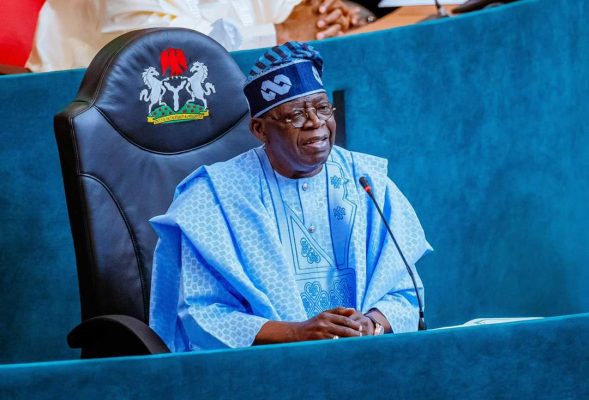
President Bola Ahmed Tinubu
Share


President Bola Tinubu is expected to present the 2027 Appropriation Bill to the National Assembly before the end of 2026, as the Federal Executive Council (FEC) approved the National Development Plan 2026–2030 and new policy measures aimed at strengthening food security and tackling child stunting.

The Minister of State for Budget and Economic Planning, Doris Uzoka-Anite, disclosed this on Wednesday while briefing State House correspondents on the outcomes of the FEC meeting chaired by President Tinubu at the Presidential Villa, Abuja.

Uzoka-Anite also announced the council’s approval of the Revised National Policy on Food and Nutrition 2026, which seeks to establish sustainable financing mechanisms and strengthen collaboration among ministries responsible for agriculture, livestock, health and education, as well as development partners.

The announcements followed the conclusion of the 32nd Nigerian Economic Summit, held in Abuja from October 26 to 28, which focused on key issues affecting the country’s economic development.

Meanwhile, the Minister of Finance and Coordinating Minister of the Economy, Taiwo Oyedele, has clarified that the $21.7 billion borrowing proposal transmitted by President Tinubu to the National Assembly is intended to finance investments in productive assets and infrastructure rather than recurrent expenditure.

Oyedele explained that the proposal represents a multi-year investment programme spanning approximately five years, rather than an immediate drawdown of the entire amount.

According to him, $10.6 billion is earmarked for critical transportation infrastructure, including the Sokoto–Badagry Highway, Lagos–Calabar Coastal Highway and Kano–Kaduna Metro Rail.

He further disclosed that more than $7.9 billion would be sourced from multilateral and bilateral development partners, including $5 billion from the World Bank, at an average interest rate of approximately 2.1 per cent.

The proposed financing package also includes $3.3 billion for state government projects and $1.45 billion for projects in the Federal Capital Territory.

The planned 2027 budget presentation and the approval of the five-year development plan underscore the Federal Government’s efforts to align fiscal planning, infrastructure investment and social development priorities with its broader economic agenda.

Continue Reading

Business & Economy

Tinubu Rules Out Fuel Subsidy Return, Says Nigeria Cannot Go Back to ‘Egypt’

Published

on

President Bola Ahmed Tinubu
Share


President Bola Tinubu has ruled out any return to petrol subsidy, insisting that the removal of the policy was necessary to prevent Nigeria’s economy from sliding into bankruptcy.

The President reiterated his position on Monday during a meeting with members of the City Boy Movement, a youth-driven political and advocacy group, where he defended the economic reforms introduced by his administration.

Tinubu said the government could no longer sustain the financial burden of subsidising petrol, arguing that the country lacked the resources required to continue funding the scheme.

“I came, and I removed the subsidy on my first day. Nigeria would have gone bankrupt; there was nothing left to pay for subsidies,” he said.

Using a biblical and Quranic analogy to underscore his position, the President declared that reversing the policy would amount to returning to an unsustainable economic system.

“When Moses (Musa) left Egypt, the Red Sea parted and gave way. You cannot ask Moses to go back to Egypt. With your energy and support, we will never go back to Egypt,” he stated.

The removal of petrol subsidy, announced during Tinubu’s inauguration on May 29, 2023, marked a major shift in Nigeria’s fiscal policy. The decision significantly increased petrol prices and contributed to mounting pressure on household incomes, transportation costs and businesses.

Petrol prices, which were below ₦200 per litre before the policy change, have since risen substantially, with prices reported at between ₦1,350 and ₦1,405 per litre across major filling stations.

The resulting increase in energy and transportation costs has continued to fuel public concerns over inflation, declining purchasing power and the overall cost of living.

However, the Federal Government has maintained that subsidy removal is critical to reducing fiscal pressure, improving public revenue and creating room for investment in infrastructure and other priority sectors.

Tinubu acknowledged the political contest surrounding the policy, noting that his opponents had promised to restore fuel subsidy. He nevertheless maintained that his administration would not reverse the reform.

Beyond defending the policy, the President urged members of the City Boy Movement to mobilise support for his administration by communicating its achievements and future plans to young Nigerians across campuses, markets and rural communities.

He also encouraged eligible young people to obtain their Permanent Voter Cards (PVCs) and participate in the electoral process.

The debate over fuel subsidy remains a central issue in Nigeria’s economic policy, with the government defending the reform on fiscal sustainability grounds while households and businesses continue to grapple with the effects of higher fuel prices.


Continue Reading

Business & Economy

FG Rules Out Electricity Tariff Hike, Targets 24-Hour Power Supply

Published

on

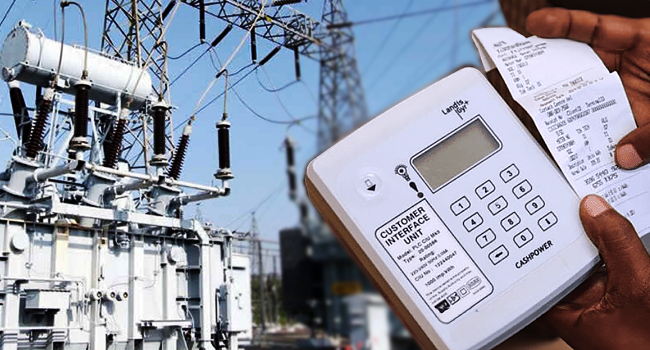
Power Station and Meters
Share


The Federal Government has ruled out any plan to increase electricity tariffs, saying its priority is to improve power supply and ensure reliable electricity across the country.

The Minister of Power, Joseph Tegbe, gave the assurance in Ibadan, Oyo State, on Thursday, amid concerns and speculation about a possible increase in electricity tariffs.

Tegbe spoke during the groundbreaking ceremony for five interconnected mini-grid projects with a combined generation capacity of 17.7 megawatts and a 17.74-megawatt-hour Battery Energy Storage System (BESS).

“I want to say this clearly and without ambiguity: there is no plan to increase electricity tariffs. What we are planning is a power sector that works around the clock. Our commitment is 24/7 power,” the minister said.

He urged Nigerians to disregard reports suggesting an impending tariff hike, stressing that the government was focused on improving electricity generation, transmission and distribution.

The five mini-grid projects are located in Bola, Jiboye, Molade-Adelubi, Ogo Oluwa and Sooko-Elega. They are expected to provide electricity to communities across Akinyele, Ido, Ibadan North, Egbeda and Lagelu Local Government Areas of Oyo State.

According to the minister, the projects are designed to expand electricity access, reduce dependence on petrol and diesel-powered generators, and create a more favourable environment for businesses, investment and job creation.

Tegbe said the Federal Government was also implementing a broader energy strategy aimed at improving electricity supply through designated energy corridors, including the Lagos-Ogun, Abuja-Kaduna-Kano and Benin-Enugu-Port Harcourt corridors.

He added that efforts were underway to strengthen the national grid and upgrade generation and transmission infrastructure across the country’s eastern, western and central corridors.

The minister described the mini-grid initiative as part of President Bola Tinubu’s Renewed Hope Agenda, noting that similar electricity interventions had been implemented in communities across several states with support from the Rural Electrification Agency (REA).

He commended Tinubu for his leadership and acknowledged the contributions of the REA, project developer Paras Energy and Natural Resources Development Limited, the World Bank and the Ibadan Electricity Distribution Company.

Tegbe also recognised the Oyo State Government, traditional rulers and other stakeholders for their roles in facilitating the projects.

The initiative is expected to improve electricity reliability in the beneficiary communities, support local economic activities and reduce energy costs for households and businesses.


Continue Reading