Connect with us

Business & Economy

Dangote Refinery Targets Africa’s Largest Company Status by December 2026 — Dangote

Published

on

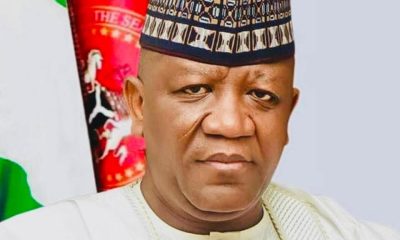
President of Dangote Group, Aliko Dangote
Share


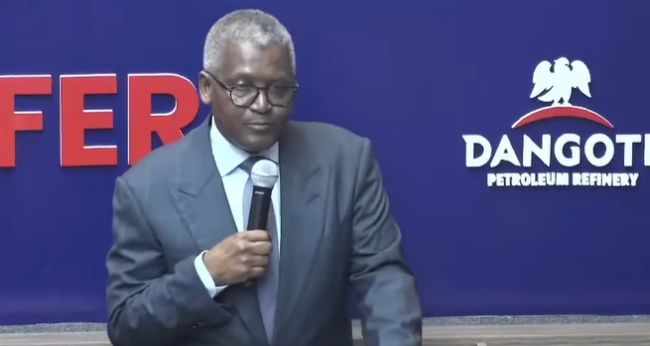
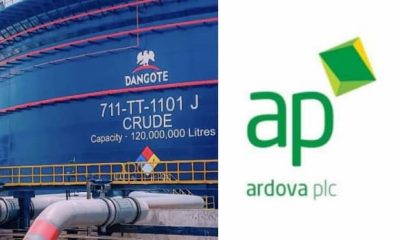
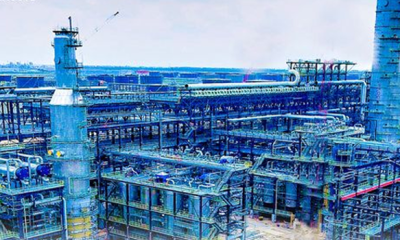
President of Dangote Group, Aliko Dangote, has expressed confidence that Dangote Petroleum Refinery and Petrochemicals FZE will emerge as the most viable and largest company in Africa by the end of December 2026.

Dangote made the declaration on Monday, September 14, 2026, at the trading floor of the Nigerian Exchange (NGX) in Lagos, where he delivered the opening address to formally launch the refinery’s Initial Public Offering (IPO).

The public offer comprises 4.1 billion new ordinary shares priced at ₦525 per share, with a minimum subscription of 10 shares valued at ₦5,250. The offer opened on September 14 and is scheduled to close on October 13, 2026, subject to the terms and conditions contained in the Prospectus.

The IPO is targeted at retail and institutional investors, as well as eligible investors across Africa and other parts of the world, as Dangote Refinery seeks to broaden ownership and deepen participation in Nigeria’s capital market.

Speaking at the event, Dangote urged Nigerians and other investors not to underestimate the potential of the refinery, saying the company was positioned for significant growth and value creation.

“Everything is in the hands of God, but by the end of this year, this is going to be the largest company in Africa, not in Nigeria,” Dangote said.

He described the IPO as an opportunity for investors to participate in the future growth of the refinery, urging prospective shareholders not to miss the opportunity.

According to him, the public offer is not primarily about raising funds for the Dangote Group, but about democratising wealth creation by giving ordinary Nigerians and other investors an opportunity to own a stake in one of Africa’s biggest industrial projects.

Dangote said the decision to open the refinery’s ownership to the public followed a long-standing commitment to ensure that the benefits of the project extend beyond a small group of investors.

He explained that the company waited until the refinery became operational, sustainable and sufficiently de-risked before taking the decision to invite the public to participate in its ownership.

“Today is not about listing a company but about listing a company for Nigerians, for Africa and for the black race,” he said, while inviting investors from across Africa, the Caribbean, Europe, America, China and other parts of the world to become shareholders.

Dangote also highlighted the potential benefits of the investment to Nigerians, particularly teachers, civil servants and parents with children studying abroad.

He said investors could potentially benefit from dollar-denominated dividends, which could provide some protection against the impact of naira depreciation on families with foreign currency obligations.

According to him, the opportunity could give parents with children abroad greater confidence in meeting future school-fee obligations even during periods of currency devaluation.

The Dangote Group president further disclosed that the group currently has about $46 billion worth of projects and investments in its pipeline, aimed at expanding its various businesses and achieving its Vision 2030 objectives.

He stressed that the IPO was therefore not driven by a need for additional capital to execute the group’s projects.

“If it is the question of raising money, I think we have raised more than what we need as a group to execute all our projects,” Dangote said.

The public offer is expected to raise approximately ₦2.15 trillion, potentially making it one of the largest equity offerings ever undertaken in Africa.

The proceeds, according to the company, will be deployed towards the refinery’s long-term growth plans, operational expansion, strategic investments and further value creation for shareholders and other stakeholders.

Dangote also disclosed that the group had previously conducted a private placement as part of its capital-raising strategy.

He said the original plan involved raising $2.5 billion, comprising a $1.5 billion IPO and a $1 billion private placement. According to him, the private placement attracted significant demand, leading the company to allocate and reallocate applications.

Dangote said the company ultimately returned applications worth about $1.2 billion after receiving strong demand during the process.

He explained that the funds raised through the private placement had already met the group’s immediate funding requirements, reinforcing his position that the current IPO is primarily aimed at expanding public ownership and allowing more people to share in the refinery’s future prosperity.

Meanwhile, Nigerian Exchange Group’s Group Managing Director and Chief Executive Officer, Temi Popoola, said the participation process had been designed to be accessible, transparent and technology-enabled.

Eligible investors can subscribe through approved distribution channels, including NGX Invest, designated commercial banks and authorised investment platforms, subject to the requirements contained in the Prospectus.

Dangote said the broader objective was to ensure that the economic benefits generated by the refinery are shared among a wider pool of investors, rather than being concentrated among a limited number of private shareholders.

The development marks a significant step in the evolution of the Dangote Refinery, which has become one of the most prominent industrial investments in Africa and a major component of Nigeria’s ambition to strengthen domestic refining capacity, reduce dependence on imported petroleum products and expand its participation in the global energy market.

Continue Reading
Click to comment

Leave a Reply

Your email address will not be published. Required fields are marked *

Business & Economy

Nigeria Open for Business, Tinubu Assures Investors

Published

on

President Bola Ahmed Tinubu
Share


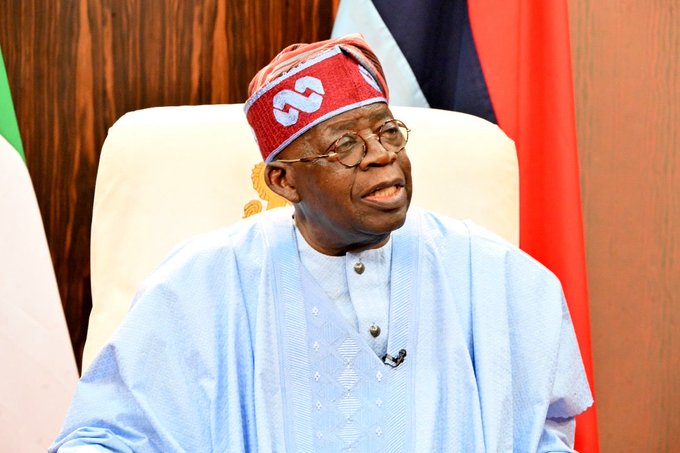
President Bola Tinubu has assured local and foreign investors that Nigeria remains open for business, saying his administration is working to create a more predictable, competitive and investment-friendly environment.

Tinubu spoke on Monday in Abuja at the 75th anniversary celebration of the Nigerian Bottling Company Limited (NBC), where he was represented by the Secretary to the Government of the Federation, Senator George Akume.

The President said the Federal Government was aware of the challenges facing businesses and was addressing them through economic reforms under the Renewed Hope Agenda.

“Our message to investors, both Nigerian and international, is clear: Nigeria is open for business, and we are working to make the business environment more predictable, more competitive and more supportive of investment,” he said.

He identified reliable electricity, infrastructure, clear regulations, efficient ports and logistics, access to foreign exchange and a business-friendly tax system as critical to attracting and retaining investments.

Tinubu said the administration’s economic reforms were aimed at building a more productive economy, reducing dependence on imports, expanding local manufacturing and creating more jobs.

He also welcomed the Coca-Cola System’s planned $1 billion investment in Nigeria over five years, describing it as a vote of confidence in the Nigerian economy.

The President said the government was interested not only in the amount of investment coming into the country but also in its impact on job creation, skills development, local sourcing, technology transfer and the growth of Nigerian businesses.

He urged investors to see Nigeria not merely as a large consumer market but as a production base from which they could serve African and global markets.

Tinubu also commended NBC for its continued investment in production capacity, including new production lines at Asejire in Oyo State and Challawa in Kano State.

He called for greater local content in manufacturing and urged businesses to develop Nigerian suppliers, train young people in technical skills and gradually replace imports with competitively produced Nigerian goods.

The President stressed that government alone could not transform the economy, urging the private sector to invest, innovate, take risks and create jobs.

He also highlighted the importance of human capital development, commending NBC’s Supply Chain Academy, which he said had trained more than 1,400 young people since its establishment in 1996.

Tinubu acknowledged the difficulties caused by the ongoing economic reforms but said Nigeria’s longstanding structural challenges could no longer be ignored.

He assured investors willing to make long-term commitments to Nigeria of the government’s support, particularly those prepared to manufacture locally, develop Nigerian talent, strengthen supply chains and contribute to host communities.

Earlier, the President congratulated NBC on its 75th anniversary, describing its growth from a Lagos-based company established in 1951 into a nationwide enterprise as an example of the opportunities available through long-term investment in Nigeria.

He said the Coca-Cola System generated an estimated $1 billion in value-added economic activity in Nigeria in 2024, supported more than 160,000 livelihoods and purchased about $601 million worth of goods and services from Nigerian suppliers.

Tinubu urged NBC and the Coca-Cola System to sustain their investments, deepen local supply networks and continue developing Nigerian talent as the country works towards a more productive and globally competitive economy.

Continue Reading

Business & Economy

Oil Prices Rise Above $100 As Iran Tightens Grip On Strait Of Hormuz

Published

on

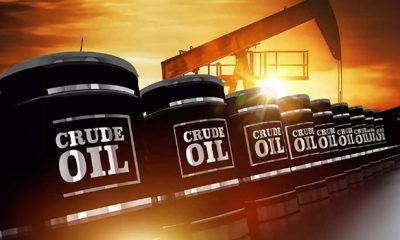
Crude oil
Share


Oil prices rose above $100 per barrel on Thursday after Iran tightened restrictions on vessels passing through the Strait of Hormuz amid its ongoing war with the United States.

Brent crude, the international benchmark, stood at $101.28 per barrel in early Asian trading, after rising above $100 on Wednesday for the first time since July.

Iran’s Revolutionary Guards said they had attacked several vessels attempting to pass through the strategic waterway, including two US vessels, eight oil tankers and 10 other vessels described as “non-compliant.”

The Strait of Hormuz is one of the world’s most important oil shipping routes, normally carrying about one-fifth of global oil supplies.

The British maritime security agency UKMTO also reported that several merchant vessels in the Northern Arabian Gulf and Gulf of Oman had come under fire amid continuing military activities in the region.

Iran has now expanded its restricted area beyond the Strait of Hormuz, declaring parts of the Gulf of Oman and Arabian Sea a “prohibited zone.” Iranian authorities warned that vessels entering the area without coordination could face sanctions.

US President Donald Trump, however, said oil prices would eventually fall as the war ends. He claimed that the United States was winning the conflict and had control of the Strait of Hormuz.

Trump also suggested that the war could end after the US mid-term elections in November, saying Iran could no longer continue fighting.

However, reports indicate that some US officials privately believe the conflict could continue for much longer.

The Iranian Revolutionary Guards also claimed responsibility for an attack on a US military base in Jordan, describing it as retaliation for US forces destroying five Iranian oil tankers.

Jordan said its military intercepted 18 missiles fired toward the country.

Iran condemned the destruction of its oil tankers, describing the action as a threat to regional and international peace and security. Tehran said its attacks on US military facilities were carried out in self-defence.

The escalating conflict has increased concerns about global energy supplies, particularly if the disruption of shipping through the Strait of Hormuz continues.

Meanwhile, the International Atomic Energy Agency’s Board of Governors voted to refer Iran to the UN Security Council over its nuclear activities. The resolution reportedly passed by 23 votes to three, with eight countries abstaining.

Iran rejected the resolution, accusing the United States of pressuring the nuclear watchdog and insisting that the decision would produce no results.

Israeli Prime Minister Benjamin Netanyahu also maintained that Iran was close to collapse, saying the main objective was to bring down what he described as Iran’s “terror regime.”


Continue Reading

Business & Economy

Subsidy Removal Debate Is Over, Nigerians Must Now See Its Benefits — PENGASSAN

Published

on

Fuel Station and Attendant
Share

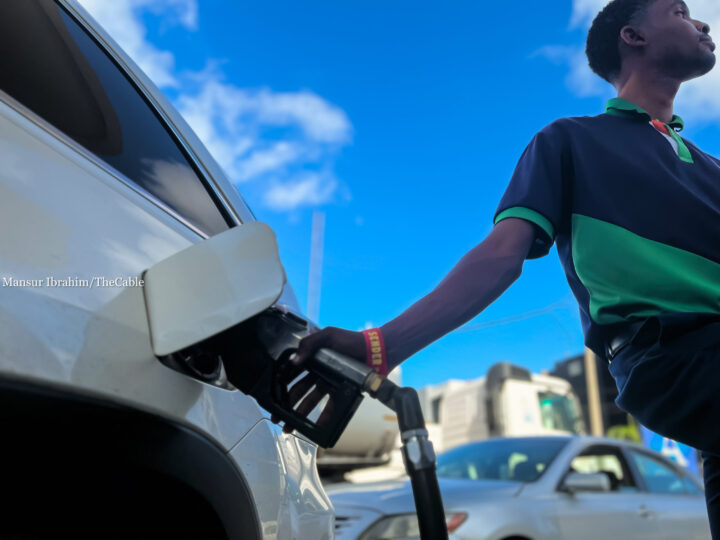
The Petroleum and Natural Gas Senior Staff Association of Nigeria (PENGASSAN) has called on the Federal Government to move beyond the debate over fuel subsidy removal and focus on ensuring that Nigerians begin to feel the benefits of the policy.

PENGASSAN President, Bosun Olabiyi-Agoro, made the call while speaking on Channels Television’s The Morning Brief on Friday.

According to him, the argument over whether fuel subsidy should have been removed or retained is now belated because the policy has already been implemented.

“I think the argument over whether to remove the subsidy or not to remove it is belated now. We have done it, but we need to start seeing the benefits of fuel subsidy removal in the lives of common Nigerians,” he said.

President Bola Tinubu announced the removal of the petrol subsidy shortly after assuming office in May 2023. Since then, the price of petrol has risen significantly, moving from about ₦200 per litre to around ₦1,300 per litre.

The policy has remained one of the most controversial economic decisions of the Tinubu administration, with critics and opposition figures blaming the removal of subsidy for part of the hardship and rising cost of living experienced by Nigerians.

Some opposition politicians have also promised to reverse the policy if elected, while the Federal Government has maintained that there is no going back on subsidy removal.

PENGASSAN Admits Policy Has Been Painful

Olabiyi-Agoro acknowledged that the removal of subsidy has been difficult for Nigerians and workers, describing the policy as painful.

He said the immediate consequences of the decision placed significant pressure on households and workers, many of whom are still struggling with the high cost of living more than three years after the policy was introduced.

However, he argued that the country should now concentrate on ensuring that the economic gains associated with the policy translate into tangible improvements in people’s lives.

Economic Growth Must Benefit Nigerians

The PENGASSAN president also reacted to Nigeria’s reported 4.43 per cent Gross Domestic Product (GDP) growth in the second quarter of 2026, saying that positive macroeconomic figures are welcome but should ultimately improve the living conditions of ordinary citizens.

He noted that indicators such as GDP growth, improved balance of trade and stronger foreign exchange reserves are positive developments for the economy.

However, he stressed that Nigerians need to see these improvements reflected in areas such as food prices, employment, wages and general living conditions.

According to him, economic growth should not remain confined to government statistics while ordinary Nigerians continue to struggle.

He said workers are prepared to contribute their own efforts to the country’s economic development and support whichever government is in power, but they also expect the benefits of economic reforms to reach the people.

Fuel Supply Has Improved

Olabiyi-Agoro also linked the improvement in the availability of petroleum products to the removal of the subsidy.

He explained that since government stopped making budgetary provisions for fuel subsidy, petroleum products are now being sold closer to their actual market prices without government bearing the cost of subsidising them.

He therefore argued that the country has moved beyond the question of whether subsidy should be removed.

For PENGASSAN, the priority now should be ensuring that the economic benefits of the policy are translated into better living conditions for Nigerians.

The association’s position reflects a growing call for the Federal Government to demonstrate that the sacrifices Nigerians have made since the removal of subsidy will ultimately produce measurable improvements in their standard of living.

Continue Reading