Business & Economy
How Fraudsters’ Deepfake ads used Elon Musk, Johann Rupert to Swindle South African Investors of $61.5 million
Published
38 minutes agoon
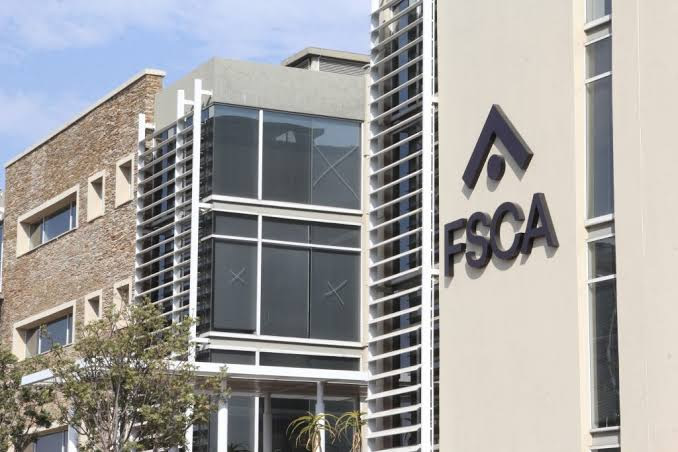
For adopting deepfake digital ads to swindle unsuspecting investors, South Africa’s Financial Sector Conduct Authority, FSCA, has fined online trading platform Banxso R2 billion ($123 million). And its four directors were handed 30-year industry bans after a year-long investigation concluded the company used deepfake advertisements featuring billionaires Johann Rupert and Elon Musk to steal approximately R1 billion ($61.5 million) from South African investors.
The FSCA detailed the scheme in its 2026 Regulatory Actions report, describing it one of the most significant enforcement actions against digitally enabled financial fraud in South African history.
The deepfake advertisements showed Rupert and Musk, two of the most recognizable business figures in the world, falsely promising investors profits of up to R300,000 ($18,450) a month from an initial investment of R4,700 ($289). The offering was branded as “Immediate Matrix.” Individuals who responded to the advertisements were systematically redirected to Banxso representatives and encouraged to trade primarily in contracts for difference, complex high-risk derivative instruments the FSCA regards as unsuitable for most retail investors.
Banxso and its representatives have consistently denied being behind the advertisements, claiming the firm was itself a victim of hacking. The FSCA launched its investigation in March 2024 after receiving information about the deepfake campaign and concluded that Banxso was directly or indirectly involved in, or at minimum materially benefited from, the dissemination of the deceptive material.
The investigation found that misleading information, including promises of unrealistic returns, was provided to prospective clients to undermine their ability to make informed decisions. Client funds were not placed with legitimate liquidity providers but were instead controlled internally by Banxso, commingled, transferred between non-designated accounts and rendered difficult to trace. The FSCA found that client funds were misappropriated and used for personal and business expenses.
The enforcement actions that followed reflected what the FSCA described as the scale, seriousness and systemic nature of the misconduct. Banxso owner Harel Adam Sekler, Warwick David Sneider, Manuel de Andrade and Mohammed Bux each received 30-year debarments. Henry James Simpson received a 10-year debarment. The R2 billion ($123 million) fine was imposed on Banxso, Sekler and Sneider jointly, with additional fines of R16 million ($984,000) on Banxso, R20 million ($1.23 million) on De Andrade, R10 million ($615,000) on Bux and R5 million ($307,500) on Simpson. Banxso’s financial services provider license was withdrawn.
The FSCA has referred its findings and supporting evidence to the Directorate for Priority Crime Investigation, known as the Hawks, to support potential criminal proceedings.
The legal battle is far from over. In September 2025, Banxso and its key individuals applied to the Financial Services Tribunal for reconsideration of the license withdrawal. The Tribunal dismissed the applications in December. In February 2026, the five Banxso representatives lodged fresh applications for reconsideration of the debarments and administrative penalties. That matter remains pending.
According to reports, the Western Cape High Court ruled that Banxso’s business model was illegal, triggering liquidation proceedings. Those proceedings are currently stalled following a legal challenge by Flamingo Clearing House, a company also owned by Sekler that served as Banxso’s CFD liquidity provider and was identified as a key player in the scheme.
The case represents the clearest illustration yet of how artificial intelligence-generated deepfake technology is being weaponized in South Africa’s financial markets, using the faces and reputations of the country’s most prominent billionaires to manufacture credibility for fraudulent investment offerings.
The intelligence satisfies curiosity. The paid briefings satisfy strategy.
Every Monday, Elite subscribers receive an Investor Memo breaking down the deal, the structure and the positioning behind the week’s most consequential African wealth story – the kind of analysis that doesn’t appear anywhere else.
Twice a month, a Wealth Intelligence brief profiles a single billionaire’s holdings, cash flows and expansion pipeline in detail no public source matches.
Business & Economy
Nigeria, Thailand Deepen Economic Ties, Sign Technical Cooperation Agreement
Published
13 minutes agoon
August 26, 2026
Nigeria and Thailand have taken a fresh step towards strengthening bilateral relations with the signing of a Memorandum of Understanding on Technical Cooperation and renewed calls for increased trade and investment between both countries.
The agreement was signed on Tuesday at the Ministry of Foreign Affairs in Abuja by Nigeria’s Minister of Foreign Affairs, Ambassador Bianca Odumegwu-Ojukwu, and Thailand’s Deputy Prime Minister and Minister of Foreign Affairs, Sihasak Phuangketkeow.
The development comes as both countries seek to expand their economic relationship and establish stronger mechanisms for cooperation in technology, agriculture, manufacturing, energy and other strategic sectors.
Speaking at the signing ceremony, Odumegwu-Ojukwu said Nigeria was interested in elevating its relationship with Thailand to a strategic partnership anchored on stronger economic cooperation.
She welcomed Thailand’s Thailand-Africa Initiative and called for deeper collaboration between the Nigerian Technical Aid Corps and the Thailand International Cooperation Agency.
According to her, closer cooperation between the two agencies would promote skills development, technology transfer and sustainable development in both countries.
The minister also highlighted the Thailand-Nigeria Sustainable Agricultural Technology Development Project, describing it as an important area of existing cooperation.
She called for the project to be expanded to more parts of Nigeria, alongside increased collaboration in agricultural research, technology and innovation.
Nigeria seeks wider trade opportunities
Odumegwu-Ojukwu said Nigeria wanted to move bilateral trade beyond its current focus on crude oil, rice and agricultural machinery.
She invited Thai companies to explore investment and joint-venture opportunities in agro-processing, manufacturing, energy, ICT, mining, renewable energy and other value-added industries.
The minister pointed to Nigeria’s large consumer market and investment opportunities, urging Thai businesses to take advantage of the incentives available to investors.
She also proposed the establishment of a Joint or Bi-National Commission to provide a structured platform for bilateral economic dialogue.
Such a mechanism, she said, would help monitor the implementation of agreements between both countries and accelerate the conclusion of outstanding bilateral instruments.
These include the Investment Promotion and Protection Agreement, Trade Agreement and Agreement on Economic, Scientific, Technical and Cultural Cooperation.
Nigeria pushes ASEAN-ECOWAS cooperation
The minister also advocated closer engagement between the Association of Southeast Asian Nations and the Economic Community of West African States.
She said stronger links between the two regional blocs could unlock new opportunities for trade, investment and development.
Odumegwu-Ojukwu reaffirmed Nigeria’s commitment to building a stronger economic relationship with Thailand through increased trade, investment, technical cooperation and regular high-level engagements.
Thailand pledges stronger economic partnership
Thailand’s Deputy Prime Minister and Foreign Minister, Sihasak Phuangketkeow, described Nigeria as a major economy in Africa and stressed the potential for a stronger strategic economic partnership.
He said deeper economic relations between the two countries would boost investment and trade while creating positive benefits for their respective populations.
The signing of the MoU is expected to provide a broader framework for technical cooperation and further strengthen Nigeria-Thailand relations in areas of mutual economic and development interest.
Business & Economy
Dangote Refinery’s Free Fuel Delivery Reaches Kano, Imo, others
Published
31 minutes agoon
August 26, 2026
— Distribution burden removed for savings to reach consumers. — Dangote
–IPMAN applauds initiative
Free delivery of fuel to filling stations is expected to reduce distribution costs for independent petroleum marketers and create room for lower petrol prices.
This objective explains why Dangote Petroleum Refinery and Petrochemicals has expanded its free petroleum product delivery initiative to Kano, Imo, Anambra and Nasarawa States.
The initiative, which initially covered Lagos, Ogun, Rivers, Kaduna, Abuja and Delta, is designed to take petroleum products closer to marketers and retailers while eliminating the cost of transporting products over long distances from the refinery.
By absorbing delivery costs, the refinery is removing a significant expense from the downstream distribution chain and giving marketers more room to operate at competitive prices.
Group Executive Director, Commercial Operations, Oil & Gas, WAEP and Fertiliser, Fatima Aliko Dangote, said the initiative was intended to ensure that the benefits of domestic refining translate into savings for businesses and consumers. In her words:
“The value of domestic refining must ultimately be felt beyond the refinery gate. By absorbing the cost of delivering petroleum products to our customers, we are removing a significant component of the distribution burden and creating room for those savings to flow through the value chain to consumers.
“Our goal is to make fuel distribution more efficient, reduce avoidable costs and support more competitive pump prices across Nigeria.”
The initiative has been welcomed by the Independent Petroleum Marketers Association of Nigeria (IPMAN), which said it would ease some of the financial and logistical pressures facing independent marketers.
National Publicity Secretary and Public Relations Officer of IPMAN, Chinedu Ukadike, said the initiative addresses a longstanding challenge in the petroleum products distribution chain, where marketers commit substantial funds to product purchases and may wait for days or weeks before their orders are loaded and transported. Ukadike said:
“This gesture, if sustained, will be able to alleviate the sufferings of independent marketers.
“There has been the issue of financial hold-up, whereby marketers pay for products and are not loaded for days and weeks, and they suffer unnecessary hardship bringing the product down.”
According to him, Dangote’s delivery arrangement would reduce the period marketers’ funds remain tied up, improve cash flow and allow them to deploy their capital more efficiently.
“This time around, Dangote has made it very, very easy for marketers. Marketers are jubilating, and you will see the return on investment as an independent marketer. Your money will not be tied down,” he said.
Ukadike said the initiative could also help moderate pump prices because transportation costs are ultimately reflected in the price consumers pay.
“You also have less risk, and you have petroleum products at your doorstep. Other consumers will also see that our pump price will not continue to go up. The more Dangote brings down its pump price, the more independent marketers will bring down theirs.”
The impact is expected to be particularly significant in markets located far from the refinery, where marketers traditionally incur substantial haulage, vehicle operating, insurance and other logistics costs.
Removing those expenses could improve the economics of supplying distant markets while reducing the risks associated with transporting large volumes of petroleum products over long distances.
Ukadike commended Dangote Refinery for the initiative and urged the company to extend the programme to more locations, particularly in the northern states.
He described the development as a practical demonstration of the benefits of competition and deregulation in Nigeria’s downstream petroleum sector.
“This is the beauty of deregulation and competition,” he said.
The expansion comes as Nigeria’s downstream petroleum market adjusts to rising domestic refining capacity and increased competition among suppliers.
The Dangote Petroleum Refinery, with a capacity of 700,000 barrels per day, has continued to supply refined petroleum products to the domestic market while expanding its presence in international markets.
The free delivery initiative adds a new dimension to the refinery’s role in the downstream sector by targeting not only product availability but also the cost of moving products from the refinery to end markets.
For consumers, the potential benefit is straightforward: lower distribution costs could give marketers greater room to reduce pump prices and improve the competitiveness of petroleum products across the country.
Business & Economy
Nigeria Ports Economic Regulatory Agency (NPERA), formerly Nigerian Shippers’ Council, Takes Off
Published
3 days agoon
August 23, 2026
A major change in the running of commercial activities at the nation’s seaports is set to begin with the Nigeria Ports Economic Regulatory Agency (NPERA) officially commencing operations.
Those to head the running of the agency have also been appointed. Chairman of NPERA Governing Board has Dr. Ibrahim Shema, while Dr Pius Akutah, is the Executive Secretary and Chief Executive Officer.
Established under the Nigeria Ports Economic Regulatory Agency Act, 2026, the new agency is to foster order, transparency and predictability to the port business while enhancing Nigeria’s competitiveness as a regional trade hub.
At a press briefing in Lagos, Chairman of the NPERA Governing Board, Dr. Ibrahim Shema, said the development is a major milestone in the evolution of Nigeria’s port system.
Shema highlighted that the new law gives permanent legal backing to economic regulation of the ports, replacing the interim arrangement under which the Nigerian Shippers’ Council operated its role since 2014.
The board chair said the history of port economic regulation dates back to the establishment of the Nigerian Shippers’ Council in 1978 and the concessioning of port terminals in 2006.
But NPERA, under the new framework, he said, will regulate port tariffs and charges, licensing, service standards, competition, commercial disputes and trade facilitation, while also protecting the interests of port users.
The chairman stressed that the agency’s emergence would not create a power struggle with the Nigerian Ports Authority (NPA), which will continue to handle port infrastructure and its landlord responsibilities. In his words:
“This is not about creating competing authorities. It is about establishing a coherent system in which institutions work together, each within its statutory responsibilities.”
He said NPERA would focus on eliminating unnecessary regulatory hurdles, reducing uncertainty for businesses and improving the speed of cargo movement through Nigerian ports.
He identified transparency, fairness, predictability, efficiency and accountability as the principles that would guide the agency’s operations.
On port charges, Shema said the new system would provide clearer information on how regulated tariffs are determined, while giving terminal operators and other service providers a better understanding of their regulatory obligations.
He also promised easier access to dispute-resolution mechanisms and greater use of digital platforms for licensing, tariff management, monitoring, compliance and engagement with stakeholders.
He assured stakeholders that the transition from the Nigerian Shippers’ Council to NPERA would be handled without unnecessary disruption, with attention to staff, assets, liabilities, existing contracts, pending disputes, regulatory records and licences.
He called for cooperation among the NPA, Nigerian Maritime Administration and Safety Agency (NIMASA), Nigeria Customs Service, terminal operators, shipping companies, freight forwarders, importers, exporters and other stakeholders.
“The establishment of NPERA is a historic achievement, but the harder work begins now,” he said, stressing that the real test would be the agency’s ability to convert the new law into better services, improved efficiency and stronger competitiveness.
The Executive Secretary and Chief Executive Officer of NPERA, Dr. Pius Akutah, equally expressed confidence that the new regulatory regime would significantly improve the business environment at the ports within the next one to two years.
Akutah said the agency would pursue fair pricing, stronger competition and improved trade facilitation.
Latest News
Nigeria, Thailand Deepen Economic Ties, Sign Technical Cooperation Agreement
ShareNigeria and Thailand have taken a fresh step towards strengthening bilateral relations with the signing of a Memorandum of Understanding...
NFIU: Terrorists Adopt Crowdfunding, Dead/Proxy Accounts, Mules, Others To Raise, Transfer Funds
ShareCrowdfunding networks, gender proxy accounts and other ways are now being exploited to raise and channel funds for terrorist operations,...
Dangote Refinery’s Free Fuel Delivery Reaches Kano, Imo, others
Share— Distribution burden removed for savings to reach consumers. — Dangote –IPMAN applauds initiative Free delivery of fuel to filling...
How Fraudsters’ Deepfake ads used Elon Musk, Johann Rupert to Swindle South African Investors of $61.5 million
ShareFor adopting deepfake digital ads to swindle unsuspecting investors, South Africa’s Financial Sector Conduct Authority, FSCA, has fined online trading...
‘Exclusion of Tiv on Tinubu’s Campaign Council’ Deliberate – Hembe, Benue ADC Gov Candidate
ShareAfrican Democratic Congress (ADC) 2027 governorship candidate in Benue State, Rt. Hon. Herman Hembe, has kicked against the exclusion of...