Connect with us

News

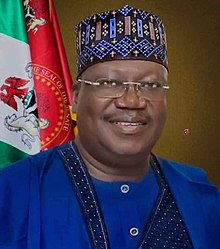
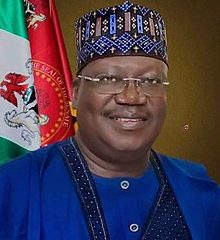
Const. Review: Senate President lobbies Governor El Rufai to prevail on his colleagues in states

Published

on

Senate President Ahmad Lawan
Share

The President of the Senate, Ahmad Lawan on Monday urged the Governor of Kaduna State, Nasir El Rufai to prevail on his Governor colleagues to encourage their respective state Houses of Assembly to transmit back to the National Assembly their responses on the Bills sent to them on the Constitution amendment.

The National Assembly in March passed 44 Bills to amend some key provisions of the 1999 constitution and transmitted same to the 36 states for their endorsement or otherwise as part of the constitutional amendment process.

The process requires the endorsement of not less than two-third of the 36 state Houses of Assembly for any of the Bills to sail through but far less than half of the 36 states were believed to have have so far transmitted their responses back to the National Assembly.

The Senate President spoke against this backdrop while declaring open the Distinguished Parliamentarians Lecture 2022 which was organised by the National Institute of Legislative and Democratic Studies (NILDS).

The lecture was delivered by the Speaker of House of Representatives, Rt. Hon. Femi Gbajabiamila.

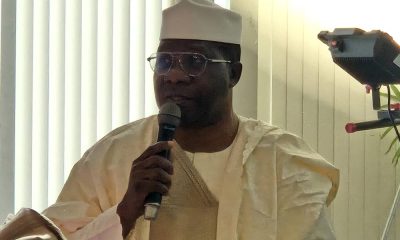
Lawan told Governor El Rufai who chaired the occasion: “We will task you to lobby for us. We have sent(to the states) the outcome of our constitution review and we are yet to receive all from the states.

“So we should be able to wind up this process by getting responses from the state Houses of Assembly. Even if it is one month left, we have the capacity working together to ensure that we pass some of the legislations that are required in a very expeditious manner.

“Lobby your Governor colleagues because I can see that you do that very well.”

Lawan said the lecture was one of the laudable initiatives of NILDS geared towards bridging the gap between the electorates and their elected representatives.

“It is also an avenue for we the parliament to tell our stories to the wider audience, so as to change the misperception and misinformation in the public domain.

“No doubt, the legislature which is the fulcrum of Democracy worldwide has been misunderstood, some for mischievous purpose and at times as owing to its underdeveloped stature historically.

“It is in lieu of this that the First Parliamentarians lecture which I delivered last year gave a lucid narration of such misplaced perception of the 9th Assembly under my leadership.

“Today’s 2nd series of the Distinguished Parliamentarians Lecture attempt a critical assessment of the House of Representatives within the context of its agenda, this is because the importance of the House of Representatives in the annals of Nigeria’s political and legal evolution cannot be overemphasized.

“We all know that the House of Representatives is normally the radical arm of the National Assembly. It is the same in the US and it is the same everywhere.

“That is because the House has its own orientation. Its own sensibilities. It’s own sentiments.

“Tellingly, the 9th National Assembly (including the 9th House of Representatives) has passed some of the most ground-breaking and significant legislations in the history of parliamentarianism in Sub-Saharan Africa.

“To mention but a few, the Companies and Allied Matters Act, which was passed in 2020, has revolutionized Nigeria’s corporate world and fostered the ‘ease of doing business’ agenda of the federal government of Nigeria.

“The Petroleum Industry Act, which was passed in 2021, is a watershed enactment that clearly stipulates new principles, new regulatory regimes, and new governance frameworks for the realization of the full promise of Nigeria’s hydrocarbons potential.”


Continue Reading
Click to comment

Leave a Reply

Your email address will not be published. Required fields are marked *

News

Police Arrest 5 PakistanI Nationals, Recover 35 Phones in Benue Intelligence Ooperations

Published

on

Share

The Benue State Police Command has arrested five Pakistani nationals and recovered thirty-five mobile phones in separate intelligence-led operations in Otukpo and Ugbokolo areas of the state.

The arrests were disclosed in a statement issued on Thursday, August 7, 2026, by the Command’s Public Relations Officer, DSP Orchia Peter Aondongu.

According to the statement, operatives acting on credible intelligence arrested three Pakistanis at Adoka Motor Park, Otukpo Local Government Area, on August 4, 2026.

The suspects were identified as Younas Mohammad, 36; Ahmad Nunil, 38; and Aslam Muhammad, 46. They were intercepted while attempting to board a vehicle to Adoka village.

During preliminary questioning, the suspects claimed they were in Otukpo to market cosmetics and mobile gadgets, none of which were found in their possession.

“This made their explanation, activities and movements within the area suspicious, requiring more clarification,” the PPRO stated.

In a separate operation on August 5, 2026, two other Pakistanis, Juma Sharif, 30, and Muhammed Sharif, 25, were arrested at a local hotel in Ugbokolo following another credible intelligence.

The two claimed to be dealers in Android phones. A search of their belongings led to the recovery of eleven Tecno Camon 50 Pro mobile phones.

Further investigation and operational follow-up resulted in the recovery of an additional twenty-three Tecno Camon 50 Pro phones and one Infinix Hot 60 phone, bringing the total number of recovered mobile phones to thirty-five.

The five suspects have been transferred to the State Criminal Investigation Department, SCID, Makurdi, where discreet and comprehensive investigations are ongoing to establish the circumstances surrounding their presence, activities and movements within the state.

The Command said it strongly suspects that the possession of the mobile phones may be a decoy for clandestine activities in rural areas of the state, noting that the suspects “hardly speak or understand English.”

The Commissioner of Police, Benue State Command, CP Cletus C. N. Nwadiogbu, commended the officers involved in the operations and members of the public whose timely information contributed to the arrests.

He reassured residents that the operations form part of the Command’s proactive, intelligence-led policing strategy aimed at identifying potential security threats, preventing criminal activities and safeguarding lives and property across the state.

CP Nwadiogbu further urged residents to remain vigilant and promptly report suspicious persons, movements or activities to the Police.

“The Command will continue to work with relevant stakeholders and members of the public to maintain peace and security across Benue State. The public will be updated as the investigation progresses,” the statement added.

Continue Reading

News

HURIWA Calls for Probe of Adeyemi’s Govt Collaborators

Published

on

Human Right Writers Association of Nigeria, HURIWA
Share

The Human Rights Writers Association of Nigeria (HURIWA) has dismissed the interim report of the Independent Corrupt Practices and Other Related Offences Commission (ICPC) on the controversial Presidential Foreign Intervention Promotion Council (PFIPC), alleging that its findings have raise more questions than answers.

HURIWA, National Coordinator, Comrade Emmanuel Onwubiko, in a statement, on Friday, argued that the report appeared to focus largely on alleged offences committed by one individual while failing to establish how a purportedly non-existent government agency operated within official circles for an extended period.

The organisation therefore opposed the prosecution of Prince Adeniyi Adeyemi, ICPC’ sole accused for forging documents, falsely presenting himself as Director-General of the PFIPC, creating additional agencies, opening bank accounts with forged instruments and exploiting weaknesses in government institutions.

HURIWA insisted that the alleged activities of Adeyemi could not, on their own, explain how the PFIPC acquired the appearance of an official government institution.

In HURIWA’s view, the central issue was not merely who allegedly forged documents, but how such documents were accepted and acted upon by government institutions.

It asked how a non-existent agency could acquire official legitimacy, who admitted its operators into government circles, who authorised meetings and engagements with public institutions and why elementary verification procedures failed to detect the alleged fraud.

The group also questioned how the PFIPC found its way into the 2026 Appropriation Act with a budgetary allocation running into billions of naira if it did not legally exist.

“The questions confronting Nigeria are neither difficult nor complicated,” HURIWA said.

It said there is a need to establish who processed documents linked to the agency, who ignored red flags and who enabled it to operate without challenge.

The organisation expressed concern that the ICPC’s interim findings could give the impression that the scandal was essentially the work of a lone individual.

It argued that such a conclusion would be difficult to reconcile with the scale and duration of the alleged activities, particularly given the involvement of multiple Ministries, Departments and Agencies (MDAs).

“HURIWA refuses to accept the proposition that one private citizen, acting entirely alone, successfully penetrated multiple Ministries, Departments and Agencies, operated for an extended period, secured official interactions and allegedly built an elaborate structure involving forged instruments without significant failures or possible complicity within the public service,” Onwubiko stated.

The association noted that the ICPC itself had identified weaknesses in inter-agency coordination, verification mechanisms and internal controls, arguing that such weaknesses required further investigation.

It said Nigerians deserved to know whether the failures were merely administrative lapses or whether some officials deliberately facilitated the activities of the alleged fake agency.

HURIWA was particularly critical of any recommendation for administrative sanctions against public officers whose negligence may have enabled the operation.

Continue Reading

News

Why Alia revamped Abandoned Benue N70bn Taraku Mill After 40 Years

Published

on

Share
The Benue State Gov. Hyacinth Alia  says he revived the N70 billion moribund Taraku Mill after 40 years because the state could no longer afford to waste its economic potential.
Alia made the disclosure on Friday in Makurdi during a media chat with the Renewed Hope Ambassadors Presidential Media Team.
The team was led by Mr Bayo Onanuga, Special Adviser to the President Bola Tinubu on Media and Strategy.
The News Agency of Nigeria (NAN) reports the team was in Benue to inspect completed and ongoing federal and state infrastructure projects, including the Taraku Mill, located in Gwer East Local Government Area.
The governor said the revival of the mill, located in Taraku, was part of his administration’s broader strategy to establish sustainable economic structures capable of surviving changes in political leadership.
He said previous administrations had lacked a comprehensive development plan, resulting in projects being initiated without adequate consideration for continuity and the actual needs of citizens.
“​​There has to be a direction. There has to be a mission and there has to be a vision,” Alia said.
According to him, his administration’s development blueprint was designed after consultations with communities to distinguish between what people wanted and their actual priority needs.
He said that the approach required government to understand the needs of market women, farmers and other residents before committing resources to projects.
Alia said the objective was to move Benue from  “a glorified village status” and improve the state’s towns and economic centres.
He said sustainability was built into the projects being implemented, stressing that government must put measures in place to ensure investments remained productive after the tenure of the current administration.
The governor argued that government could not completely stay away from business when strategic investments were necessary to create employment, retain capital and stimulate the local economy.
He cited the newly established Benue Brewery, juice factory and concentrate factory as examples of investments intended to process local agricultural products and strengthen the state’s value chain.
Alia said Benue produced sorghum, cassava, maize, oranges and soybeans in large quantities, but needed industries capable of converting the agricultural produce into finished products.
He said the development of such industries would create markets for farmers, generate employment and reduce capital flight caused by importing products that could be produced locally.
The governor said farmers with orchards and farms had been identified and organised into cooperatives, enabling them to access support while providing industries with dependable sources of raw materials.
He said the improved road network linking Benue with Abuja would further enhance opportunities for farmers to take fresh agricultural produce to the federal capital and other markets.
Alia said the revival of Taraku Mill was particularly significant because Benue was previously a leading soybean-producing state, but the collapse of the mill disrupted the market for farmers.
He said the return of the mill would provide a sustained market for soybean farmers, adding that his administration had begun providing incentives and farm inputs to identified producers.
The governor said the revival was, therefore, not limited to restoring the factory but was aimed at rebuilding an agricultural ecosystem in which farmers could consistently earn income from their produce.
Earlier, the inspection team visited the Taraku Mill, where the governor’s Chief Press Secretary, Mr Tersoo Kula, explained that production had continued until around the mid-1990s.
Kula said the factory subsequently became moribund until the Alia administration decided to revamp it, with the machinery serviced and currently undergoing test runs.
He commended residents of the area for protecting the abandoned facility over the years, saying they collectively ensured that no equipment was removed from the premises.
According to him, the mill will produce soybean and groundnut oil, process maize and manufacture animal feeds, thereby restoring its former role as an economic booster for the area.
Kula also attributed the revival to improved economic conditions and support from the Federal Government, saying major investments of that magnitude required adequate resources.
He said the administration had also rehabilitated the Otobi Waterworks and its treatment plant in Otukpo Local Government Area to provide water needed for operations at the mill.
Mr Terngwu Kyuve, General Manager of the mill, said the revived facility would create no fewer than 2,000 direct and indirect jobs when fully operational.
Kyuve said the plant comprised oil, maize and animal-feed divisions, adding that its maize plant had a capacity to process 72,000 metric tonnes annually.
He said the animal-feed plant could process 172,300 metric tonnes annually, while the oil division had mechanical pressing, flaking, solvent extraction and refining facilities.
According to him, the mechanical press can process 200 metric tonnes of seeds daily, solvent extraction 320 metric tonnes daily, while the refinery can process 100 metric tonnes of oil daily.
Kyuve, a pioneer staff member, said maintenance and test-running were ongoing, adding that dry and wet testing would precede actual production.
He expressed optimism that products would begin coming out of the factory within two months, marking the return of Taraku Mill to industrial production after decades of inactivity.

Continue Reading