Connect with us

Business & Economy

AfDB to develop, structure innovative finance instruments in Africa

Published

on

AFDB
Share

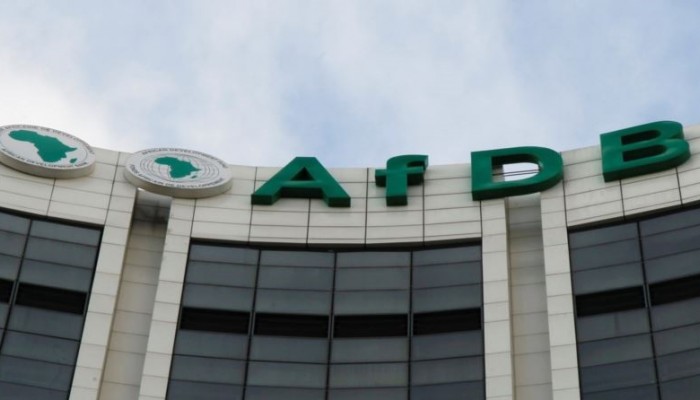
The African Development Bank (AfDB) is collaborating with African countries to develop and structure innovative financing instruments to address insecurity and challenges to economic growth investment and development in the continent.

President of AfDB, Dr Akinwumi Adesina, said this at the fourth edition of the Africa Resilience Forum (ARF 2021), a high-level flagship event of the bank, held virtually on Tuesday.

The event had as its theme: “Covid-19 and Beyond: Working Together for a Resilient Continent”.

The event is aimed to reflect on policies and approaches that support the continent’s efforts around conflict prevention, peace, and state-building initiatives.

Adesina stressed that there was a compelling case for innovative financing mechanisms to tackle challenges that faced the continent.

He called on all partners to work towards strengthening interventions that responded to such challenges.

“Only by working together as humanitarian, peace and development partners can we, effectively, address root causes and focus on strengthening interventions that respond to what I call disaster triangle which has to do with unemployment, environmental degradation and extreme poverty.

“Wherever you find these disaster triangles, you have instability and insecurity. There is, therefore, a compelling case for innovative financing mechanisms to tackle these challenges.

“Recognising this critical link between security, economic growth, investment and development, the African Development Bank (AfDB) is collaborating with African countries to develop and structure innovative financing instruments.

“This includes security index investment banks to mobilise resources to address the root causes of insecurity and project investments and livelihoods,” he said.

The AfDB president also emphasised the need to focus on tackling the effects of climate change and reiterated the bank’s commitment to double its climate adaption finance to 25 billion dollars by 2025.

“We have expanded the percentage of financing devoted to climate adaptation from 26 per cent in 2016 to 67 per cent in 2020.”

He further stressed the need to increase investment for social protection, safety nets, and resilient and affordable healthcare systems to reduce the effects of the COVID-19 on the continent.

“We must also prioritise job creation especially for the youth that is why the bank created the Youth Entrepreneurship and Innovation Multi-Donor Trust Fund, an initiative to support Africa’s entrepreneurship ecosystems that help to create 25 million jobs by 2025.

Also, he reiterated the importance of women to further drive inclusive and resilient growth through the bank’s Affirmative Finance Action for Women in Africa which supported women-enabled businesses.

“To be clear, when women thrive, Africa prospers,” he emphasised.

Adesina urged Africa not be deterred by the enormous challenges facing the continent adding that resilient economies, communities and people promoted peaceful, stable and prosperous nations.

In his address, Chairperson, African Union Commission (AUC), Mr Moussa Mahamat called on African countries to remain focused and harness their human and natural resources which were “huge assets” for resilience.

“Africa’s assets for full resiliency are huge. The challenge is to reach resilience and fast-track economic growth by harnessing our natural resources and attention to our agricultural production.”

Mahamat said the pandemic had helped the continent to identify categories of population and economic sectors that were vulnerable and required a new vision for reform.

“Flagship programmes that are found in the 2063 Agenda show that gradually, on a macro management perspective, we are giving ourselves a tool for resilience, ongoing reforms and establishment of the African Continental Free Trade Area pathways for our development and self-centred growth.

“We have to count on our intra-African solidarity and promoting principles within which to set up mechanisms for shock management.

“In this regard, creating financing tools to manage this risk is vital. I call on you create all the tools because it is worthwhile and the situation calls for such tools,” he said.

He further stressed an important aspect of institutional reform which is building new forms of partnerships.

He, however, emphasised the need for reliance on the AUC’s own efforts “without turning our backs to our strategic partners”.

“That is our vision of a renaissance, of multilateralism which we are all yearning for.

“The issue of financing, particularly debt management, financing peace as well as renovating developmental aid should be raised within the framework of the rebirth of multilateralism.”

Mahamat also stressed the need to have an efficient combination of all forces of the continent for the vision of resiliency to take root in the governance, political and social practices of the continent.

ARF 2021 aims to provide a platform for sharing experiences, lessons learned, and co-create innovative solutions based on global and regional trends to address fragility and build lasting resilience on the African continent.

The three-day forum would end on Thursday. (NAN)

Continue Reading
Click to comment

Leave a Reply

Your email address will not be published. Required fields are marked *

Business & Economy

Tinubu Welcomes Nigeria’s Removal from FATF Grey List, Pledges Continued Financial Reforms

Published

on

President Bola Tinubu
President Bola Ahmed Tinubu
Share

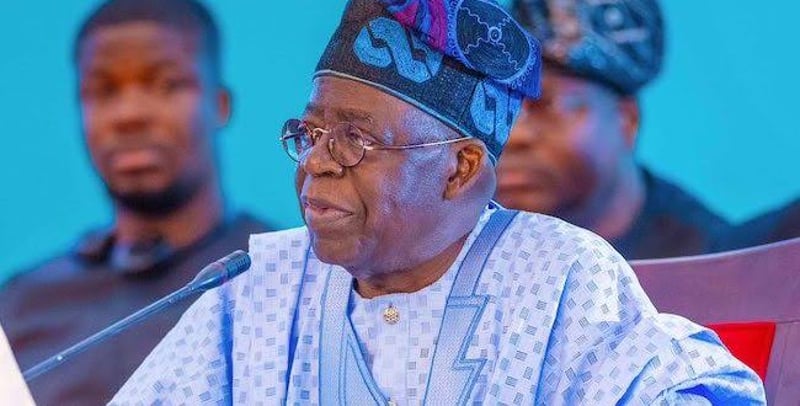
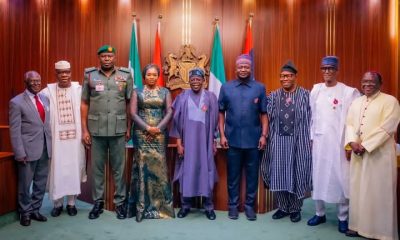
President Bola Ahmed Tinubu has welcomed the removal of Nigeria from the Financial Action Task Force (FATF) grey list, describing it as a major milestone in the nation’s economic reform and global credibility drive.

The FATF, the world’s foremost body for combating money laundering, terrorist financing, and proliferation financing, announced Nigeria’s delisting on Friday at its plenary session in Paris, France.

The decision formally removes Nigeria from the list of countries under increased monitoring, following the nation’s successful completion of its FATF Action Plan after over two years of sustained reforms and inter-agency coordination.

In a statement issued by his Special Adviser on Information and Strategy, Bayo Onanuga, President Tinubu said the development reflects Nigeria’s progress in strengthening its Anti-Money Laundering and Counter-Financing of Terrorism (AML/CFT) framework.

“Rather than treat our placement on the grey list in 2023 as a setback, we saw it as a call to action,” the President said. “This delisting is a strategic victory for our economy and a renewed vote of confidence in Nigeria’s financial governance.”

The President credited the achievement to far-reaching legal, institutional, and operational reforms implemented under his administration through the Nigerian Financial Intelligence Unit (NFIU), in collaboration with the Attorney-General of the Federation, the Minister of Finance and Coordinating Minister of the Economy, and other key ministries.

Tinubu commended the Director/CEO of the NFIU, Ms. Hafsat Abubakar Bakari, and her team for their diligence and professionalism, as well as the contributions of several ministries, agencies, and private sector representatives who participated in the National Task Force on AML/CFT.

He also acknowledged the support of international partners including France, Germany, the United Kingdom, the United States, the United Nations, and the European Commission, for their technical assistance throughout Nigeria’s reform process.

President Tinubu assured that his administration will sustain and deepen the reforms that led to the country’s delisting.

“This is not just a technical accomplishment,” he said. “It marks the beginning of a new chapter in our financial reform agenda as we continue building a system Nigerians and the world can trust.”

Continue Reading

Business & Economy

Lagos Tops 2024 State Revenue Ranking with ₦1.26 Trillion — NBS Report

Published

on

lagos state logo
Lagos State coat of Arms
Share

Lagos State has retained its position as Nigeria’s highest internally generated revenue (IGR) state in 2024, according to a new report released by the National Bureau of Statistics (NBS).

The report, published on Monday via the NBS X handle, revealed that the 36 states and the Federal Capital Territory (FCT) collectively generated ₦3.6 trillion in 2024, marking a 49.7 per cent increase from ₦2.43 trillion recorded in 2023.

Lagos led the chart with ₦1.26 trillion, followed by Rivers with ₦317.3 billion, and the FCT with ₦282.36 billion. Ogun and Enugu States completed the top five with ₦194.93 billion and ₦180.5 billion, respectively.

The bottom five states on the list were Adamawa (₦20.29 billion), Taraba (₦17.46 billion), Kebbi (₦16.97 billion), Ebonyi (₦13.18 billion), and Yobe (₦11.08 billion).

Other states that made the top 10 include Delta (₦157.79 billion), Edo (₦91.15 billion), Akwa Ibom (₦75.77 billion), Kano (₦74.77 billion), and Kaduna (₦71.57 billion).

The NBS noted that the sharp increase in overall IGR reflects growing fiscal efforts by states to boost their internal revenue base amid declining federal allocations.


Continue Reading

Business & Economy

FG Launches Free Financial Education Programme for 100,000 Youths 

Published

on

FG logo
Share

The Federal Ministry of Youth Development, in partnership with Investonaire Academy, has commenced registration for a nationwide financial education programme designed to train 100,000 Nigerian youths annually in financial literacy, entrepreneurship, global trade, and investment.

In a statement signed by Omolara Esan, Director of Information & Public Relations, the Ministry said the initiative reflects its commitment to equipping young Nigerians with the skills to navigate today’s complex financial landscape, enhance employability, and foster sustainable wealth creation.

The programme will provide participants with exposure to global asset classes, including commodities, gold, equities, and foreign exchange, as well as training in risk management, portfolio development, and wealth-building strategies.

Successful candidates will receive industry-recognised certificates to support career advancement and entrepreneurial opportunities. Training will be delivered via an interactive Learning Management System (LMS), incorporating gamified learning, simulations, quizzes, and real-life trading scenarios. Physical sessions will begin in Abuja before expanding nationwide.

The programme is open to students, NYSC members, entrepreneurs, job seekers, and young professionals across Nigeria’s 36 states and the FCT.

Registration is free and currently ongoing via www.investonaire.org.


Continue Reading