
Defence and Security
Senate moves to strengthen labour institutions in Nigeria

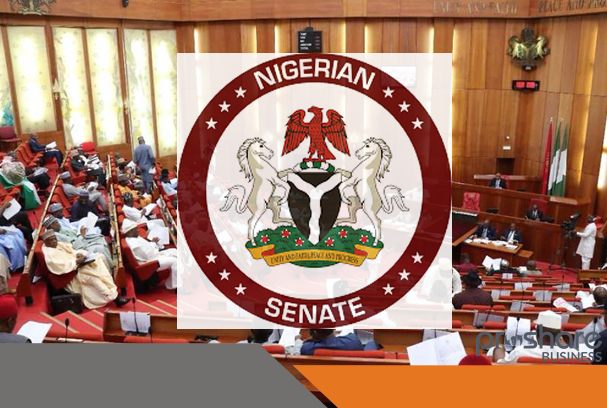

The Senate, on Tuesday, moved to strengthen labour institutions in the country when it considered the Labour Institutions (Establishment) Bill, 2021.
The bill which scaled second reading on the floor during plenary, seeks to, among others, address the indiscriminate firing and retrenchment of workers by employers in the country.
Sponsor of the bill, Senator Sadiq Sulieman Umar (APC, Kwara North), said the piece of legislation seeks to provide for the establishment of the National Commission for Conciliation and Arbitration, National Labour Council and the office of the Registrar of Trade Unions to administer the provision of labour laws in Nigeria.
According to the lawmaker, Trade Disputes in Nigeria are currently governed entirely by the provisions of the Trade Disputes Act Cap T8 laws of the Federation of Nigeria 2004.
Umar is observed that, “the greatest challenge of the present dispute settlement is that the entire process from negotiation, conciliation up to arbitration is domiciled in, activated by and operated by the Federal Ministry of Labour and Productivity.
“Under section 9 of the Trade Disputes Act, the Minister appoints the chairman, vice-chairman and all members of the industrial arbitration panel. This scenario is totally at variance With best practices in dispute settlement as it is difficult to see how such a body can be impartial where government is a party.”
The lawmaker explained that the objectives of the Bill seek to create labour institutions that are independent, impartial, flexible, simple and functional.
He added that the Labour institutions when established would, among others, administer the provisions of all labour laws in Nigeria as it affects freedom of association, industrial relations, working conditions, health and occupational safety.
The institutions, according to Umar, would also ensure compliance with the principle of tripartism as enjoined by the International Labour Organisation Convention 144 to which Nigeria is a party and has ratified; as well as promote the prevention, containment and speedy resolution of labour disputes.
“Mr. President, Distinguished colleagues, the thrust of the Bill is to transform the Industrial Arbitration Panel established under the Trade Disputes Act Cap T8 LPN 2004, into a Commission which shall be responsible for regulating the practice and procedure of Industrial Arbitration and Conciliation in Nigeria and these will further deepen the practice of Alternative Dispute Resolution (ADR) in the country”, he said.
He expressed concern that the Industrial Arbitration Panel established under the Trade Dispute Act during the military era in 1976 was crafted to suit the military agenda and the prevailing labour environment at the time.
“These provisions have become obsolete and its implementation and enforcement is now at variance with current labour realities”, Umar observed.
The lawmaker, therefore, advocated for the interest of the Government, Employers and Labour to be represented at all times and applied to all institutions in dealing with industrial relations and dispute resolutions in accordance with the ILO convention on tripartite consultations, to which Nigeria is a signatory.
Citing Section 7 (3) and (4) of National Industrial Court Act 2006, which provides for the establishment of a conciliation and arbitration process, Umar observed that the industrial arbitration panel as currently constituted under the Trade Dispute Act is not only grossly inadequate to meet modern labour challenges but also in conflict in some cases with the provisions of the National Industrial Court Act 2006.
The lawmaker emphasized that the provisions of the Bill would not conflict with the Conciliation and Arbitration Act.
He noted that it is rather concerned with issues involving hiring, firing, pensions, retirement, redundancy, retrenchment, welfare matters, social responsibilities and labour related matters between employers and employees, employees and labour unions and between unions.
Contributing to the debate on the bill, Senator Aliyu Sabi Abdullahi (APC, Niger North), described the bill as “innovative”, adding that it would address lingering disputes between employers, employees and Labour unions in the country.
The Senate Leader, Yahaya Abdullahi (APC, Kebbi North), on his part, suggested an amendment to the Trade Dispute Act as against establishing a Commission for the purpose complying with the tripartite provisions of the International Labour Organization.
Ibrahim Shekarau (APC, Kano Central), however, threw his weight behind the establishment of a separate Commission for the settlement of Industrial disputes.
“The current situation, whereby it is an arm of the government – Ministry of Labour establishing the Arbitration panel – which in the end, most of the Labour Union still see it as discussing with the same government.
“Because the Arbitration panel is usually appointed by the government, most of the argument of the Labour union is that they are discussing with the same party (ie the government) with which they have the dispute”, he said.
The Senate President, Ahmad Lawan, thereafter, referred the bill to the Committee on Employment, Labour and Productivity for further work.
The Committee was given two weeks to report back to the Senate.



APC Accuses Atiku of Politicising Ebola Outbreak, Defends Tinubu’s Response
Share The All Progressives Congress (APC) Presidential Campaign Council has accused former Vice President Atiku Abubakar of politicising Nigeria’s Ebola...


INTERPOL Arrests 1,462 Cybercrime Suspects, Recovers $105m in Africa
Share The International Criminal Police Organisation (INTERPOL) has arrested 1,462 suspects, disrupted 10,909 malicious networks and recovered $105 million in...


Imo Court Targets January 2027 for Trial of Five Suspected Kidnappers
Share An Imo State High Court sitting in Owerri has called for an accelerated hearing of cases involving five suspected...

Bamidele Urges Lagos, Southwest States to Establish Regional Investment Compact
Share The Leader of the Senate, Senator Opeyemi Bamidele, has called on the Lagos State Government and other Southwest states...

2027: Ogun Igbo Community Endorses Tinubu, Yayi, to Confer Chieftaincy Title on Senator
Share The Ohanaeze Ndi Igbo in Ogun State has endorsed President Bola Ahmed Tinubu for re-election in 2027 and declared...