The Senate recorded a historic feat on Thursday with the passage of the complete version of the Petroleum Industry Bill (PIB) which defied passage in previous assemblies over the last twenty years.
The bill was passed after a clause-by-clause consideration of a report by the Joint Committee on Downstream Petroleum Sector; Petroleum Resources (Upstream); and Gas on the PIB.
The Chairman of the Joint Committee, Sabo Muhammed Nakudu, delivered a presentation on the Committee’s report moments before the upper chamber held a closed session to receive briefing by the Petroleum Minister, Timipre Sylva, and the Group Managing Director of the Nigerian National Petroleum Corporation (NNPC), Mele Kyari.
The closed session which started at 11:10am ended at 12:40pm.
In his presentation, the lawmaker said that the Petroleum Industry Bill consists of five distinct chapters which include Governance and Institutions; Administration; Host Communities Development; Petroleum Industry Fiscal Framework; and Miscellaneous Provisions comprising 319 clauses and 8 schedules.
According to him, the bill’s passage and eventual assent into law would strengthen accountability and transparency of NNPC limited as a full-fledged company under statutory/regulatory oversight with better returns to its shareholders – the Nigerian people.
He added that the Joint Committee’s recommendation on Frontier Basins recognized the need for Nigeria to explore and develop the country’s frontier basins to take advantage of the foreseeable threats to the funding of fossil fuel projects across the world due to speedy shift to alternative energy sources.
During a clause-by-clause consideration of the bill, the upper chamber approved the funding mechanism of thirty percent of NNPC limited’s oil and gas profit in the production sharing, profit sharing, and risk service contracts to fund exploration of frontier basins.
It also approved Clause 4 of the bill which seeks the establishment of the Nigerian Upstream Regulatory Commission to provide technical regulatory functions that would enforce, administer and implement laws, regulations and policies relating to upstream petroleum operations.
The Commission would, among others, ensure compliance with applicable national and international petroleum industry policies, standards and practices for upstream petroleum operations; and establish, monitor, regulate and enforce health, safety and environmental measures and standards relating to upstream petroleum operations.
In addition, the upper chamber while adopting the Committee’s recommendation to retain provisions in Clause 29 of the bill, approved the establishment of the Nigerian Midstream and Downstream Petroleum Regulatory Authority.
Clause 29(3) empowers the Authority to be responsible for the technical and commercial regulation of midstream and downstream petroleum operations in the petroleum industry in Nigeria.
Its function include implementing Government policies for midstream and downstream petroleum operations as directed by the Minister; and to promote, establish and develop a positive environment for international and domestic investment in midstream and downstream petroleum operations.
Others are to ensure strict environmental
implementation of policies, laws and regulations for midstream and downstream petroleum operations; and to develop and enforce a framework on tariff and pricing for natural gas and petroleum products.
The recommendation of the Joint Committee was amended in Clause 52(7d) to ensure that all monies received from gas flaring be channeled for the purpose of environmental remediation and relief of the host communities as against the development of infrastructure in midstream gas operations.
The upper chamber, however, retained the recommendation of the Joint Committee in Clause 53 which empowers the Minister of Petroleum Resources to incorporate the Nigeria National Petroleum Corporation as a limited liability company to be known as NNPC Limited, six months after the commencement of the Act.
Accordingly, the adopted Clause 53 mandates the Minister of Petroleum Resources at the incorporation of NNPC Limited, to consult with the Minister of Finance to determine the number and nominal value of the shares to be allotted, which would form the initial paid-up share capital of NNPC Limited.
Consequently, the Senate approved ownership of all shares in NNPC Limited to be vested in the Government at incorporation and held by the Ministry of Finance Incorporated on behalf of the Government.
The upper chamber, however, reviewed downward the Joint Committee’s recommendation that 5 percent be paid as contribution to the host community development fund.
Senators in the majority voted for 3 percent contribution to the host communities, following an amendment to Clause 240(2) by Senator Ahmad Babba Kaita (APC, Katsina North), which was seconded by Ibrahim Gobir (APC, Sokoto East).
The approval of 3 percent for host communities represents an upward review of 0.5 percent from the previous 2.5 percent contribution to the host community development fund.
Efforts by the Deputy Senate President, Ovie Omo-Agege (APC, Delta Central), Senators James Manager (PDP, Delta South), George Thompson Sekibo (PDP, Rivers East), and Albert Bassey Akpan (PDP, (PDP, Akwa-Ibom North East) to demand an upward review met a brick wall from lawmakers.
Sekibo, in a move to sustain his agitation for an increase in contributions to host communities, relied on Order 73 of the Senate Rule and called for a division.
The Senate Leader, Yahaya Abdullahi (APC, Kebbi North), however, prevailed on Sekibo to withdraw his call for division, and reminded him of the commitment of Senators of the Ninth Assembly in fostering unity while keeping in mind their obligation at all times to protect the national interest.
The Senate Leader’s plea was accompanied by a subtle reaction from the Senate President, Ahmad Lawan, who reminded Sekibo of the overwhelming support demonstrated by lawmakers who had earlier approved that host communities receive remediation and relief from monies accruing from gas flaring in the PIB.
Sekibo at this point withdrew his earlier call for division.
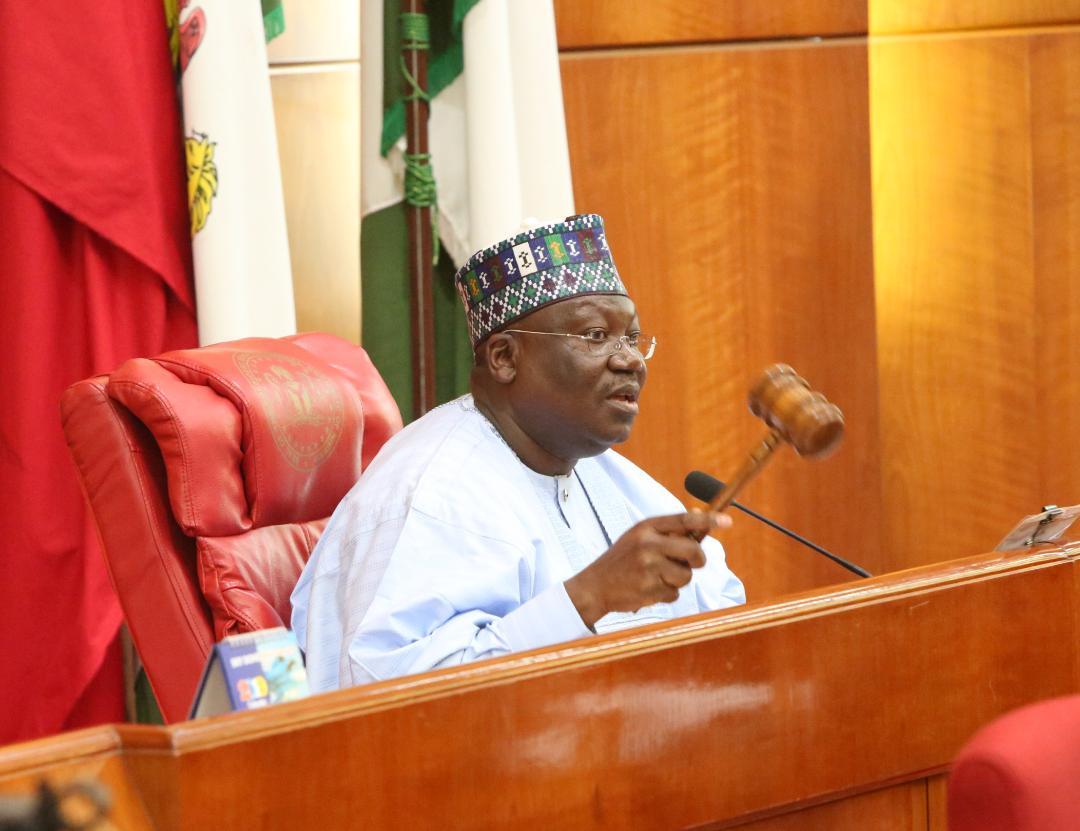
The Senate President, Ahmad Lawan, in his remarks after the eventual passage of the PIB, congratulated the Ninth Assembly and Joint Committee on Downstream Petroleum Sector; Petroleum Resources (Upstream); and Gas for the “tremendous and historical achievement of passing the long awaited Petroleum Industry Bill.”
According to him, the passage of the PIB was an indication that the “demon” behind its non-passage in the past had been finally defeated.
He added, “I must commend the leadership of the House of Representatives, too, for providing leadership to ensure that our Joint Committees in the Senate and the House work together to produce the report that we have just passed.
“Let me say that the Ninth Senate and, indeed, the Ninth National Assembly has achieved one of its fundamental items on the legislative agenda.
“We promised Nigerians that we will do our best to pass the PIB that has defied passage or defied assent. At least, the demons are being defeated in this chamber.”
Lawan appealed to President Muhammadu Buhari to give expeditious assent to the bill when it is eventually forwarded to him by the National Assembly.
The Senate, thereafter, adjourned plenary till next week Tuesday, the 6th of July, 2021.