Connect with us

Business & Economy

Tinubu Approves Framework to Unlock $50bn Deep Offshore Investment

Published

on

President Bola Ahmed Tinubu
Share


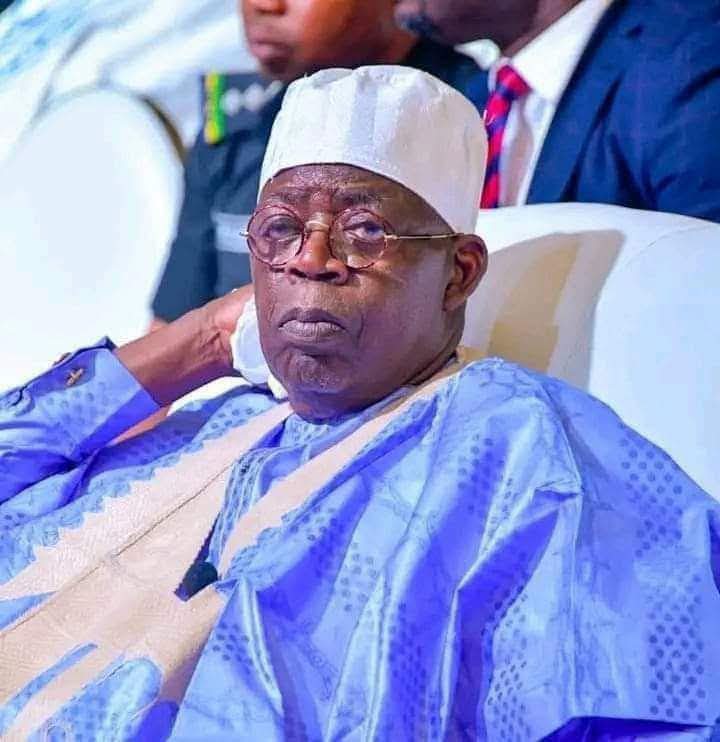
President Bola Ahmed Tinubu has approved a new investment framework aimed at attracting up to $50 billion in fresh investment into Nigeria’s deep offshore oil and gas sector.

The reform is designed to end project-by-project negotiations and introduce clear rules and incentives for large-scale offshore developments.

The framework, implemented through the Deep Offshore Oil and Gas Projects Incentives (Tax Remission) Order, 2026, is expected to revive major projects that have remained stalled for years.

One of the key projects targeted is the approximately $10 billion Bonga South West development.

The new framework will provide transparent eligibility requirements and implementation procedures, giving investors greater certainty while protecting Nigeria’s long-term economic interests.

It also allows NNPC Limited, as the government’s nominated counterparty under Production Sharing Contracts, to make the necessary amendments to eligible contracts to implement the incentives.

According to the Special Adviser to the President on Oil and Gas, Olu Verheijen-Arowolo, qualifying projects will be required to maximise activities within Nigeria where commercially and technically feasible.

She said the policy would help expand local engineering, fabrication, marine logistics, technical services and project management, while creating skilled jobs and strengthening domestic supply chains.

President Tinubu commended the Federal Ministry of Justice, Ministry of Finance, Ministry of Petroleum Resources, Nigeria Revenue Service, NNPC Limited, NUPRC, NCDMB and other industry stakeholders for their contributions to developing the framework.

The President said countries that attract long-term investment are those that provide certainty, stressing that the reform would create an investment environment based on clear rules, strong institutions and lasting partnerships.

He said the initiative would help attract capital, grow Nigerian businesses, create jobs and ensure that the country’s natural resources deliver greater long-term value.

Continue Reading
Click to comment

Leave a Reply

Your email address will not be published. Required fields are marked *

Business & Economy

Over 67,000 Nigerians Benefit From Consumer Credit Scheme — Tinubu

Published

on

President Bola Ahmed Tinubu
Share


President Bola Tinubu has said that 67,512 Nigerians across 25 states and the Federal Capital Territory (FCT) have so far benefited from credit backed by the National Credit Guarantee Company (NCGC).

Tinubu disclosed this on Monday in a series of posts on his official X account as Nigeria prepares to celebrate its 66th Independence Day.

According to the President, the NCGC has issued ₦21.59 billion in guarantees, enabling participating financial institutions to provide ₦46.95 billion in loans.

He said 11,374 of the beneficiaries are women, while 33.5 per cent are first-time formal borrowers.

Tinubu noted that more than 22,000 Nigerians had entered the formal credit system for the first time through the scheme, giving them an opportunity to build credit records that could improve their access to future loans.

The consumer credit scheme was launched in July 2026 by the Nigerian Consumer Credit Corporation (CREDICORP), in partnership with the Federal Ministry of Communications, Innovation and Digital Economy.

The President said the initiative was part of his campaign promise to move Nigeria towards a credit-based economy and make financing more accessible to individuals and businesses.

He said CREDICORP enables working Nigerians to access consumer credit, while the National Education Loan Fund (NELFUND), Bank of Industry and Development Bank of Nigeria provide financing in other sectors.

Tinubu explained that the NCGC was established to reduce the risks faced by financial institutions when lending to businesses and individuals without sufficient collateral or credit history.

He said the company currently works with 19 financial institutions, comprising 13 commercial banks, three microfinance banks and three development finance institutions.

The President added that businesses supported through the NCGC scheme were estimated to have created 661,291 direct and indirect jobs.

He said the impact of the scheme showed how government reforms could translate into economic opportunities for Nigerians.

“Our reforms laid the foundation. Credit gives Nigerians the means to build on it,” Tinubu said, adding that the Federal Government would continue to expand access to credit across the country.

He described the development as evidence of his administration’s efforts to fulfil its campaign promises, saying, “Promise made, promise kept. We are moving from reforms to opportunities. Nigeria First.”

Continue Reading

Business & Economy

Ogun, DP World Seal $7bn Port, Blue Marine SEZ Investment Deal

Published

on

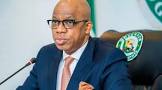
Ogun State Governor Dapo Abiodun
Ogun State Governor, Dapo Abiodun
Share


The Ogun State Government and DP World MEA FZE have signed Memoranda of Understanding (MoUs) for the development of the Gateway Deep Sea Port and the Ogun State Blue Marine Special Economic Zone (SEZ), in a deal projected to attract more than $7 billion in initial investment and create over 50,000 direct jobs.

President Bola Tinubu witnessed the signing in Paris, France, alongside the Minister of Marine and Blue Economy, Adegboyega Oyetola, and the Director-General of the Nigerian Ports Authority (NPA), Abubakar Dantsoho.

The agreements bring together the Federal Government, Ogun State, DP World, financial advisers and other private-sector partners in a framework designed to ease logistics bottlenecks, expand industrial capacity and strengthen Nigeria’s manufacturing and export potential.

The Gateway Deep Sea Port, planned for Ogun Waterside, will feature a four-kilometre berth and an 18-metre draft, allowing it to accommodate larger vessels, ease pressure on the Lagos port corridor and reduce transportation costs and delays for businesses.

The port will be linked to the proposed 10,000-hectare Blue Marine Special Economic Zone, which is expected to host manufacturing, processing, logistics and export-oriented industries.

Tinubu said the integrated development would help transform imported inputs into finished goods while enabling Nigerian raw materials to be processed for export, thereby supporting the expansion of the country’s non-oil export base.

“A port moves cargo; a port integrated with a special economic zone helps to build an economy,” the President said.

He said the 28-kilometre Ogun section of the Lagos-Calabar Coastal Highway would provide a critical connection between the port, the industrial zone, Lagos, the Nigerian hinterland and wider African markets.

The corridor is also expected to connect with other strategic investments, including the proposed Nigerian Navy Operating Base and Dockyard and the OK LNG Project, creating stronger links between maritime infrastructure, industry, energy and trade.

According to the President, the projects represent an initial investment of more than $7 billion and are projected to generate over 50,000 direct jobs, in addition to indirect employment opportunities.

Tinubu described the development as a practical demonstration of the Federal Government’s economic diversification and industrialisation drive under the Renewed Hope Agenda.

He commended Ogun State Governor Dapo Abiodun for securing the required land, structuring the investment framework and reducing project risks for investors.

The President also described the initiative as an example of cooperative federalism, with Ogun State driving the project while receiving strategic support from the Federal Government.

Tinubu assured investors of regulatory clarity and policy stability, pledging federal support for road, rail and power connectivity, investment security and the maritime sector.

He stressed that the agreements must translate into actual investments, infrastructure, jobs and economic opportunities.

Earlier, Governor Abiodun described the signing as a defining moment for Ogun State and Nigeria’s engagement with the global economy.

Abiodun said the deep seaport vision had remained largely unrealised for more than three decades until the intervention of the Tinubu administration.

“It has taken the foresight, courage and dogged leadership of President Bola Ahmed Tinubu to move it from aspiration to reality,” the governor said.

He commended the Federal Government, Oyetola, the NPA and other institutions for supporting the project, describing it as a convergence of the Renewed Hope Agenda and Ogun State’s Building Our Future Together agenda.

According to Abiodun, the deep seaport will strengthen trade, attract investment, improve connectivity and expand Nigeria’s maritime economy, while creating opportunities for SMEs, logistics operators, manufacturers, technology firms and other businesses.

He said the Blue Marine SEZ would provide a platform for investment, technology, innovation and talent, drawing on the integrated port-and-industrial-zone model exemplified by DP World’s Jebel Ali Free Zone.

The governor added that the development would form part of a wider multimodal infrastructure network connecting the Gateway International Airport, dry ports, the Lagos-Calabar Coastal Highway and the deep seaport.

“History will judge us not by the elegance of documents signed, but by the transformation that follows. Ceremonies proclaim intentions; only implementation creates prosperity,” Abiodun said.

He assured DP World and other partners of Ogun State’s commitment to investment, while emphasising community participation, environmental sustainability and security.

The MoUs mark a significant step in Ogun State’s long-standing ambition to develop its coastline into a major maritime and industrial hub, with the proposed port and SEZ expected to strengthen logistics, manufacturing, exports and regional trade.

Continue Reading

Business & Economy

FG Cuts Interest Rate on Late Tax Payments, New Order Takes Effect October 1

Published

on

Share

The Federal Government has introduced a new tax administration order reducing the interest rate charged on late payment of taxes.

The Nigeria Tax Administration Order 2026, signed by the Minister of Finance and Coordinating Minister of the Economy, Taiwo Oyedele, will take effect from October 1, 2026.

The Order, issued under Section 65 of the Nigeria Tax Administration Act, 2025, links interest on late tax payments more closely to prevailing market rates.

What the New Order Says

For taxes payable in naira, interest will be charged at the Central Bank of Nigeria’s Monetary Policy Rate (MPR) plus one percentage point.

This represents a reduction from the previous five-percentage-point spread. However, the applicable rate will not be lower than the yield on 364-day Treasury Bills.

For taxes payable in foreign currency, the interest rate will be based on the Secured Overnight Financing Rate (SOFR) plus six percentage points.

The Nigeria Revenue Service (NRS) is required to publish the applicable rates on its website by the third business day of every month.

Explaining the policy, Oyedele said the new system was designed to ensure that delaying tax payments would not become a cheaper source of credit than borrowing from the market.

According to him, the new framework will also provide taxpayers with greater certainty because the applicable rates will be published monthly and applied uniformly.

New Rates Apply From October 1

The new rates will apply to interest arising from October 1, 2026, including interest on taxes that became due before that date.

However, interest that arose before October 1 will remain governed by the rules applicable at the time.

The new Order also supersedes the 2017 notice on interest on unpaid taxes and other earlier notices on the subject.

The 10 per cent penalty for late payment under Section 65 of the Nigeria Tax Administration Act remains unchanged.

Tax authorities may also waive interest or penalties where good cause is established, as provided under Section 66 of the Act.

The minister urged taxpayers to file their returns and pay their taxes on time, while those with outstanding liabilities were advised to settle them promptly or engage the relevant tax authority.

Continue Reading