Blast Politics
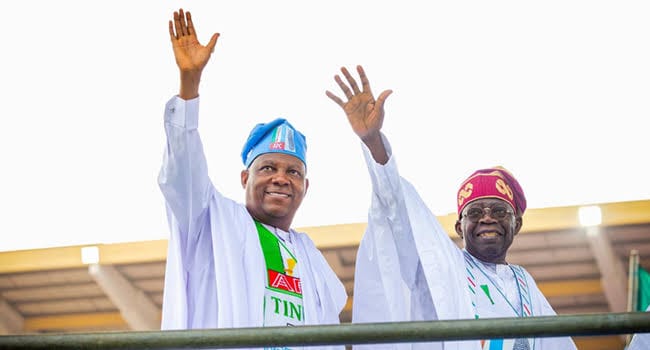
2027 Presidency: Tinubu Unveils APC Campaign Council, Names Yari DG, Uzodimma Secretary
Published
3 months agoon
By
News Editor
President Bola Ahmed Tinubu has constituted the All Progressives Congress (APC) Presidential Campaign Council ahead of the 2027 general elections, placing former Zamfara State Governor, Senator Abdulaziz Yari, at the helm of the campaign as Director-General.
The campaign council, unveiled on Saturday, August 22, 2026, brings together senior party leaders, serving and former governors, legislators, ministers, political strategists and media professionals as the governing party begins preparations for the presidential contest.
President Tinubu will serve as Chairman of the council, while Vice President Kashim Shettima will occupy the position of Vice Chairman. APC National Chairman, Professor Nentawe Yilwatda, is also designated Vice Chairman.
Governor Hope Uzodimma of Imo State has been appointed Secretary of the campaign council, while APC National Secretary, Senator Ajibola Bashiru, and Hadiza Bala-Usman will serve as Deputy Secretary and Assistant Secretary respectively.
Yari Takes Charge of Campaign Structure
The appointment of Senator Abdulaziz Yari as Director-General places the former Zamfara governor at the centre of the APC’s operational strategy for the 2027 presidential election.
Yari will be expected to coordinate the various directorates and political structures of the campaign council as the party seeks to consolidate its hold on the presidency and mobilise support across Nigeria’s six geopolitical zones.
President Tinubu will be supported by a team of senior political advisers comprising former APC National Chairman, Chief Bisi Akande; former Ogun State Governor, Chief Segun Osoba; Senator Rochas Okorocha; former APC National Chairman, Senator Abdullahi Adamu; and Senator Florence Ita Giwa.
Akpabio, Abbas, Bamidele Get Zonal Responsibilities
The campaign structure also assigns major responsibilities to the leadership of the National Assembly and key state governors.
Senate President Godswill Akpabio, Speaker of the House of Representatives Tajudeen Abbas and Yobe State Governor Mai Mala Buni have been appointed Deputy Directors-General responsible for campaign activities in the South and North.
They will work alongside Senate Leader Senator Opeyemi Bamidele and Deputy Senate President Senator Jibrin Barau in coordinating political activities across the respective zones.
Senator Adams Oshiomhole has been appointed Deputy Director-General in charge of mobilisation, while the President’s Chief of Staff will serve as Deputy Director-General for Administration.
Faleke Returns to Election Planning
James Abiodun Faleke, a prominent figure in the APC’s previous presidential campaign, has been brought back into the campaign structure as Deputy Director-General for Election Planning, Coordination and Monitoring.
Faleke will supervise a team of zonal directors responsible for coordinating election-related activities across the country.
They include Senator Olushola Adeyeye for the South-West, Dr Ngozi Olejeme for the South-South, Senator Uche Ekwunife for the South-East, Muntaqha Rabe for the North-West, Ahmed Muhammed Ketso for the North-Central and Senator Sani Danladi for the North-East.
Stella Okotete, Engineer Abdullahi Garba Ramat and Audu Maikori have also been appointed secretaries of the Election Planning Directorate.
Legal Team Takes Shape
The legal arm of the campaign will be headed by Muiz Adeyemi Banire as Director, with Dr Liman Hassan and Babatunde Ogala serving as Deputy Directors.
Other members of the legal directorate include Attorney-General of the Federation and Minister of Justice, Prince Lateef Fagbemi; former Katsina State Governor Ibrahim Shema; Worgu Boms; and Dr Kingsley Tochukwu Udeh.
The directorate is expected to provide legal and strategic support to the campaign throughout the electoral process.
Mohammed Idris Leads Media and Strategic Communications
The campaign’s media and strategic communications machinery will be coordinated by the Minister of Information and National Orientation, Mohammed Idris Malagi.
He will work with former presidential spokespersons and senior media strategists, including Dele Alake, Bayo Onanuga and Lanre Issa-Onilu.
Tunde Rahman, Sunday Dare, Daniel Bwala and Felix Morka have been designated Coordinating Deputy Directors within the media directorate.
Abdulaziz AbdulAziz, Temitope Ajayi, Arabinrin Aderonke and Frederick Nwabufor will serve as Coordinating Secretaries.
Segun Dada has also returned as Director of New Media, a role he occupied during the 2022/2023 presidential campaign, while Solomon Arowolo has been appointed Secretary of the New Media Directorate.
Five Spokespersons Named
The APC campaign council has further appointed five spokespersons to drive its public communication strategy.
Dele Alake will lead the team, with Alwan Hassan, Ayobami Oyalowo, Kemi Asekun-Shittu and Adamu Fanda serving alongside him.
The spokespersons are expected to articulate the campaign’s message, defend the administration’s record and communicate its agenda to voters as the election season gathers momentum.
Tinubu Tasks Council With Securing Victory
In his message to members of the campaign council, President Tinubu charged them to work relentlessly towards securing victory for the APC in the January 2027 elections.
The President also directed leaders of the various directorates to extend their reach beyond those formally listed in the council, encouraging them to bring other capable party members into the campaign effort.
Tinubu said the administration had fulfilled its campaign promises and positioned Nigeria for economic recovery, urging members of the campaign team to make the government’s achievements central to its electoral message.
He said the country had moved beyond the period of economic difficulty and was approaching the benefits of a more prosperous economy.
The President further urged the campaign team to confidently present the administration’s record to Nigerians and inspire hope across the country, while defeating political forces seeking to reverse the direction of the nation.
With the unveiling of the campaign council, the APC has effectively moved into a more organised phase of its preparations for the 2027 presidential election, assembling a broad political and communication structure designed to coordinate mobilisation, election planning, legal strategy and messaging across the federation.
The council’s composition also signals the central role that the presidency, the National Assembly leadership, governors and experienced political operators will play in the APC’s bid to retain power at the federal level in 2027.
You may like
-
Tinubu Assures Nigerians of Improved Electricity, Pledges Leyland Factory Revival
-
Tinubu Warns Politicians Against Violence, Orders Security Agencies To Crush Thuggery Ahead Of 2027 Elections
-
Tinubu Rules Out Return Of Fuel Subsidy, Says Policy Is Here To Stay
-
Tinubu Accelerates Northern Rail Projects, Kaduna-Kano Line Set for December 3 Inauguration
-
Tinubu Urges Rivers Voters To Use PVCs As Weapon Against Poverty
-
Tinubu To Present 2027 Budget Before Year-End As FEC Approves Five-Year Development Plan
Blast Politics
Tinubu Assures Nigerians of Improved Electricity, Pledges Leyland Factory Revival
Published
7 hours agoon
November 22, 2026
President Bola Tinubu has assured Nigerians of improved electricity supply, promising to tackle the persistent power challenges as his administration seeks renewed support ahead of the 2027 general elections.
Tinubu gave the assurance on Saturday at the APC presidential campaign rally held at Mapo Hall, Ibadan, Oyo State, where he urged residents to remain committed to the party, promising greater development and economic opportunities.
“I guarantee you an improvement in electricity. Joseph Tegbe, Minister of Power, is working really hard with his team,” the President said.
He also disclosed that the Federal Government had signed an agreement with Chinese automobile manufacturer, Yutong, to revive the defunct Leyland automobile factory in Ibadan.
According to him, the project will transform the facility into a public transport vehicle production and automobile assembly plant.
The agreement, signed on November 19, involves the Federal Government, through the Presidential Initiative on Compressed Natural Gas and Electric Vehicles, Yutong and its local partner, YP Automobile.
Tinubu’s electricity promise comes amid widespread complaints over poor power supply, with households and businesses facing prolonged outages despite the electricity tariff bands introduced by the government.
Even customers under Band A, who are expected to receive at least 20 hours of electricity daily, have continued to complain about inadequate supply.
The situation has been worsened by rising petrol and diesel prices, making alternative power sources increasingly expensive for households and businesses.
Minister of Power, Joseph Tegbe, had attributed recent blackouts to maintenance work at the Egbin Power Station, gas supply challenges and vandalism of transmission infrastructure.
The President’s latest assurance has also revived public debate over his 2023 campaign promise to end estimated billing and ensure Nigerians have access to electricity.
During the 2023 campaign, Tinubu had promised that Nigerians would have electricity and would no longer pay estimated bills, urging voters not to re-elect him if he failed to deliver without providing adequate reasons.
The debate gained fresh attention following comments by former Lagos State Governor, Babatunde Fashola, who argued that Tinubu did not specifically promise 24-hour electricity during the campaign.
Fashola urged Nigerians to assess the administration based on actual improvements in electricity supply and efforts to eliminate estimated billing.
His remarks, however, attracted criticism from opposition figures and the campaign organisation of Oyo State Governor, Seyi Makinde, amid continuing concerns over the country’s power situation.
Blast Politics
2027: Atiku, Obi Are Handing Tinubu Re-Election Victory on a Platter – Sule Lamido
Published
1 week agoon
November 14, 2026
Former Jigawa State Governor and Peoples Democratic Party (PDP) chieftain, Sule Lamido, has raised the alarm over the deepening divisions within Nigeria’s opposition political parties, warning that the failure of former Vice President Atiku Abubakar and former Anambra State Governor Peter Obi to forge a common front could pave the way for President Bola Ahmed Tinubu’s re-election in 2027.
Lamido declared that the personal ambitions, political rivalries and growing hostility among leading presidential contenders had overshadowed the national interest, warning that Nigeria could emerge as the biggest casualty of the forthcoming presidential election, irrespective of who eventually wins.
Speaking on Channels Television’s Politics Today on Friday, the former governor argued that the inability of Atiku and Obi to consolidate their political strengths had significantly weakened the opposition and handed the ruling All Progressives Congress (APC) a strategic advantage ahead of the January 16, 2027, presidential election.
According to him, the political atmosphere has become increasingly dominated by propaganda, personality clashes and divisive campaigns, leaving Nigerians struggling to identify meaningful policy alternatives among the major contenders.
“I think the way things are, the propaganda and support warfare is too much. It’s too intense for even Nigeria to be able to really understand what’s happening,” Lamido said.
Atiku, Obi Divisions Strengthening Tinubu — Lamido
The former Jigawa governor maintained that President Tinubu’s political advantage was being reinforced by the APC’s growing network of serving and former governors, alongside the fragmentation of opposition forces.
He argued that the political influence and electoral structures available to Atiku and Obi could have presented a formidable challenge to the incumbent president if both leaders had agreed to work together.
“Because of the number of governors, both serving and former governors of the APC, and because Atiku and Obi divided their own force, it gives Tinubu the advantage,” he stated.
Lamido suggested that a joint presidential ticket featuring Atiku as the presidential candidate and Obi as his running mate would have significantly strengthened the opposition’s electoral prospects.
He further proposed a political arrangement under which Atiku could serve an initial four-year term before handing over to Obi, describing such an understanding as a potentially effective strategy for confronting the ruling party.
“So both Peter Obi and Atiku are simply handing Tinubu, very easily. But if they come together, it would have been a high-level canvas, you know, Atiku for president and Obi running mate, and then after four years, one takes over,” he said.
His remarks underscore the continuing debate over opposition unity and whether the fragmentation that characterised the 2023 presidential election could once again shape the outcome of the 2027 contest.
Opposition Coalition Collapses Amid Presidential Ambitions
The political disagreements between Atiku and Obi have remained a major concern among opposition stakeholders seeking to unseat President Tinubu.
Following the 2023 presidential election, opposition leaders initiated discussions aimed at building a broad political coalition capable of challenging the APC’s dominance.
The initiative gained momentum in July 2025 when prominent opposition figures adopted the African Democratic Congress (ADC) as a common political platform ahead of the 2027 general elections.
However, disagreements over party leadership, organisational structure, presidential ambitions and the sharing of political influence reportedly undermined the coalition’s unity.
The internal crisis eventually resulted in Obi leaving the ADC alongside former Kano State Governor Rabiu Musa Kwankwaso for the Nigeria Democratic Congress (NDC) in May 2026.
Obi subsequently emerged as the NDC presidential candidate, while Atiku remained in the ADC and secured the party’s presidential ticket.
The development effectively placed the two prominent opposition figures on separate political platforms, raising questions about the possibility of a united challenge against Tinubu.
Although both politicians have continued to pursue their presidential ambitions, Obi has maintained that any political alliance with Atiku must be founded on a formal agreement between their respective political parties rather than a personal understanding.
Lamido, however, believes the continued division could ultimately benefit the incumbent president, particularly in a closely contested election where opposition votes are distributed among several candidates.
Whoever Wins, Nigeria Will Lose — Lamido
Beyond the electoral calculations, Lamido expressed deeper concerns about what he described as the deterioration of national unity, political tolerance and mutual respect among Nigerians.
The PDP chieftain warned that the increasingly bitter political atmosphere could leave lasting divisions across the country, regardless of which candidate emerges victorious.
“I’ve been saying, look, whoever wins, Nigeria will lose. That’s my problem,” he declared.
“Whoever, whether Peter Obi, Atiku, whoever wins, in terms of our unity, our economy, our love as a country of brothers and sisters, it’s all gone down. It’s more about their personalities. They are abusing each other. Those things become very, very personal.”
Lamido argued that the forthcoming election should ordinarily provide an opportunity for Nigerians to assess competing visions for national development, economic recovery, security and democratic governance.
Instead, he lamented that political discourse had increasingly shifted towards personal attacks, ethnic suspicion and hostile exchanges among supporters of rival candidates.
The former governor insisted that his primary concern was not the eventual winner of the presidential contest but the long-term implications of the prevailing political hostility for Nigeria’s unity and stability.
Lamido Raises Concern Over Political Tension in North
Lamido also expressed concern over rising political tensions in northern Nigeria, warning that propaganda, hate campaigns and inflammatory political messaging could further undermine national cohesion.
He criticised the growing tendency among political actors and their supporters to promote personal rivalries at the expense of constructive engagement on pressing national challenges.
According to him, political campaigns should be centred on the welfare of citizens, the promotion of peaceful coexistence and the presentation of credible solutions to Nigeria’s socioeconomic difficulties.
“We’ve abandoned the traditional campaign on issues, about love, about empathy, about unity, about Nigeria, and then what can you offer? What can you offer? So it’s not there anymore,” he said.
His warning comes amid growing public debate over the tone of political campaigns as parties intensify preparations for the 2027 general elections.
2027: Tinubu, Atiku, Obi, Sowore Set for Presidential Contest
The January 16, 2027, presidential election is expected to feature several prominent political figures seeking to determine Nigeria’s leadership for another four-year term.
President Bola Ahmed Tinubu is seeking re-election on the platform of the ruling APC, while Atiku Abubakar is contesting under the ADC.
Peter Obi is flying the flag of the NDC, while former presidential candidate and activist Omoyele Sowore is representing the African Action Congress (AAC).
The contest is expected to test the electoral strength of the ruling party against opposition candidates campaigning on alternative approaches to governance, economic management and national development.
Political analysts have continued to examine the potential impact of opposition fragmentation on the outcome, particularly given the voting patterns recorded during the 2023 presidential election.
In that election, Tinubu emerged victorious with 8,794,726 votes, defeating Atiku, who polled 6,984,520 votes, while Obi secured 6,101,533 votes to finish third.
The results have continued to fuel discussions about whether a coordinated opposition could have produced a different electoral outcome.
However, the political dynamics ahead of 2027 remain subject to changing alliances, voter preferences, party structures and the effectiveness of nationwide campaign mobilisation.
INEC Registers Over 103 Million Voters Ahead of 2027 Polls
Meanwhile, the Independent National Electoral Commission (INEC) has scheduled the presidential and National Assembly elections for January 16, 2027, while governorship and State Houses of Assembly elections are slated for February 6, 2027.
According to figures announced by the commission, Nigeria’s National Register of Voters has risen to 103,428,715 following the three-phase Continuous Voter Registration exercise, which recorded 10,772,421 new registrations.
INEC disclosed on Tuesday, November 10, that more than 1.6 million invalid and duplicate registration records had been removed following a technical audit of the voter database.
The electoral body also reported that approximately 14 million Permanent Voter Cards (PVCs) remained uncollected nationwide as of November 2026.
It explained that the remaining Phase Three PVCs were being delivered for distribution, with collection scheduled to resume at Registration Area, or ward, levels nationwide from December 1, 2026.
For comparison, INEC recorded 93,469,008 registered voters ahead of the 2023 general elections, with 87,209,007 collecting their PVCs, representing approximately 93.3 per cent.
The growing voter register and continuing PVC collection exercise are expected to play important roles in determining the level of public participation in the forthcoming polls.
Opposition Unity Remains Major Test Ahead of 2027
As political parties intensify preparations for the presidential election, Lamido’s intervention has brought renewed attention to the question of opposition unity and the consequences of personal political ambitions.
His assessment suggests that while President Tinubu may benefit electorally from divisions among his challengers, the broader danger lies in the growing hostility that could outlast the election itself.
For Lamido, the stakes extend beyond who occupies the Presidential Villa in 2027.
The greater challenge, he argued, is whether Nigeria’s political leaders can restore issue-based campaigns, mutual respect and a shared commitment to national unity before the country goes to the polls.

Blast Politics
Court Orders INEC To Reinstate Adebutu As Ogun PDP Governorship Candidate
Published
1 week agoon
November 13, 2026
The Federal High Court in Abuja has ordered the Independent National Electoral Commission (INEC) to reinstate Ladi Adebutu as the Peoples Democratic Party (PDP) governorship candidate in Ogun State for the 2027 election.
Justice Peter Lifu gave the order on Friday, directing INEC to restore Adebutu’s name to the official list of candidates within 24 hours.
The court held that INEC lacked the constitutional power to unilaterally disqualify a candidate validly nominated by a political party.
Justice Lifu also ruled that the commission violated Adebutu’s right to fair hearing by removing his name without giving him an opportunity to defend himself.
The judge maintained that only a competent court, including the Federal High Court or a State High Court, could disqualify a candidate after the political party had forwarded the candidate’s name to INEC.
In the judgment, the court dismissed INEC’s preliminary objection challenging the PDP’s suit and declared the commission’s decision to exclude Adebutu unlawful, unconstitutional and of no effect.
The court further held that evidence presented by the PDP showed that Adebutu participated in and won the party’s governorship primary conducted on May 24, 2026.
It also faulted INEC’s handling of the party membership register, noting that the commission’s witness admitted under cross-examination that he was not the official who received the flash drive containing the submitted membership list.
Justice Lifu consequently ordered INEC to correct the candidates’ list published on October 10, 2026, to include Adebutu’s name.
The court also declared that INEC could not validly announce the result of the 2027 Ogun governorship election without the participation of the plaintiffs, warning that such an election would be unconstitutional and of no effect.
The judgment followed a suit instituted by the PDP and Adebutu over his exclusion from INEC’s list of governorship candidates.
Latest News
Adeboye, Oyedepo, Idahosa, Others to Feature as Dunamis Marks 30th Anniversary in Abuja
ShareThe seven-day celebration will bring together leading Nigerian and international Christian ministers, gospel artistes and delegates from across the world...
Tinubu Assures Nigerians of Improved Electricity, Pledges Leyland Factory Revival
Share President Bola Tinubu has assured Nigerians of improved electricity supply, promising to tackle the persistent power challenges as his...
Ekiti Targets Over 100,000 Women for Economic Empowerment Through Nigeria for Women Programme
Share The Ekiti State Government has intensified efforts to promote women’s economic empowerment through the Nigeria for Women Programme...
Bamidele Celebrates Wole Olanipekun at 75, Hails His Landmark Courtroom Victories as Pillars of Nigeria’s Democracy
Share Says legal icon’s five decades at the Bar, philanthropy and commitment to justice have strengthened the rule of law...
ONDO STATE POLITICS: LEADERSHIP IS NOT A MONOPOLY, AND LOYALTY MUST NOT BE CONFUSED WITH SUBSERVIENCE
Share With all due respect, this write-up is a classic example of how political loyalty can sometimes cloud objective...