Connect with us

Defence and Security

State Police Constitutional Framework Near Completion as Tinubu Administration Advances Reform Agenda

Published

on

Share

ABUJA, Nigeria — The Federal Government says significant progress has been made toward the establishment of state police across Nigeria, with a constitutional amendment expected in the near future following months of consultations involving the Presidency, the National Assembly, and key security stakeholders.

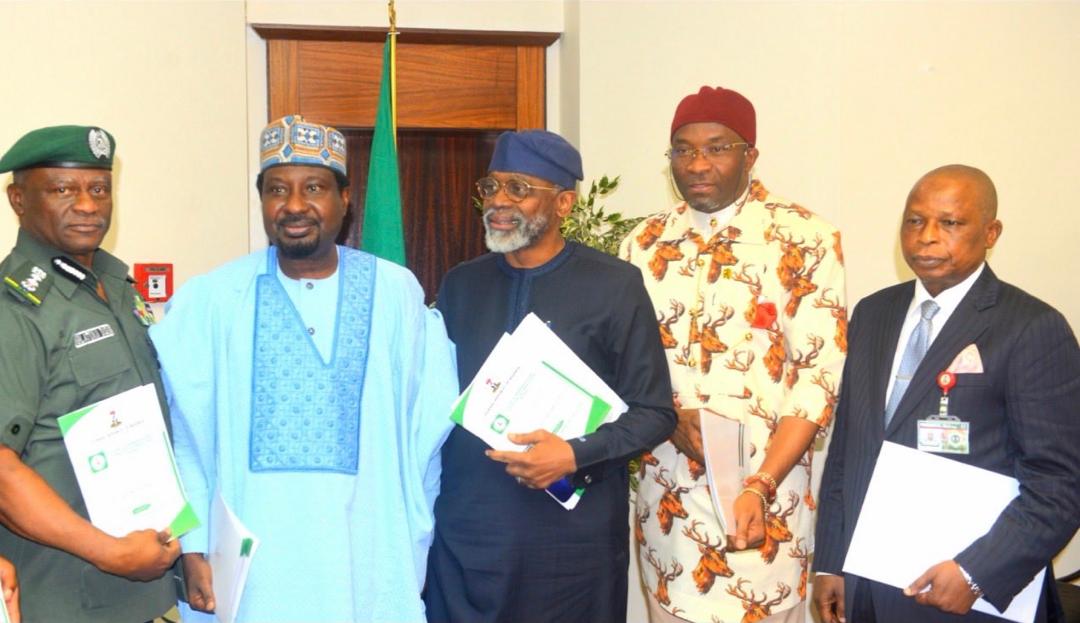
The development was disclosed on Thursday by the Chief of Staff to the President, Femi Gbajabiamila, after a high-level consultative meeting on state policing convened by the Presidency at the State House in Abuja.

Addressing State House Correspondents after the meeting, Gbajabiamila revealed that deliberations on the proposed framework commenced several months ago on the directive of President Bola Ahmed Tinubu and have since recorded substantial progress.

According to him, while there is broad consensus on the necessity of state police, the process requires extensive constitutional and legal considerations before implementation can commence.

“We started deliberations in the last three or four months on how to go about the establishment of state police as directed by Mr President,” Gbajabiamila said.

“Establishing state police is not something that you do with the snap of the fingers. There is a lot involved in terms of constitutional provisions and legalities, and thank God we have now gained a lot of traction.”

He expressed optimism that the constitutional amendment required to create the legal foundation for state police would soon be presented, while further details regarding the proposed framework would be unveiled afterward.

Constitutional Amendment Takes Centre Stage

The Chief of Staff explained that current discussions are focused primarily on amending relevant sections of the Constitution to accommodate a decentralized policing structure. Once the constitutional amendments are secured, enabling legislation would then be introduced to provide operational guidelines for the new security arrangement.

“Right now, what we are looking at is the constitutional amendment itself, and then the enabling law would follow thereafter. That is what we have been deliberating on in the last couple of hours,” he stated.

The move marks one of the most significant security reform initiatives being pursued by the Tinubu administration since assuming office, as the government seeks innovative solutions to Nigeria’s growing security challenges, including banditry, kidnapping, communal violence, terrorism, and other forms of criminality.

National Consensus Emerging

Gbajabiamila noted that discussions have evolved beyond the question of whether Nigeria should establish state police. Instead, stakeholders are now concentrating on designing a framework that would ensure effectiveness, accountability, and constitutional compliance.

He emphasized that there appears to be widespread support across political and institutional lines for the initiative, reflecting a growing national consensus that a centralized policing structure alone may no longer be sufficient to address the country’s complex security realities.

According to him, President Tinubu, a longstanding advocate of state policing, will receive a comprehensive report detailing the outcome of the consultations and recommendations arising from the meeting.

Tinubu’s Push for Decentralized Security

For several months, President Tinubu has consistently argued that state police represents a necessary and practical response to Nigeria’s evolving security environment.

The President has maintained that empowering sub-national governments with policing responsibilities would strengthen grassroots security operations, improve intelligence gathering at the community level, and enhance the protection of lives and property across the federation.

Supporters of the initiative argue that state-controlled police forces would be more familiar with local terrains, cultures, and security dynamics, thereby enabling quicker responses to emerging threats and criminal activities.

High-Level Participation

The consultative meeting brought together senior government officials and security leaders, underscoring the importance attached to the reform.

Among those in attendance were the Deputy President of the Senate, Jibrin Barau; the Deputy Speaker of the House of Representatives, Benjamin Kalu; and the Inspector-General of Police, Tunji Disu, alongside other top government officials and security stakeholders.

The meeting forms part of a series of consultations being undertaken by the Federal Government to develop a workable and sustainable framework for state police, a reform widely regarded as a major step toward restructuring Nigeria’s internal security architecture and enhancing the capacity of states to tackle security challenges within their jurisdictions.

If successfully implemented, the creation of state police would represent one of the most far-reaching constitutional and security reforms in Nigeria’s recent democratic history.

Continue Reading
Click to comment

Leave a Reply

Your email address will not be published. Required fields are marked *

Defence and Security

Weapons Looted During Libya Conflict Ended Up in Hands of Terrorists in Nigeria — UN

Published

on

United Nations Under-Secretary-General and High Representative for Disarmament Affairs, Izumi Nakamitsu
Share


The United Nations has revealed that weapons looted during the 2011 Libyan conflict eventually found their way into the hands of terrorist and extremist groups operating in Nigeria and other countries across the Sahel region, highlighting the long-term security consequences of uncontrolled arms proliferation following armed conflicts.

The disclosure was made by the United Nations Under-Secretary-General and High Representative for Disarmament Affairs, Izumi Nakamitsu, during a high-level discussion at the UN Headquarters in New York on the global spread of illicit firearms and their impact on international peace and security.

Nakamitsu warned that the diversion, theft and illegal circulation of weapons from conflict zones continue to fuel violence, terrorism and organised crime long after wars have ended, posing significant challenges to governments and international peacebuilding efforts.

According to her, the 2011 uprising in Libya, which culminated in the overthrow and death of former Libyan leader Muammar Gaddafi, triggered the widespread looting of military stockpiles. Many of those weapons subsequently spread across the Sahel region, reaching countries such as Niger, Burkina Faso and Nigeria.

“Libya, where weapons looted or diverted during and after the 2011 conflict, which ended the rule of Muammar Gaddafi, later surfaced across the wider Sahel region, including in Niger, Burkina Faso, and Nigeria,” Nakamitsu stated.

She explained that investigations and recovery efforts over the years showed that some of the weapons were eventually traced to extremist groups operating in the region, demonstrating how arms originating from one conflict can destabilise neighbouring countries for years.

“Some were subsequently found in the hands of extremist groups, illustrating how arms from one conflict can destabilise neighbouring countries years later,” she said.

“The end of the conflict does not mean the end of the circulation of those weapons; it stays, and it continues to harm people.”

Growing Threat to Regional Security

The UN disarmament chief stressed that the continued movement of illicit firearms remains one of the most serious threats to peace and stability in fragile states and conflict-affected regions.

She noted that weapons retained by armed groups, militias and local communities after conflicts often become instruments for renewed violence, criminal activity and insurgency.

According to Nakamitsu, the availability of illegal weapons has contributed significantly to the activities of terrorist organisations, bandit groups and transnational criminal networks operating across the Sahel and West Africa.

The region has witnessed increasing insecurity over the past decade, with extremist groups exploiting porous borders and weak governance structures to move weapons, fighters and resources across countries.

Beyond Security Concerns

Nakamitsu emphasised that the proliferation of small arms and light weapons is not merely a military or security issue but one with far-reaching humanitarian and developmental consequences.

She said the widespread availability of illicit firearms is closely linked to terrorism, human rights abuses, organised crime, forced displacement, gender-based violence and the erosion of state authority.

“It is not just a security issue. It is also about peacebuilding. It is about human rights. It is also about development,” she said.

The UN official argued that efforts to tackle illicit arms trafficking must therefore form part of broader strategies aimed at promoting peace, protecting human rights and fostering sustainable development.

Weapons Continue to Circulate After Wars

Highlighting a major challenge facing governments and international organisations, Nakamitsu noted that weapons used during conflicts frequently remain outside official control after hostilities end.

She explained that many firearms are hidden, sold on black markets or smuggled across borders, making them available for use in new conflicts and criminal enterprises.

“Wars end, but unfortunately, the weapons that are used in that particular conflict would not be under full control,” she said.

“They continue to circulate. They are sometimes hidden. They are brought across borders.”

Security analysts have long linked the influx of weapons from post-Gaddafi Libya to the rise in armed insurgencies, terrorism and banditry across the Sahel. The collapse of state institutions in Libya created vast ungoverned spaces that became major transit routes for arms trafficking networks.

Emerging Challenges in Arms Trafficking

Nakamitsu also warned that technological advancements are creating new challenges for law enforcement agencies seeking to combat illicit arms trafficking.

She pointed to the growing emergence of so-called “ghost guns,” 3D-printed firearms and sophisticated smuggling methods that make tracing illegal weapons increasingly difficult.

According to her, traffickers are now able to disassemble firearms into separate components, transport them across borders and reassemble them later, complicating efforts to identify their origins and track their movement.

“Those weapons or weapon parts, if they are disassembled and then trafficked, are more difficult to trace,” she said.

UN Calls for Stronger International Action

The United Nations has repeatedly raised concerns over the unchecked proliferation of small arms and light weapons in the Sahel region, warning that the trend continues to fuel terrorism, armed conflict, organised crime and political instability.

The organisation has consistently urged governments to strengthen border controls, improve weapons stockpile management, enhance intelligence-sharing and deepen regional cooperation to curb illicit arms flows.

Nakamitsu reiterated the need for coordinated international action to prevent weapons from conflict zones from entering illegal markets and falling into the hands of non-state actors.

Her remarks underscore growing global concerns that unresolved conflicts and weak post-war disarmament measures can have lasting consequences, allowing weapons to circulate for years and threaten peace and security far beyond the original battlefield.

Continue Reading

Defence and Security

Oyo Lawmakers Reject Negotiation With Kidnappers, Demand Intensified Rescue Efforts for Abducted Schoolchildren and Teachers

Published

on

Oyo State House of Assembly in Session
Share


Members of the Oyo State House of Assembly have strongly opposed calls for negotiations with kidnappers responsible for the abduction of dozens of schoolchildren and teachers in Oriire Local Government Area, insisting that government efforts should focus on intensified rescue operations and the dismantling of criminal networks.

The lawmakers made their position known during Wednesday’s plenary session, following growing public pressure for authorities to engage the abductors in dialogue to secure the release of the victims.

The abduction crisis began on May 15 when suspected bandits attacked three schools in Oriire LGA, kidnapping approximately 39 students and seven teachers. The situation worsened after one of the abducted teachers, Michael Oyedokun, was reportedly killed by the kidnappers.

Public concern heightened further after a video surfaced on Instagram showing Rachael Alamu, the principal of Community High School, Esiele, who is among those held captive. In the video, she disclosed that the kidnappers had threatened to kill another victim and appealed to authorities to urgently negotiate for their freedom.

The development sparked nationwide protests by members of the Nigerian Union of Teachers (NUT), students, civil society groups, and other concerned stakeholders, who demanded immediate action to secure the release of the abductees.

However, lawmakers in Oyo State maintained that negotiating with kidnappers could embolden criminal elements and worsen the security challenges facing the state and the country.

Speaking during the debate, Speaker of the House, Adebo Ogundoyin, warned against engaging terrorists and armed groups, arguing that such actions could encourage future kidnappings and strengthen criminal operations.

He acknowledged the pain and anxiety being experienced by the families of the victims but urged residents to continue supporting ongoing efforts by security agencies and the state government aimed at securing the safe return of the abductees.

According to the Speaker, the focus should remain on intelligence-driven rescue operations, coordinated security interventions, and sustained pressure on the kidnappers until all victims regain their freedom.

Ogundoyin stressed that yielding to the demands of kidnappers would send the wrong message and could create incentives for similar attacks in the future.

Beyond the immediate rescue efforts, the lawmakers called for urgent measures to strengthen security around schools, particularly those located in vulnerable communities near forests and border areas.

The Assembly urged the Oyo State Ministry of Education, Science and Technology, alongside the Oyo State Universal Basic Education Board (SUBEB), to conduct a comprehensive security assessment of schools situated in high-risk locations.

Among the recommendations made by the lawmakers were the installation of solar-powered lighting systems, construction of perimeter fencing around schools, deployment of surveillance cameras, and the establishment of a comprehensive emergency response framework to address security threats across educational institutions in the state.

The House also directed its Committee on Security and Strategy to undertake an immediate assessment visit to Oriire Local Government Area and recommend urgent legislative measures to address the recurring security challenges in the area.

The resolutions followed a motion of urgent public importance sponsored by Johnson Ogundele, the lawmaker representing Oriire State Constituency, shortly after the Assembly reconvened from the Eid-el-Kabir recess.

The motion, titled “Urgent Need for the Executive Arm of Government Through Its Security Architecture to Proactively Nip in the Bud the Spike and Recurring Bandit Attacks on Oriire Communities Since the Beginning of 2026 and to Intensify Rescue and Manhunt Operations to Secure the Release of the Abductees of the Recent Attack on Esiele, Oyo and Yawota Communities,” highlighted the worsening security situation in the constituency.

Ogundele noted that Oriire communities have suffered a series of violent attacks since the beginning of the year. He recalled an earlier assault on the National Park Service office in Oloka Village, where five forest guards were killed by armed attackers.

The lawmaker commended Governor Seyi Makinde for his swift response to the latest incident, including the deployment of security personnel, support for rescue operations, and visits to affected communities.

He urged the state government to further strengthen support for security agencies and consider the establishment of a permanent military presence around vulnerable communities and forest corridors frequently targeted by criminal gangs.

Also contributing to the debate, Sanjo Adedoyin, the Majority Leader of the House, reiterated the need for the Federal Government to accelerate efforts toward the creation of state police, describing it as a critical step in addressing persistent security threats at the grassroots level.

The Assembly’s position underscores growing concerns over the rising wave of kidnappings and banditry in parts of Oyo State, while reinforcing calls for stronger security measures, enhanced protection for schools, and a more aggressive approach to rescuing the abducted students and teachers.

Continue Reading

Defence and Security

Makinde Assures Rescue of Abducted Ogbomoso Schoolchildren, Teachers as Protests Intensify

Published

on

Governor Seyi Makinde of Oyo State
Share


Governor Seyi Makinde of Oyo State has assured residents that every effort is being made to secure the release of the schoolchildren and teachers abducted by gunmen in Oriire Local Government Area of the state, urging Nigerians to remain united and avoid actions that could undermine ongoing rescue operations.

Makinde gave the assurance on Tuesday while addressing protesters at the Government House in Ibadan. The demonstrators, drawn from the Nigerian Union of Teachers (NUT), the National Association of Nigerian Students (NANS), the All Nigeria Confederation of Principals of Secondary Schools (ANCOPSS), and other stakeholders, had organised a solidarity rally to demand the immediate rescue of the victims.

The protests followed a nationwide outcry over the continued captivity of the abducted pupils and teachers, as well as an ongoing strike by teachers in Oyo State initiated by the NUT national leadership in response to the incident.

Addressing the crowd, the governor stressed that the rescue mission should not be politicised or turned into a blame game among different levels of government. According to him, the focus should remain on working together to ensure the safe return of the victims.

“This is not the time to apportion blame or argue over whether the responsibility lies with the president, the governor, or the local government. This is a time for all of us to come together as one,” Makinde said.

The governor described the kidnappers as dangerous criminals whose actions defy normal human behaviour, noting that security agencies were dealing with individuals capable of extreme violence.

“We are not dealing with normal human beings. Anyone who can abduct fellow human beings and kill them without remorse cannot be considered normal,” he said.

Makinde appealed to students, teachers, workers, and residents to maintain confidence in government efforts, revealing that security personnel deployed by the federal government had remained actively engaged in the state for more than two weeks.

He disclosed that he had been holding regular meetings with security operatives, sometimes several times a day, to review developments and coordinate rescue efforts.

“I can only appeal to the students, teachers, workers, and all residents to trust the government. We are doing everything possible. Federal security operatives have been on ground for the past two weeks, and I have been meeting with them morning, afternoon, and night to ensure that progress is being made,” he said.

The governor further warned against actions that could create division or provide encouragement to those behind the attacks, insisting that unity was critical at a time of national concern.

“We should not give oxygen to those who want to see us divided. The best response at this moment is for everyone to stand together and allow the government and security agencies to complete their work,” he added.

Makinde also expressed confidence that the victims would eventually regain their freedom.

“I can assure you that our children and their teachers will be rescued,” the governor stated.

The abduction occurred on May 15 when armed men attacked three schools in Oriire Local Government Area, kidnapping about 39 pupils and seven teachers. During the attack, an assistant headmaster and a motorcyclist were reportedly killed.

Public anger intensified days later after one of the abducted teachers, Michael Oyedokun, was reportedly beheaded by the kidnappers.

The situation has continued to generate widespread concern across the country, with families of the victims, labour unions, student groups, and civil society organisations calling for urgent action.

In separate videos circulated on social media, one of the abducted victims, Rachael Alamu, the principal of Community High School, Esiele, appealed for government intervention, alleging that the kidnappers had threatened to kill another captive if negotiations were not pursued.

As pressure mounts, both state and federal authorities have stepped up engagement with affected families and local communities. Governor Makinde visited relatives of the victims on Saturday, while a federal delegation led by the Chief of Staff to the President, Femi Gbajabiamila, and the National Security Adviser, Nuhu Ribadu, visited Ogbomoso on Sunday to assess the situation.

President Bola Ahmed Tinubu has also directed the deployment of a specialised security unit equipped with advanced rescue capabilities to support efforts aimed at securing the safe release of the abducted schoolchildren and teachers.

The incident remains one of the most disturbing school-related kidnappings in recent times and has renewed concerns over security in educational institutions across Nigeria.

Continue Reading