Connect with us

Business & Economy

“WE HAVE DRASTICALLY REDUCED UNEMPLOYMENT, UNEMPLOYABILITY IN LAGOS” – COMMISSIONER 

Published

on

Share

The Lagos State Government has spoken of its efforts in reducing unemployment, saying no less than 125,000 direct and indirect jobs have been created in the last two years.

Commissioner for Wealth Creation and Employment, Mrs. Yetunde Arobieke, announced the figure while addressing the media in commemoration of the second year in office of Governor Babajide Olusola Sanwo-Olu at Alausa Secretariat, Ikeja.

The Commissioner said that the partnership initiative of the State Government with the Federal Government in giving soft loans and grants as well as making empowerment initiatives have assisted greatly in bridging skills-gap, unemployment rate and poverty.

Specifically, the Commissioner reported that the impact of the COVID-19 pandemic on the livelihood of residents, especially the indigent, was minimal because of the succour provided by the various empowerment initiatives embarked upon by the Ministry.

Mrs. Arobieke said 8,000 residents were supported earlier this year, through a Special Grant for Rural Women in partnership with Federal Government. The beneficiaries are spread across all the 57 Local Government Areas and Local Council Development Areas.

No fewer than 22,647 beneficiaries under the variants (N-teach, N-Health, N-Agro) participated in a sensitisation workshop organised to review experiences, gather strategies needed post-N-Power programme and provide a platform for future career prospects. The Commissioner said the Graduate Internship Programme has invited 1,000 candidates who scored 60% and above in the online Assessment Test for the first tranche of the employability skills training.

On capacity enhancement and upskilling for tradesmen and artisans, Mrs. Arobieke stated that 2000 artisans selected from trade associations were retrained in Y2020 while another batch of 2000 artisans will begin training soon..

Continue Reading
Click to comment

Leave a Reply

Your email address will not be published. Required fields are marked *

Business & Economy

Tinubu Rules Out Fuel Subsidy Return, Says Nigeria Cannot Go Back to ‘Egypt’

Published

on

President Bola Ahmed Tinubu
Share


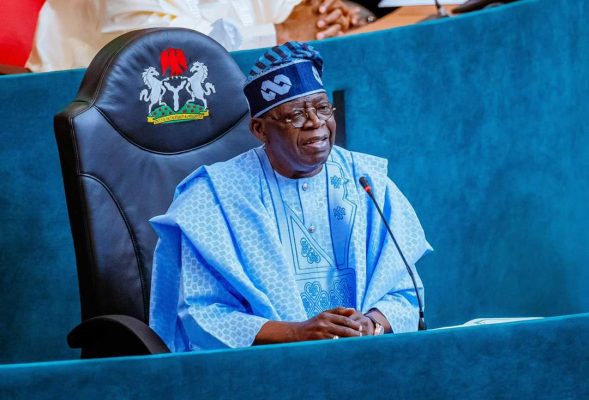
President Bola Tinubu has ruled out any return to petrol subsidy, insisting that the removal of the policy was necessary to prevent Nigeria’s economy from sliding into bankruptcy.

The President reiterated his position on Monday during a meeting with members of the City Boy Movement, a youth-driven political and advocacy group, where he defended the economic reforms introduced by his administration.

Tinubu said the government could no longer sustain the financial burden of subsidising petrol, arguing that the country lacked the resources required to continue funding the scheme.

“I came, and I removed the subsidy on my first day. Nigeria would have gone bankrupt; there was nothing left to pay for subsidies,” he said.

Using a biblical and Quranic analogy to underscore his position, the President declared that reversing the policy would amount to returning to an unsustainable economic system.

“When Moses (Musa) left Egypt, the Red Sea parted and gave way. You cannot ask Moses to go back to Egypt. With your energy and support, we will never go back to Egypt,” he stated.

The removal of petrol subsidy, announced during Tinubu’s inauguration on May 29, 2023, marked a major shift in Nigeria’s fiscal policy. The decision significantly increased petrol prices and contributed to mounting pressure on household incomes, transportation costs and businesses.

Petrol prices, which were below ₦200 per litre before the policy change, have since risen substantially, with prices reported at between ₦1,350 and ₦1,405 per litre across major filling stations.

The resulting increase in energy and transportation costs has continued to fuel public concerns over inflation, declining purchasing power and the overall cost of living.

However, the Federal Government has maintained that subsidy removal is critical to reducing fiscal pressure, improving public revenue and creating room for investment in infrastructure and other priority sectors.

Tinubu acknowledged the political contest surrounding the policy, noting that his opponents had promised to restore fuel subsidy. He nevertheless maintained that his administration would not reverse the reform.

Beyond defending the policy, the President urged members of the City Boy Movement to mobilise support for his administration by communicating its achievements and future plans to young Nigerians across campuses, markets and rural communities.

He also encouraged eligible young people to obtain their Permanent Voter Cards (PVCs) and participate in the electoral process.

The debate over fuel subsidy remains a central issue in Nigeria’s economic policy, with the government defending the reform on fiscal sustainability grounds while households and businesses continue to grapple with the effects of higher fuel prices.


Continue Reading

Business & Economy

FG Rules Out Electricity Tariff Hike, Targets 24-Hour Power Supply

Published

on

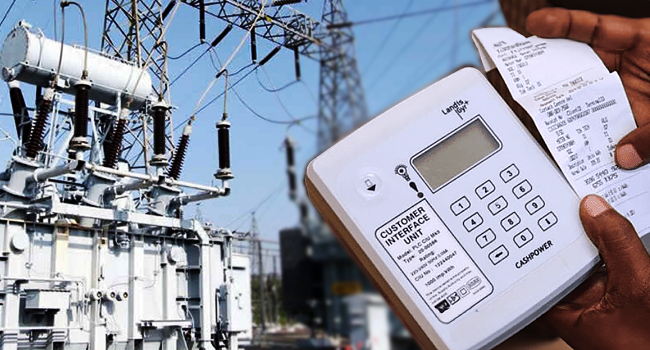
Power Station and Meters
Share


The Federal Government has ruled out any plan to increase electricity tariffs, saying its priority is to improve power supply and ensure reliable electricity across the country.

The Minister of Power, Joseph Tegbe, gave the assurance in Ibadan, Oyo State, on Thursday, amid concerns and speculation about a possible increase in electricity tariffs.

Tegbe spoke during the groundbreaking ceremony for five interconnected mini-grid projects with a combined generation capacity of 17.7 megawatts and a 17.74-megawatt-hour Battery Energy Storage System (BESS).

“I want to say this clearly and without ambiguity: there is no plan to increase electricity tariffs. What we are planning is a power sector that works around the clock. Our commitment is 24/7 power,” the minister said.

He urged Nigerians to disregard reports suggesting an impending tariff hike, stressing that the government was focused on improving electricity generation, transmission and distribution.

The five mini-grid projects are located in Bola, Jiboye, Molade-Adelubi, Ogo Oluwa and Sooko-Elega. They are expected to provide electricity to communities across Akinyele, Ido, Ibadan North, Egbeda and Lagelu Local Government Areas of Oyo State.

According to the minister, the projects are designed to expand electricity access, reduce dependence on petrol and diesel-powered generators, and create a more favourable environment for businesses, investment and job creation.

Tegbe said the Federal Government was also implementing a broader energy strategy aimed at improving electricity supply through designated energy corridors, including the Lagos-Ogun, Abuja-Kaduna-Kano and Benin-Enugu-Port Harcourt corridors.

He added that efforts were underway to strengthen the national grid and upgrade generation and transmission infrastructure across the country’s eastern, western and central corridors.

The minister described the mini-grid initiative as part of President Bola Tinubu’s Renewed Hope Agenda, noting that similar electricity interventions had been implemented in communities across several states with support from the Rural Electrification Agency (REA).

He commended Tinubu for his leadership and acknowledged the contributions of the REA, project developer Paras Energy and Natural Resources Development Limited, the World Bank and the Ibadan Electricity Distribution Company.

Tegbe also recognised the Oyo State Government, traditional rulers and other stakeholders for their roles in facilitating the projects.

The initiative is expected to improve electricity reliability in the beneficiary communities, support local economic activities and reduce energy costs for households and businesses.


Continue Reading

Business & Economy

Oyedele Warns Against New Taxes, Urges Governments to Explore Revenue Alternatives
Published

on

President Bola Ahmed Tinubu
Share

Minister of Finance and Coordinating Minister of the Economy, Taiwo Oyedele, has cautioned governments against imposing new taxes or increasing the tax burden on vulnerable citizens and productive sectors amid economic pressures.

Oyedele spoke on the sidelines of the 2026 annual meetings of the International Monetary Fund (IMF) and the World Bank in Bangkok, Thailand, where he presented the communiqué of the Intergovernmental Group of Twenty-Four (G24), which he chairs.

The minister said governments should prioritise identifying areas of savings, improving revenue mobilisation and strengthening fiscal management rather than introducing additional tax burdens that could further strain households and businesses.

“This is the wrong time to impose new taxes or increase the burden of tax, particularly on the vulnerable population and productive sectors of the economy,” he said.

Oyedele made the remarks while responding to questions on how developing countries could reduce debt-servicing costs without cutting essential public expenditure.

He urged governments to look inward for savings and explore more efficient ways of generating revenue while protecting vulnerable populations from further financial pressure.

On public borrowing, the minister said debt financing remained necessary to support economic growth but stressed that borrowed funds should be deployed to stimulate job creation and promote inclusive development.

He noted that governments should prioritise limited public resources for essential services, including healthcare and education, while leveraging private capital to support other investment needs.

Oyedele also cautioned against treating taxation and borrowing as mutually exclusive options, explaining that both have economic implications and must be carefully balanced.

According to him, excessive taxation of vulnerable households could reduce their capacity to afford basic necessities, including food, healthcare and education.

He described public debt as a future tax burden, emphasising the need for governments to adopt fiscal policies that balance present revenue needs with long-term economic sustainability.

“Debt is future taxes, so it’s not one or the other. It’s to strike a balance, bearing in mind ultimately that the essence of tax and of debts is to cater for the people,” he said.

The minister’s remarks underscore the need for developing economies to strengthen domestic revenue mobilisation, improve public spending efficiency and manage debt sustainably without undermining household welfare or productive economic activities.

Continue Reading