Senate President Godswill Akpabio says the Electoral Act 2026 (Amendment) signed into law by President Bola Ahmed Tinubu will ensure that every Nigerian vote counts and eliminate the manipulation of results.
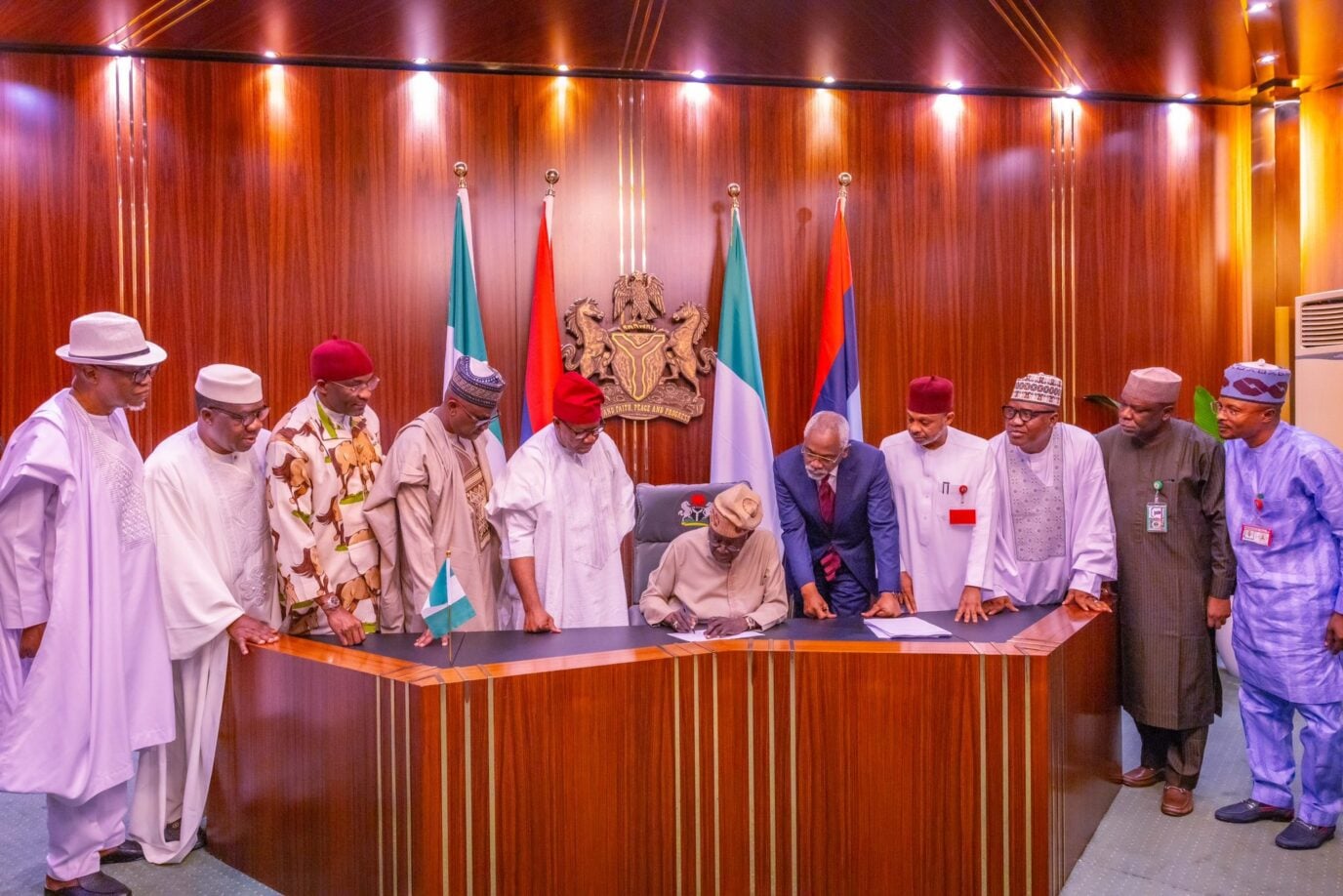
Akpabio spoke with State House correspondents on Wednesday shortly after Tinubu assented to the bill in the presence of principal officers of the national assembly.
“At the end, Nigerians will benefit a lot from future elections. Every vote will now count,” he said.
The senate president stated that the amendment addresses the longstanding issue of result manipulation between polling units and collation centres. He noted that, for the first time since independence in 1960, Nigeria’s electoral law formally recognises electronic transmission of results.
According to him, the amended act mandates the electronic transmission of polling unit results to the Independent National Electoral Commission result viewing portal (IReV).
Akpabio said the provision responds to demands by civil society organisations, opposition parties and election observers following allegations of result manipulation during the 2023 general election.
He, however, said the law makes allowances for areas with poor telecommunications infrastructure.
“We took cognisance of areas where there may not be any network, where there may not be communication capacities and availability,” he said.
He explained that the EC8A form, signed by the presiding officer and party agents in the presence of security personnel, would serve as the primary source of collation at the polling unit level.
“Even if there is no network at that time, once we step out of there, maybe towards the ward centre or the local government centre, it will drop into the iREV, and people will still be able to view,” he added.
Akpabio said the new framework allows Nigerians to compare results uploaded on the portal with figures collated at ward, local government and state levels.
“The implication of that is that if what is eventually collated at the next centre is different from what is in the iREV, Nigerians will be able to compare whether the election result had been tampered with,” he said.
He dismissed claims that the national assembly yielded to political pressure in passing the amendment, insisting that lawmakers acted in the interest of Nigerians. He added that the senate cut short its holiday to conclude work on the legislation.
Akpabio also said the amendment introduces direct primaries for political parties, enabling members to vote directly for candidates of their choice rather than relying solely on delegate systems.
In addition, he said the law provides that where a court disqualifies a declared winner, a fresh election must be conducted instead of declaring the runner-up as winner.
“We don’t want a situation where, in an election, you have five people contesting, one person scores 300,000 votes, one person scores 290,000, and then, for one reason or another, he’s disqualified by the court, and then the person who scored 1,000, who is not popularly elected, will now be declared a winner,” he said.
He added that the same principle applies to governorship elections, where candidates must meet constitutional spread requirements.
Speaker of the House of Representatives Tajudeen Abbas, who also addressed journalists, said the amendment reduces the election notice period from 360 days to 300 days.
He said the adjustment would likely result in the presidential and national assembly elections being held in January 2027, thereby avoiding the Ramadan period and reducing the risk of voter apathy.
The amendment was signed into law days after INEC released the timetable for the 2027 general elections.