Connect with us

Defence and Security

State Police May Fail Without Financial Autonomy, Adequate Funding — Senate Leader Bamidele Warns

Published

on

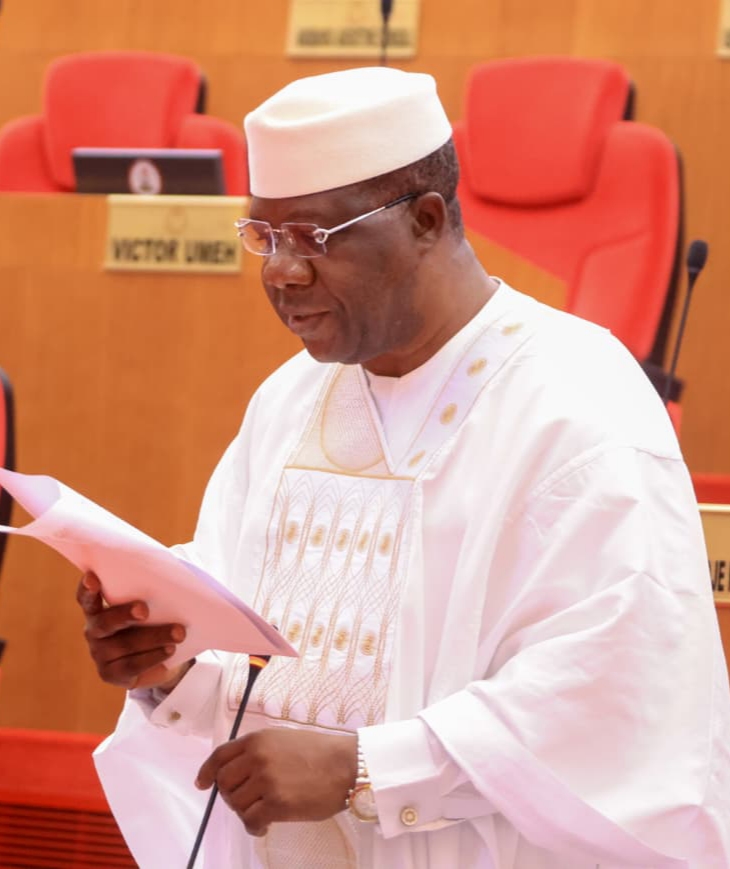
Senate Leader, Senator Michael Opeyemi Bamidele
Share


ABUJA, Nigeria — Leader of the Senate, Opeyemi Bamidele, has warned that the proposed establishment of state police in Nigeria could fail if the new policing system is not backed by guaranteed funding and financial independence.

Speaking on Thursday at the ARISE NEWS Townhall on State Police, Bamidele said inadequate funding would expose state police to undue influence from politicians, wealthy individuals, corporate interests and criminal elements, thereby undermining its ability to effectively protect lives and property.

He stressed that financial autonomy would be a critical factor in determining the success of decentralised policing.

“If the state police is not well funded, it may as well be a highway to nowhere,” Bamidele said.

The Senate Leader explained that the constitutional amendment currently before the National Assembly is not intended to compel every state to immediately establish its own police force. Rather, it seeks to provide the constitutional framework that would enable states to create and operate their own police services if they choose.

According to him, the amendment proposes moving policing from the Exclusive Legislative List to the Concurrent Legislative List, thereby granting states the constitutional authority to establish state police.

“It’s not every state that will immediately, after we finish amending this constitution, go to town to say, ‘We’re launching our state police.’ All we are trying to achieve with this constitutional amendment is to move this duty from the exclusive legislative list to the concurrent legislative list,” he stated.

Addressing widespread concerns over the possible misuse of state police by political office holders, Bamidele acknowledged that such fears are legitimate and must be addressed through robust legal safeguards.

He said the National Assembly is committed to enacting laws that would ensure accountability, transparency and operational independence while preventing abuse of the proposed security structure.

“The various concerns that have been expressed from different quarters are well-founded concerns that we cannot sweep under the carpet or pretend that they are not real,” he said.

The Senate Leader noted that accountability would require not only legislative intervention but also active oversight by citizens and civil society organisations.

“When it comes to issues of accountability, it’s something that will have to be addressed, both at the level of legislative intervention through the law, as well as vigilance on the part of the Nigerian people,” he added.

Bamidele further cautioned that the danger of undue influence extends beyond politicians, warning that poorly funded state police could become susceptible to manipulation by private businesses, influential organisations and criminal networks.

“It’s not only state actors or politicians that can abuse this. Business class, some other organisations, even criminals can abuse it, because he who pays the piper dictates the tune,” he warned.

To safeguard the operational independence of state police, Bamidele proposed constitutional and statutory provisions that would guarantee a stable source of funding outside the discretion of state governors.

He suggested that legislation should provide for a fixed percentage of state budgets to be dedicated to policing, with clear mechanisms governing access to and management of such funds.

“We must have a situation where there will be some first-line provisions in our law. The police chief and the police service commission must have a guaranteed source of income in a way that it will not be subject to the whims and caprices of a sitting governor,” he said.

The Senate Leader also stressed that constitutional amendment alone would not be sufficient to establish an effective state policing system, noting that comprehensive amendments to the Police Act and other relevant legislation would be necessary to define the structure, powers, operations and inter-agency relationships of state police.

He said lawmakers would also need to determine the future roles of existing paramilitary organisations and how they would coordinate with state police.

“We must see beyond constitutional amendment, because once the constitution has been amended, what is next?” he asked.

Bamidele explained that the ultimate objective of state police is to strengthen community policing and improve security at the grassroots level. However, he maintained that the initiative would deliver limited results without genuine local government autonomy.

“The whole essence of trying to emphasise on the move for state policing is because we want community policing. If we do not address the issue of local government autonomy, we will not have achieved much, even with the creation of state police,” he said.

He disclosed that the National Assembly has examined international best practices in developing a framework that would establish minimum national standards for state police operations across Nigeria.

According to him, while Nigeria has reached a stage where decentralised policing has become necessary, the success of the initiative will depend on strong legal safeguards, sustainable funding, accountability mechanisms and clearly defined operational standards.

“We are at a stage now where we must bring this to reality,” Bamidele concluded.

The renewed push for state police comes amid growing insecurity across Nigeria and increasing calls for a decentralised policing structure capable of responding more effectively to local security challenges. The National Assembly is currently considering constitutional amendments that would transfer policing from the Exclusive Legislative List to the Concurrent Legislative List, enabling states to establish their own police services while operating within nationally prescribed standards.

Defence and Security

Troops rescue 16 kidnapped victims in Dekina LG of Kogi State

Published

on

Share

Troops have rescued 16 kidnapped persons after engaging suspected bandits in Dekina Local Government Area of Kogi State.

The victims comprised six males, six females and four children, according to an operational report made available to the News Agency of Nigeria (NAN) on Monday.

The report said the victims were abducted on Saturday, Aug. 9 along Ojuwo-Ajengo-Memarebo and Ojiwo-Itobe roads in Ofu Local Government Area of the state.

It said the operation followed intelligence that the victims were sighted around Adumu community in Dekina.

According to the report, the search-and-rescue operation involves troops of 21 Battalion and Nigerian Navy Ship (NNS) Lugard, the police, vigilantes and Hybrid Forces.

“The security forces eventually made contact with the suspected kidnappers and engaged them, forcing the criminals to abandon their victims and flee.

“However, one member of the Hybrid Forces was killed during the encounter, while one police personnel sustained injuries.

“The rescued victims were subsequently handed over to the police in Ajaokuta for further action,” it said.

The military said the operation highlights the continued collaboration among the military, police and local security groups in tackling kidnapping and rescuing victims in Kogi

Continue Reading

Defence and Security

Kano Multi Agency Task Force Arrest 28 Illicit Drug Suspects

Published

on

Share

The Kano State Multi-Agency Task Force on Drug Abuse and Illicit Trafficking has arrested 28 suspects and recovered assorted illicit substances in Rimin Gado and Doka communities of the State.

This is contained in a statement  by the Chairman of the Task Force, Mr Muhuyi Malawi and issued by the Secretary, Mr Ibrahim Garba-Muhammad on Sunday in Kano.

Magaji, who led the operation, said it was aimed to tackle drug-related criminality and protect communities from the effects of drug abuse and illicit trafficking.

“On Aug. 7, the task force raided five drug joints in Rimin Gado and Doka in Tofa Local Government Area of the state.

The targeted operation was aimed to demonstrate the task force’s impartial enforcement mandate and to send a clear message that no one is above the law.

“We are treating every community equally and enforcing the law without bias.

“Our guiding principle is Kano First and we are determined to ensure a peaceful, prosperous and drug-free state inline with the vision of Gov. Abba Kabir-Yusuf,” he said.

Magaji said the task force recovered various assorted illicit substances during the raids.

He said  that he commenced the operations from his hometown Rimin Gado saying it was deliberate and symbolic.

“Sanitising my own community is the first step to a wider campaign,” he added.

He said that the campaign would be extended beyond Kano Metropolis to all  44 Local Government Areas of the state.

The chairman noted that the operation combined kinetic interventions to disrupt criminal activities with coordinated follow-up.

He said the task force would also adopt a balanced approach that would combine enforcement with prevention and recovery.

“While kinetic measures continue to dismantle illicit drug networks, non-kinetic efforts are being intensified through engagement with community leaders, regulatory bodies, health services and educational partners to raises awareness.

“We’ll also strengthen supply‑chain controls and expand rehabilitative support to those affected by substance use” Magaji said.

He stressed that lawful and legitimate businesses were not the target of the operations.

“Our aim is to protect honest traders and create an environment in which businesses and communities can thrive free from the effects of drug trafficking and abuse” he said.

Magaji said investigations were ongoing and suspects found culpable would be prosecuted in accordance with the law.

He urged members of the public to support the ongoing operations by reporting suspicious activities and provide relevant information on drug trafficking and abuse.

The Chairman reaffirmed the task force’s commitment to sustain its operations, uphold professional standards and safeguard the health and security of residents across the state.

Continue Reading

Defence and Security

Nigerian Navy Intercepts 17,000 Litres of Suspected Illegally Refined AGO in Rivers

Published

on

Share

The Nigerian Navy has intercepted abour 17,000 litres of products suspected to be illegally refined Automotive Gas Oil (AGO) in Rivers under Operation DELTA SENTINEL.

This is contained in an operational report by the Director of Naval Information, Capt Abiodun Folorunsho, on Saturday in Abuja.

Folorunsho said, personnel of Nigerian Navy Ship (NNS) PATHFINDER made the interception during ongoing anti-crude oil theft operations within its Area of Operation.

“During the operation, a speedboat conveying the suspected illegally refined petroleum product was intercepted along the Onne/Okrika waterways.

“The recovered speedboat and the suspected illegally refined AGO were handled in accordance with extant anti-crude oil theft procedures.

“Efforts are also ongoing to identify and apprehend those connected with the illegal activity.”

The naval spokesperson said that the latest operational success further demonstrated the navy’s sustained commitment to disrupting the illicit petroleum supply chain.

He said it also denied economic saboteurs freedom of action, while protecting Nigeria’s critical oil and gas infrastructure from criminal exploitation.

Folorunsho reaffirmed the navy’s commitment to sustaining intelligence-driven operations to combat crude oil theft, illegal oil bunkering and other forms of economic sabotage, while safeguarding Nigeria’s maritime environment and supporting national economic security.

Continue Reading