Connect with us

Parliamentary News

Senate Slashes Election Notice to 300 Days to Avert Ramadan Clash in 2027

Published

on

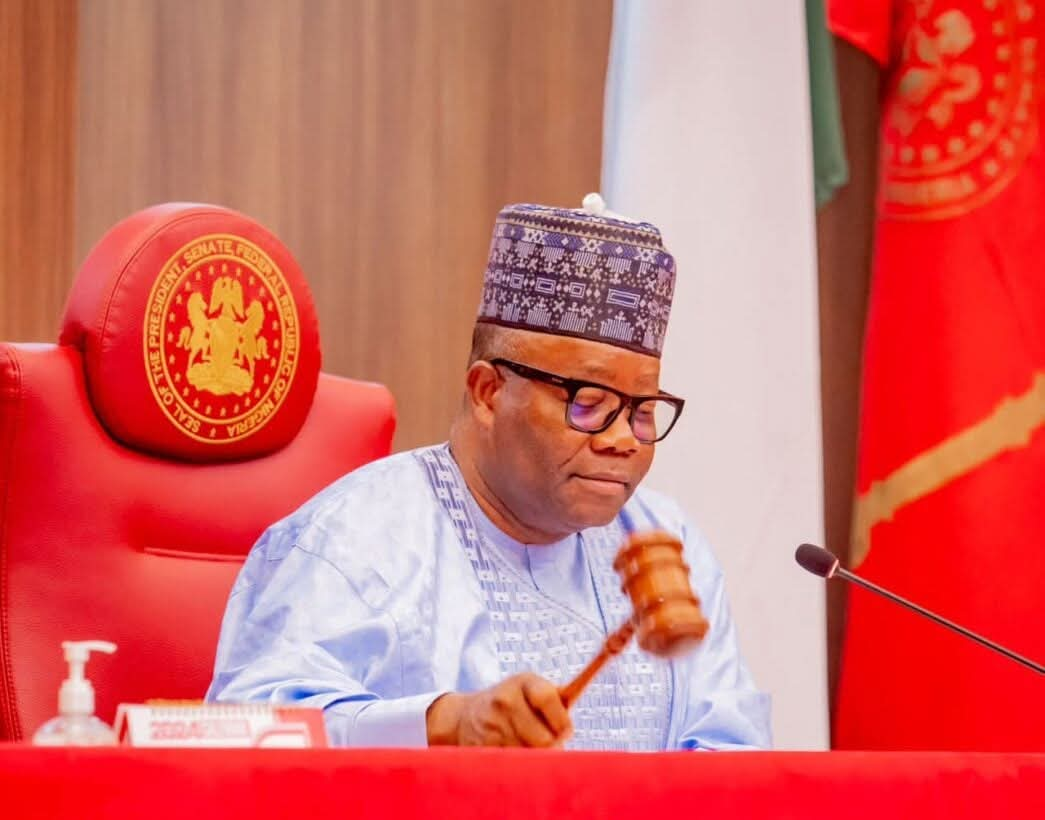
Senate President Godswill Akpabio
Share

Nigeria’s Senate has amended Clause 28 of the Electoral Act (Repeal and Re-enactment) Bill, 2026, cutting the mandatory notice period for general elections from 360 days to 300 days in a decisive move to prevent the 2027 polls from coinciding with the Muslim holy month of Ramadan.

The upper chamber rescinded its earlier passage of the bill and recommitted it to the Committee of the Whole after concerns emerged that the 360-day notice requirement could compel the Independent National Electoral Commission (INEC) to schedule elections during Ramadan.

Why the Change?

Leading the motion under Orders 1(b) and 52(6) of the Senate Standing Orders, Senate Leader Opeyemi Bamidele warned that retaining the 360-day timeline could inadvertently disrupt the 2027 electoral calendar.

“Upon critical review of the passed bill, the 360-day notice requirement prescribed in Clause 28 could result in the scheduling of the 2027 presidential and national assembly elections during the Ramadan period,” Bamidele stated on the floor.

He stressed that holding elections during Ramadan could negatively affect voter turnout, logistics, stakeholder participation, and overall inclusiveness — potentially undermining the credibility of the polls.

Under the revised provision, INEC is now required to publish election notices not later than 300 days before the appointed election date in each state and the Federal Capital Territory. The notice must clearly state the election date and designate venues for submission of nomination papers across constituencies.

INEC’s Role and Election Timeline

The amendment followed consultations between National Assembly leadership and INEC. The electoral body had earlier fixed:

February 20, 2027 – Presidential and National Assembly elections

March 6, 2027 – Governorship and State Assembly elections

Chairman of the Senate Committee on Electoral Matters, Simon Lalong, clarified that the current INEC leadership did not intentionally schedule the polls to clash with Ramadan.

According to him, the election timetable framework was originally established by former INEC Chairman Mahmood Yakubu, who set templates for election cycles spanning 2019 to 2031.

Senate Divides Over Manual Result Transmission

Beyond the notice period amendment, the Senate also faced sharp divisions over Clause 60(3) concerning result transmission.

A proviso allowing manual transmission of election results in the event of electronic network failure was retained after a division vote. Senator Enyinnaya Abaribe had raised a point of order, opposing the inclusion of manual transmission.

“This is democracy in action,” declared Senate President Godswill Akpabio, as he ordered senators to physically indicate their positions.

The outcome:

55 senators voted to retain the manual transmission proviso

15 senators voted against it

Akpabio maintained that those who supported the clause “had just saved Nigeria’s democracy.”

What It Means

With the Senate’s final passage of the Electoral Act (Repeal and Re-enactment) Bill, 2026:

Election notices must now be issued at least 300 days before polling day.

Electronic transmission of results remains permitted.

However, the duly signed Form EC8A will serve as the primary legal record of results where electronic transmission fails.

The amendment signals the Senate’s attempt to balance religious sensitivity, electoral logistics, and technological reliability ahead of the high-stakes 2027 general elections.

All eyes now turn to the House of Representatives and the Presidency as the legislative process advances toward final enactment.

Parliamentary News

55–15 Vote Seals Fate of Clause 60 as Senate Approves Electoral Reform Bill

Published

on

Senate Logo
Share

The Senate on Tuesday passed the Electoral Act, 2022 (Repeal and Re-Enactment) Bill, 2026, following a dramatic and at times rowdy plenary marked by sharp disagreements over Clause 60 and the fate of electronic transmission of election results.

The session opened on a tense note after Senator Enyinnaya Abaribe (ADC–Abia South) renewed his demand for a division on Clause 60, triggering procedural disputes and vocal exchanges across party lines.

Procedural Clash Over Division

Senate President Godswill Akpabio initially stated that he was under the impression the request for division had earlier been withdrawn. However, opposition senators immediately objected, insisting the matter remained unresolved.

Deputy Senate President Barau Jibrin, citing Order 52(6) of the Senate Standing Orders, argued that it would be procedurally out of order to revisit any provision already ruled upon by the presiding officer.

His intervention sparked further uproar, briefly escalating tensions in the chamber. At one point, Senator Sunday Karimi was seen confronting Abaribe before order was restored.

Senate Leader Opeyemi Bamidele then clarified the procedural position, reminding lawmakers that he had earlier sponsored a motion for rescission. According to him, that motion effectively nullified previous decisions on the bill, thereby validating Abaribe’s call for division.

Akpabio suggested that the renewed demand was aimed at publicly demonstrating Abaribe’s position on the contentious clause. Nevertheless, he sustained the point of order and invited the Abia South senator to formally move his motion.

The Core Dispute: Clause 60(3)

Rising under Order 72(1), Abaribe formally called for a division on Clause 60(3), particularly the proviso stating that where electronic transmission of results fails due to network challenges, the duly signed Form EC8A would serve as the primary basis for result collation.

Abaribe proposed deleting the provision permitting manual transmission in cases of electronic failure, arguing that allowing such a caveat could undermine public confidence in digital reforms to the electoral system.

The division was conducted in accordance with Senate procedure. Akpabio directed senators supporting the proviso to stand, followed by those opposing it.

When votes were counted:

55 senators voted in favour of retaining the proviso (manual transmission allowed where e-transmission fails).

15 senators voted against it.

The outcome affirmed the Senate’s decision to preserve the fallback mechanism for manual transmission in cases of network disruption.

Closed-Door Consultations and Clause-by-Clause Review

Earlier in the day, proceedings had briefly stalled during clause-by-clause consideration of the bill after a motion was moved and seconded to rescind previous amendments. The chamber subsequently resolved into the Committee of the Whole for detailed reconsideration and re-enactment.

As Senate President Akpabio read through the clauses, Abaribe’s point of order at Clause 60 drew immediate murmurs and prompted consultations at the presiding officer’s desk. The rising tension ultimately led to a closed-door session before plenary resumed.

Bill Passed Amid Divisions

Following the division vote and completion of clause-by-clause consideration, the Senate formally passed the Electoral Act, 2022 (Repeal and Re-Enactment) Bill, 2026.

The legislation retains electronic transmission of results as a permissible method but upholds Form EC8A as the legally binding primary record in instances where electronic transmission fails.

Tuesday’s proceedings underscored deep partisan sensitivities around electoral reforms, with Clause 60 emerging once again as a defining flashpoint in Nigeria’s ongoing debate over technology, transparency, and the integrity of the ballot.

Continue Reading

Parliamentary News

Senate to Reconvene Plenary on Tuesday

Published

on

Senate Logo
Share

The Senate will reconvene plenary on Tuesday, February 17, at 11 a.m., following a directive by the President of the Senate, Senator Godswill Akpabio.

The Clerk of the Senate, Emmanuel Odo, disclosed this in an official notice issued to senators and made available to journalists on Sunday.

According to the notice, senators have been requested to adjust their schedules to ensure full attendance, as critical national issues are expected to be deliberated upon during the session.

“I am directed by the President of the Senate, Senator Godswill Akpabio, to inform all distinguished senators that the Senate will reconvene plenary session as follows: Date: Tuesday, February 17 by 11 a.m.,” the notice stated.

“Consequently, all distinguished senators are kindly requested to note and reschedule their engagements accordingly to enable them to attend as very crucial decisions will be taken on national issues during the session.”

The red chamber had earlier adjourned plenary to February 24 but reconvened last week for an emergency sitting to address controversies surrounding the Electoral Act Amendment Bill 2026.

Continue Reading