Connect with us

Business & Economy

Senate receives Buhari’s 2022-2024 MTEF/FSP

Published

on

President Muhammad Buhari
Share

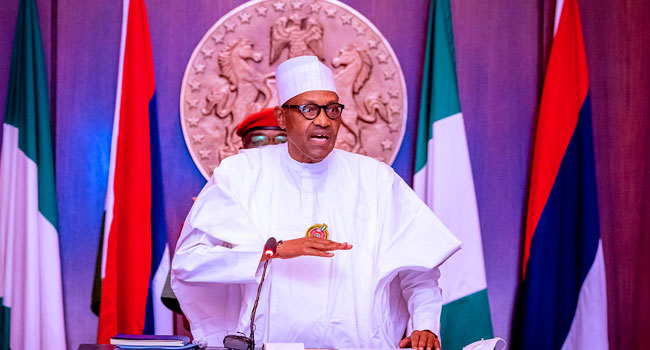
The Senate has received President Muhammadu Buhari’s 2022 to 2024 Medium Term Expenditure Framework (MTEF) and Fiscal Strategy Paper (FSP) for consideration.

The President of the Senate, Ahmad Lawan, on Tuesday, made this known while reading an accompanying letter with the submission from the executive arm of government.

The President  in the letter commended the upper chamber for its commitment towards sustaining the restoration of the Jan. to Dec. financial timeline under the ninth assembly.

The President explained that its timely passage would facilitate the early preparation of the 2022 budget based on approved parameters by the upper chamber.

The letter titled ‘Submission of the Federal Government of Nigeria 2022–2024 Medium Term Expenditure Framework and Fiscal Strategy Paper’ reads:

“It is with pleasure that I forward the 2022-2024 Medium Term Expenditure Framework and Fiscal Strategy Paper (MTEF/FSP) for the kind consideration and approval of the distinguished Senate.

“Let me use this medium to express my deep gratitude for the enduring collaboration and commitment of the leadership and distinguished Senators in our collective efforts to sustain the restoration of the Jan. to Dec. Financial year.

“On our part, we have worked very hard to sustain the early submission of the MTEF/FSP.

This is to allow the National Assembly sufficient time to perform its important statutory duty of reviewing the framework and strategy paper.

“I herewith forward the 2022-2024 MTEF/FSP, as the 2022 budget of the Federal Government will be prepared based on the parameters and fiscal assumptions of the approved 2022-2024 MTEF/FSP.

“I seek the cooperation of the National Assembly for expeditious legislative action on the submission.” it stated.(NAN)


Continue Reading
Click to comment

Leave a Reply

Your email address will not be published. Required fields are marked *

Business & Economy

Market Patronage Declines as Rising Prices Hit Ekiti Traders

Published

on

Share


Traders in Ekiti State have appealed to governments at all levels to take urgent steps to address the rising cost of goods and ease the economic burden on citizens.


Our correspondent, Oluwaseun Adebolu, who visited Market places in Ado-Ekiti to assess the situation, said that many traders called for increased government support to improve business activities and enhance the welfare of residents.


The traders commended the Ekiti State Government for its efforts to promote local businesses but stressed that additional interventions targeted at traders and families would further improve their standard of living.


They expressed concern over the persistent increase in the prices of goods and commodities, attributing the trend to high transportation costs and the impact of the removal of fuel subsidy on the economy.


According to the traders, many essential items that were once affordable have become increasingly expensive, making it difficult for both traders and consumers to cope with current economic realities.


They also noted a shift in consumers’ buying habits, explaining that many customers now prefer shopping in markets closer to their homes to reduce transportation costs.


The traders further lamented a decline in market patronage, saying sales have dropped significantly compared to previous years due to reduced purchasing power.


They urged the government, relevant agencies, and other stakeholders to introduce measures such as palliatives, soft loans, and transportation subsidies for traders to cushion the effects of the economic hardship and stimulate commercial activities across markets in the state.

Continue Reading

Business & Economy

FG Dismisses Reports of New Telecoms and Fuel Taxes, Says No Such Plans Under Consideration

Published

on

President Bola Ahmed Tinubu
Share


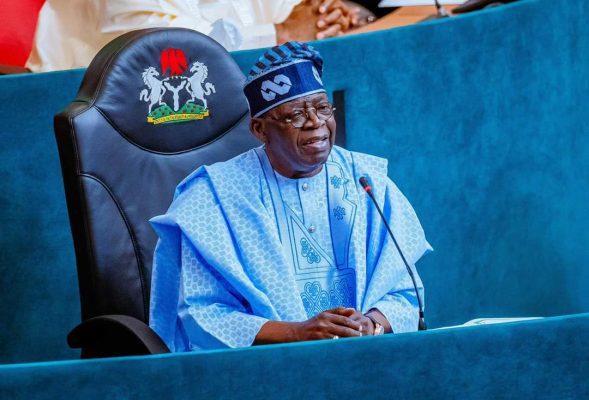
The Federal Government has dismissed reports claiming that it has introduced or is planning to introduce new taxes on telecommunications services and petroleum products.

The clarification came following media reports based on the recent International Monetary Fund (IMF) Article IV Consultation Report on Nigeria. The reports suggested that the IMF recommended extending Value Added Tax (VAT) to fuel products and introducing excise duties on telecommunications services as part of efforts to boost government revenue and fund development projects and social programmes.

However, in a statement issued on Wednesday by the Head of Information and Public Relations Unit of the Federal Ministry of Finance, Efe Ovuakporie, the government said the reports were misleading and did not reflect its current policy position.

According to the ministry, the IMF report merely contains the Fund’s assessment of Nigeria’s economy and recommendations for consideration by government authorities. It stressed that such recommendations are not binding and do not automatically become government policy.

The statement explained that all decisions relating to taxation in Nigeria are made through established constitutional and legislative processes and are guided by the country’s economic priorities and prevailing realities.

The Federal Government also clarified that the existing VAT waiver on petroleum products remains in force and has not been withdrawn.

It further explained that although current legislation provides for a fuel surcharge, such a charge can only be implemented through a ministerial order and official publication in the government gazette. The ministry stated that no such process is currently being considered.

According to the government, the continued suspension of these charges has helped reduce the impact of fluctuations in global energy prices on households and businesses while keeping domestic fuel prices relatively stable.

On telecommunications services, the government noted that the excise duty introduced before 2023 has already been repealed under the new tax laws and is no longer applicable.

The ministry therefore urged Nigerians to disregard reports suggesting that fresh taxes are being planned for either the telecommunications or petroleum sectors, describing such claims as inaccurate.

The government reiterated its commitment to economic reforms aimed at promoting growth, improving revenue collection, and creating a more attractive environment for investment and job creation.

It added that its focus remains on expanding economic activities, blocking revenue leakages, and improving efficiency in public finance management rather than imposing additional tax burdens on citizens.

The statement assured Nigerians that any future tax measures, if necessary, would be officially announced through appropriate government channels and implemented strictly in accordance with the law.

Continue Reading

Business & Economy

NERC Orders DisCos to Compensate Band A Customers for Power Supply Shortfalls

Published

on

Share


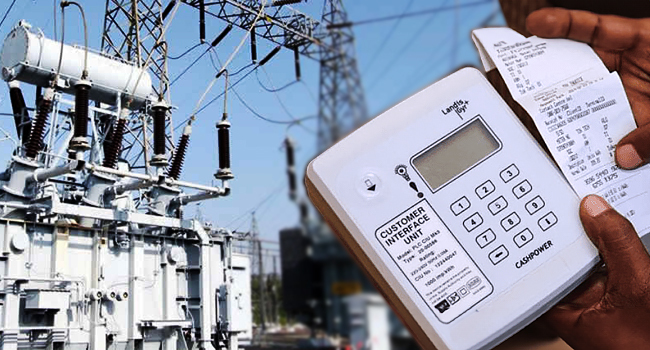
The Nigerian Electricity Regulatory Commission (NERC) has directed electricity distribution companies (DisCos) to compensate eligible Band A customers affected by power supply shortfalls recorded between February and March 2026.

In a public notice issued on Wednesday, the commission said the special compensation scheme became necessary following significant electricity generation deficits across the Nigerian Electricity Supply Industry (NESI), which prevented some DisCos from meeting the minimum service commitments required for Band A customers.

According to NERC, the supply disruptions were largely caused by inadequate gas supply as well as vandalism of critical gas and transmission infrastructure, factors beyond the direct control of the distribution companies.

The regulator explained that Band A customers are entitled to a minimum of 20 hours of electricity supply daily. It noted that where a Band A feeder recorded an average daily supply of between 18 and 20 hours during the affected period, the existing compensation framework under Addendum No. NERC/2024/003 would continue to apply to both Maximum Demand (MD) and Non-Maximum Demand (Non-MD) customers.

However, NERC stated that Band A feeders that received less than 18 hours of electricity supply per day between February and March 2026 would not be downgraded despite failing to meet the service threshold. Instead, customers connected to such feeders would receive special compensation.

Under the approved arrangement, Non-MD customers will receive compensation equivalent to 20 percent of the approved February 2026 energy cap applicable to their feeder. MD customers, on the other hand, will receive compensation equivalent to 20 percent of the average energy billed per MD customer in February 2026.

The commission further directed that prepaid customers should receive their compensation through electricity token credits, while postpaid customers should benefit through direct bill adjustments.

To ensure transparency, NERC instructed DisCos to clearly communicate the value and period of the compensation to affected customers. The regulator also prohibited distribution companies from using the compensation credits to offset any existing customer debts.

Reaffirming its commitment to consumer protection, NERC said it would closely monitor the implementation of the directive and verify compliance across all distribution companies to ensure that eligible customers receive the compensation due to them.

The commission added that the measure is aimed at safeguarding consumer interests while maintaining the stability and sustainability of Nigeria’s electricity market.

Continue Reading