Connect with us

News

Economic Sabotage: Senate Invites NNPC, CBN, NIMASA, Dangote, Others for Questioning

Published

on

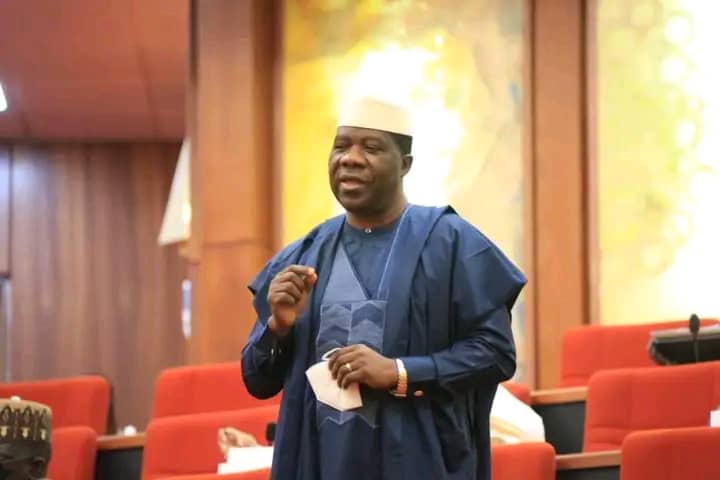
Senator Michael Opeyemi Bamidele
Senate Leader, Senator Michael Opeyemi Bamidele
Share

*Investigates Billions Spent On Maintenance Of Nation’s Refineries
*Beams Searchlight On NMDPRA Over Payment To Transporters
*Reveals Plan To Visit 22 Depots, Refineries Nationwide

The Senate has revealed its plan to invite the Central Bank of Nigeria, Nigeria Port Authority, Nigerian National Petroleum Company Limited, Dangote Group and Hon. Minister of State for Petroleum, Heineken Lokpobiri, among others, for questioning over alleged economic sabotage in the country’s petroleum industry.

The upper chamber, further, disclosed that it would investigate billions of dollars that had been spent on turnaround maintenance of the state-owned refineries in the last decade with a view to addressing deep-rooted challenges facing the industry.

The Leader of the Senate and Chairman, Senate Ad-hoc Committee on Alleged Economic Sabotage in the Nigerian Petroleum Industry reeled out the plans at a news conference he addressed yesterday alongside other members of the ad-hoc committee at the Public Accounts Hearing Room 4, National Assembly Complex, Abuja yesterday.

The news conference was organised to educate the public on the mandates, workings, and of course the modalities adopted by the ad-hoc committee, which the Senate constituted on July 3 to investigate allegations of economic sabotage in the country’s petroleum industry.

After its inauguration last Monday, President of the Senate, Senator Godswill Akpabio charged the 15-man ad-hoc committee to conduct a comprehensive investigation into the allegations within three weeks.

Speaking at the conference on Thursday, Bamidele pledged to carry out holistic investigation into the allegations of economic sabotage in Nigeria’s petroleum industry.

The chairman of the ad-hoc committee also assured Nigerians that the ad-hoc committee would carry out thorough investigation into diverse reasons the state-owned refineries have not been operational for years despite budget earmarked for turnaround maintenance.

Specifically, Bamidele noted that the contractors handling the turnaround Maintenance for the refineries would be invited to let the committee on the situation of things.

Bamidele added that the investigation would not be an armchair investigation, pointing out that members of the ad-hoc committee had already set machinery in motion to visit Lagos, Port Harcourt and Warri to have engage key actors in the petroleum industry.

He said: “It is pertinent to note that in the course of interactions with the identified stakeholders, the ad-hoc committee will visit any of their facilities that it deems necessary, especially the state-owned refineries, to ascertain their status, considering the funds already invested in the various turn around maintenances year without any meaningful result.

“The ad-hoc committee is particularly interested in understanding why local refineries are not working despite the substantial amounts of money spent annually on their maintenance and operations. We will closely examine what the Nigerian National Petroleum Corporation Limited has been doing to address this persistent problem.”

He further revealed that the ad-hoc committee had identified some critical stakeholders to interact with in the course of discharging this noble assignment

The stakeholders, according to him, Federal Ministry of Finance, Federal Ministry of Trade and Investment, Nigerian Midstream and Downstream Petroleum Regulatory Authority, Nigerian Upstream Petroleum Regulatory Commission, Standards Organisation of Nigeria, Nigerian Maritime Administration and Safety Agency, Nigeria Customs Service, Nigerian Navy, Obat Oil and Petroleum Limited, Matrix Energy Depot
Independent Petroleum Marketers Association of Nigeria,
International Oil Companies (IOCs), Depot and Petroleum Products Marketers Association of Nigeria, Major Oil Marketers Association of Nigeria,
Capital Oil and Modular Refineries.

Bamidele added that the ad-hoc committee “will meet with stakeholders in their various zones to gather localised insights and feedback. To ensure broad participation and transparency, the ad-hoc committee will create a platform for the general public and stakeholders to submit memoranda before the public hearings.”

He categorically stated that part of mandate of the committee meant “to uncover parties involved in the importation of adulterated fuel and diesel into the country.

“Our investigation seeks to identify and hold accountable all parties involved in the importation and distribution of the adulterated petroleum products. This includes suppliers, importers, regulatory bodies, and any other entities that may have contributed to this serious lapse in quality control.

“We will conduct a thorough review of current regulatory frameworks and procedures to identify deficiencies and recommend necessary reforms to prevent such occurrences in the future. The Committee is committed to ensuring the highest standards of fuel quality for the Nigerian market.”

Bamidele noted that the ad-hoc committee would beam legislative searchlight on the activities of the Nigerian Midstream and Downstream Petroleum Regulatory Authority including payments made to transporters in the last 10 years.

He noted that the ad-hoc committee would enquire from the NNPCL the state and status of the 22 depots built by the defunct NNPC to eliminate road distribution of petroleum products.

He, therefore, appealed to various stakeholders “to cooperate with the committee so that there can be lasting solution to problems in the oil sector. Our mandate is of strategic national interests.

“Each member of the committee is carefully selected based on his/her records of sterling performance. We are all men of integrity who will never pursue selfish interests at the expense of the national interests.

“The Senate did not constitute this committee to intimidate and witch-hunt any party. Rather, the committee was constituted for the purpose of ensuring social and economic justice in the light of grim realities we are facing as a federation.

“We are also taking this task seriously with a view to addressing fundamental issues that pose grave threats to our economic prosperity, fiscal stability and public health as a federation.

“In line with our mandate, we will definitely unravel the roots of economic sabotage in Nigeria’s petroleum industry and make necessary recommendations that will entrench global best practices in the industry and open it up for more investments, especially in the midstream and downstream sectors.

“We are utterly committed to this mandate. We shall also carry out this national assignment without fear or favour. We shall be fair and just to all parties with a view to promoting and protecting the strategic national interests of our fatherland.”

Other members of the ad-hoc committee, who attended the news conference, include Senator Adams Oshiomhole (Edo North), Senator Abdul Ningi (Bauchi Central), Senator Osita Izunazo (Imo West), Senator Ifeanyi Uba (Anambra South), Senator Diket Plang (Plateau Central), Senator Tahir Monguno (Borno North) and Senator Abdullah Yahaha (Kebbi North),

News

Bamidele: 2026 Electoral Act Reflects Stakeholders’ Consensus, Not Legislative Imposition

Published

on

Senate Leader, Senator Michael Opeyemi Bamidele
Share

The Leader of the Senate, Opeyemi Bamidele, has stated that the provisions of the 2026 Electoral Act were the outcome of broad consultations with stakeholders rather than unilateral decisions by the National Assembly.

In an Easter message issued on Sunday through his Directorate of Media and Public Affairs, Bamidele explained that the new electoral law aligns with global best practices and was not designed to serve any political interest. He urged political actors to adhere to the rules collectively established to ensure stability, peace, and order within Nigeria’s democratic system.

His remarks come amid criticisms from opposition parties, particularly the African Democratic Congress (ADC), which alleged that certain provisions—such as Sections 77 and 84 of the Act—were introduced to weaken their chances ahead of the 2027 general elections. However, Bamidele dismissed the claims, insisting that all sections of the law were products of consensus involving civil society groups, development partners, and other stakeholders.

He defended the requirement for political parties to submit a digital register of members to the Independent National Electoral Commission (INEC), describing it as a transparency measure aimed at preventing undue influence by individuals outside party structures. According to him, the reform is essential for strengthening internal democracy and ensuring that party decisions reflect the will of legitimate members.

Bamidele also justified the restriction of candidate nomination processes to either direct primaries or consensus arrangements, noting that the move is intended to eliminate the delegate system, which he said had been susceptible to manipulation by wealthy individuals. He added that the new system empowers party members and reinforces majority rule in line with democratic principles.

Beyond electoral matters, the Senate leader condemned recent violent attacks in Plateau and Kaduna states, describing them as unacceptable acts against innocent citizens. He assured that the National Assembly is collaborating with federal and state authorities to tackle insecurity and prevent further loss of lives.

He disclosed that ongoing legislative efforts, including amendments to the Terrorism (Prevention and Prohibition) Act, are aimed at introducing stricter penalties for kidnappers, their sponsors, and collaborators. Bamidele expressed confidence that these measures would help restore security and stability across the country.

Reflecting on Easter, Bamidele called on Nigerians, especially political leaders, to embrace the values of sacrifice, tolerance, and unity exemplified by the resurrection of Jesus Christ, urging a collective commitment to nation-building.

Continue Reading

News

FG to Deploy AI Cameras to Tackle Insecurity in Plateau — Tinubu

Published

on

President Bola Tinubu
President Bola Ahmed Tinubu
Share


President Bola Tinubu has announced that the Federal Government will deploy over 5,000 artificial intelligence-enabled digital cameras across Plateau State to help security agencies combat rising insecurity.

The President made this known on Thursday during a visit to Jos, following the March 29 gun attacks in Angwan Rukuba, Jos North Local Government Area, which claimed several lives. He assured residents that such incidents would not recur, pledging decisive action to bring perpetrators to justice.

Tinubu directed security chiefs, including the Minister of Defence, Chief of Army Staff, and Inspector General of Police, to track down those responsible for the killings. He also tasked the Minister of Communications and Digital Economy, Bosun Tijjani, with overseeing the immediate installation of the surveillance system, starting in Jos and later expanding across the state.

Expressing sympathy to affected families, the President said no compensation could replace lost lives but promised government support and justice. He also directed the Ministry of Humanitarian Affairs to compile data on victims to ensure fair distribution of relief.

Plateau State Governor Caleb Mutfwang described the incident as a temporary setback, noting that the state had previously enjoyed relative peace. He expressed confidence in ongoing security efforts and thanked the Federal Government for approving the recruitment of 1,000 forest guards to strengthen local security.

Stakeholders at the meeting, including former governors and political leaders, called for greater collaboration and dialogue among Plateau indigenes, stressing that lasting peace would require collective responsibility.

Continue Reading

News

El-Rufai Returned to ICPC Custody After Court Appearance in Kaduna

Published

on

Former Kaduna State Governor,Nasir El -Rufai
Share

Former Kaduna State governor, Nasir El-Rufai, has been returned to the custody of the Independent Corrupt Practices and Other Related Offences Commission (ICPC) following court proceedings in Kaduna.

El-Rufai, who had earlier left custody on March 27, 2026, due to the death of his mother, was re-arraigned on Tuesday.

He first appeared before the Kaduna State High Court over a separate charge filed by the ICPC. However, proceedings were stalled due to the absence of the second defendant, prompting the court to adjourn the case until April 10, 2026.

Following the adjournment, El-Rufai was taken to the Federal High Court in Kaduna, where his application for bail was scheduled to be heard.

The court had earlier fixed March 31, 2026, for the hearing of his bail application.

Continue Reading