Connect with us

News

Senate passes Electricity Bill to boost power distribution

Published

on

Power installations
Share


…seeks increased investments, reform of Nigerian Electricity Supply Industry

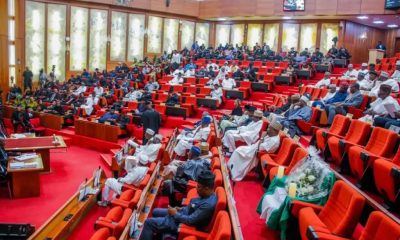
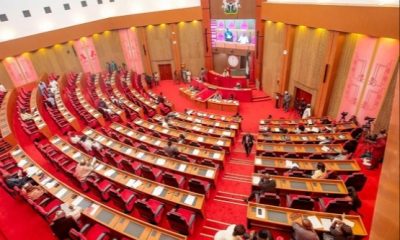
The Senate, on Wednesday, passed the Electricity Bill, 2022.

The bill’s passage was sequel to the consideration of a report by the Committee on Power.

Chairman of the Committee, Senator Gabriel Suswam (PDP, Benue North East), in his presentation, said the bill seeks to, amongst others, provide an Ideal legal and institutional framework to leverage on the modest gains of the privatisation phase of the electricity power sector in Nigeria.

He added that when signed into law, the bill would improve utilisation of generated power through increased investments in new technologies to enhance transmission and distribution of generated power to minimise aggregate value chain loses.

According to the lawmaker, the piece of legislation would “reinvigorate the Institutional framework for the reform of the Nigerian Electricity Supply Industry (NESI) initiated and implemented by the Federal Government.”

He disclosed that the provisions of the bill seeks to promote policies and regulatory measures that would ensure the expansion of power transmission networks in Nigeria in order to address any imbalance in the existing transmission infrastructure.

Suswam noted that the bill would stimulate policy and regulatory measures to scale up efficient power generation, transmission and distribution capabilities of the sector; as well as address technological limitations and outdated infrastructure that are responsible for value chain loses.

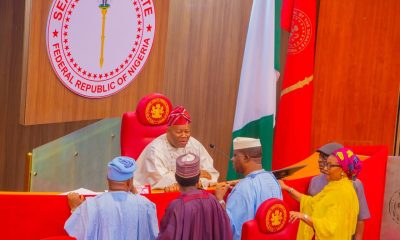
The Senate President, midway through consideration of the bill, sought to know the role and operational capacity of banks that had taken over distribution companies (discos) indebted to them.

Responding, Senator Suswam explained that the take-over of entities (Discos) by banks was duly carried out in collaboration with the Nigerian Electricity Regulatory Commission (NER) and Bureau of Public Enterprise (BPE).

According to him, there was a transitional process put in place during the take-over of the Abuja Electricity Distribution Company (AEDC) by the United Bank for Africa (UBA) to ensure efficiency in service delivery.

He noted that such transitional process usually involves the invitation of new investors to scale up generation and distribution capacities.

He further disclosed that the Federal Government had disbursed $100 million (USD) to Siemens to kickstart transmission in the distribution end of the power sector.

On his part, Senator Ahmad Babba-Kaita (PDP – Katsina North), said the faulty way in which Discos were created was largely responsible for their inability to live up to expectations.

He, therefore, advised the federal government to ensure a transparent process in the selection of companies to take-over power generation and distribution across the country.

The Deputy Chief Whip, Senator Aliyu Sabi Abdullahi (APC – Niger North), noted that the aspect of renewable energy in the bill, was given prominence amidst the energy mix.

The Electricity Bill, 2022, after a clause-by-clause consideration of the Committee’s report by the Committee of the Whole, was passed by the upper chamber.

The Senate President, Ahmad Lawan, in his remarks after the passage of the bill, said, “because of its importance and sensitivity, we would like to see a quick concurrence by the House of Representatives, because time is of essence as far as Nigeria is concerned when you talk about electricity and energy supplies in Nigeria.

“So, we would like to see that this bill is fully processed in the National Assembly and sent to the Executive side of government for the consideration for assent by Mr. President.

“We believe that this piece of legislation can change the fortunes of the electricity industry in Nigeria for the better.”

News

Tinubu Accelerates Northern Rail Projects, Kaduna-Kano Line Set for December 3 Inauguration

Published

on

Train station
Share


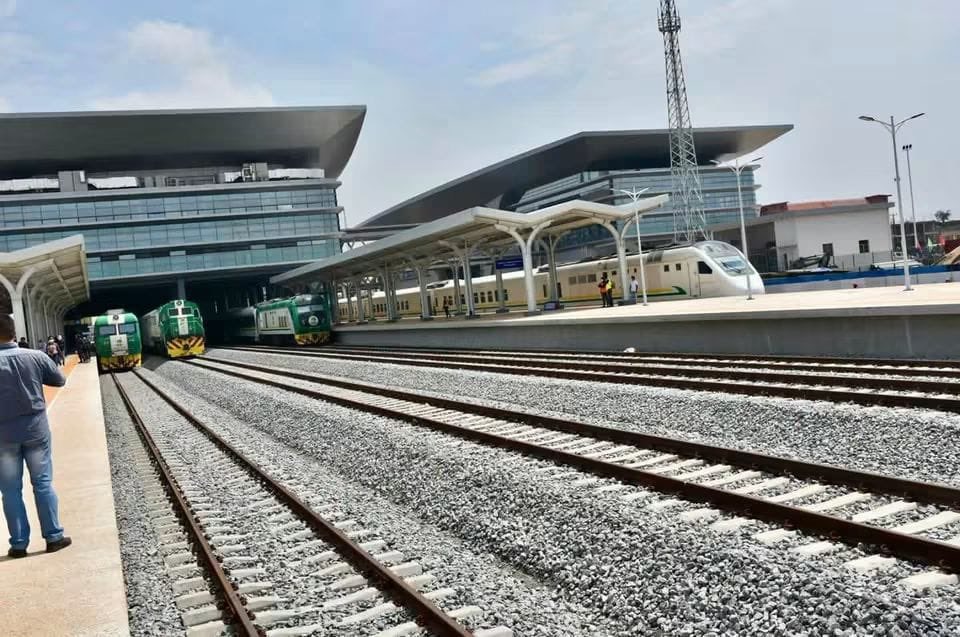
President Bola Ahmed Tinubu has intensified efforts to complete major railway projects across Northern Nigeria, with the Kaduna–Kano Standard Gauge Railway scheduled for inauguration on December 3, 2026.

The 203-kilometre Kaduna–Zaria–Kano railway project has reached approximately 90 per cent completion, while the 400-kilometre Kano–Katsina–Maradi railway project has attained 70 per cent completion.

According to the Federal Government, both projects have recorded significant progress since the Tinubu administration assumed office in 2023. The Kano–Katsina–Maradi project was reportedly at just five per cent completion, while the Kaduna–Kano line was below 30 per cent.

The projects form part of the administration’s commitment to expanding Nigeria’s railway network, improving regional connectivity and facilitating the movement of passengers and goods across the country and beyond.

The Kaduna–Kano railway, an extension of the existing Abuja–Kaduna Standard Gauge Railway, is expected to establish a continuous rail connection between Abuja, Kaduna, Zaria and Kano, strengthening transportation links among key commercial centres in Northern Nigeria.

To assess the level of progress, President Tinubu recently directed a Federal Government inspection team, led by the Permanent Secretary of the Federal Ministry of Transportation, Engr. Funso Adebiyi, to inspect the projects.

Adebiyi expressed satisfaction with the quality of construction work, particularly the railway alignment, drainage systems, embankment protection, stone pitching and soil stabilisation.

The inspection also featured a train test run from Jaji in Kaduna State to Kano, enabling officials to assess the completed track infrastructure and passenger comfort.

President Tinubu has further directed that outstanding land acquisition and compensation issues within Kaduna metropolis be resolved immediately to facilitate the completion of the railway corridor connecting Abuja to Kano.

The Federal Government disclosed that the completed 190-kilometre Jaji–Kano section of the Kaduna–Kano railway, alongside the 250-kilometre Dawanu–Kano–Kazaure–Daura–Katsina section of the Kano–Maradi project, is scheduled for inauguration on December 3, 2026.

When fully operational, the Kaduna–Kano railway is expected to ease passenger movement, boost commercial activities and provide a safer alternative to road transportation along one of Northern Nigeria’s busiest economic corridors.

Similarly, the Kano–Katsina–Maradi railway is expected to enhance cross-border transportation, strengthen regional trade and deepen economic relations between Nigeria and neighbouring Niger Republic.

The Federal Government reiterated its commitment to ensuring that ongoing infrastructure projects across the country are completed and delivered in line with their scheduled timelines.

Continue Reading

News

FG Begins ₦50,000 Monthly Cash Relief for Vulnerable Nigerians

Published

on

Coat of Arms
Share


The Federal Government has commenced a monthly cash relief programme offering ₦50,000 to vulnerable Nigerians to cushion the effects of rising living costs and economic hardship.

The Minister of Humanitarian Affairs and Poverty Reduction, Bernard Doro, disclosed this in a statement issued on Friday in Abuja, announcing the National Emergency Relief and Stabilisation Intervention (NERSI), a presidential initiative aimed at providing direct financial support to millions of vulnerable households.

Doro said the intervention was introduced in response to global food inflation and rising prices of essential goods, which continue to put pressure on household finances.

Under the programme, eligible beneficiaries will receive ₦50,000 monthly to help meet essential needs and ease the burden of the rising cost of living.

The minister explained that the intervention would be reviewed periodically in line with prevailing economic conditions, with beneficiaries notified directly before any adjustment.

He said the ministry was working with licensed digital financial service providers to ensure secure, transparent and timely disbursement of the funds.

According to him, beneficiaries will receive text messages from the providers seeking their consent before payments are made directly into their bank accounts or mobile wallets.

Doro clarified that beneficiaries are not required to apply, pay any fee or register through agents to access the programme.

He warned Nigerians against fraudsters, urging them not to disclose their Personal Identification Numbers (PINs) or Bank Verification Numbers (BVNs) to anyone.

The minister advised those uncertain about any message or facing demands for payment to contact the official NERSI helpline on 0700-022-2222.

He said the intervention complements existing Federal Government social protection and economic support programmes, while strengthening household resilience and economic stability.

Doro added that the initiative aligns with President Bola Tinubu’s Renewed Hope Agenda and underscores the ministry’s commitment to delivering social support with dignity, transparency and accountability.

Continue Reading

News

Ekiti Bureau Congratulates Oyebanji, Prioritises Curbing Capital Flight

Published

on

Share


The Ekiti State Bureau of Local Content has congratulated Governor Biodun Oyebanji on his inauguration for a second term in office, pledging to prioritise efforts to address capital flight and strengthen the state’s economy.

The Bureau, in a congratulatory message issued by its management, and signed by the director of Admin Mr Tope Fasoyin, described the governor’s second-term inauguration as an opportunity to consolidate the achievements of his first tenure and advance policies aimed at promoting sustainable economic development in the state.


The agency reaffirmed its commitment to supporting the governor’s vision of retaining more economic resources within Ekiti State through effective implementation of local content policies.


It said efforts would be intensified to promote the participation of indigenous businesses in government projects, encourage patronage of locally produced goods and services, and create more opportunities for local contractors, suppliers, and service providers.


According to the Bureau, prioritising local content would help reduce capital flight, stimulate indigenous enterprise, create employment opportunities, and ensure that more economic benefits accrue to the people of Ekiti State.


The management also pledged to collaborate with relevant stakeholders to ensure that the governor’s economic development agenda is translated into tangible benefits for residents.


It expressed confidence that Governor Oyebanji’s second term would bring renewed opportunities for economic growth, investment, and sustainable development across the state.


The Bureau wished the governor a successful and impactful second term in office.

Continue Reading