Connect with us

News

Senate passes bill to establish Electoral Offences Commission 

Published

on

SENATE-PRESIDENT
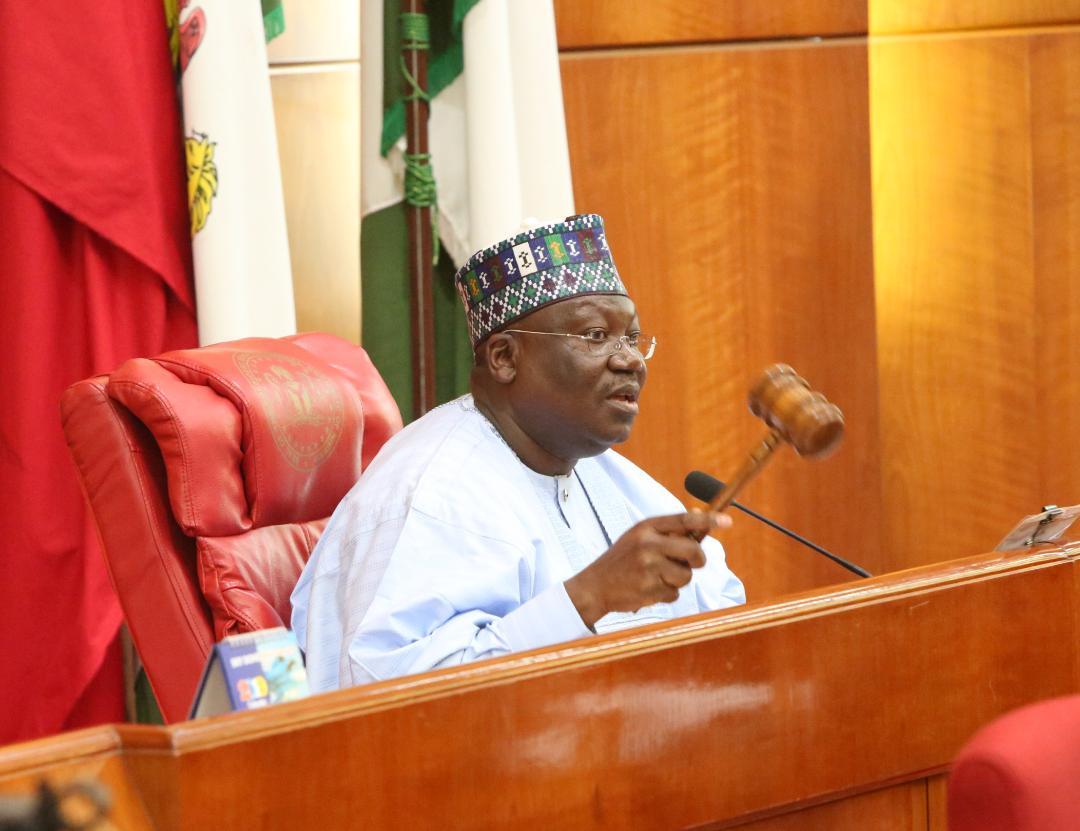
Senate President, Ahmad Lawan
Share

…Okays 20yrs jail term for candidates caught snatching ballot materials 


The Senate on Tuesday passed a bill seeking to establish the Electoral Offences Commission.
The passage of the bill followed the consideration of a report by the Committee on Independent National Electoral Commission (INEC).
Chairman of the Committee, Senator Kabiru Gaya (APC, Kano South), in his presentation, said the bill became imperative in view of INEC’s inability to prosecute electoral offenders in accordance with the provisions of a section 149 and 150(2) of the Electoral Act (as Amended).
“By the foregoing statistics, it is unrealistic to expect INEC to conduct free, fair and credible election and simultaneously prosecute Offences arising from the same elections.
“Indeed, INEC has at several occasions admitted that it lacks the wherewithal to cleanse the system.
“Its failure to prosecute even one percent 870,000 and over 900,000 alleged electoral Offences in 2011 and 2015 general elections respectively is an affirmation of the necessity for a paradigm shift on how we deal with electoral offences”, the lawmaker said.
According to him, as a result of electoral flaws in the system, the Justice Uwais Electoral Committee; Sheik Nurudeen Lemu Committee; and Constitution and Electoral Reform Committee were constituted.
He recalled that the Committees in their final reports recommended that for INEC to function efficiently, some of the functions currently performed by it should be assigned to other agencies.
Accordingly, the Senate during consideration of the INEC Committee report, approved the establishment of the National Electoral Offences Commission.
The Commission’s membership consists of the Chairman, Secretary  and representatives from the Justice, Interior, Defence, and Information Ministries.
The function of the Commission includes  investigating electoral Offences created in any laws relating to elections in Nigeria; prosecution of electoral offenders; and maintaining records of all persons investigated and prosecuted.
Others are to liaise with the Attorney-General of the Federation and government security and law enforcement bodies and agencies in the discharge of its duties; liaise with other bodies within and outside Nigeria involved in the investigation or prosecution of electoral Offences; and adopting measures to prevent, minimize and eradicate electoral Offences throughout the federation.
The Senate in Clause 12 of the bill approved at least five years imprisonment or a fine of at least N10 million naira or both, for any officer or executives of any association or political party that engages in electoral fraud that contravenes the provisions of clauses 221, 225(1)(2)(3) and (4) and 227 of the 1999 Constitution as amended.
The upper chamber adopted the Committee’s recommendation of fifteen years imprisonment for any person involved ballot box snatching, supplying voter’s card to persons without due authority, unauthorized printing of voters’ register, illegal printing of ballot paper or electoral document, and importation of any device or mechanism by which ballot paper or results of elections may be extracted, affected or manipulated, and voting at an election when he is not entitled to vote.
It also approved ten years imprisonment for any person who sells voter’s card, or in possession of any voter’s card bearing the name of another person, or prepares and prints a document or paper purporting to be a register of voters or a voter’s card.
The Senate also gave its nod to a term of at least ten years upon conviction for any  election official who willfully prevents any person from voting at the polling station, willfully rejects or refuses to count any ballot paper validly cast,  willfully counts any ballot paper not validly cast, gives false evidence or withholds evidence, and announces or declares a false result at an election.
The upper chamber in Clause 20(2) approved at least fifteen years imprisonment for any judicial officer or officer of a court or tribunal who corruptly perverts electoral justice, during or after an election.
It also gave at least fifteen years jail term or N30 million naira fine for any security personnel or election official engaged by the Independent National Electoral Commission or State Electoral Commission who attempts to influence the outcome of an election.
In addition, any person found to disturb the public peace on Election Day by playing musical instruments, singing or holding an assembly where a polling station is located shall be guilty of breaching electoral peace and liable to six months imprisonment or a fine of at least N100,000 or both.
Also, any person acting for himself or on behalf of any organization or political party or candidate or his agent with the intention of prejudicing the result of an election, damage or defame, in any manner, the character of any candidate in an election or his family member by making, saying, printing, airing or publishing  in the print or electronic media false accusation on any matter shall be guilty of serious corrupt practice and liable on conviction to a term of at least ten years or a fine of ten million naira or both.
Any person soliciting or giving votes for or against any political party or candidate at an election, or found to affix campaign materials on any private house, public buildings or structures, or prints posters and banners without the name and address of the political party to which the candidate or person belongs contravenes sub-clause (1) to (5) and guilty of an offence and liable to at least five years or a fine of at least ten million naira, or both.
The National Electoral Offences Commission Bill, 2021, prohibits any campaign against national interest.
It provides a twenty years jail term without option of fine for any person who propagates information that undermines the independence, sovereignty, territorial integrity, or unity of the federation.
Also, any candidate or agent who damages or snatches ballot boxes, ballot papers or election materials before, during and after an election without the permission of election official in charge of the polling station attracts at least twenty years imprisonment or a fine of at least forty million naira.
The Senate approved at least fifteen years imprisonment for any person who conveys voters to and from the poll; and three years imprisonment for any employee who directly or indirectly exerts undue influence on a voter in his employ.
The upper chamber approved three years and not more than five years imprisonment for any person who provide false information in any material particular to a public officer.
It also gave the nod for at least ten years imprisonment or at least twenty million naira fine or both for any person who uses hate speech to stir up ethnic, religious or racial hatred, social or political insecurity or violence against anyone or group of persons.

Continue Reading
Click to comment

Leave a Reply

Your email address will not be published. Required fields are marked *

News

Senate Moves to Reshape Legal Profession, Proposes Two-Year Mandatory Pupillage for New Lawyers
Published

on

Senate Logo
Share

The Nigerian Senate on Wednesday considered sweeping reforms to the legal profession, passing into second reading a bill seeking to amend the Legal Practitioners Act 2004. Central to the proposal is a mandatory two-year pupillage programme for newly called lawyers, designed to align training and regulation with global best practices.

Debating the bill at plenary, lawmakers agreed that the legal system must evolve in response to technological advancement, complex commercial transactions, and growing demands for professional accountability. The bill was sponsored and led by the Leader of the Senate, Senator Opeyemi Bamidele.

According to Bamidele, the current law — nearly six decades old in design — no longer reflects contemporary realities of legal practice. He explained that the reform seeks to modernise oversight structures, strengthen discipline mechanisms, and enhance the quality of service within the profession.

A major highlight of the bill is the restructuring of the Body of Benchers, which, for the first time, will be established as a corporate legal entity with financial autonomy, strengthened secretariat, and defined rule-making authority. The reforms also introduce a clearer institutional framework for committees, oversight, and policy enforcement.

The Senate Leader stressed that the initiative would deliver “a coordinated and well-modernised regulatory framework that addresses admission to the bar, discipline, and professional standards.”

The bill also seeks to fast-track disciplinary processes by reorganising the Legal Practitioners Disciplinary Committee (LPDC). Under the proposed structure, multiple panels would sit across the country while wielding broader sanctioning powers, including suspension, disbarment, restitution, compensation, cost awards, and formal apologies. For transparency, disciplinary outcomes will be published, while affected practitioners will retain the right of appeal to the Supreme Court.

Additionally, the proposal creates a new Ethics, Adherence and Enforcement Committee empowered to inspect law offices, demand records, investigate public complaints, and prosecute cases before the LPDC.

To further boost competence, two years of compulsory pupillage and ongoing professional development will now be requirements for lawyers before full practice certification and licence renewal.

The bill also criminalises unauthorised legal practice, clearly defining the practice of law to protect the public from impersonators and unqualified service providers. Other provisions address the regulation of foreign lawyers, reform of the Senior Advocate of Nigeria rank, and improved safeguards for clients and public trust.

Speaking in support, Chief Whip of the Senate, Senator Tahir Monguno, recalled his experience entering practice over 35 years ago, noting that the realities of the digital age justify reform.

“This bill is very apt and germane,” Monguno said. “We are in the digital age, and our legal profession must reflect these realities.”

The Senate subsequently referred the bill to its Committee on Judiciary, Human Rights and Legal Matters for public hearing and a report within two weeks.


Continue Reading

News

Tinubu Approves Nigerian Team for US–Nigeria Joint Security Working Group

Published

on

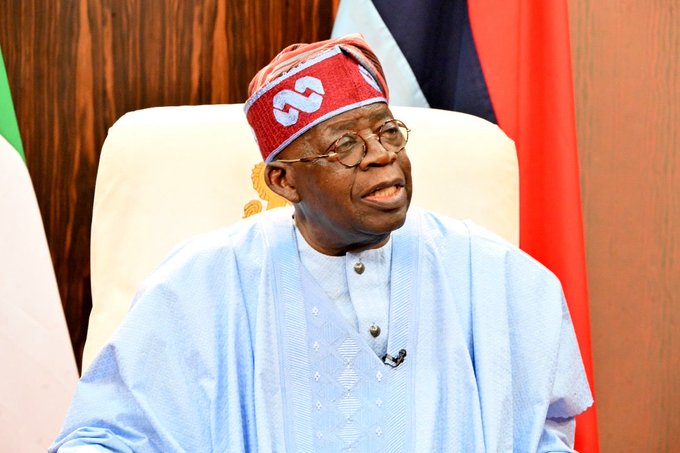
President Bola Ahmed Tinubu
Share

President Bola Tinubu has approved the Nigerian contingent of the US–Nigeria Joint Working Group, a new collaborative platform aimed at strengthening security cooperation between both countries.

The decision follows agreements reached during a recent high-level visit to Washington, D.C., led by the National Security Adviser (NSA), Nuhu Ribadu. Ribadu will head the Nigerian side of the Working Group, supported by senior officials drawn from key security and government institutions.

The Nigerian members include Minister of Foreign Affairs, Amb. Yusuf Maitama Tuggar; Minister of Defence, Mohammed Badaru Abubakar; Minister of Interior, Hon. Olubunmi Tunji-Ojo; and the Minister of Humanitarian Affairs, Dr. Bernard M. Doro.

Also on the team are the Chief of Defence Staff, Gen. Olufemi Oluyede; Director-General of the National Intelligence Agency, Amb. Mohammed Mohammed; and the Inspector General of Police, Kayode Egbetokun.

Ms. Idayat Hassan of the Office of the National Security Adviser and Mr. Paul Alabi of the Nigerian Embassy in the United States will serve as the secretariat.

President Tinubu urged the members to work closely with their US counterparts to ensure the effective implementation of all agreements reached across various sectors.

The announcement was made on Wednesday in a statement by Bayo Onanuga, Special Adviser to the President on Information and Strategy.

Continue Reading

News

Obasanjo Returns $20,000 Allegedly Given for Fayose’s Birthday Logistics

Published

on

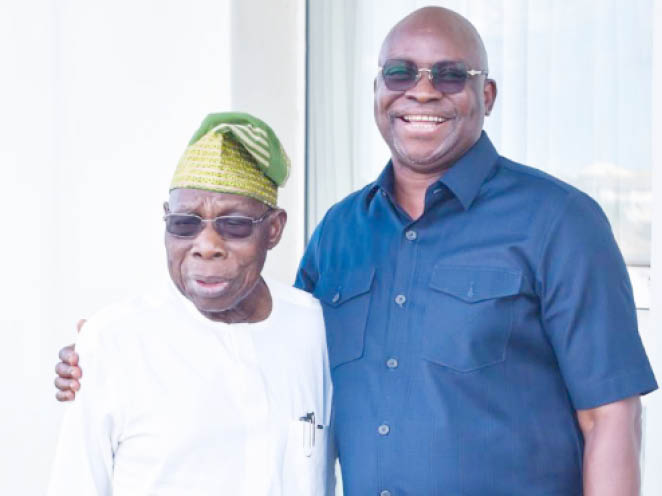
EX President Olusegun Obasanjo and Former Ekiti State, Ayo Fayose
Share

Former President Olusegun Obasanjo has returned the $20,000 allegedly provided to him by former Ekiti State Governor, Ayo Fayose, ahead of Fayose’s 65th birthday celebration, following a fresh disagreement between the two political figures.

Fayose confirmed the development during an interview with AF24 News, where he narrated the sequence of events surrounding the controversy. According to him, preparations for his birthday prompted him to reach out to individuals he had previously fallen out with politically. He noted that this move was aimed at “mending fences,” but stressed that his call to Obasanjo should not be misconstrued as an apology.

The former governor recounted that Obasanjo visited his Lagos residence days before the celebration and expressed willingness to attend the event, despite having a conflicting engagement in Rwanda. Fayose said that during the visit, Obasanjo requested financial support for his travel logistics, prompting him to provide $20,000.

“I changed $20,000 and gave it to him. How can you accept somebody’s money and come and be spiting that person?” Fayose said, expressing disappointment over Obasanjo’s subsequent public remarks.

The matter escalated after Obasanjo stated that he had not opened the money and would return it, comments that Fayose considered disrespectful. In response, Fayose said he sent the former president a strongly worded text message demanding clarity and expressing his displeasure.

Following the exchange, Obasanjo reportedly returned the money.

“I have written to him, and he has returned my $20,000,” Fayose confirmed during the interview. When asked how he felt about the return of the funds, he replied: “I am very happy. I will not allow such a man to carry my money away.”

The clash adds another layer to the long-standing political tension between both men, who have had a history of public disagreements spanning several years.

Continue Reading