Connect with us

Gender

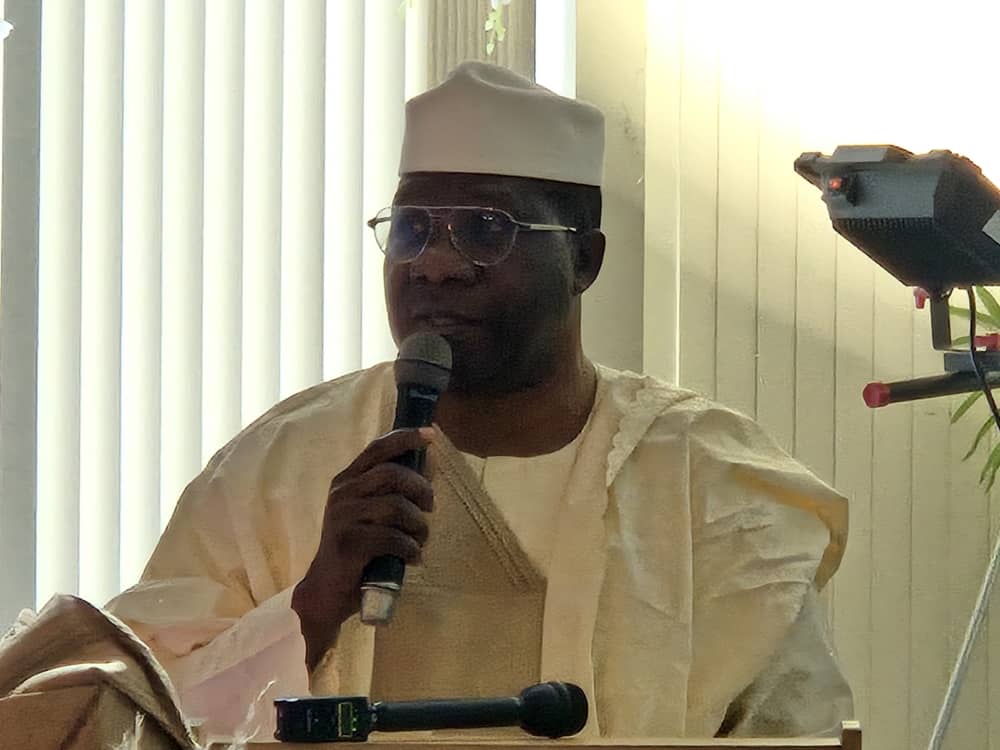
Post-COVID-19: Wadada to empower 1,000 women

Published

on

Alhaji Ahmed Wadada
Share

A former member of the House of Representatives, Alhaji Ahmed Wadada, has revealed plans to train 1,000 rural women in Nasarawa West Senatorial District on different skills, to stimulate entrepreneurship development.

Wadada, who made the disclosure in an interview with the News Agency of Nigeria (NAN) on Sunday in Keffi, Nasarawa, said the training was part of his efforts to cushion the negative impacts of COVID-19 on rural women.

He also said that the training was part of a strategy to empower women and support the growth of enterprises in Nasarawa, adding that the initiative would build the capacity of women to produce items such as beads, liquid soaps, among other skills.

Wadada, who is also the Chairman, Peugeot Automobile Nigeria (PAN), disclosed that all the 1,000 women to be trained would also be supported with starter packs and grants.

The former lawmaker noted that women empowerment would address the myriad of issues affecting women across the globe such as Gender Based Violence, inequality on girl child education and premature marriage.

“Wadada Education Foundation, in partnership with the Amazons of Arewa Rural Women Intervention Scheme, is setting up a training centre to empower and train 1,000 across the Nasarawa West Senatorial District to be economically independent.

“For the dream I have of fostering gender equality for women to thrive. I decided to allocate 200 slots to each of the five local governments that made up Nasarawa West, namely, Keffi, Karu, Kokona, Nasarawa and Toto Local Government Areas of the state.

“The programme is scheduled to start from Nov. 1 to Nov. 5, at Keffi Polo Ranch on Abuja Expressway,” he said.

Wadada, who said the programme would nurture rural women to discover their full potential, said that the beneficiaries would also be trained on bookkeeping, savings culture, customer relations, among other modules to effectively start and manage their skills.

He reiterated his determination to continue to empower women, youths and other vulnerable groups as a strategy to alleviate poverty and reduce idleness in the society.

The former Chair, House of Representatives Committee on Capital Market, disclosed that after the training and empowerment programme he would roll out medical outreach, targeting no fewer than 1,000 people in the state.

Wadada, who hold the traditional title of Sarkin Yakin Keffi, explained that the measure was aimed at complementing government efforts toward providing effective health care services in the state. (NAN)

Continue Reading
Click to comment

Leave a Reply

Your email address will not be published. Required fields are marked *

Gender

Bamidele: National Assembly Proposes 74 Additional Seats for Women

Published

on

National Assembly Complex, Abuja
National Assembly Complex
Share


The National Assembly has proposed the creation of 74 additional seats for women in the Senate and House of Representatives as part of efforts to improve women’s representation in Nigeria’s political system.

The Leader of the Senate, Senator Opeyemi Bamidele, disclosed this on Monday at the 2026 Law Week organised by the International Federation of Women Lawyers (FIDA), Ekiti State Chapter.

Bamidele, who is also Vice Chairman of the Senate Committee on the Review of the 1999 Constitution, said the proposal includes 37 additional seats in the Senate and 37 in the House of Representatives, with each state and the Federal Capital Territory expected to have one additional seat in each chamber.

He also revealed that the committee had proposed three additional seats for women in each State House of Assembly, without displacing existing elected members.

According to him, the special seats arrangement is expected to run for 16 years, covering four electoral cycles, before a comprehensive review.

Bamidele said the proposal was the outcome of extensive consultations and consensus-building, adding that the National Assembly was engaging state legislatures to secure the required approval for the constitutional amendment.

He expressed confidence that the proposal would receive the necessary two-thirds approval from state assemblies to become law.

The Senate Leader described the initiative as a non-partisan effort aimed at strengthening representative democracy and addressing the underrepresentation of women in governance.

He said the 10th National Assembly was committed to promoting gender inclusion, noting that advocacy from key stakeholders, including the First Lady, Senator Oluremi Tinubu, had strengthened the push for the reform.

The event, chaired by FIDA Ekiti State Chapter Chairperson, Mrs Ayobami Olowoyo-Richards, was held under the theme, “Justice in a Changing World: Responding to New Challenges Affecting Women and Children.”

Bamidele also called for stronger legal protections for women and children, stressing the need for justice to be accessible, affordable, timely and effective.

He urged improved support for victims of domestic violence and child abuse through legal assistance, medical care and psychosocial services, while calling for perpetrators to be held accountable under the law.

The Senate Leader attended the programme alongside the Chairman of the House of Representatives Committee on Information and National Orientation, Hon. Steve Fatoba, and the Speaker of the Ekiti State House of Assembly, Rt. Hon. Adeoye Aribasoye, among other dignitaries.

Continue Reading

Gender

Bamidele: Nigeria’s Full Potential Depends on Meaningful Gender Inclusion

Published

on

Senate Leader, Senator Michael Opeyemi Bamidele during the event in New York on Thursday, 24 September 2026
Share


The Leader of the Senate, Senator Opeyemi Bamidele, has called for greater and more meaningful inclusion of women in Nigeria’s governance, diplomacy, economic development and public leadership, stressing that gender inclusion should be seen as a strategic investment in the country’s future rather than an act of favour.

Bamidele made the submission on Thursday while chairing the presentation of the book, “The Female Diplomat: Navigating Power, Ambition and Identity,” held at Nigeria House in New York, United States. He said no nation could fully realise its potential when a significant segment of its population was unable to contribute meaningfully to national development.

According to the Senate Leader, Nigeria’s democracy would be strengthened when citizens see themselves adequately represented in institutions established to serve them. He noted that inclusion should not be limited to the physical presence of women in government institutions but must provide them with genuine opportunities to participate in decision-making, exercise responsibility and contribute to the formulation and implementation of public policies.

“Gender inclusion is not an act of favour. It is a strategic investment in Nigeria’s human capital and institutional strength. No nation can realise its full potential if a significant proportion of its population is unable to contribute fully to governance, diplomacy, economic development and public leadership,” Bamidele said.

He further stated that Nigeria’s foreign relations would be enriched when the country was represented by competent professionals whose knowledge, judgement and experience reflected the diversity and breadth of its national talent.

The Senate Leader said the administration of President Bola Ahmed Tinubu had, through the Renewed Hope Agenda, recognised the importance of harnessing the abilities and contributions of all Nigerians, particularly women and young people, in the political, economic and national development of the country.

Bamidele stressed, however, that meaningful inclusion required more than policy statements or appointments, arguing that it must translate into opportunities for qualified women to participate actively in leadership and decision-making processes.

He also highlighted the role of the National Assembly in advancing gender inclusion through legislation, representation and oversight. According to him, parliament has a responsibility to support institutions that are fair, accessible and responsive while creating an environment where competence is recognised, opportunities are broadened and qualified women can contribute to leadership.

“This is not a responsibility for the government alone. Political institutions, the diplomatic service, the private sector, academic institutions and civil society all have roles to play,” he said.

Bamidele added that achieving sustainable progress would require deliberate policies, supportive institutions and a collective commitment to recognising and developing talent regardless of gender.

The book presentation attracted prominent Nigerian and international figures, including the Deputy Secretary-General of the United Nations, Ms. Amina Mohammed; Minister of Foreign Affairs, Ambassador Bianca Odumegwu-Ojukwu; Nigeria’s Permanent Representative to the United Nations, Ambassador Jimoh Ibrahim; Nigeria’s Ambassador to the United States, Ambassador Kayode Are; and the President/CEO of Montefiore Einstein.

Apart from chairing the book presentation, Bamidele also participated in the Nigeria Investment Forum 2026, which brought together government representatives, international investors, development finance institutions, multinational corporations, business leaders and strategic partners to explore investment opportunities across Nigeria.

He said the engagements provided an important platform for strengthening Nigeria’s international partnerships while promoting conversations around inclusive development, leadership and the country’s continued engagement with the global community.

Continue Reading

Gender

INEC, NGO seek increased women’s participation in electoral process

Published

on

African women
African women
Share

The SOS Children’s Villages Nigeria in collaboration with the European Union Support to Democratic Governance in Nigeria has called for increased women’s participation in electoral process.

The call was made at the training for women and other marginalised groups on peace building, mitigation, human rights, gender and participation, on Monday, in Ibadan.

The guest speaker, Dr Esther Sanya, the representative of the National Council for Women Societies (NCWS), Oyo State chapter, said that there had been growing recognition of untapped capacity and talents of women in political leadership.

Sanya noted that women’s engagement in politics would help to advance gender equality.

“Research indicates that whether a legislator is a male or female has a distinct impact on his or her policy priorities.

“There is also strong evidence that as more women are elected to office, there is a corollary increase in policy making that emphasises quality of life and reflects the priorities of families, women, ethic and racial minorities,” she said.

Also speaking, Mr Lateef Ariori, the Director, Child Welfare Oyo State Ministry of Women Affairs and Social inclusion, said that women should be given substantial consideration in the design and execution of political participation process.

Ariori charged women organisations in the state to work toward promoting gender equality among candidates, election officials, observers and other electoral participants.

“Women have a responsibility to oversee the electoral process because gender equality and true democracy fundamentally depend on women’s political engagement,” Ariori said.

Earlier, Mrs Catherine Ogwu, the Gender Desk Officer, Independent National Electoral Commission (INEC), Oyo state, urged the women not to sell their votes or be intimidated during the forthcoming general elections.

She noted that the current Electoral Act and new technology from INEC would make 2023 general elections the most free and inclusive elections in the history of Nigeria.

The News Agency of Nigeria (NAN) reports that the training featured lectures and presentations from different women groups in the state.


(NAN)


Continue Reading