The Medical Doctor Who Sold Sand, Owns 6 Aircrafts and is Building a Billion-dollar Refinery in Bayelsa State
The story of Dr Eruani Azibapu Godbless, a trained medical doctor- turned businessman, a graduate of the University of Port-Harcourt, is both interesting and inspiring.
After graduating from the medical school, he worked in the private and public sectors.
In the course of his medical practice, he demonstrated a high degree of commitment to his work which helped him to get multiple promotions before he was called upon to serve as the Honorable Commissioner for Health in Bayelsa State.
In the course of this political appointment, he also got appointed as a Special Adviser to President Goodluck Jonathan, then the governor of Bayelsa State.
While growing up, Dame Patience Jonathan (Former First Lady) connected Dr Eruani to Alhaji Aliko Dangote and The Dantatas.
Even though the entrepreneurial spirit was always there, connecting with like minds helped to fan that flame the more.
The entrepreneur in him triggered his looking around the whole of Bayelsa without seeing any sand supplier.
Consequently, Dr Eruani chose selling sand in the State to fill the gap. He did so at a commercial scale by introducing the mechanized approach.
He pulled his resources together and launched a dredging company, Azikel Dredging.
It was from this dredging company (selling of sand) that he made his first ₦1 billion ever.
That ₦1 billion revenue from sand business proved that the concept was right.
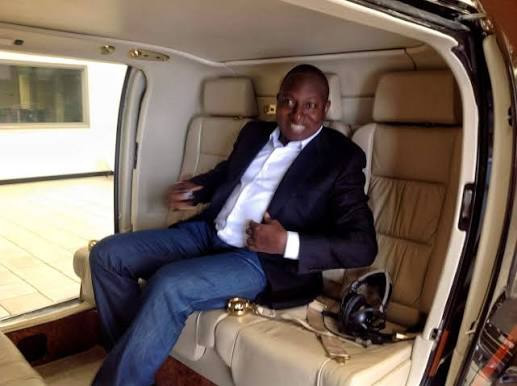
Using the proceeds from selling sand, he bought his first helicopter and private jet, and expanded to other businesses.
Today, he has diversified into aviation, power generation and recently, petroleum.
Today, work is on top gear at his $1 billion Azikel Refinery investment and it will be commissioned soon. When in full operation, it will be delivering 25,000 barrels per day.
There are some lessons to learn from Dr Eruani Azibapu Godbless, .
First of all is that, no business is really too small or beneath your standard if you are a big thinker.
Ordinarily, many would expect that a medical doctor at his level going into business will start by building a hospital.
That may have been the disappointment of his former colleagues. Many probably expected when they heard that he left active medical practice that he had started a big hospital instead of selling sand in Bayelsa State. Others would expect he had rather joined them to japa, get a better job or build a new hospital.
But he understood alone “why” creating jobs and wealth for other people is so that they can live healthier lives.
Every business is as big as the mindset and the vision of the person who’s operating it.
Using the revenue made selling sand, he bought his first helicopter and private jet. Today, he has 3 helicopters and 3 private jets (short and ultra-long ranges).
Secondly, associating with people who can inspire you is important. Who you associate with can influence your life in more ways than you can imagine.
It is better to be alone than to be in the wrong company. Being alone doesn’t mean you are lonely.
Mrs Patience Jonathan’s facilitating Dr Eruani to connect with Alhaji Aliko Dangote and The Dantatas many years ago, while they were much younger, became vital in his entrepreneurial quests.
According to the Former First Lady, Dr Eruani was the youngest among them in their clique. She asked him to follow Alhaji Aliko Dangote closely and he did.
Even though contestable, it’s important to note that entrepreneurial excellence is a culture-based thing. You can pick up a lot about why someone is wealthy or poor by looking at their way of life (which is culture).
In addition, it’s necessary to venture into any business only when you believe in it or understand it in and out.
That explains why even though Dr Eruani, Alhaji Aliko Dangote and many others have not come from petroleum engineering background but because of strong conviction, they are doing well in it.