Connect with us

Communication

NCC Sets the Pace in FG’s Indigenous Tech Development Policy

Published

on

NCC Logo
Share

…Showcases sponsored prototypes

By Ossom Raphael

TheNigerian Communications Commission (NCC) has given concrete expression to the Federal Government’s drive to promote indigenous innovative technologies in Nigeria’s telecommunication sector.

The Commission demonstrated this when it organised the maiden prototype and research exposition aimed at showcasing no fewer than 10 prototypes, arising from its sponsored Telecommunications-Based Research Innovation Projects in the Nigerian universities.

The Commission selected 10 prototypes for exhibition as outputs of its telecom research project during the two-day event that took place at the NCC’s Communications and Digital Economy Complex in Abuja.

A statement by Ikechukwu Adinde, Director, Public Affairs of the NCC, listed the top 10 prototypes to include: Multiple operators’ enabled SIM, GSM communication-based walking cane robot, Powerline communications module, Home-grown electrical power charger, Low-cost GSM telephone system, Wireless power transfer device, Vital sign monitor, Plastic optical fibre cable, Wearable E-band tracker, and a Software-based nomadic base station.

The Commission is implementing the research and prototype exposition as a way of encouraging the commercializing of the prototypes, as an influential platform for universities, professionals and industry experts to come together, share information and build long-lasting business relationships.

Speaking at the event, Minister of Communications and Digital Economy, Prof. Isa Ali Ibrahim Pantami, said through the NCC’s telecoms-based research and prototype exposition, “the indigenous technological capabilities of Nigerians will be fully appreciated, harnessed, and utilised towards stimulating the overall productivity and sustainability of the telecommunications industry.”

Pantami emphasised that research is considered a necessary condition for the technological development of any nation and also regarded as the backbone of the communications industry, because it is the building block for the future development of advanced telecommunications products and services. He tasked the mobile network operators (MNOs) to work with NCC to support indigenous technology development to solve national challenges in future.

The Minister commended the Commission’s Board and Management for facilitating the delivery of the lofty policy targets contained in the National Policy for the Promotion of Indigenous Content (NPPIC) 2021. He also thanked the recipients of the Commission’s grants for the display of already developed prototypes for the knowledge of the industry stakeholders.

Speaking earlier, Chairman, NCC, Board of Commissioners, Prof. Adeolu Akande, declared that the Commission will continue to provide the enabling environment to bridge the gap in the significant tripartite relationship among the academia, industry, and the government. He encouraged participants to support NCC’s initiative to succeed, as businesses will emerge, and sustainable jobs will be available for our young graduates on account of this new developments.

On his part, the Executive Vice Chairman and Chief Executive of NCC, Prof .Umar Garba Danbatta, reinforced the Commission’s commitment to discharging its role as an active regulator to drive the indigenous content development component of the nation’s telecoms sector. The EVC reiterated the significance of building the indigenous technological capacities of Nigerians through partnerships with relevant stakeholders.

He said: “The Commission has awarded grants to successful academic institutions to develop Working Prototype and Telecommunications-led Products capable of addressing industry needs and providing overall sustainability, fully-developed and ready-for-the-first phase of market entry”, Danbatta stated.

“It is important to have a commercialisation strategy to transit from rudimentary research into the market to address the local challenges and reduce the over-dependence on imported innovations and technologies with the attendant drain on the nations scarce foreign exchange.. This is what this programme hopes to achieve to maximize the full potential of academia in contributing to the steady growth of the telecoms industry in Nigeria”.

Continue Reading
Click to comment

Leave a Reply

Your email address will not be published. Required fields are marked *

Communication

Nigeria’s Digital Broadcasting Transition Gains Momentum as Stakeholders Endorse New Hybrid Strategy

Published

on

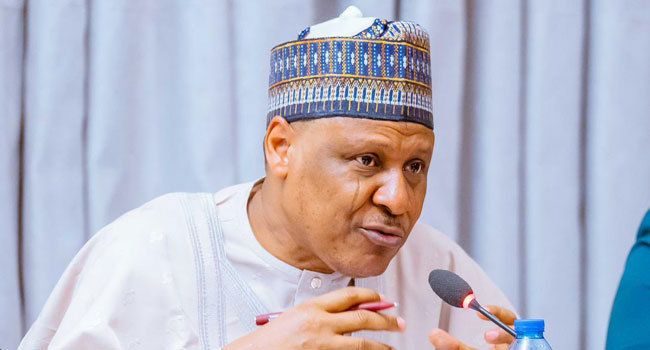
Minister of Information and National Orientation, Mohammed Idris
Share


Nigeria’s long-delayed transition from analogue to digital broadcasting received a major boost on Tuesday as key stakeholders renewed their commitment to completing the Digital Switch Over (DSO) programme and adopted a new implementation strategy aimed at accelerating the process.

The renewed commitment emerged during a stakeholders’ meeting convened by the National Broadcasting Commission under the supervision of the Federal Ministry of Information and National Orientation in Abuja.

At the meeting, participants agreed to adopt a hybrid digital broadcasting model that combines Digital Terrestrial Television (DTT), Direct-to-Home (DTH) satellite services, and digital application-based delivery platforms. The new framework is expected to broaden access to digital television services and fast-track Nigeria’s migration from analogue broadcasting.

Stakeholders dismissed suggestions that Digital Terrestrial Television should be abandoned, insisting that DTT remains a critical component of Nigeria’s digital broadcasting architecture and must continue to play a central role in the transition process.

They also agreed that the Digital Implementation Team (DigiTeam), which previously coordinated major aspects of the DSO programme, should be reconstituted to provide strategic leadership and drive implementation efforts across the industry.

Speaking at the meeting, Nigeria’s Minister of Information and National Orientation, Mohammed Idris, described the gathering as a “family discussion” aimed at resolving outstanding issues that have slowed the implementation of the DSO project over the years.

The minister assured stakeholders that the Federal Government has no hidden agenda regarding the digital migration programme and emphasized that all decisions would be guided by national interest, inclusiveness, and the long-term sustainability of Nigeria’s broadcasting industry.

He acknowledged concerns raised by stakeholders regarding consultations and participation in the process, admitting that broader engagement should have commenced much earlier. Despite differing opinions on implementation strategies, Idris noted that all parties were united on the need for Nigeria to complete its transition to digital broadcasting.

Participants at the meeting reaffirmed that the DSO project remains essential to Nigeria’s economic and technological development. They identified job creation, attraction of new investments, promotion of local content, and support for indigenous manufacturing as some of the key benefits expected from the successful implementation of the programme.

The stakeholders also stressed the importance of regulatory certainty, stronger investor confidence, and closer collaboration among industry players to ensure the long-term sustainability of the broadcasting value chain.

A major issue raised during the discussions was the need to protect investments already made by licensed set-top box manufacturers and other operators participating in the DSO ecosystem. Stakeholders emphasized that any new implementation strategy must safeguard existing investments while creating opportunities for further growth and innovation within the sector.

The meeting ended with a renewed consensus among government officials, broadcasters, technology providers, and industry stakeholders that Nigeria must intensify efforts to finally complete its digital broadcasting transition after years of delays. The adoption of the hybrid model is expected to serve as a key step toward achieving that objective.

Continue Reading

Communication

FG Deactivates 13.6 Million Social Media Accounts Over ‘Offensive Cont

Published

on

Social Media
Share

In a massive digital clampdown, the Nigerian government has deactivated a staggering 13,597,057 social media accounts across TikTok, Facebook, Instagram, and X, citing “offensive content and violations of the code of practice.”

The bombshell revelation came through the 2024 Code of Practice Compliance Report, jointly issued by the Nigerian Communications Commission (NCC), the National Information Technology Development Agency (NITDA), and the National Broadcasting Commission (NBC).

According to the report, no fewer than 58.9 million offensive posts were deleted from various platforms, while NITDA disclosed it received 754,629 complaints from Nigerian users. Startlingly, 420,439 contents were initially removed but later re-uploaded after appeals.

NITDA spokesperson Hadiza Umar hailed the compliance of global tech giants like Google, Microsoft, and TikTok, describing the mass takedowns as a “giant step towards sanitising Nigeria’s digital space.”

She declared:

“The compliance reports provide valuable insights into platforms’ efforts to protect users in line with the Code of Practice. This is a bold move towards a safer and more transparent online environment for Nigerians.”

With millions of accounts axed and tens of millions of posts wiped out, the government insists this is only the beginning of a sweeping drive to curb digital harm and enforce order in Nigeria’s social media space.


Continue Reading

Communication

Telecommunications workers threaten 3-day warning strike

Published

on

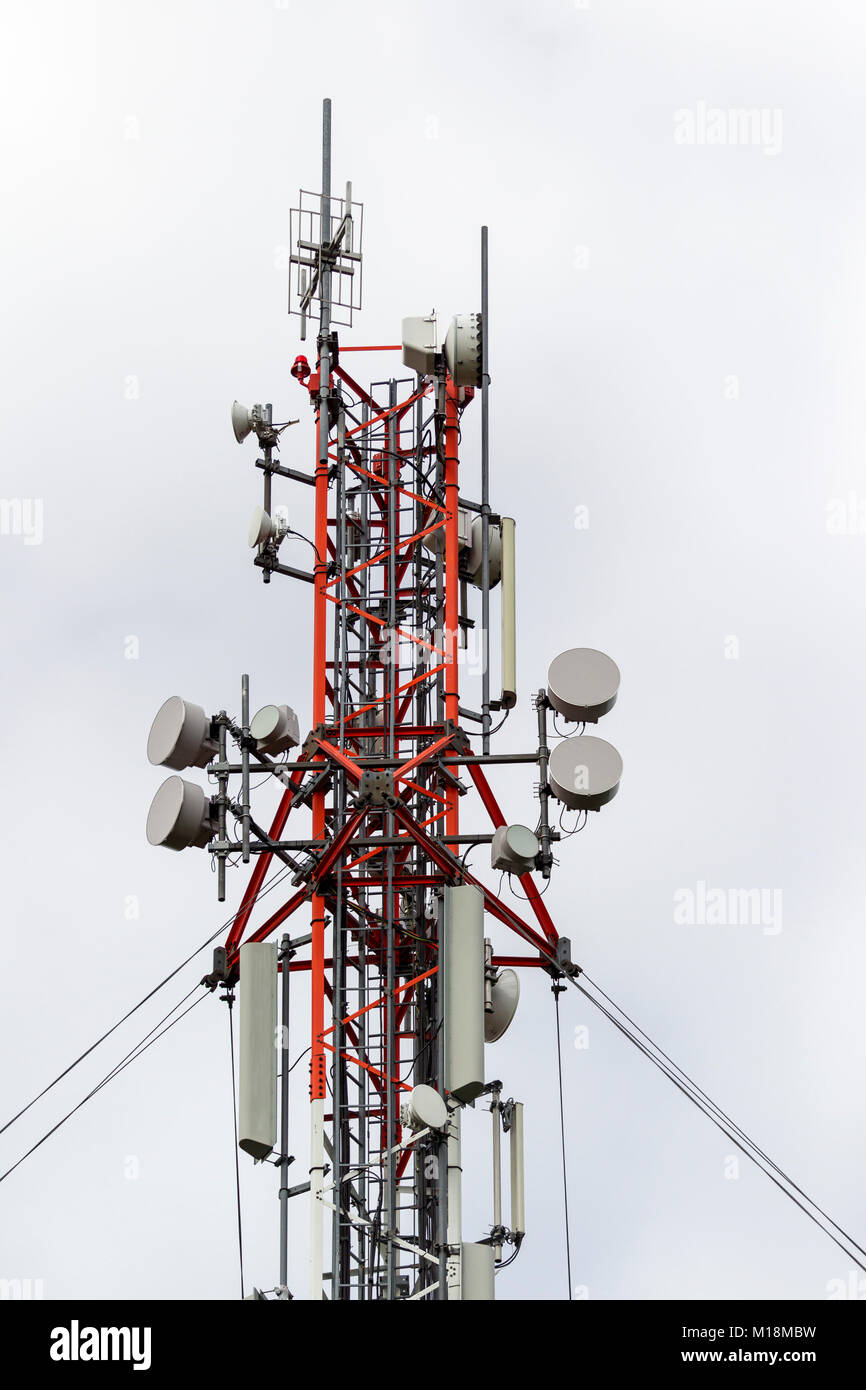
Telecommunications Mast
Share

The Private Telecommunications and Communications Senior Staff Association of Nigeria (PTECSSAN) has issued a three-day warning strike notice to Huawei Technologies Company Limited over alleged anti-labour practices.

Huawei is a global provider of information and communications technology (ICT) infrastructure and smart devices.

The PTECSSAN General Secretary, Okonu Abdullahi, in a letter addressed to the company, said the union has directed the withdrawal of services of its members from projects of the company effective between 12.00 a.m. May 2 and 11.59 p.m. May 4, 2023.

Abdullahi, in the letter made available to newsmen on Sunday, April 30, said the failure of the company to comply with the union’s demands after the warning strike would result in an indefinite strike.

He noted that the strike might cause telecommunications network disruptions as no worker would be available to attend to them.

The PTECSSAN official said: “We were constrained to embark on this industrial action when it became apparent to us that your company is not labour friendly and is not interested in peaceful and amicable resolutions of the concerns of our members.

“For the avoidance of doubt, we shall not be backing down on the warning strike except the following are agreed with the union.

“Immediate recognition of the fundamental right of the employees to freely associate with the union; immediate recognition of the union as negotiating body for the employees on workers welfare.

“Immediate remittance of membership dues into the union’s account as earlier provided; immediate payment of March salaries of some members of the union, among others.

“As we look forward to your company’s granting of our demands, please be assured of our union’s resolve to ensure better working conditions for her members.”

Other demands of the Telecommunications workers include the immediate regularisation of the employment of union members on the Huawei projects and the involvement of the union in the process.

Others are the immediate commencement of appropriate pensions deduction and remittance of same as required by the Pension Act.

“Immediate approval of the National Health Insurance Scheme that covers the employees, their spouses and four of their dependents.

“Immediate enrollment of Union members in the Group Life Insurance as stipulated in the Pension Reform Act 2004, Section 9(3).

“Immediate commencement of negotiation of the Collective Bargaining Agreement (Conditions of Service) for the benefit of union members,” Abdullahi added.

Meanwhile, Huawei has yet to react to the latest development as of the time of filing this report.


Continue Reading