Connect with us

Education

FG Stops Overseas Scholarships, Channels Funds to Nigerian Institutions

Published

on

Share

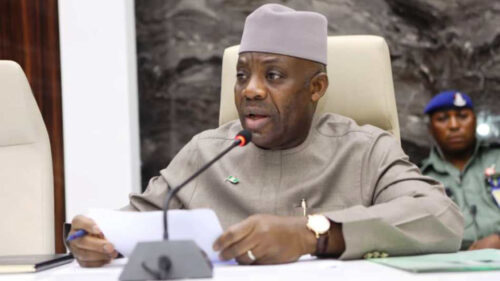
The Federal Government is reviewing its foreign scholarship and bilateral education arrangements as part of efforts to eliminate unnecessary expenditure and redirect public resources towards strengthening Nigerian tertiary institutions, the Minister of Education, Dr Tunji Alausa, has said.

Alausa said the government could no longer justify spending scarce public funds to send students abroad to study programmes that are already available in Nigerian universities, polytechnics and colleges of education.

The minister disclosed this while explaining the rationale behind the Federal Government’s decision to review its overseas scholarship arrangements, stressing that the policy was driven by the need to build domestic capacity and ensure better value for public expenditure.

He recalled that shortly after assuming office, he was presented with a proposal involving about 100,000 Nigerian students travelling to Morocco to study courses taught in English, including mass communication and journalism.

According to him, the proposal raised serious concerns because the courses were already available in Nigeria, while the students would have had to spend their first year learning French before commencing their programmes.

Alausa said, “Number one, we have all those courses in Nigeria. And yet, number two, they were going to spend the first year learning French before they started the programme.”

He added that the cost of supporting such students abroad could not be justified when Nigeria had developed considerable capacity in its tertiary institutions over the years.

“And number three, in the position of a few million to support this in Nigeria, we support thousands of them,” he said.

The minister said the government therefore concluded that continuing the arrangement in its previous form would amount to an inefficient use of public resources.

“So the Bilateral Education Agreement was not making sense, again, to us in government. It was a way to waste government funds,” Alausa said.

He added, “And this President will not waste any public funds.”

The latest position builds on the Federal Government’s earlier decision to discontinue government-funded BEA scholarships while retaining support for students already enrolled under the previous arrangements.

The Federal Government has clarified that existing beneficiaries of the bilateral scholarship programme would not be abandoned and would continue to receive support until the completion of their studies, while new government-funded awards under the arrangement were discontinued following a review of the programme.

The policy does not amount to a blanket ban on Nigerians receiving scholarships from foreign governments.

Foreign governments willing to sponsor Nigerian students can continue to offer such opportunities, but the Federal Government intends to be more selective about committing Nigerian public funds to overseas education.

Alausa similarly explained that foreign countries willing to continue sponsoring Nigerian students could do so without necessarily requiring financial support from the Nigerian government.

The minister said the circumstances that justified sending large numbers of Nigerian students abroad decades ago had changed considerably.

“When those programmes were set up 20 years ago, they were meant to get students to go to the government colleges where we did not have capacity.

“But in the last 20 years, we’ve built a number of capacities in the tertiary institutions — universities, polytechnics and colleges,” he added.

The scholarship review comes amid broader reforms by the Federal Ministry of Education aimed at repositioning Nigeria’s education system under President Bola Ahmed Tinubu’s Renewed Hope Agenda.

The reforms have focused increasingly on strengthening domestic tertiary institutions, expanding technical and vocational education and training, improving digital education, promoting research and innovation, and making education more responsive to the needs of the economy.

The Federal Government has also intensified efforts to strengthen technical and vocational education and training, with emphasis on modernising curricula, developing industry-relevant skills and improving the capacity of institutions to produce graduates who can contribute directly to economic development.

Alausa has repeatedly argued that education spending must produce measurable outcomes, particularly given the country’s competing development needs and limited public resources.

The push to retain more education spending within Nigeria also reflects the government’s broader objective of strengthening local institutions rather than relying excessively on overseas opportunities.

Alausa said the government’s approach was not simply about withdrawing foreign scholarships but ensuring that public resources were deployed where they would have the greatest impact.

He cited an instance involving scholarship beneficiaries who were expected to study abroad but were instead studying in Nigerian universities, saying such situations further demonstrated the need to review the system.

“So we have to start with Nigerians,” the minister said.

The Federal Government has simultaneously been strengthening domestic student support mechanisms, including scholarships and bursaries for Nigerian students and the Nigerian Education Loan Fund, which provides financial support to students in tertiary institutions.

Alausa said the government’s broader objective was to create a tertiary education system capable of producing the skills, research and innovations required for national development.

He recently inaugurated the Tertiary Institution National Gallery Prize Committee to recognise outstanding academic research and innovation, particularly research with potential for commercialisation and industrial application.

“We want undergraduate researchers to see a clear pathway from academic research to industrial application, enterprise, innovation, and national development,” he said.

The minister said Nigeria could no longer afford to measure the success of its education system simply by the number of certificates awarded.

“The most successful nations of the 21st century will not necessarily be those endowed with greater natural resources. They will be those that can systematically transform knowledge into solutions, research and intellectual capital into economic and industrial value,” Alausa said.

Continue Reading
Click to comment

Leave a Reply

Your email address will not be published. Required fields are marked *

Education

NECO Releases 2026 SSCE Results, 58.67% Get Five Credits Including English, Maths

Published

on

NECO symbol
Share


The National Examinations Council (NECO) has released the results of the 2026 Senior School Certificate Examination (SSCE) Internal, with 58.67 per cent of candidates obtaining five credits and above, including English Language and Mathematics.

The Registrar and Chief Executive of NECO, Professor Dantani Wushishi, announced the results on Thursday at the Council’s headquarters in Minna, Niger State.

Wushishi said 1,378,048 candidates registered for the examination, comprising 682,352 males and 695,696 females. A total of 1,371,992 candidates eventually sat for the examination.

According to him, 1,162,118 candidates, representing 84.70 per cent, obtained five credits and above, irrespective of their performance in English Language and Mathematics.

The examination was conducted from June 15 to July 23, 2026, across the 36 states and the Federal Capital Territory, as well as six foreign countries.

The marking exercise was conducted nationwide between August 17 and September 4, 2026.

On examination malpractice, the NECO boss said 1,406 candidates were involved in various forms of malpractice in 2026, compared with 3,878 candidates recorded in 2025.

He said this represented a 64.74 per cent reduction, attributing the decline to improved examination processes, stronger monitoring and increased collaboration with security agencies and other stakeholders.

Wushishi also disclosed that 1,334 candidates with special needs participated in the examination, noting that NECO continued to make provisions to promote inclusiveness.

He thanked the Federal Government, education authorities, the NECO Governing Board, National Assembly, security agencies, state governments, schools and other stakeholders for their support.

He also commended NECO staff for their commitment to the successful conduct, marking and release of the examination results.

The NECO Registrar formally declared the results released and said candidates could access their results through the NECO website using their examination registration numbers.

He urged candidates to remain focused on their academic pursuits, assuring stakeholders that the Council would continue to uphold the credibility, fairness and integrity of its examinations.


Continue Reading

Education

NYSC Sets September 30 for 2026 Batch ‘C’ Stream One Orientation

Published

on

NYSC Symbol
Share


The National Youth Service Corps (NYSC) has announced Wednesday, September 30, 2026, as the commencement date for the 2026 Batch ‘C’ Stream One Orientation Course across the country.

The NYSC Director of Information and Public Relations, Caroline Embu, disclosed this in a statement issued on Tuesday, urging prospective Corps members to take note of the schedule and make necessary preparations.

According to the statement, the three-week orientation exercise will run from Wednesday, September 30, to Tuesday, October 20, 2026, across NYSC orientation camps in the 36 states of the federation and the Federal Capital Territory.

Registration of prospective Corps members will commence on September 30 and close on Friday, October 2, while the official swearing-in ceremony is scheduled for Friday, October 2, 2026.

The NYSC Director-General, Brigadier General Olakunle Nafiu, wished prospective Corps members and course officials safe journeys to their respective orientation camps.

He also advised Corps members to prioritise their safety by avoiding night journeys and using vehicles from designated motor parks when travelling to their camps.

Continue Reading

Education

Gov. Ododo Challenges TETFund to Turn Research into Solutions, Hails Ocholi for North Central Education Forum

Published

on

Share

Kogi State Governor, Alhaji Ahmed Usman Ododo, FCA, has challenged the Tertiary Education Trust Fund (TETFund) to deepen its investment in research and innovation capable of producing practical solutions to Nigeria’s developmental challenges, declaring that the future of the nation’s economy depends largely on the strength of its educational institutions.

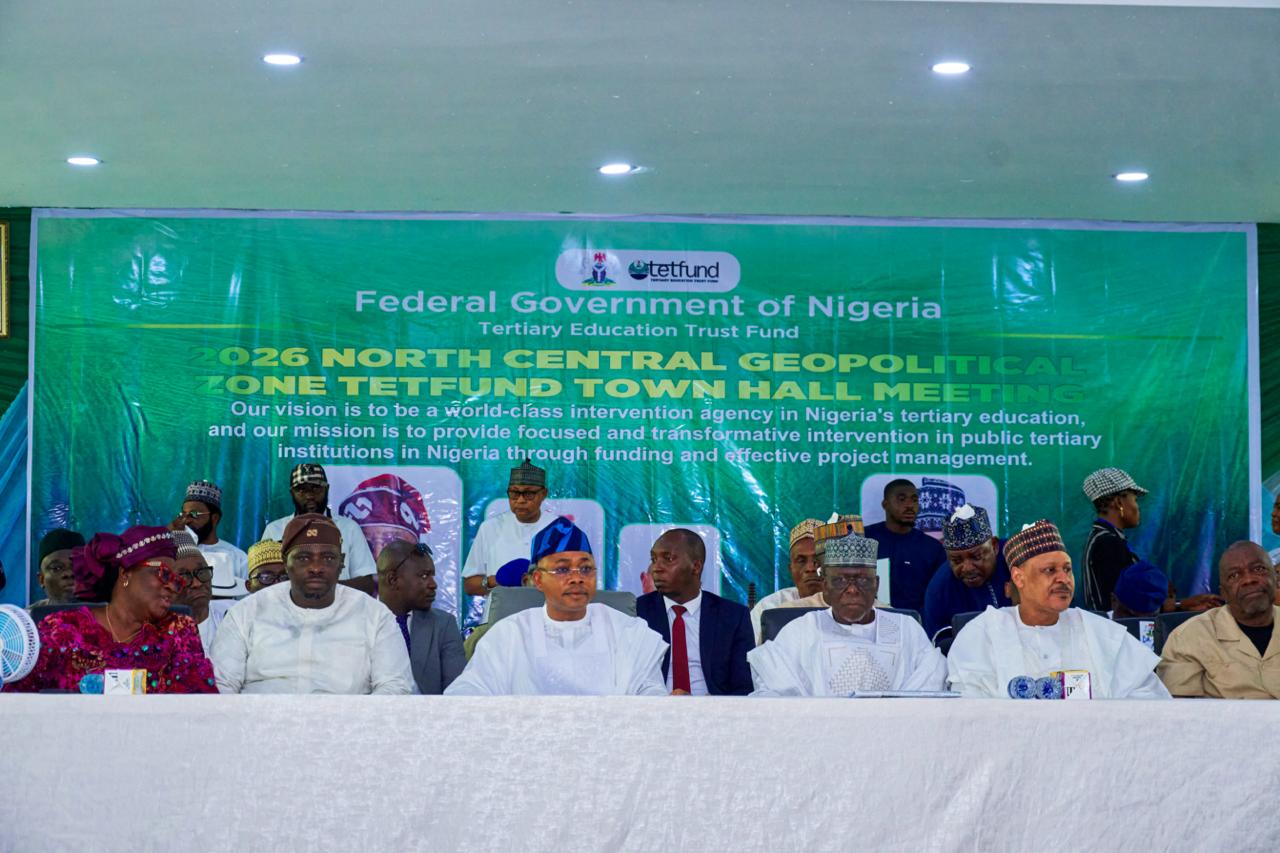
Governor Ododo stated this on Thursday at the 2026 TETFund North Central Stakeholders’ Town Hall Meeting held at the Glass House of the Kogi State Government House, Lokoja, with the theme, “The Renewed Hope Agenda of President Bola Ahmed Tinubu, GCFR, and Its Impact on Tertiary Institutions in North Central Nigeria.”

The Governor, who served as Chief Host, described education as the foundation upon which prosperous societies are built, stressing that investment in the sector remains one of the most enduring investments any nation can make. According to him, “Every prosperous nation is first built in the classroom before it is built in the marketplace.” He said education develops the human mind, unlocks innovation and prepares citizens to solve contemporary challenges.

Ododo particularly urged TETFund to devote greater resources to research in agriculture, mining, healthcare, manufacturing, artificial intelligence, renewable energy and security. He said tertiary institutions must move beyond theoretical research and become solution centres capable of providing governments and industries with ideas that can translate the North Central’s agricultural, mineral and human resources into food security, industrial growth, employment and sustainable prosperity.

The Governor commended President Bola Ahmed Tinubu for strengthening TETFund under the Renewed Hope Agenda, noting that the Federal Government’s commitment demonstrates an understanding that education is not merely a social service but a strategic investment in national development. He also praised TETFund for its interventions in infrastructure, research, academic staff development and institutional capacity building, assuring that Kogi State would continue to provide an enabling environment for programmes that strengthen teaching, research, innovation and skills development.

Governor Ododo specially congratulated Dr. Abdulrahman Hassan Ocholi, the TETFund Board of Trustees Member representing the North Central Zone, for initiating the stakeholders’ Town Hall shortly after his appointment. He described the initiative as a demonstration of purposeful leadership, accountability and genuine commitment to tertiary education, noting that bringing together Vice Chancellors, Rectors, Provosts, education commissioners, students, traditional rulers and other stakeholders would help produce practical solutions to the challenges confronting the sector. He said no single institution or individual could provide all the answers, stressing that progress requires collaboration.

In his welcome address, Dr. Ocholi said the meeting was designed to provide a strategic platform for dialogue, accountability and collaboration among TETFund, beneficiary institutions, governments, students and host communities. He highlighted interventions under the Renewed Hope Agenda, including academic staff development, innovation and entrepreneurship hubs, research, digital transformation, postgraduate scholarships, infrastructure, robotics and coding facilities, artificial intelligence laboratories and renewable energy projects.

The stakeholders subsequently endorsed President Tinubu for a second term, citing his interventions and reforms in education, and also endorsed Governor Ododo for a second term while supporting APC governorship candidates across the North Central Zone.

The forum appointed Governor Ododo as Patron of the Group, resolved to commence peaceful grassroots mobilisation, commended the Federal Government’s support for TETFund and NELFUND, and called for increased funding for TETFund. Votes of confidence were also passed in SGF Senator George Akume, Minister of Education Dr. Tunji Alausa, Minister of Information Mohammed Idris, TETFund Chairman Rt. Hon. Aminu Bello Masari and Executive Secretary Arc. Sonny St. Echono.

Continue Reading