Connect with us

News

FEC approves N84.6bn for road, airports’ projects

Published

on

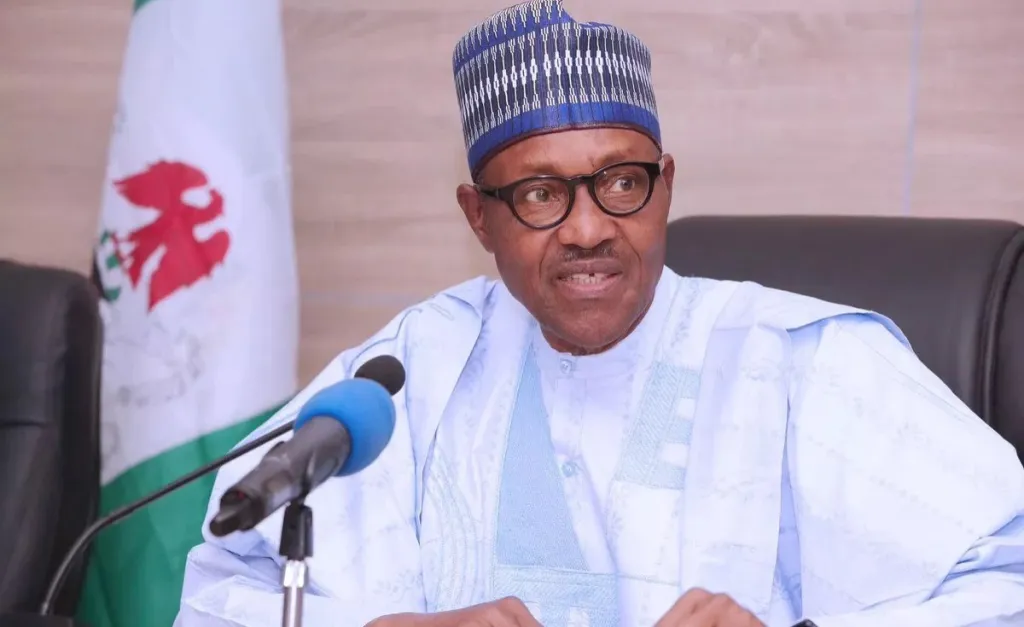
President Muhammadu Buhari
President Muhammad Buhari
Share


The Federal Executive Council (FEC) has approved over N5 billion for various contracts in Lagos, Abuja, Kano and Katsina airports.

The News Agency of Nigeria (NAN) reports that the meeting of the Council, which was presided over by President Muhammadu Buhari in Abuja on Wednesday, also approved the dualisation of the Odukpani-Itu-Ikot Ekpene road at the cost of N79.649 billion.

Special adviser to the President on Media and Publicity, Femi Adesina, and the Minister of Works, Babatunde Fashola, revealed this while briefing State House correspondents on decisions reached by the Council at the weekly cabinet meeting.

Adesina said: “The Minister of Aviation presented a memo for the approval of the award of contracts at the Murtala Mohammed international airport Lagos, Nnnamdi Azikiwe international airport Abuja, Aminu Kano international airport Kano and Katsina airport in Katsina State.

“For Lagos, it is for the expansion of the terminal building at domestic terminal GAT for the sum of N2, 817, 579, 271.99. For the Katsina airport, it is for the expansion of the airport’s apron awarded at N527, 353, 095.12.

“There is also the expansion of Lagos cargo apron areas awarded at N1,982. 943, 242.31.

“Council also approved the expansion of Abuja domestic apron areas at N795, 976, 947.34 and also the expansion of Kano apron area at the cost of N1, 059, 120, 254.37,”

Adesina said when completed, the contracts would go a long way in improving the air transportation network in the country.

On his part, Fashola revealed that the Council approved the dualization of the Odukpani-Itu-Ikot Ekpene road at the cost of N79.649 billion.

According to the minister, the approved contract is in relation to the section from Oku Iboku Power Plant to Abak of about 26 kilometre stretch.

“The Ministry of Works and Housing presented the memorandum for the completion of the dualization of the Odukpani-Itu-Ikot Ekpene road. And this is in relation to the section from Oku Iboku Power Plant to Abak of about 26 kilometre stretch.

“Council approved the award to Messers Sematech Nigeria Ltd for N79.649 billion to be executed over 16 months.

“So, this will help complete the dualization gaps between the one awarded to Julius Berger and the section awarded to CCECC.

“When this is done, motorists in that area will now have an option of the dual carriageway instead of the existing single carriageway.

“And this is in recognition of the heavy cargo that passes through that area from the South-South through to the North Central, Benue through Katsina Ala through to the South East to Abia. It’s very very important trade link for the country.”

Asked to give an update on the 2020 contract award for the same project, Fashola expressed regret that there had been paucity of fund to implement the project.

He said: “Okay, first of all, it’s important for us to have a common understanding of the area – that is the rain forest area of Nigeria, mangrove areas, very high water table and rains in seven, eight months of the year.

“So, when we awarded the first section, from Odukpani-Itu to Julius Berger  in 2016, they could not move to site because of the limited budgetary requisitions.

“So, that slowed down work in that area and they didn’t move to site until 2018.

“And the second section, which was from Abak to Ikot Ekpene was awarded in last year, February 2020. We have had to mobilise some Sukuk resources to the area.

“Sometime last year, you might recall that I was there visiting with the governor, I  actually went twice and we focused first on the link road from Alese Ugep area because that was a very big bad one, that one used to take like, three, four days to traverse a 70 kilometer road.

“Now, we have that under control, resolved, motorable in the first phase to Odukpani. That has reduced the journey time there to less than two hours, from days. So, again, it’s a work in progress.’’

On the recent collapsed of a section of the Lokoja-Kabba road, the minister attributed the incident to natural causes.

He said: “As we go through the rainy season, this is the context in which to locate the Lokoja-Kabba.

“It’s a failure caused by nature and aging. And, again, an opportunity to share with you what we have. We expect that these things will happen, but we don’t know where it will happen every time.”

While noting that his ministry was often unable to respond to such failures, he called for the setting up of a contingency maintenance fund, which he said should have a sizable amount.

“So, we’ve been proposing that Nigeria should have an emergency provision in the works budget, but we haven’t been successful enough.

“There must be a contingency, a sizable sum, because when we see failures, last year, we had a problem like that in Kebbi, where roads were washed away.

“We couldn’t respond because we didn’t have the resources. But we will lean on FERMA.

“Well, traditionally back in Lagos when I was governor, I think we used to provide about five per cent of our capital expenditure as a contingency fund for emergencies. Something between three and five per cent varies across the world,” he said. (NAN)

Continue Reading
Click to comment

Leave a Reply

Your email address will not be published. Required fields are marked *

News

Bamidele: 2026 Electoral Act Reflects Stakeholders’ Consensus, Not Legislative Imposition

Published

on

Senate Leader, Senator Michael Opeyemi Bamidele
Share

The Leader of the Senate, Opeyemi Bamidele, has stated that the provisions of the 2026 Electoral Act were the outcome of broad consultations with stakeholders rather than unilateral decisions by the National Assembly.

In an Easter message issued on Sunday through his Directorate of Media and Public Affairs, Bamidele explained that the new electoral law aligns with global best practices and was not designed to serve any political interest. He urged political actors to adhere to the rules collectively established to ensure stability, peace, and order within Nigeria’s democratic system.

His remarks come amid criticisms from opposition parties, particularly the African Democratic Congress (ADC), which alleged that certain provisions—such as Sections 77 and 84 of the Act—were introduced to weaken their chances ahead of the 2027 general elections. However, Bamidele dismissed the claims, insisting that all sections of the law were products of consensus involving civil society groups, development partners, and other stakeholders.

He defended the requirement for political parties to submit a digital register of members to the Independent National Electoral Commission (INEC), describing it as a transparency measure aimed at preventing undue influence by individuals outside party structures. According to him, the reform is essential for strengthening internal democracy and ensuring that party decisions reflect the will of legitimate members.

Bamidele also justified the restriction of candidate nomination processes to either direct primaries or consensus arrangements, noting that the move is intended to eliminate the delegate system, which he said had been susceptible to manipulation by wealthy individuals. He added that the new system empowers party members and reinforces majority rule in line with democratic principles.

Beyond electoral matters, the Senate leader condemned recent violent attacks in Plateau and Kaduna states, describing them as unacceptable acts against innocent citizens. He assured that the National Assembly is collaborating with federal and state authorities to tackle insecurity and prevent further loss of lives.

He disclosed that ongoing legislative efforts, including amendments to the Terrorism (Prevention and Prohibition) Act, are aimed at introducing stricter penalties for kidnappers, their sponsors, and collaborators. Bamidele expressed confidence that these measures would help restore security and stability across the country.

Reflecting on Easter, Bamidele called on Nigerians, especially political leaders, to embrace the values of sacrifice, tolerance, and unity exemplified by the resurrection of Jesus Christ, urging a collective commitment to nation-building.

Continue Reading

News

FG to Deploy AI Cameras to Tackle Insecurity in Plateau — Tinubu

Published

on

President Bola Tinubu
President Bola Ahmed Tinubu
Share


President Bola Tinubu has announced that the Federal Government will deploy over 5,000 artificial intelligence-enabled digital cameras across Plateau State to help security agencies combat rising insecurity.

The President made this known on Thursday during a visit to Jos, following the March 29 gun attacks in Angwan Rukuba, Jos North Local Government Area, which claimed several lives. He assured residents that such incidents would not recur, pledging decisive action to bring perpetrators to justice.

Tinubu directed security chiefs, including the Minister of Defence, Chief of Army Staff, and Inspector General of Police, to track down those responsible for the killings. He also tasked the Minister of Communications and Digital Economy, Bosun Tijjani, with overseeing the immediate installation of the surveillance system, starting in Jos and later expanding across the state.

Expressing sympathy to affected families, the President said no compensation could replace lost lives but promised government support and justice. He also directed the Ministry of Humanitarian Affairs to compile data on victims to ensure fair distribution of relief.

Plateau State Governor Caleb Mutfwang described the incident as a temporary setback, noting that the state had previously enjoyed relative peace. He expressed confidence in ongoing security efforts and thanked the Federal Government for approving the recruitment of 1,000 forest guards to strengthen local security.

Stakeholders at the meeting, including former governors and political leaders, called for greater collaboration and dialogue among Plateau indigenes, stressing that lasting peace would require collective responsibility.

Continue Reading

News

El-Rufai Returned to ICPC Custody After Court Appearance in Kaduna

Published

on

Former Kaduna State Governor,Nasir El -Rufai
Share

Former Kaduna State governor, Nasir El-Rufai, has been returned to the custody of the Independent Corrupt Practices and Other Related Offences Commission (ICPC) following court proceedings in Kaduna.

El-Rufai, who had earlier left custody on March 27, 2026, due to the death of his mother, was re-arraigned on Tuesday.

He first appeared before the Kaduna State High Court over a separate charge filed by the ICPC. However, proceedings were stalled due to the absence of the second defendant, prompting the court to adjourn the case until April 10, 2026.

Following the adjournment, El-Rufai was taken to the Federal High Court in Kaduna, where his application for bail was scheduled to be heard.

The court had earlier fixed March 31, 2026, for the hearing of his bail application.

Continue Reading