Connect with us

News

EFCC Interrogates El-Rufai Over Alleged Multi-Billion Naira Fraud

Published

on

Nasir El Rufai
Share

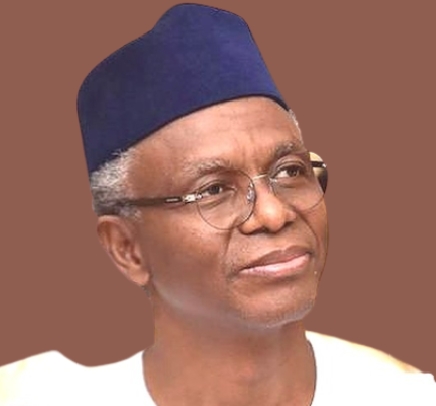
Abuja — The Economic and Financial Crimes Commission on Monday questioned former Kaduna State governor Nasir El-Rufai over alleged corruption and fraud tied to his eight-year tenure from 2015 to 2023.

El-Rufai, now a chieftain of the African Democratic Congress, arrived at the EFCC headquarters in Jabi, Abuja, in response to an invitation issued by the anti-graft agency. His appearance followed a failed attempt by operatives to arrest him last Thursday at the Nnamdi Azikiwe International Airport.

Sources within the commission confirmed that investigators are examining multiple petitions alleging financial misconduct, abuse of office and procurement irregularities during his administration. Officials declined to disclose specific details of the allegations but indicated that the scope of the probe spans several projects executed under his government.

“He is currently with investigators. The process is ongoing, and the duration will depend on the scope of issues under review,” a senior EFCC official said on condition of anonymity, adding that charges could be filed if sufficient evidence emerges.

El-Rufai was accompanied by supporters who gathered outside the commission’s premises. Two separate groups of demonstrators were observed — one expressing solidarity with the former governor, the other calling for a thorough and impartial investigation.

Tensions rose briefly when security operatives prevented some supporters from entering the premises. The situation was later contained without incident.

His legal counsel, Ubong Akpan, confirmed that the EFCC invitation was received while his client was abroad and argued that the earlier attempted arrest was unlawful. “There exists no justifiable basis for the attempted arrest or any alleged mistreatment,” Akpan said, maintaining that his client remains willing to cooperate with investigators.

Meanwhile, EFCC spokesperson Dele Oyewale appealed for calm, assuring members of the public that the commission would handle the matter professionally and in accordance with the law.

As of press time, the EFCC had not announced any formal charges. Investigations are ongoing.

Continue Reading
Click to comment

Leave a Reply

Your email address will not be published. Required fields are marked *

News

Akpabio: Electoral Act Amendment Will End Result Manipulation, Make Every Vote Count

Published

on

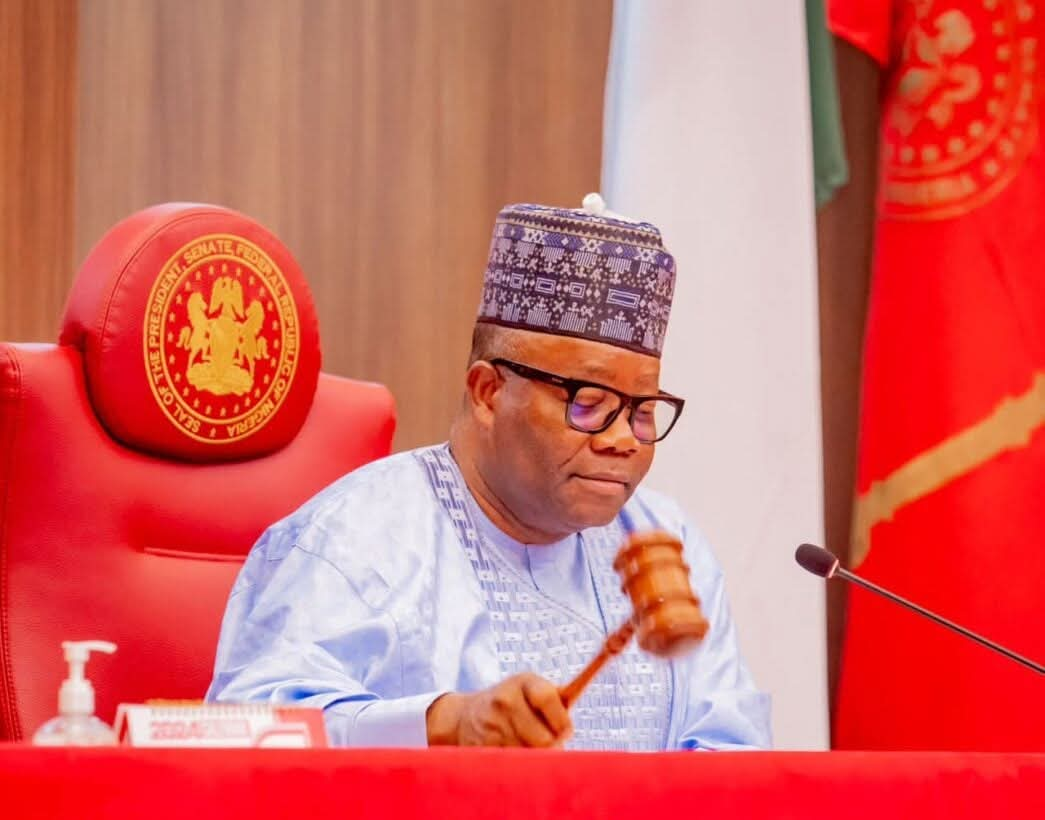
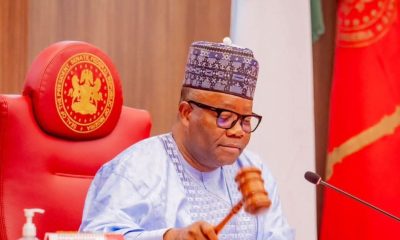
Senate President, Godswill Akpabio
Share

Senate President Godswill Akpabio says the Electoral Act 2026 (Amendment) signed into law by President Bola Ahmed Tinubu will ensure that every Nigerian vote counts and eliminate the manipulation of results.

Akpabio spoke with State House correspondents on Wednesday shortly after Tinubu assented to the bill in the presence of principal officers of the national assembly.

“At the end, Nigerians will benefit a lot from future elections. Every vote will now count,” he said.

The senate president stated that the amendment addresses the longstanding issue of result manipulation between polling units and collation centres. He noted that, for the first time since independence in 1960, Nigeria’s electoral law formally recognises electronic transmission of results.

According to him, the amended act mandates the electronic transmission of polling unit results to the Independent National Electoral Commission result viewing portal (IReV).

Akpabio said the provision responds to demands by civil society organisations, opposition parties and election observers following allegations of result manipulation during the 2023 general election.

He, however, said the law makes allowances for areas with poor telecommunications infrastructure.

“We took cognisance of areas where there may not be any network, where there may not be communication capacities and availability,” he said.

He explained that the EC8A form, signed by the presiding officer and party agents in the presence of security personnel, would serve as the primary source of collation at the polling unit level.

“Even if there is no network at that time, once we step out of there, maybe towards the ward centre or the local government centre, it will drop into the iREV, and people will still be able to view,” he added.

Akpabio said the new framework allows Nigerians to compare results uploaded on the portal with figures collated at ward, local government and state levels.

“The implication of that is that if what is eventually collated at the next centre is different from what is in the iREV, Nigerians will be able to compare whether the election result had been tampered with,” he said.

He dismissed claims that the national assembly yielded to political pressure in passing the amendment, insisting that lawmakers acted in the interest of Nigerians. He added that the senate cut short its holiday to conclude work on the legislation.

Akpabio also said the amendment introduces direct primaries for political parties, enabling members to vote directly for candidates of their choice rather than relying solely on delegate systems.

In addition, he said the law provides that where a court disqualifies a declared winner, a fresh election must be conducted instead of declaring the runner-up as winner.

“We don’t want a situation where, in an election, you have five people contesting, one person scores 300,000 votes, one person scores 290,000, and then, for one reason or another, he’s disqualified by the court, and then the person who scored 1,000, who is not popularly elected, will now be declared a winner,” he said.

He added that the same principle applies to governorship elections, where candidates must meet constitutional spread requirements.

Speaker of the House of Representatives Tajudeen Abbas, who also addressed journalists, said the amendment reduces the election notice period from 360 days to 300 days.

He said the adjustment would likely result in the presidential and national assembly elections being held in January 2027, thereby avoiding the Ramadan period and reducing the risk of voter apathy.

The amendment was signed into law days after INEC released the timetable for the 2027 general elections.

Continue Reading

News

Tinubu Signs Electoral Act 2026 into Law, Defends Human Role in Finalising Results

Published

on

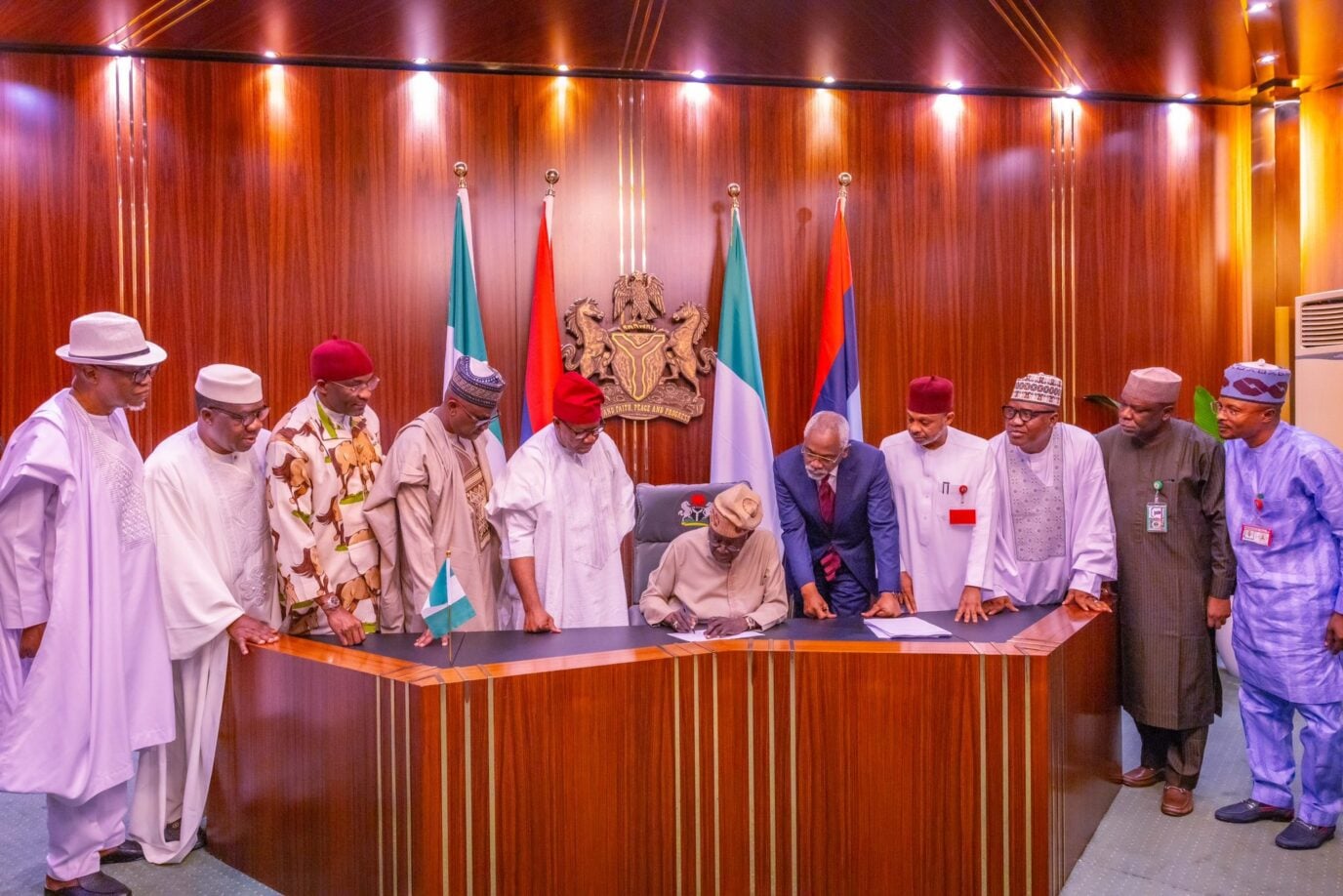
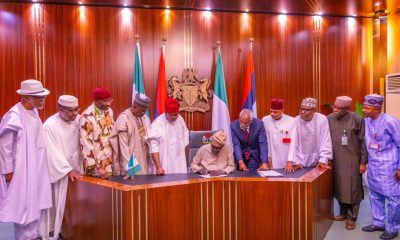
President Bola Ahmed Tinubu and Principal of officers of the National Assembly during the signing ceremony at the State House Abuja
Share

President Bola Ahmed Tinubu has signed the Electoral Act 2026 (Amendment) Bill into law, declaring that election results in Nigeria are ultimately finalised by human beings and not computers.

The signing ceremony took place at the State House around 5:00 pm on Wednesday, with senior leaders of the national assembly in attendance. The legislation was passed on Tuesday after months of debate, review and amendments by both chambers.

Speaking shortly after signing the bill, Tinubu commended the lawmakers for what he described as “solid brainstorming discussions” aimed at strengthening national development and safeguarding democratic stability.

He said the primary objective of the amendment is to ensure that the electoral process is managed without confusion or disenfranchisement.

“What is crucial is the fact that you manage the process to the extent there will be no confusion, no disenfranchisement of Nigerians; and we are all going to see democracy flourish,” the president said.

Tinubu stressed the need to rebuild confidence in the electoral system, arguing that no framework, however technologically advanced, can function effectively without human integrity.

“No matter how good a system is, it’s managed by the people, promoted by the people, and result is finalised by the people,” he said. “For final results, you are not going to be talking to the computer. You are going to be talking to human beings who announce the results.”

On the controversy surrounding real-time electronic transmission of results, the president called for a realistic assessment of Nigeria’s technological capacity, particularly broadband infrastructure.

“When you look at the crux of various agreements, maybe Nigeria should question our broadband capability. How technically are we today? How technically will we be tomorrow?” he asked.

Tinubu maintained that the voting process remains largely manual. According to him, voters will continue to appear physically at polling units, receive ballot papers, thumbprint their preferred candidates and cast their votes. The ballots will then be sorted and counted manually, with only the arithmetic results entered into official forms.

He said attention should focus on ensuring glitch-free transmission of manually collated results, warning against unnecessary interference in an era of heightened digital scrutiny.

Earlier on Tuesday, the Senate reconvened for an emergency plenary and rescinded its initial passage of the bill to accommodate amendments affecting the 2027 election timetable.

Lawmakers said the adjustment was necessary after further review revealed that the 360-day notice requirement in Clause 28 could result in the scheduling of the 2027 presidential and national assembly elections during the Ramadan period.

Debates had also trailed the issue of electronic transmission of election results. The Senate had initially rejected compulsory real-time electronic transmission, triggering public outrage and protests at the national assembly complex.

Following reconsideration of the contentious provision at its February 10 plenary, the Senate approved electronic transmission of results to the Independent National Electoral Commission result viewing portal (IReV), while retaining manual collation as a fallback in the event of technological failure.

However, the amendment does not mandate real-time electronic transmission or require compulsory live uploads of results.

Under the new provision, where electronic transmission is disrupted by network or communication challenges, the manually completed EC8A form will serve as the primary basis for collation and declaration of results.

Tinubu expressed optimism about Nigeria’s democratic future, saying the country would continue to nurture its democracy in pursuit of prosperity and stability.

Continue Reading

News

Tinubu Urges Unity as Lent, Ramadan Begin Same Day

Published

on

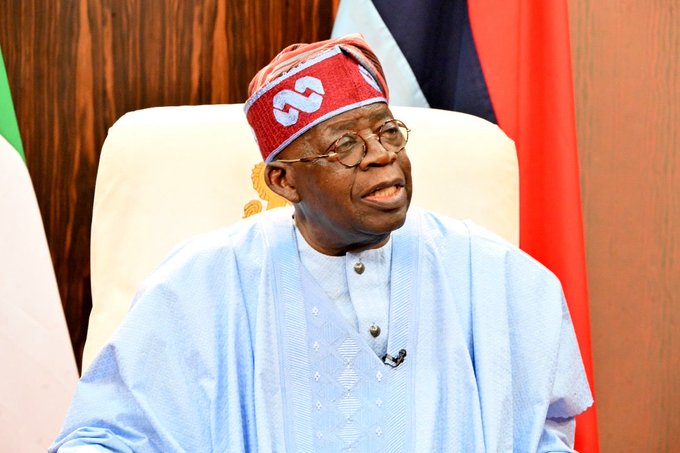
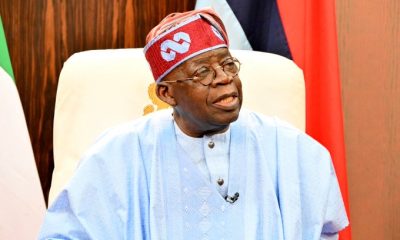
President Bola Ahmed Tinubu
Share

President Bola Ahmed Tinubu has called on Christians and Muslims across Nigeria to use the sacred seasons of Lent and Ramadan to deepen unity, promote peace and pray for the nation’s progress and security.

In a message to the faithful on Tuesday, the President described the rare coincidence of Lent and Ramadan commencing on the same day as a powerful symbol of shared faith and common purpose among Nigerians.

“With profound reverence to God Almighty, I greet the Christian and Muslim faithful on the solemn occasions of Lent and Ramadan,” the President said.

Noting that the simultaneous observance is uncommon, Tinubu said it serves as a reminder that Nigerians, though diverse in religious expression, are “one people under God.”

Call to Reflection and Sacrifice

The President described Lent as a sacred period for Christians marked by fasting, abstinence and penitence, rooted in the example of Jesus Christ’s 40-day fast in the wilderness before His crucifixion. He said the season calls believers to spiritual discipline, sacrifice and reflection on Christ’s suffering and the salvation it brought to humanity.

On Ramadan, Tinubu noted that the holy month represents total submission to God Almighty in Islam, emphasising sacrifice, devotion, service and communal love. He described the fast as not only an act of obedience but also a period of deep spiritual reflection, charity and renewed commitment to faith.

Appeal for Peace and National Stability

“As a nation and as a people, I urge us, as we embark on these important observances, to ensure good neighbourliness, promote peace, unity, and stability, and pray for the progress and security of our nation,” the President stated.

He encouraged Nigerians to live out the core values of their respective faiths, stressing the importance of honouring both divine obligations and responsibilities to fellow citizens.

“Let us live by the good precepts of our faiths and be honourable in our duty to God and fellow humans,” he added.

The President concluded with prayers that the lessons, blessings and spiritual renewal associated with Lent and Ramadan would extend beyond the fasting period and foster lasting harmony and joy across the country.

Continue Reading