Connect with us

Business & Economy

Africa needs fiscal stimulus to drive economic growth – Okonjo-Iweala

Published

on

Share

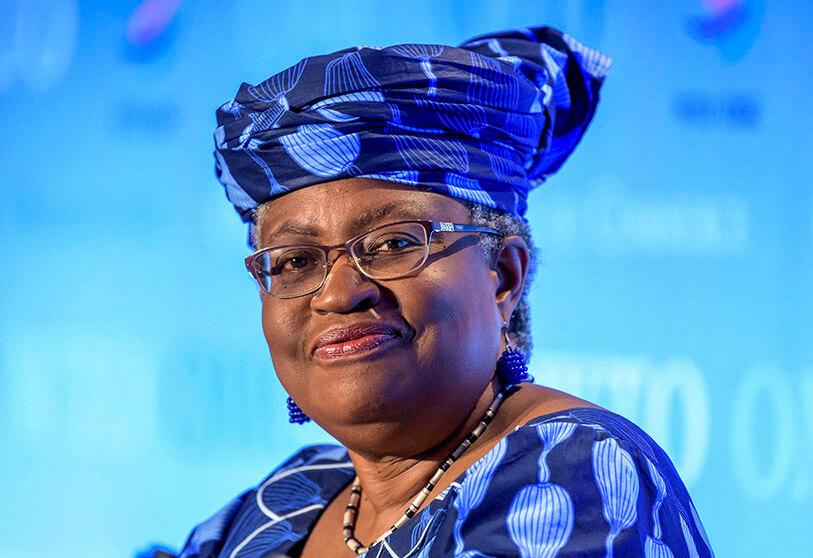
The Director-General of the World Trade Organisation (WTO), Dr Ngozi Okonjo-Iweala, said the African continent needed more fiscal stimulus to engender economic growth and recovery.

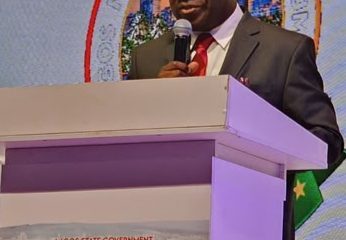
Okonjo-Iweala spoke at the UBA Africa Conversations 2021 with the theme: “Africa to the World,” held virtually to commemorate Africa Day on Tuesday in Lagos.

She noted that other developed countries were employing fiscal stimulus for economic growth recovery.

“On catalysing recovery and economic growth, aside from health investments, the next few actions, is to see on the short-term economic side, how we can get more fiscal stimulus into our economy.

“The developed countries are recovering very fast because they have been able to implement massive amount of fiscal stimulus.

”For the rich countries, 29 per cent of the Gross Domestic Product, for the emerging markets, 6.9 per cent and for poorer countries, just about two per cent.

“This is the reason for the whole discussions on restricting debts and giving African economies fiscal space to breath so that they can invest not only on the health side but also on the economic side, this will help us recover.

“The good news is that all African presidents like President Kagame of Rwanda, have been pushing for issuance of new Special Drawing Rights at the International Monetary Fund and $650 billion has now been agreed.

”Out of the $650 billion, Africa will get $34bn but more may be allocated.

“We can use this to help prevent more fiscal stimulus so that our economies can have the ability to recover, of that we should use some for liquidity for the private sector,” Okonjo-Iweala said.

She also said there was a need to revive the services sector such as tourism, logistics and others to help the recovery plan of the continent.

Okonjo-Iweala said: “We need to look at how to revive the services sector, many of our countries depend on tourism, logistics and how to get those services revive using these resources is very important.

“In the long or medium term, we need to diversify our economy, we are too vulnerable to movement in commodity prices and it was evident during the pandemic, too much fluctuations in oil and gas and other sectors.

“Some countries in the continent that did better during the pandemic were those that had diversified economies.

“Also, we must take advantage of the Africa Continental Free Trade Area (AfCTA) agreement. Movement of goods and people should be made easier to get the AfCTA to work,” Okonjo-Iweala added. (NAN)

Continue Reading
Click to comment

Leave a Reply

Your email address will not be published. Required fields are marked *

Business & Economy

Tinubu Approves Framework to Unlock $50bn Deep Offshore Investment

Published

on

President Bola Ahmed Tinubu
Share


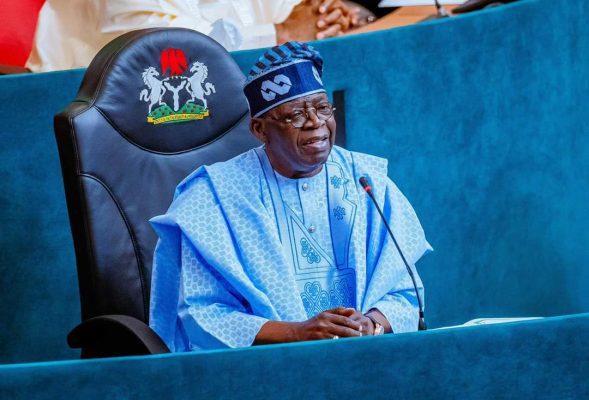
President Bola Ahmed Tinubu has approved a new investment framework aimed at attracting up to $50 billion in fresh investment into Nigeria’s deep offshore oil and gas sector.

The reform is designed to end project-by-project negotiations and introduce clear rules and incentives for large-scale offshore developments.

The framework, implemented through the Deep Offshore Oil and Gas Projects Incentives (Tax Remission) Order, 2026, is expected to revive major projects that have remained stalled for years.

One of the key projects targeted is the approximately $10 billion Bonga South West development.

The new framework will provide transparent eligibility requirements and implementation procedures, giving investors greater certainty while protecting Nigeria’s long-term economic interests.

It also allows NNPC Limited, as the government’s nominated counterparty under Production Sharing Contracts, to make the necessary amendments to eligible contracts to implement the incentives.

According to the Special Adviser to the President on Oil and Gas, Olu Verheijen-Arowolo, qualifying projects will be required to maximise activities within Nigeria where commercially and technically feasible.

She said the policy would help expand local engineering, fabrication, marine logistics, technical services and project management, while creating skilled jobs and strengthening domestic supply chains.

President Tinubu commended the Federal Ministry of Justice, Ministry of Finance, Ministry of Petroleum Resources, Nigeria Revenue Service, NNPC Limited, NUPRC, NCDMB and other industry stakeholders for their contributions to developing the framework.

The President said countries that attract long-term investment are those that provide certainty, stressing that the reform would create an investment environment based on clear rules, strong institutions and lasting partnerships.

He said the initiative would help attract capital, grow Nigerian businesses, create jobs and ensure that the country’s natural resources deliver greater long-term value.

Continue Reading

Business & Economy

NERC Dissolves Kaduna Electricity Distribution Company Board Over ₦456.5bn Insolvency

Published

on

NERC Logo
Share


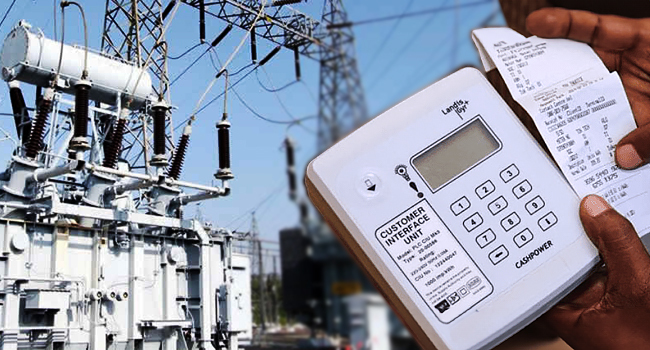
The Nigerian Electricity Regulatory Commission (NERC) has dissolved the Board of Kaduna Electricity Distribution Company (Kaduna Electric) with immediate effect over severe financial insolvency amounting to ₦456.5 billion.

NERC, in a statement, said the decision followed the company’s poor financial and operational performance.

According to the commission, Kaduna Electric remitted only 41.93 percent of its adjusted market invoices in 2025 and recorded aggregate losses of 71.88 percent.

The company also invested ₦2.48 billion against a required capital investment of ₦24.51 billion, while customer metering coverage remained below 36 percent.

To ensure continued electricity supply and operational stability, NERC has constituted an interim board of Special Directors chaired by Dr. Abdullahi Garba.

The commission also appointed Dr. Abubakar Umar Hashidu as Administrator of the company for an initial six-month term.

NERC further said Afrexim would coordinate a transparent 12-month competitive process to secure a competent replacement core investor for Kaduna Electric.

The commission assured electricity consumers across Kaduna Electric’s franchise area that distribution services would remain safe and uninterrupted during the transition.

Continue Reading

Business & Economy

Subsidy Removal Best Thing That Happened to Nigeria — NRS Chairman

Published

on

President Bola Ahmed Tinubu
Share


The Chairman of the Nigeria Revenue Service (NRS), Zacch Adedeji, has described the removal of petrol subsidy as one of the best economic decisions taken in Nigeria, saying President Bola Tinubu deserves commendation for the policy.

Adedeji made the remarks while appearing on Channels Television’s Sunday Politics on Sunday, August 9, 2026.

He said many of the positive economic developments being recorded by the government were linked to the decision to remove the subsidy, which he described as unsustainable and harmful to the country’s economy.

According to him, the subsidy regime had existed for decades and placed a heavy burden on government finances.

“All the good results that I will reel out soon come as a result of that courageous decision. So, it is not a mistake; it is the best thing that has happened to this country,” Adedeji said.

The NRS chairman said Tinubu inherited an economy facing several structural challenges, including an unsustainable petrol subsidy regime, an underperforming oil sector and a narrow tax base.

He said the administration had introduced major reforms to address these challenges and urged Nigerians to assess the policies based on their long-term economic impact rather than emotions.

Adedeji also challenged those seeking to contest the 2027 presidential election to explain how they would handle the country’s economic challenges differently.

He specifically questioned whether they would reverse the removal of fuel subsidy or the unification of the foreign exchange market.

The NRS chairman further argued that retaining the subsidy would have placed an even greater strain on Nigeria’s finances, particularly amid global energy market pressures.

He estimated that the subsidy bill could have risen to about ₦53 trillion, while the exchange rate might have reached ₦3,500 to the dollar.

President Tinubu announced the removal of petrol subsidy during his inauguration speech on May 29, 2023. The decision led to a sharp increase in petrol prices and contributed to higher transportation, food and production costs.

While the reform has increased government revenues and boosted allocations to the federal, state and local governments, its effect on the cost of living remains a major concern for many Nigerians.


Continue Reading