Connect with us

Business & Economy

SANWO-OLU SIGNS 2022 APPROPRIATION BILL OF N1.758 TRILLIONS 

Published

on

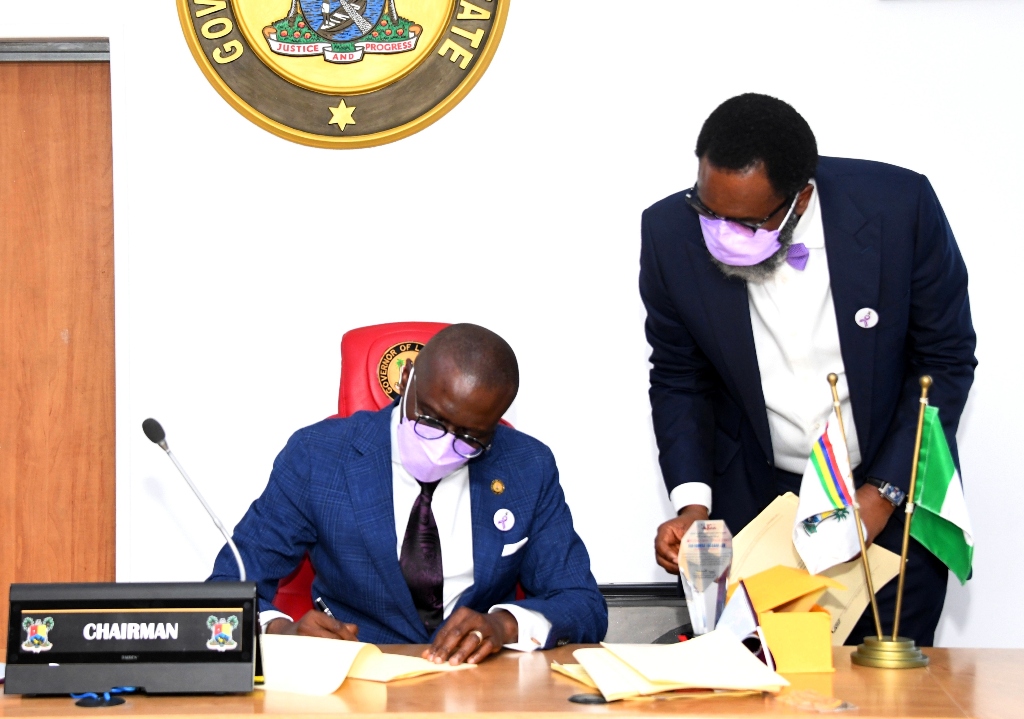
Lagos State Governor, Mr. Babajide Sanwo-Olu signing the Anti-Open grazing bill into law With him is the Attorney General and Commissioner for Justice, Mr. Moyosore Onigbanjo (SAN)
Lagos State Governor, Mr. Babajide Sanwo-Olu and his Deputy
Share

Lagos State Governor, Mr. Babajide Sanwo-Olu on Friday signed the 2022 Appropriation Bill of N1.758 trillion christened ‘Budget of Consolidation’ into law.

Governor Sanwo-Olu, while signing the Bill at the Lagos House, Ikeja, said that the capital expenditure stands at N1.166 trillion, representing 66 percent of the budget estimates, while recurrent expenditure is N591 billion, representing 34 percent, to maintain the 66:34 percent budget tradition of Lagos State.

Speaking after signing the 2022 Appropriation bill, Governor Sanwo-Olu said the budget is to consolidate infrastructural development across the state in line with his administration’s T.H.E.M.E.S. developmental agenda to address issues on education, infrastructure, health, technology, social intervention, rail projects and other critical areas.

While explaining the rationale behind the increase in the 2020 Appropriation Bill from the initial N1.388 trillion budget estimates presented to the Lagos State House of Assembly on November 24, Sanwo-Olu said there is a need to capture all financing options for the Blue and Red line rail projects and other ongoing projects in the Budget of Consolidation.

He said: “Let me state at this juncture that the difference between the budget amount presented by the Executive and the final amount passed by the Legislature is largely accounted for by the decision to further accelerate already existing infrastructure projects and bring them to substantial levels of completion.

“We have also decided to capture in the Budget, the financing being deployed towards the Blue Line and the Red Line rail projects by private sector consortia, up to a level that will not put pressure on our cash flow and debt sustainability.

“In addition, this 2022 Appropriation Bill recognises several other already-funded project transactions that are now being accounted for as corporate transactions. What this means is that we are now choosing to capture in the Budget the significant value already accruing to the State from these projects.

“As I said during the presentation to the House of Assembly, this will be the last full-year budget in the tenure of this administration. As a result, a major focus of this budget will be ensuring the completion of all ongoing projects that are critical to achieving our desire to build a Greater Lagos in line with the goals and objectives of the T.H.E.M.E.S development agenda.”

He said the Commissioner for Economic Planning and Budget, Mr. Sam Egube would present to the public the full details and breakdown of the budget in due course.

Governor Sanwo-Olu also commended the Speaker and members of the Lagos State House of Assembly for their cooperation and support, especially in ensuring the quick consideration and passage of the 2022 Appropriation Bill, which he presented on Wednesday, November 24.

The Governor also appreciated Lagosians for their support in ensuring the impressive performance in the implementation of the 2021 budget, against all odds, especially the continuous challenge posed by COVID 19.

“I believe very strongly that we, working together, and with everyone doing their part diligently, will achieve much more in 2022,” the Governor said.

Speaking earlier, the Speaker of the Lagos State House of Assembly, Rt. Hon. Mudasiru Obasa, stated that the budget was given expeditious approval with proper scrutiny within five weeks to ensure that all projects are executed.
Obasa, who was represented by the Chairman of the Lagos State House of Assembly Committee on Appropriation, Hon. Gbolahan Yishawu, said the Babajide Sanwo-Olu administration is heading in the right direction in ensuring that infrastructural projects are put in place across the state in line with the T.H.E.M.E.S. development agenda.

He also commended Governor Sanwo-Olu for completing all the projects he inherited and providing funds for all the ongoing projects in different parts of the State.

Also speaking, Commissioner for Economic Planning and Budget, Sam Egube, commended the Lagos State House of Assembly for the speedy passage of the 2022 Appropriation Bill.

He said he was excited and grateful to all stakeholders for leading the process to the signing of the biggest State’s budget.

It would be recalled that the
Lagos State House of Assembly on Wednesday passed the 2022 budget estimates with a slight increase of the grand total from the initial N1.38 trillion to N1.758 trillion.

Continue Reading
Click to comment

Leave a Reply

Your email address will not be published. Required fields are marked *

Business & Economy

NERC Orders DisCos to Compensate Band A Customers for Power Supply Shortfalls

Published

on

Share


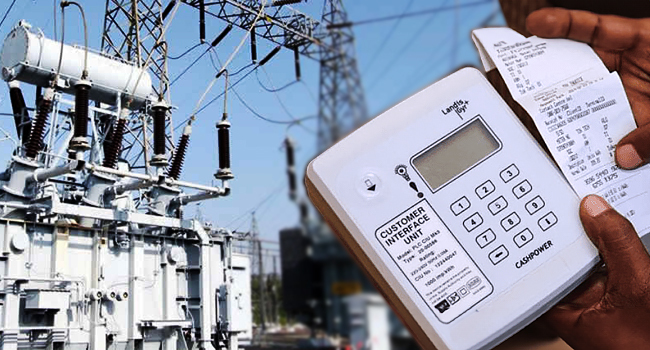
The Nigerian Electricity Regulatory Commission (NERC) has directed electricity distribution companies (DisCos) to compensate eligible Band A customers affected by power supply shortfalls recorded between February and March 2026.

In a public notice issued on Wednesday, the commission said the special compensation scheme became necessary following significant electricity generation deficits across the Nigerian Electricity Supply Industry (NESI), which prevented some DisCos from meeting the minimum service commitments required for Band A customers.

According to NERC, the supply disruptions were largely caused by inadequate gas supply as well as vandalism of critical gas and transmission infrastructure, factors beyond the direct control of the distribution companies.

The regulator explained that Band A customers are entitled to a minimum of 20 hours of electricity supply daily. It noted that where a Band A feeder recorded an average daily supply of between 18 and 20 hours during the affected period, the existing compensation framework under Addendum No. NERC/2024/003 would continue to apply to both Maximum Demand (MD) and Non-Maximum Demand (Non-MD) customers.

However, NERC stated that Band A feeders that received less than 18 hours of electricity supply per day between February and March 2026 would not be downgraded despite failing to meet the service threshold. Instead, customers connected to such feeders would receive special compensation.

Under the approved arrangement, Non-MD customers will receive compensation equivalent to 20 percent of the approved February 2026 energy cap applicable to their feeder. MD customers, on the other hand, will receive compensation equivalent to 20 percent of the average energy billed per MD customer in February 2026.

The commission further directed that prepaid customers should receive their compensation through electricity token credits, while postpaid customers should benefit through direct bill adjustments.

To ensure transparency, NERC instructed DisCos to clearly communicate the value and period of the compensation to affected customers. The regulator also prohibited distribution companies from using the compensation credits to offset any existing customer debts.

Reaffirming its commitment to consumer protection, NERC said it would closely monitor the implementation of the directive and verify compliance across all distribution companies to ensure that eligible customers receive the compensation due to them.

The commission added that the measure is aimed at safeguarding consumer interests while maintaining the stability and sustainability of Nigeria’s electricity market.

Continue Reading

Business & Economy

Nigeria, UK Move to Close £1.2bn Trade Data Gap with Digital Customs Pact

Published

on

UK and Nigeria Flags
Share


Nigeria and the United Kingdom have agreed to deepen customs cooperation through a new digital data-sharing framework aimed at resolving a £1.2 billion discrepancy in bilateral trade figures, a longstanding issue affecting transparency and efficiency between both economies.

The agreement was reached during a high-level meeting in London on March 18, 2026, held on the sidelines of President Bola Tinubu’s state visit under the Nigeria–UK Enhanced Trade and Investment Partnership (ETIP).

According to the Nigeria Customs Service (NCS), the talks brought together Comptroller-General Adewale Adeniyi and Ms. Megan Shaw, Head of International Customs and Border Engagement at His Majesty’s Revenue and Customs (HMRC), with discussions focused on customs modernisation, trade data transparency, and operational collaboration.

At the centre of the engagement is a significant mismatch in trade statistics. Nigeria recorded about £504 million worth of imports from the UK in 2024, while UK data shows exports to Nigeria at approximately £1.7 billion over the same period — leaving a gap of roughly £1.2 billion.

Both sides described the discrepancy as structural and agreed on coordinated measures to address it. Chief among these is the proposed implementation of a pre-arrival data exchange system, which will connect digital customs platforms in both countries to improve data accuracy, strengthen risk management, and enhance compliance monitoring.

Adeniyi emphasised that stronger customs collaboration is vital for economic growth and sustainable trade, noting that customs authorities play a key role in ensuring secure and transparent cross-border trade flows.

The meeting also highlighted advancements in customs technology, with the UK showcasing artificial intelligence-driven tools, digital verification systems, and real-time analytics designed to improve cargo processing, risk assessment, and border security.

In addition to addressing the data gap, both countries agreed on several strategic initiatives, including the development of a Customs Mutual Administrative Assistance Framework, technical cooperation on capacity building, and the establishment of a joint engagement mechanism under ETIP.

The NCS said the outcomes of the meeting would enhance operational efficiency, boost trade facilitation, and support Nigeria’s broader economic reform agenda, positioning the country for improved competitiveness in global trade.

Continue Reading

Business & Economy

Nigeria’s “Shockproof” Economy: Cardoso Signals New Era of Stability to London Investors

Published

on

CBN Governor, Yemi Cardoso
Share

Central Bank of Nigeria (CBN) Governor Olayemi Cardoso issued a bullish assessment of the nation’s financial health yesterday, declaring that aggressive institutional reforms and disciplined monetary policy have built a “stronger capacity” to withstand global economic volatility.

Speaking at the Africa Capital Forum—held on the sidelines of President Bola Ahmed Tinubu’s state visit to the United Kingdom—Cardoso painted a picture of a Nigerian economy transitioning from a period of emergency stabilization to one of sustained investment.

A Fortress Against Volatility

The Governor’s address focused heavily on the “de-risking” of the Nigerian financial system. By emphasizing a shift toward a predictable policy framework, Cardoso aimed to reassure international stakeholders that the days of opaque, discretionary decision-making are ending.

“We are reviewing our policies with a view to developing meaningful policies and establishing a predictable policy framework to minimise discretion,” Cardoso stated, noting that consistency is the primary tool for reducing investor uncertainty.

The Governor highlighted several critical milestones achieved under the current administration’s reform agenda:

Banking Recapitalization: The CBN reported that over 30 banks have already met new capital requirements.

Notably, 28% of the newly raised funds originated from foreign investors—a metric Cardoso cited as a clear vote of international confidence.

FX Transparency: A new foreign exchange manual has been deployed, stripping away previous restrictions to boost liquidity and simplify operations for multinational businesses.

Remittance Surge: Increased diaspora remittances have bolstered foreign exchange reserves, providing a crucial buffer against external shocks.

Fiscal-Monetary Synergy: In a departure from previous friction, Cardoso noted that the inclusion of fiscal authorities on the CBN Board and the Monetary Policy Committee (MPC) has synchronized the nation’s broader economic strategy.

The Digital Frontier: “Vision for Nigeria”

Looking ahead, the Governor announced the completion of a new Payments System Vision. This initiative aims to cement Nigeria’s status as the continental leader in digital payments and cross-border transactions, specifically targeting the removal of regulatory hurdles for the nation’s burgeoning fintech sector.


Continue Reading