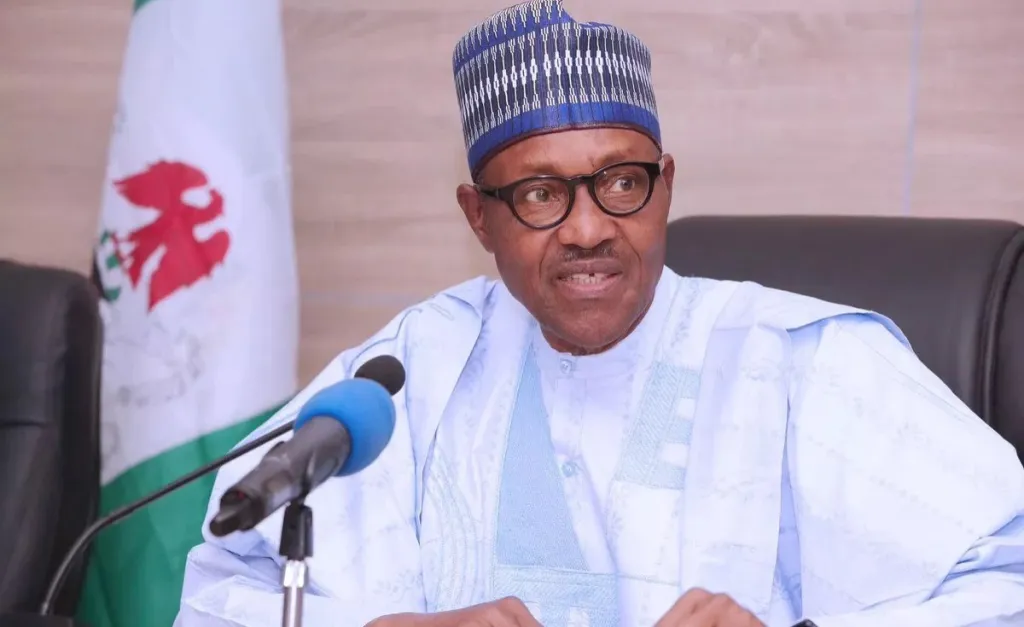
President Muhammadu Buhari has approved a steering committee to oversee the process of implementation of the newly signed Petroleum Industry Act (PIA).
The steering committee is headed by the Minister of State, Petroleum Resources, Timipre Sylva.
The president, who announced this while marking the passage the PIA which he signed into law on Aug. 16, said Nigeria lost an estimated 50billion dollars worth of investments in ten years, created by the uncertainty of non-passage of the PIB, lack of progress and stagnation in the petroleum industry.
According to the president, the committee is tasked with the completion of the implementation of this act within 12 months.
He, therefore, directed all relevant Ministries, Departments and Agencies of government to fully cooperate in ensuring the successful and timely implementation of the PIA.
The implementation process to be headed by the Hon Minister of State, Petroleum Resources is hereby tasked with the completion of the implementation of this act within 12 months. I am therefore directing all relevant Ministries, Departments and Agencies of government to fully cooperate in ensuring the successful and timely implementation of this law.
“To consolidate the commitment of this administration to delivering the value proposition of this law, I have approved an implementation framework commencing immediately to ensure the industry envisaged in the new law begins to take shape.
“The implementation process to be headed by the Minister of State, Petroleum Resources is hereby tasked with the completion of the implementation of this act within 12 months.
“I am therefore directing all relevant Ministries, Departments and Agencies of government to fully cooperate in ensuring the successful and timely implementation of this law,’’ he said.
The president maintained that the signing into law had become necessary in view of the fact that Nigeria runs a Petroleum Industry that is governed largely by laws enacted over 50 years ago such as the principal legislation; the Petroleum Act of 1969 and other obsolete legislations.
According to him, in the past ten years, Nigeria has lost an estimated 50billion dollars worth of investments due to uncertainty created by the non-passage of the PIB.
He said: “We are all aware that Past Administrations have identified the need to further align the industry for global competitiveness, but there was lack of political will to actualize this needed transformation.
“This lack of progress has stagnated the growth of the industry and the prosperity of our economy.
“In the past ten years, Nigeria has lost an estimated 50billion dollars worth of investments due to uncertainty created by the non-passage of the PIB.
“This administration believes that the timely passage of the Petroleum Industry Bill will help our country attract investments across the oil and gas value chain.’’
The president commended the two Chambers of the National Assembly for ensuring the passage of the PIB.
He noted that his signing of the Petroleum industry bill on Aug. 16, 2021 to “Petroleum Industry Act 2021” marked the beginning of the journey towards a competitive and resilient petroleum industry that would attract investments to support the nation economic recovery and growth plan.
According to the president, the PIA creates a regulatory environment that will ensure efficiency and accountability across the oil and gas value chain and reposition NNPC to a commercially driven National Petroleum Company that is accountable to the federation.
“The Act also provides for a direct benefit framework that will enable sustainable development of Host Communities. I appeal to the host communities to look carefully at the contents of the Bill which in the implementation will bring real and lasting benefits to them.
“Furthermore, the act provides for deliberate end to gas flaring which would facilitate the attainment of Nigeria’s Nationally Determined Contributions of the Paris Agreement through a funding mechanism to support gas flare out project in host communities.
“Similarly, it acknowledges global energy transition and made necessary provisions for NNPC to invest in renewable energy,’’ he added.
The president commended the two Chambers of the National Assembly for ensuring the passage of the PIB.
“Let me now commend the leadership of the 9th Assembly for their continued pursuit of our national aspiration and demonstration of mutual harmony with the Executive in the pursuit of a patriotic outcome in the passage of the PIB.
“I also commend the entire team in the executive that worked tirelessly to ensure the delivery of this strategic legislation for our country,’’ he said.
President Buhari also thanked Nigerians and other industry stakeholders for their contributions and support in achieving this historic landmark.
Other members of the implementation committee include: Permanent Secretary, Ministry of Petroleum Resources, Group Managing Director, NNPC, Executive Chairman, FIRS, representative of the Ministry of Justice and representative of the Ministry of Finance, Budget and National Planning.
The Senior Special Assistant to the President on Natural Resources, Olufemi Lijadu, will serve as External Legal Adviser, while the Executive Secretary, Petroleum Technology Development Fund, will serve as Head of the Coordinating Secretariat and the Implementation Working Group.
The primary responsibility of the steering committee shall be to guide the effective and timely implementation of the PIA in the course of transition to the petroleum industry envisaged in the reform programme.
It is also to ensure that the new institutions created have the full capability to deliver on their mandate under the new legislation.
The committee has 12 months duration for the assignment, and periodic updates will be given to Mr President. (NAN)