Connect with us

Business & Economy

AGF submits 2019 Audit report to NASS

Published

on

Auditor General of the Federation Logo
Share


The Auditor General of the Federation, Mr Adolphus Aghughu on Wednesday, submitted the 2019 Audit report to the Clerk to the National Assembly (CNA) Mr Ojo Amos.

The presentation ceremony was held at the National Assembly Complex, Abuja.

Aghughu said the audit was carried out on the 2019 Federal Government Consolidated Financial Statement,  which included unsubstantiated balances amounting to N4.973 trillion.

He however lamented that his office was incapacitated in so many ways from functioning effectively and efficiently as far as detection of mismanagement of public funds by the various Ministries, Departments and Agencies (MDAs) was concerned

“The N4.973 trillion unsubstantiated balances are above the materiality level of N89.34 billion set for the Audit.”

“In auditing, materiality means not just a quantified amount but the effect that amount will have in various contexts.

“During the auditing planning process, the auditor decides what the level of materiality will be taking into account the entirety of the financial statements to be audited.”

Aghughu said that auditing of consolidated financial statement of the Federal Government on yearly basis would be expeditiously carried out as made available by the office of the Accountant-General of the Federation .

“You will recall that on March 25, Audit of Consolidated Financial Statement of the Federal Government for the 2018 was submitted to this office for the required investigation of queries raised in it by the National Assembly .

“Just five months after, we are here again to make submission of the 2019 Audit Report,” he said.

He however decried that his office was not working the way it should due to myriad of factors crippling its operations and invariably giving room for all forms of financial infractions across the various MDAs.

He said that the problem incapacitating optimal functionality of the office’s mandate as far as thorough and appropriate l auditing of financial statements of the MDAs were concerned, was gross underfunding which was telling much on their efficiency .

“For example, the office is understaffed but there is no money for recruitment. Imagine many of our state offices having just two or three staff. Auditing is done by a team not by an individual.”

In his remarks, the Deputy Clerk to the National Assembly (DCNA), Mr Bala Yabani, who represented the CNA said the report presented would be submitted to both the President of the Senate, Ahmad Lawan and Speaker of the House of Representatives, Femi Gbajabiamila for the required legislative consideration.

He said that all the complaints made by the AGF would be tabled before the leadership of the National Assembly for required actions and solutions

” Your complaints are very germane. They will surely be conveyed to the appropriate quarters that will surely do the needful on them because the people heading the quarters have listening ears,” he said. (NAN)

Continue Reading
Click to comment

Leave a Reply

Your email address will not be published. Required fields are marked *

Business & Economy

CBN Retains Interest Rate at 26.5% as MPC Prioritises Inflation Control, Economic Stability

Published

on

Share

Cbn

The Monetary Policy Committee (MPC) of the Central Bank of Nigeria (CBN) has retained the Monetary Policy Rate (MPR), the country’s benchmark interest rate, at 26.5 per cent, citing the need to sustain macroeconomic stability amid easing domestic inflation and growing global economic uncertainties.

The decision was announced on Tuesday by the Governor of the Central Bank of Nigeria and Chairman of the MPC, Olayemi Cardoso, at the end of the committee’s 306th meeting held in Abuja.

The latest decision marks the second consecutive meeting in 2026 in which the apex bank has maintained the benchmark lending rate, signalling a cautious approach to monetary policy while monitoring both domestic and international economic developments.

In addition to retaining the MPR at 26.5 per cent, the committee also left other key monetary policy parameters unchanged. The asymmetric corridor around the MPR was maintained at +500/-100 basis points, while the Cash Reserve Ratio (CRR) remained at 40.5 per cent for Deposit Money Banks and 16 per cent for Merchant Banks. The Liquidity Ratio was equally retained at 30 per cent.

Addressing journalists after the meeting, Cardoso explained that the committee’s decision followed a comprehensive assessment of prevailing economic conditions and the balance of risks facing the Nigerian economy.

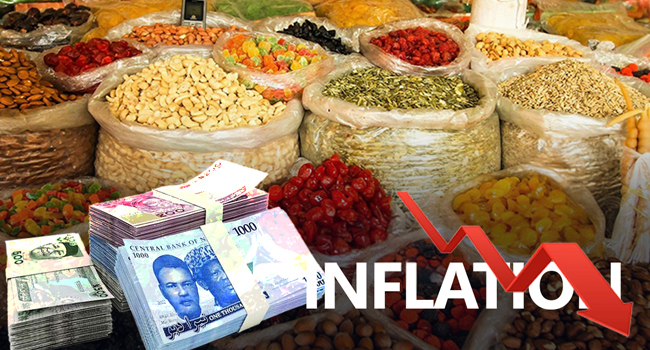
According to him, although Nigeria’s headline inflation moderated slightly to 15.91 per cent in June 2026—its first decline in three months—the MPC considered it prudent to maintain its current monetary policy stance in view of heightened global uncertainties, particularly the renewed geopolitical tensions in the Middle East.

He noted that the committee believes holding rates steady would provide sufficient time to evaluate incoming economic data before considering any future policy adjustments.

Cardoso observed that despite increasing global risks, particularly those capable of triggering renewed inflationary pressures through higher energy and commodity prices, the Nigerian economy has continued to demonstrate resilience.

He attributed the country’s economic stability to the reforms implemented by both the Federal Government and the Central Bank, which, he said, have strengthened macroeconomic fundamentals and enhanced the economy’s capacity to withstand external shocks.

The CBN Governor further commended the growing coordination between fiscal and monetary authorities, describing the improved policy alignment as critical to achieving sustainable economic growth, price stability and overall macroeconomic objectives.

He also disclosed that the MPC welcomed the positive outcome of the ongoing banking sector recapitalisation programme, noting that Nigeria’s banking industry has continued to record stronger prudential and financial soundness indicators.

According to Cardoso, the committee expressed confidence that inflation would continue on a gradual downward path in the coming months but cautioned that any prolonged escalation of the Middle East conflict could reverse recent gains by exerting fresh pressure on global supply chains and commodity prices.

To safeguard financial system stability, the MPC urged the Central Bank to sustain robust supervision of financial institutions in order to preserve the resilience of the banking sector and mitigate emerging risks.

Reaffirming the committee’s commitment to maintaining price stability and ensuring a sound financial system, Cardoso assured that the MPC remains prepared to adjust monetary policy whenever evolving macroeconomic conditions require such action.

The latest policy decision comes on the heels of the National Bureau of Statistics’ report showing that Nigeria’s inflation rate declined to 15.91 per cent in June 2026, raising cautious optimism that the country’s tight monetary policy measures may be yielding positive results while supporting broader economic stability.

Continue Reading

Business & Economy

Market Patronage Declines as Rising Prices Hit Ekiti Traders

Published

on

Share


Traders in Ekiti State have appealed to governments at all levels to take urgent steps to address the rising cost of goods and ease the economic burden on citizens.


Our correspondent, Oluwaseun Adebolu, who visited Market places in Ado-Ekiti to assess the situation, said that many traders called for increased government support to improve business activities and enhance the welfare of residents.


The traders commended the Ekiti State Government for its efforts to promote local businesses but stressed that additional interventions targeted at traders and families would further improve their standard of living.


They expressed concern over the persistent increase in the prices of goods and commodities, attributing the trend to high transportation costs and the impact of the removal of fuel subsidy on the economy.


According to the traders, many essential items that were once affordable have become increasingly expensive, making it difficult for both traders and consumers to cope with current economic realities.


They also noted a shift in consumers’ buying habits, explaining that many customers now prefer shopping in markets closer to their homes to reduce transportation costs.


The traders further lamented a decline in market patronage, saying sales have dropped significantly compared to previous years due to reduced purchasing power.


They urged the government, relevant agencies, and other stakeholders to introduce measures such as palliatives, soft loans, and transportation subsidies for traders to cushion the effects of the economic hardship and stimulate commercial activities across markets in the state.

Continue Reading

Business & Economy

FG Dismisses Reports of New Telecoms and Fuel Taxes, Says No Such Plans Under Consideration

Published

on

President Bola Ahmed Tinubu
Share


The Federal Government has dismissed reports claiming that it has introduced or is planning to introduce new taxes on telecommunications services and petroleum products.

The clarification came following media reports based on the recent International Monetary Fund (IMF) Article IV Consultation Report on Nigeria. The reports suggested that the IMF recommended extending Value Added Tax (VAT) to fuel products and introducing excise duties on telecommunications services as part of efforts to boost government revenue and fund development projects and social programmes.

However, in a statement issued on Wednesday by the Head of Information and Public Relations Unit of the Federal Ministry of Finance, Efe Ovuakporie, the government said the reports were misleading and did not reflect its current policy position.

According to the ministry, the IMF report merely contains the Fund’s assessment of Nigeria’s economy and recommendations for consideration by government authorities. It stressed that such recommendations are not binding and do not automatically become government policy.

The statement explained that all decisions relating to taxation in Nigeria are made through established constitutional and legislative processes and are guided by the country’s economic priorities and prevailing realities.

The Federal Government also clarified that the existing VAT waiver on petroleum products remains in force and has not been withdrawn.

It further explained that although current legislation provides for a fuel surcharge, such a charge can only be implemented through a ministerial order and official publication in the government gazette. The ministry stated that no such process is currently being considered.

According to the government, the continued suspension of these charges has helped reduce the impact of fluctuations in global energy prices on households and businesses while keeping domestic fuel prices relatively stable.

On telecommunications services, the government noted that the excise duty introduced before 2023 has already been repealed under the new tax laws and is no longer applicable.

The ministry therefore urged Nigerians to disregard reports suggesting that fresh taxes are being planned for either the telecommunications or petroleum sectors, describing such claims as inaccurate.

The government reiterated its commitment to economic reforms aimed at promoting growth, improving revenue collection, and creating a more attractive environment for investment and job creation.

It added that its focus remains on expanding economic activities, blocking revenue leakages, and improving efficiency in public finance management rather than imposing additional tax burdens on citizens.

The statement assured Nigerians that any future tax measures, if necessary, would be officially announced through appropriate government channels and implemented strictly in accordance with the law.

Continue Reading