Connect with us

Defence and Security

Weapons Looted During Libya Conflict Ended Up in Hands of Terrorists in Nigeria — UN

Published

on

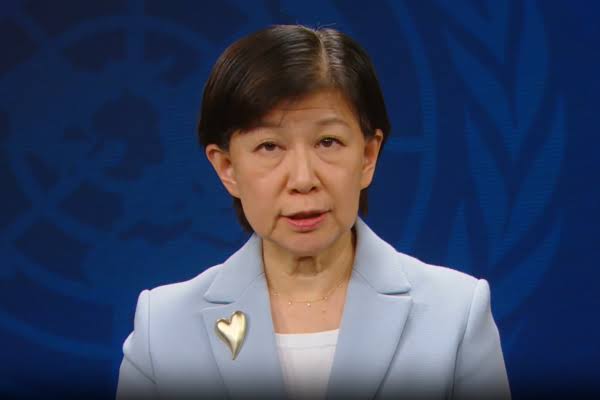
United Nations Under-Secretary-General and High Representative for Disarmament Affairs, Izumi Nakamitsu
Share


The United Nations has revealed that weapons looted during the 2011 Libyan conflict eventually found their way into the hands of terrorist and extremist groups operating in Nigeria and other countries across the Sahel region, highlighting the long-term security consequences of uncontrolled arms proliferation following armed conflicts.

The disclosure was made by the United Nations Under-Secretary-General and High Representative for Disarmament Affairs, Izumi Nakamitsu, during a high-level discussion at the UN Headquarters in New York on the global spread of illicit firearms and their impact on international peace and security.

Nakamitsu warned that the diversion, theft and illegal circulation of weapons from conflict zones continue to fuel violence, terrorism and organised crime long after wars have ended, posing significant challenges to governments and international peacebuilding efforts.

According to her, the 2011 uprising in Libya, which culminated in the overthrow and death of former Libyan leader Muammar Gaddafi, triggered the widespread looting of military stockpiles. Many of those weapons subsequently spread across the Sahel region, reaching countries such as Niger, Burkina Faso and Nigeria.

“Libya, where weapons looted or diverted during and after the 2011 conflict, which ended the rule of Muammar Gaddafi, later surfaced across the wider Sahel region, including in Niger, Burkina Faso, and Nigeria,” Nakamitsu stated.

She explained that investigations and recovery efforts over the years showed that some of the weapons were eventually traced to extremist groups operating in the region, demonstrating how arms originating from one conflict can destabilise neighbouring countries for years.

“Some were subsequently found in the hands of extremist groups, illustrating how arms from one conflict can destabilise neighbouring countries years later,” she said.

“The end of the conflict does not mean the end of the circulation of those weapons; it stays, and it continues to harm people.”

Growing Threat to Regional Security

The UN disarmament chief stressed that the continued movement of illicit firearms remains one of the most serious threats to peace and stability in fragile states and conflict-affected regions.

She noted that weapons retained by armed groups, militias and local communities after conflicts often become instruments for renewed violence, criminal activity and insurgency.

According to Nakamitsu, the availability of illegal weapons has contributed significantly to the activities of terrorist organisations, bandit groups and transnational criminal networks operating across the Sahel and West Africa.

The region has witnessed increasing insecurity over the past decade, with extremist groups exploiting porous borders and weak governance structures to move weapons, fighters and resources across countries.

Beyond Security Concerns

Nakamitsu emphasised that the proliferation of small arms and light weapons is not merely a military or security issue but one with far-reaching humanitarian and developmental consequences.

She said the widespread availability of illicit firearms is closely linked to terrorism, human rights abuses, organised crime, forced displacement, gender-based violence and the erosion of state authority.

“It is not just a security issue. It is also about peacebuilding. It is about human rights. It is also about development,” she said.

The UN official argued that efforts to tackle illicit arms trafficking must therefore form part of broader strategies aimed at promoting peace, protecting human rights and fostering sustainable development.

Weapons Continue to Circulate After Wars

Highlighting a major challenge facing governments and international organisations, Nakamitsu noted that weapons used during conflicts frequently remain outside official control after hostilities end.

She explained that many firearms are hidden, sold on black markets or smuggled across borders, making them available for use in new conflicts and criminal enterprises.

“Wars end, but unfortunately, the weapons that are used in that particular conflict would not be under full control,” she said.

“They continue to circulate. They are sometimes hidden. They are brought across borders.”

Security analysts have long linked the influx of weapons from post-Gaddafi Libya to the rise in armed insurgencies, terrorism and banditry across the Sahel. The collapse of state institutions in Libya created vast ungoverned spaces that became major transit routes for arms trafficking networks.

Emerging Challenges in Arms Trafficking

Nakamitsu also warned that technological advancements are creating new challenges for law enforcement agencies seeking to combat illicit arms trafficking.

She pointed to the growing emergence of so-called “ghost guns,” 3D-printed firearms and sophisticated smuggling methods that make tracing illegal weapons increasingly difficult.

According to her, traffickers are now able to disassemble firearms into separate components, transport them across borders and reassemble them later, complicating efforts to identify their origins and track their movement.

“Those weapons or weapon parts, if they are disassembled and then trafficked, are more difficult to trace,” she said.

UN Calls for Stronger International Action

The United Nations has repeatedly raised concerns over the unchecked proliferation of small arms and light weapons in the Sahel region, warning that the trend continues to fuel terrorism, armed conflict, organised crime and political instability.

The organisation has consistently urged governments to strengthen border controls, improve weapons stockpile management, enhance intelligence-sharing and deepen regional cooperation to curb illicit arms flows.

Nakamitsu reiterated the need for coordinated international action to prevent weapons from conflict zones from entering illegal markets and falling into the hands of non-state actors.

Her remarks underscore growing global concerns that unresolved conflicts and weak post-war disarmament measures can have lasting consequences, allowing weapons to circulate for years and threaten peace and security far beyond the original battlefield.

Continue Reading
Click to comment

Leave a Reply

Your email address will not be published. Required fields are marked *

Defence and Security

Troops rescue 16 kidnapped victims in Dekina LG of Kogi State

Published

on

Share

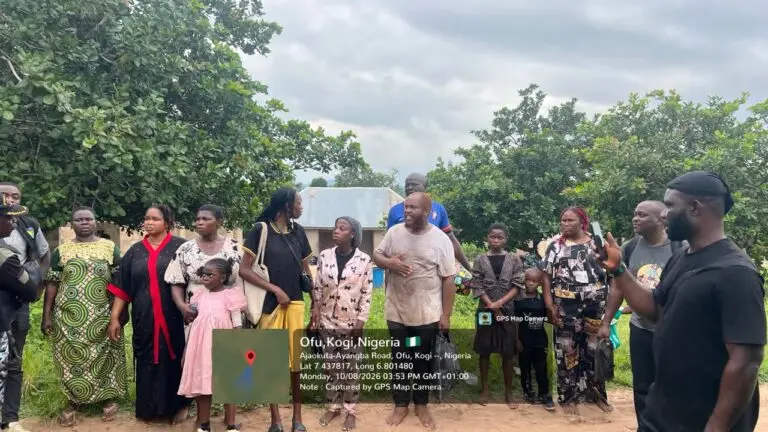
Troops have rescued 16 kidnapped persons after engaging suspected bandits in Dekina Local Government Area of Kogi State.

The victims comprised six males, six females and four children, according to an operational report made available to the News Agency of Nigeria (NAN) on Monday.

The report said the victims were abducted on Saturday, Aug. 9 along Ojuwo-Ajengo-Memarebo and Ojiwo-Itobe roads in Ofu Local Government Area of the state.

It said the operation followed intelligence that the victims were sighted around Adumu community in Dekina.

According to the report, the search-and-rescue operation involves troops of 21 Battalion and Nigerian Navy Ship (NNS) Lugard, the police, vigilantes and Hybrid Forces.

“The security forces eventually made contact with the suspected kidnappers and engaged them, forcing the criminals to abandon their victims and flee.

“However, one member of the Hybrid Forces was killed during the encounter, while one police personnel sustained injuries.

“The rescued victims were subsequently handed over to the police in Ajaokuta for further action,” it said.

The military said the operation highlights the continued collaboration among the military, police and local security groups in tackling kidnapping and rescuing victims in Kogi

Continue Reading

Defence and Security

Kano Multi Agency Task Force Arrest 28 Illicit Drug Suspects

Published

on

Share

The Kano State Multi-Agency Task Force on Drug Abuse and Illicit Trafficking has arrested 28 suspects and recovered assorted illicit substances in Rimin Gado and Doka communities of the State.

This is contained in a statement  by the Chairman of the Task Force, Mr Muhuyi Malawi and issued by the Secretary, Mr Ibrahim Garba-Muhammad on Sunday in Kano.

Magaji, who led the operation, said it was aimed to tackle drug-related criminality and protect communities from the effects of drug abuse and illicit trafficking.

“On Aug. 7, the task force raided five drug joints in Rimin Gado and Doka in Tofa Local Government Area of the state.

The targeted operation was aimed to demonstrate the task force’s impartial enforcement mandate and to send a clear message that no one is above the law.

“We are treating every community equally and enforcing the law without bias.

“Our guiding principle is Kano First and we are determined to ensure a peaceful, prosperous and drug-free state inline with the vision of Gov. Abba Kabir-Yusuf,” he said.

Magaji said the task force recovered various assorted illicit substances during the raids.

He said  that he commenced the operations from his hometown Rimin Gado saying it was deliberate and symbolic.

“Sanitising my own community is the first step to a wider campaign,” he added.

He said that the campaign would be extended beyond Kano Metropolis to all  44 Local Government Areas of the state.

The chairman noted that the operation combined kinetic interventions to disrupt criminal activities with coordinated follow-up.

He said the task force would also adopt a balanced approach that would combine enforcement with prevention and recovery.

“While kinetic measures continue to dismantle illicit drug networks, non-kinetic efforts are being intensified through engagement with community leaders, regulatory bodies, health services and educational partners to raises awareness.

“We’ll also strengthen supply‑chain controls and expand rehabilitative support to those affected by substance use” Magaji said.

He stressed that lawful and legitimate businesses were not the target of the operations.

“Our aim is to protect honest traders and create an environment in which businesses and communities can thrive free from the effects of drug trafficking and abuse” he said.

Magaji said investigations were ongoing and suspects found culpable would be prosecuted in accordance with the law.

He urged members of the public to support the ongoing operations by reporting suspicious activities and provide relevant information on drug trafficking and abuse.

The Chairman reaffirmed the task force’s commitment to sustain its operations, uphold professional standards and safeguard the health and security of residents across the state.

Continue Reading

Defence and Security

Nigerian Navy Intercepts 17,000 Litres of Suspected Illegally Refined AGO in Rivers

Published

on

Share

The Nigerian Navy has intercepted abour 17,000 litres of products suspected to be illegally refined Automotive Gas Oil (AGO) in Rivers under Operation DELTA SENTINEL.

This is contained in an operational report by the Director of Naval Information, Capt Abiodun Folorunsho, on Saturday in Abuja.

Folorunsho said, personnel of Nigerian Navy Ship (NNS) PATHFINDER made the interception during ongoing anti-crude oil theft operations within its Area of Operation.

“During the operation, a speedboat conveying the suspected illegally refined petroleum product was intercepted along the Onne/Okrika waterways.

“The recovered speedboat and the suspected illegally refined AGO were handled in accordance with extant anti-crude oil theft procedures.

“Efforts are also ongoing to identify and apprehend those connected with the illegal activity.”

The naval spokesperson said that the latest operational success further demonstrated the navy’s sustained commitment to disrupting the illicit petroleum supply chain.

He said it also denied economic saboteurs freedom of action, while protecting Nigeria’s critical oil and gas infrastructure from criminal exploitation.

Folorunsho reaffirmed the navy’s commitment to sustaining intelligence-driven operations to combat crude oil theft, illegal oil bunkering and other forms of economic sabotage, while safeguarding Nigeria’s maritime environment and supporting national economic security.

Continue Reading