Connect with us

Defence and Security

New Defence Chief, Gen. Olufemi Oluyede, Describes Army Tenure as “Most Demanding Phase” of Career

Published

on

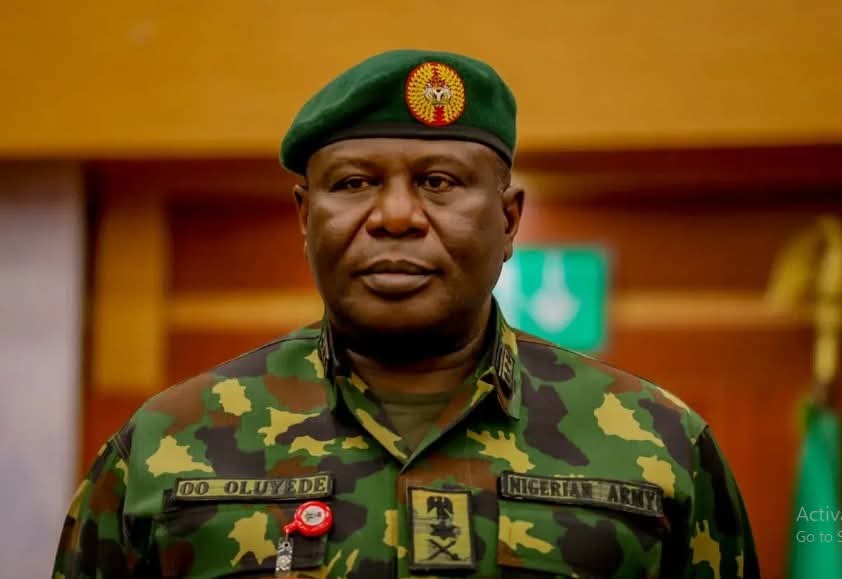
General Olufemi Oluyede
Share

Nigeria’s newly appointed Chief of Defence Staff, Lieutenant General Olufemi Oluyede, has described his tenure as Chief of Army Staff as one of the most challenging yet transformative periods of his over three-decade military career.

Speaking on Wednesday during his screening before the Senate, Gen. Oluyede reflected on his time leading the Nigerian Army, noting that it was a period defined by intense security operations, strategic reforms, and the struggle to balance limited resources with high national expectations.

“My tenure was quite challenging. Though we made notable progress in strengthening national security, there is still much more to be done,” Oluyede told lawmakers.

“Security is not solely the responsibility of the military — it requires the active cooperation of every Nigerian.”

The Defence Chief said the role demanded resilience, strategic foresight, and relentless commitment to national service, emphasizing that effective security management in a diverse nation like Nigeria requires both tactical strength and public trust.

He highlighted the importance of developing indigenous defence technology and capacity to address evolving threats such as terrorism, banditry, and cybercrime.

“It took a great deal of experience, sleepless nights, and unwavering focus to safeguard our country,” he added.

“We must also manage information responsibly, as misinformation can worsen insecurity.”

Following his presentation, senators commended Oluyede for his forthrightness and depth of insight on national security issues. They unanimously allowed him to take a bow and leave, a gesture reserved for distinguished nominees.

Gen. Oluyede is among the newly appointed service chiefs announced by President Bola Tinubu earlier this month. Others include Major-General W. Shaibu as Chief of Army Staff, Air Vice Marshal S.K. Aneke as Chief of Air Staff, and Rear Admiral I. Abbas as Chief of Naval Staff. The Chief of Defence Intelligence, Major-General E.A.P. Undiendeye, retains his position.

Before his elevation, Gen. Oluyede served as the 24th Chief of Army Staff, a role he described as both “demanding and transformative” in shaping his approach to leadership and defence management.


Defence and Security

Tinubu Approves ₦15bn Take-Off Grant for New Police Academy Campus in Ogun

Published

on

Share

President Bola Ahmed Tinubu has approved the establishment of a new campus of the Nigeria Police Academy in Erinja, Yewa South Local Government Area of Ogun State.

The President also approved a ₦15 billion take-off grant for the institution. According to his Special Adviser on Information and Strategy, Bayo Onanuga, the move aligns with the provisions of the Nigeria Police Academy (Establishment) Act, 2021, which allows for expansion into multiple campuses nationwide.

The take-off fund will be sourced from the TetFund 2026 allocation and will support key infrastructure, academic facilities, student accommodation, and essential training equipment.

The decision followed a high-level meeting involving the Minister of Police Affairs, the Minister of Education, Tunji Alausa, officials of the Federal Ministry of Education, the Inspector-General of Police, and the Executive Secretary of the National Universities Commission.

The meeting considered factors such as student capacity, funding, academic standards, and the long-term needs of the Nigerian Police Force. The expansion is expected to enhance policing education, institutional governance, and national security.

Continue Reading

Defence and Security

NSCDC Deploys Drones, Body Cameras to Strengthen Security Nationwide

Published

on

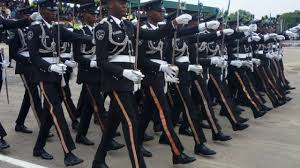
NSCDC Personnel
NSCDC Personnel
Share

The Nigeria Security and Civil Defence Corps (NSCDC) has begun deploying drones, body cameras, and other modern equipment across all states to improve security operations.

The Commandant-General, Ahmed Abubakar Audi, approved the rollout during the corps’ annual strategic meeting in Abuja, attended by state commanders from across the country.

He said the move is part of efforts to improve surveillance, intelligence gathering, and quick response to security threats.

The new equipment includes drones, GPS trackers, situation room kits, bulletproof vests, helmets, night-vision goggles, and body cameras. Officers also received backpacks with solar chargers and mini tablets.

Abubakar explained that the tools will help tackle issues like banditry, illegal mining, and infrastructure vandalism.

He warned officers to use the equipment strictly for official duties, adding that misuse would lead to serious punishment.

The NSCDC boss also noted that the corps has recently destroyed over 400 illegal refineries and arrested suspects involved in illegal activities.

He added that the new tools will support special units like Agro Rangers and improve cooperation with other security agencies.

Continue Reading

Defence and Security

Nigeria Climbs to 4th in 2025 Global Terrorism Index as Attacks Surge by 43%

Published

on

Islamic State West Africa Province
Share

Nigeria has risen to fourth place in the 2025 Global Terrorism Index (GTI), following a sharp escalation in terrorist activities across the country, according to a new report by the Institute for Economics & Peace.

The report indicates that terrorist attacks in Nigeria increased by 43 percent in 2025, with 171 incidents recorded compared to 120 in 2024. This surge has pushed the country up two places from its previous sixth position.

Nigeria now ranks behind Pakistan, Burkina Faso, and Niger Republic, which occupy the top three positions on the index.

According to the findings, the majority of attacks were carried out by Islamic State West Africa Province and Boko Haram, with both groups accounting for 80 percent of terrorism-related deaths in the country.

The report further highlights a growing human toll, with fatalities rising by 46 percent to 750 deaths in 2025—the highest level recorded since 2020. In addition, 243 people were injured in the attacks, bringing the total number of terrorism-related deaths in Nigeria since 2007 to 12,581.

Geographically, violence remained heavily concentrated in Borno State, which accounted for 67 percent of all attacks and 72 percent of total deaths recorded during the year.

Civilians continued to bear the brunt of the violence, representing 67 percent of those killed, while military personnel accounted for 19 percent. The report notes a sustained shift toward increased targeting of civilians over the past five years.

The GTI attributes the worsening security situation to ongoing internal instability and intensified clashes between ISWAP and Boko Haram, underscoring persistent challenges in counterterrorism efforts across Nigeria.

Continue Reading