Say Adequate Provisions Made for General Elections, Transition Programme
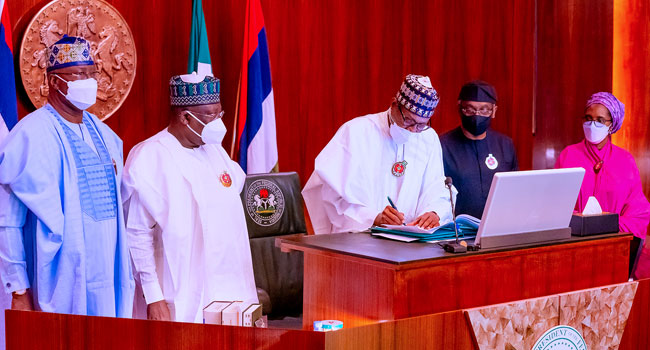
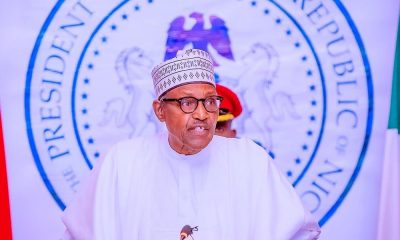
President Muhammadu Buhari on Tuesday in Abuja signed the 2023 Budget of N21.83 trillion along with the 2022 Supplementary Appropriation Bill into law.
Speaking at the signing of the eighth and final annual budget of this Administration, the President said the aggregate expenditures of N21.83 trillion, is an increase of N1.32 trillion over the initial Executive Proposal for a total expenditure of N20.51 trillion.
The President explained that the 2022 Supplementary Appropriation Act would enable the administration to respond to the havoc caused by the recent nationwide floods on infrastructure and agriculture sectors.
As is customary, he said the Minister of Finance, Budget and National Planning will subsequently provide more details of the approved budget and the supporting 2022 Finance Act.
”We have examined the changes made by the National Assembly to the 2023 Executive Budget proposal.
”The amended fiscal framework for 2023 as approved by the National Assembly shows additional revenues of N765.79 billion, and an unfunded deficit of N553.46 billion.
”It is clear that the National Assembly and the executive need to capture some of the proposed additional revenue sources in the fiscal framework. This must be rectified.
”I have also noted that the National Assembly introduced new projects into the 2023 budget proposal for which it has appropriated N770.72 billion. The National Assembly also increased the provisions made by Ministries, Departments and Agencies (MDAs) by N58.55 billion.”
President Buhari said his decision to sign the 2023 Appropriation Bill into law as passed by the National Assembly was to enable its implementation commence without delay, considering the imminent transition process to another democratically elected government.
He, however, directed the Minister of Finance, Budget and National Planning to engage with the Legislature to revisit some of the changes made to the Executive budget proposal, expressing the hope that the National Assembly will cooperate with the Executive arm of Government in this regard.
He urged the National Assembly to reconsider its position on his proposal to securitize the Federal Government’s outstanding Ways and Means balance at the Central Bank of Nigeria (CBN).
”As I stated, the balance has accumulated over several years and represents funding provided by the CBN as lender of last resort to the government to enable it to meet obligations to lenders, as well as cover budgetary shortfalls in projected revenues and/or borrowings.
”I have no intention to fetter the right of the National Assembly to interrogate the composition of this balance, which can still be done even after granting the requested approval.
”Failure to grant the securitization approval will however cost the government about N1.8 trillion in additional interest in 2023 given the differential between the applicable interest rates which is currently MPR plus 3% and the negotiated interest rate of 9% and a 40year repayment period on the securitised debt of the Ways and Means.”
To ensure more effective implementation of the 2022 capital Budget, President Buhari thanked the National Assembly for approving his request for an extension of its validity date to 31st March, 2023.
The President directed the Ministry of Finance, Budget and National Planning to work towards early release of the 2023 capital votes to enable Ministries, Departments and Agencies commence the implementation of their capital projects in good time to support efforts to deliver key projects and public services as well as improve the living conditions of Nigerians.
Reiterating that the 2023 Budget was developed to promote fiscal sustainability, macroeconomic stability and ensure smooth transition to the incoming Administration, the President said it was also designed to promote social inclusion and strengthen the resilience of the economy.
He pledged that adequate provisions have been made in the Budget for the successful conduct of the forthcoming general elections and the transition programme.
On achieving revenue targets for the budget, the President directed MDAs and Government Owned Enterprises (GOEs) to intensify their revenue mobilization efforts, including ensuring that all taxable organizations and individuals pay taxes due.
To achieve the laudable objectives of the 2023 Budget, the President said relevant Agencies must sustain current efforts towards the realization of crude oil production and export targets.
”To augment available fiscal resources, MDAs are to accelerate the implementation of Public Private Partnership initiatives, especially those designed to fast-track the pace of our infrastructural development.
”This, being a deficit budget, the associated Borrowing Plan will be forwarded to the National Assembly shortly.
”I count on the cooperation of the National Assembly for a speedy consideration and approval of the Plan.”
On the Finance Bill 2022, the President expressed regret that its review as passed by the National Assembly is yet to be finalized.
”This is because some of the changes made by the National Assembly need to be reviewed by the relevant agencies of government. I urge that this should be done speedily to enable me to assent into law,” he said.
Those who witnessed the signing of the budget include Senate President Ahmad Lawan and the Speaker of the House of Representatives, Femi Gbajabiamila.
The President thanked the Senate President, the Speaker of the House of Representatives, and all the distinguished and honourable leaders and members of the National Assembly for the expeditious consideration and passage of the Appropriation Bill.
He also recognised the roles played by the Ministers of Finance, Budget and National Planning, the Budget Office of the Federation, the Senior Special Assistants to the President (Senate and House of Representatives), the Office of the Chief of Staff, as well as all who worked tirelessly and sacrificed so much towards producing the 2023 Appropriation Act.
”As I mentioned during the presentation of the 2023 Appropriation Bill, early passage of the budget proposal is critical to ensure effective delivery of our legacy projects, a smooth transition programme and effective take-off of the incoming Administration.
”I appreciate the firm commitment of the 9th National Assembly to the restoration of a predictable January to December fiscal year, as well as the mutual understanding, collaboration and engagements between officials of the Executive and the Legislative arms of government.
”These have made the quick consideration and passage of our Fiscal bills possible over the last four years.”
The President expressed the belief that the next Administration would sustain the early presentation of the annual appropriation bill to the National Assembly to ensure its passage before the beginning of the fiscal year.
”I firmly believe the next Administration will also sustain the current public financial management reform efforts, further improve the budgeting process, and particularly maintain the tradition of supporting its Appropriation Bills with Finance Bills designed to facilitate their implementation.
”To sustain and institutionalize the gains of the reforms, we must expedite action and conclude work on the Organic Budget Law for it to become operational before the end of this Administration.”
Acknowledging that ‘‘these are challenging times worldwide,’’ the President concluded his speech at the ceremony by expressing deep appreciation to Almighty God for His Grace, while commending the continuing resilience, understanding and sacrifice of Nigerians in the face of current economic challenges.
”As this Administration draws to a close, we will accelerate the implementation of critical measures aimed at further improving the Nigerian business environment, enhancing the welfare of our people and ensuring sustainable economic growth over the medium- to long-term,” he said.