FCT Minister Says More Opposition Figures, Politicians May Align With President Ahead of 2027
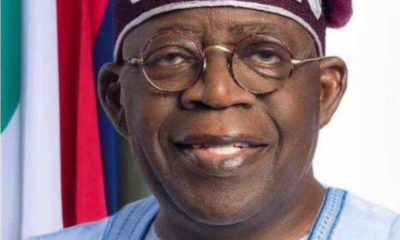
The Minister of the Federal Capital Territory (FCT), Nyesom Wike, has predicted the emergence of a broader political alliance that could strengthen President Bola Ahmed Tinubu’s bid for re-election in the 2027 presidential election.
Wike, who spoke on Friday while inspecting ongoing projects across the Federal Capital Territory, described the emerging political realignment as a “larger rainbow coalition” that would bring together politicians from different political parties in support of the President.
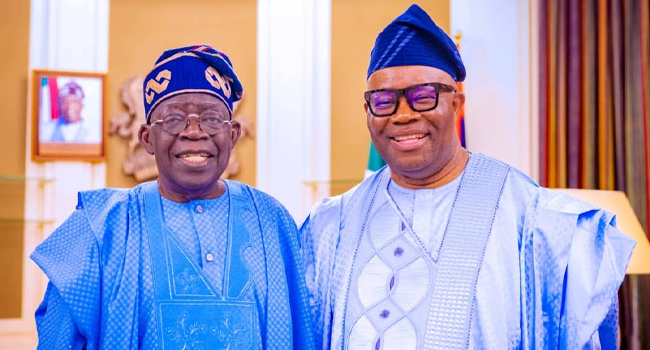
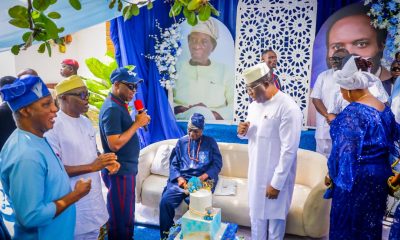
The former Rivers State governor was reacting to the recent meeting between President Tinubu and Osun State Governor-elect, Ademola Adeleke, which he said was an indication of a changing political landscape ahead of the 2027 elections.
According to Wike, Adeleke’s engagement with the President demonstrated that political affiliations would not necessarily prevent politicians from working together in support of Tinubu.
“What happened last night is a meeting to rebuild a larger Rainbow Coalition. And he (Adeleke) is supporting Mr. President. He’s in a different party; I’m supporting Mr. President, and I’m in a different party. So, it’s a larger Rainbow Coalition,” Wike said.
‘There Is No Leading Opposition Party’
Wike also dismissed the description of any political party as Nigeria’s leading opposition ahead of the 2027 elections, arguing that the internal crises within the Peoples Democratic Party (PDP) and the broader opposition camp had weakened the emergence of a formidable opposition platform.
“When you say opposition, I’ve told you I don’t know what you call opposition, as far as there is no opposition now,” he said.
He noted that although Adeleke remains associated with the PDP, his political engagement with the Tinubu administration showed the increasingly fluid nature of Nigerian politics.
Wike further argued that the PDP would ordinarily have been the country’s principal opposition party, but its prolonged internal crisis had affected its ability to function as a strong and united opposition.
“Ordinarily, it should have been PDP, but because of the crisis we’ve had, and so you can’t see a formidable party that you will call the leading opposition party,” he said.
According to him, politicians currently positioning themselves as opposition leaders are largely seeking relevance rather than operating from the strength of a cohesive political structure.
“What you have are people who are just trying to see whether they can be relevant,” the minister added.
Wike Dismisses ADC Claims
Wike also took a swipe at members of the African Democratic Congress (ADC) who claimed that the party and other opposition forces played a major role in Adeleke’s electoral victory in the August 15, 2026 Osun State governorship election.
The minister accused the ADC of attempting to claim credit for an electoral victory in which, according to him, they had little or no role in the groundwork.
“All those ADC who are talking about ‘they helped Adeleke to win,’ they just wanted to go and harvest where they never planted,” Wike said.
He maintained that Adeleke’s reported support for President Tinubu further demonstrated the fluidity of the political landscape and could have implications for the 2027 presidential contest.
Asked about how prominent opposition figures, including former Vice President Atiku Abubakar and former Anambra State Governor Peter Obi, might interpret his political engagement with Adeleke, Wike again insisted that Nigeria currently lacked a clearly defined opposition bloc.
The FCT minister subsequently hinted that more political realignments could emerge in the coming weeks.
“And the next few weeks, watch what is going to happen. You will see a larger Rainbow Coalition in this country supporting Mr. President,” he said.
Wike Inspects FCT Projects
Earlier, Wike said his inspection tour of ongoing projects in Abuja was aimed at ensuring that major infrastructure projects scheduled for completion in 2026 were delivered within the stipulated timeframe.
He inspected the N5 Extension project in Life Camp, being constructed by Julius Berger, and expressed satisfaction with the pace and quality of work.
The minister said the project was expected to be completed and handed over in December.
He also inspected the N1 Road project being executed by Arab Contractors, describing the quality of construction as high and confirming that the project was equally scheduled for completion and handover in December.
Wike later visited the IBB International Golf Club, which is undergoing extensive rehabilitation following intervention by President Tinubu.
He said the facility was expected to be physically completed by November and officially reopened in December.
“That this golf course must be ready and be reopened by December. So we are giving it to Julius Berger to ensure that everything is done. And by December this year, the golf course will be reopened,” he said.
According to the minister, Julius Berger was re-engaged for the rehabilitation because the company originally constructed the golf facility and therefore possesses the technical knowledge required to restore it to the appropriate standard.
Wike explained that the golf club had been shut following an internal crisis, prompting the appointment of a caretaker committee headed by the President of the Court of Appeal.
He commended the committee for its role in resolving the dispute and creating the conditions for the rehabilitation and reopening of the facility.
However, the minister warned that the government would not continue to provide public funds for the operation and maintenance of the golf club after its reopening.
He said the management of the facility must develop sustainable revenue streams capable of funding its operations.
“I would believe, this time around, that when this is done, they should be able to raise funds by themselves to run this place. The government should not use public funds to come back to do it,” Wike said.
With the 2027 elections drawing closer, Wike’s comments further highlight the growing political realignments across party lines and the possibility of a broader coalition emerging around President Tinubu’s re-election bid.