Connect with us

News

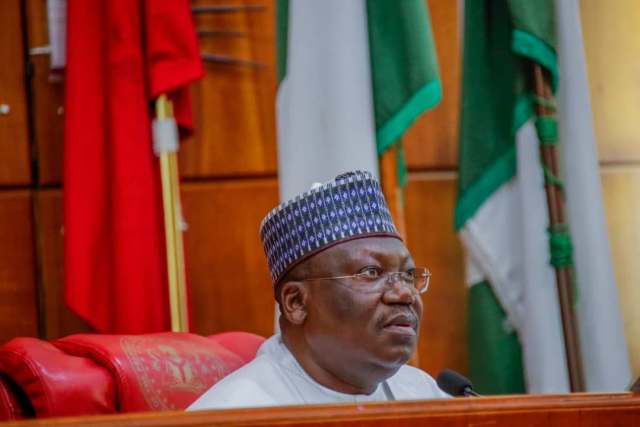
Why we voted for e-transmission of results with conditions – Senate President

Published

on

Senate-President-Lawan
Senate President, Ahmad Lawan
Share

**Says not only APC but some PDP Senators too voted for it

President of the Senate, Ahmad Lawan has advanced reasons to justify the position taken by the Senate on the electronic transmission of election results.

The Senate on Thursday, while considering the Electoral Act 2010 Amendment Bill, voted that “The Commission(INEC) may consider electronic transmission of results, provided the national coverage is adjudged to be adequate and secure by the National Communications Commission (NCC) and approved by the National Assembly.”

Lawan explained that the Upper Chamber voted the way it did in defence of about half of the Nigerian voters whose votes may not be counted with immediate deployment or application of electronic transmission of election results.

The Senate President spoke to journalists at the weekend while on a constituency visit to his Yobe North Senatorial District.

Asked to comment on the passage of the Electoral Act 2010 Amendment Bill, Lawan said: “I’m happy that we have been able to pass the amendment even though some people are complaining of what we have passed in the Senate and probably what the House of Representatives has also passed.

“When the majority of Senators voted against immediate application or deployment of electronic transmission of results from the polling units, to the ward, to the local government, states and federal, they didn’t say they do not believe in electronic transmission (of election results).

“All of us in the Senate, 109 of us, believe that at one point, our electoral process must deploy electronic transmission so that it eases and enhances the electoral process and give it more credibility and integrity.

“But you see, when you have not reached that stage where you could deploy the electronic transmission from every part of the country, then you have to be very careful. And no matter what anybody may say, you cannot have about 50 percent of Nigerian voters not participating or not getting their votes counted in elections and say it doesn’t matter, that we have to start the electronic transmission.

“We know the evils of not transmitting results electronically but compare the evils of electronically transmitting just half of the electoral votes from Nigerians and say you have elected a President with 50 percent only.

“And others have voted but their results or their votes could not be electronically transmitted. This is disenfranchising Nigerians and we are not going to support this kind of thing because essentially, we are supposed to be fair to every part of Nigeria and when we voted, every part of Nigeria voted for and against(the amendment).

“What I mean here is that, you have Senators from northern part of Nigeria who voted for electronic transmission. Maybe that is their belief or their environment is ready for electronic transmission. And you have Senators from southern part of Nigeria who voted against immediate deployment of electronic transmission but they support that the electronic transmission of results should be allowed after certain conditions are met and the conditions are simple: The National Communication Commission(NCC) had provided the technical information that only NCC could give – that only about 50 percent of the Nigerian environment, the polling units, in the country could possibly have their results electronically transmitted.

“So what happens to the other 50 percent. So we believe that all of us in the Senate were aiming at the same target but chose to go through different routes and that is why in my concluded remarks in the Senate after the debate and voting, I said there was no Victor, no Vanquish because we all meant well.

“And for those Nigerians who still feel that the electronic transmission should have just been allowed to take effect, I said well, this is how democracy works. Democracy is to allow those minority views to be expressed and democracy provides that the majority views will always prevail.”

The Senate President faulted some media reports that insinuated that only the APC Senators voted against immediate application of the electronic transmission of results.

He said the votes cast on either sides of the subject matter cut across party lines and regional divides.

“In this respect, it was not just APC. I have seen it reported in the media that only APC Senators voted against the immediate deployment of electronic transmission.

“There are PDP Senators who voted against that but it appears that some people want to target at APC Senators. There were PDP Senators who voted against immediate deployment. I’m using the word ‘immediate’ with an emphasis.

“Nobody said don’t use electronic transmission at all. You use it when we reach there and only NCC can give you information. That is the main reason why, in the Senate version, clause 52(3), there is that provision to contact the NCC because INEC will not know until they go to NCC.

“So NCC will be the only institution to give that information because they are competent and it’s within their jurisdiction. And we say the National Assembly should approve of it.

“It is not when they want to do transmission that they will have to go to National Assembly that we want to do transmission. No. That once NCC has told INEC is now ready. INEC should come to the National Assembly with the NCC and say we are now ready.

“There is no way any National Assembly, not even this Ninth National Assembly will deny INEC the use of electronic transmission as part of our electoral process when we are ready for it,” Lawan said.

The Senate President said it was wrong to conclude that Senators who voted for electronic transmission with conditions did not like the results transmitted electronically.

“I want to take this opportunity to debunk that insinuation or outright castigation of Senators that voted against immediate deployment of electronic transmission that they don’t like electronic transmission. It is not true.

“Even though I didn’t vote. But I believe that what my colleagues did is binding on all of us in the Senate. 28 against 52…l believe that what we have done requires that the Senate and the House will each constitute a conference committee. What we call harmonisation for the two sides. When we harmonise, then we will send it to Mr President,” Lawan said.

Continue Reading
Click to comment

Leave a Reply

Your email address will not be published. Required fields are marked *

News

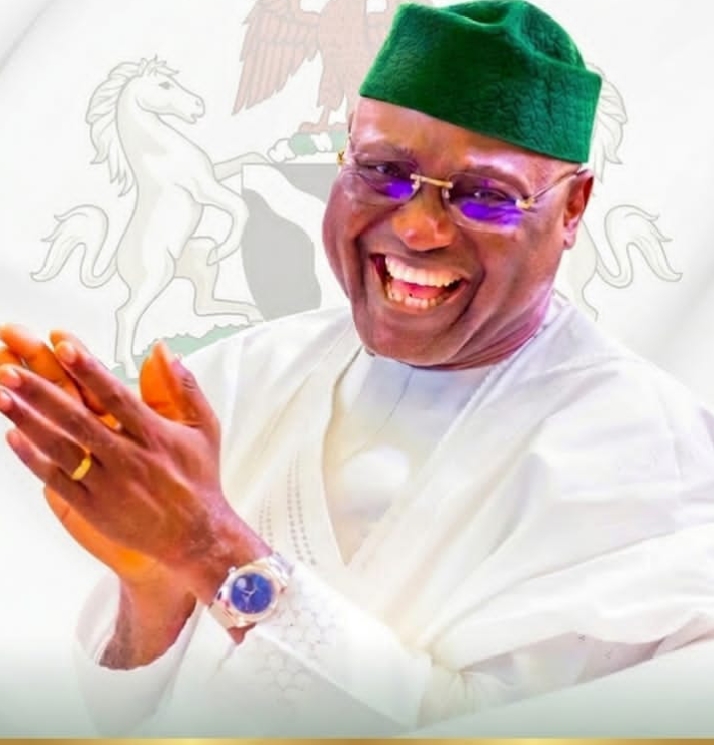
Shettima at 60: VP Rejects Birthday Gifts, Asks Nigerians to Give to the Needy

Published

on

Share


Vice President Kashim Shettima has rejected birthday gifts, elaborate celebrations and other material gestures as he marks his 60th birthday, instead urging Nigerians to mark the occasion by supporting the needy and donating to charitable causes across the country.

Shettima made the appeal in a personal statement titled “What I Ask For at Sixty,” released ahead of his birthday.

The Vice President said attaining 60 should be a moment for reflection, gratitude and service, rather than an occasion for material accumulation or personal celebration.

He appealed to his friends, supporters, associates, well-wishers and admirers, both within and outside Nigeria, to refrain from spending money on gifts or ventures in his honour and instead channel such resources to a charity, worthy cause or individual in need.

Shettima said acts of kindness, regardless of their size, could make a significant difference in the lives of Nigerians facing difficult circumstances.

According to him, every act of kindness extended to another person would amount to “a candle lit” for him as he marks the milestone.

The Vice President acknowledged that his journey to 60 had been aided by the kindness and support of family, friends, teachers, colleagues, supporters, well-wishers and strangers.

He said the most appropriate way to repay such goodwill was by extending similar kindness to others who might never have the opportunity to reciprocate.

Shettima also asked Nigerians to replace birthday gifts and celebrations with prayers for him and the country.

He called for prayers for peace in Nigerian communities, prosperity for citizens, wisdom for the nation’s leaders and the fulfilment of Nigeria’s potential.

The Vice President described Nigeria as a country blessed with an industrious population, a strong entrepreneurial spirit and a youthful population whose talent, ambition and imagination remain among its greatest national assets.

He expressed appreciation to Nigerians for their loyalty, affection, friendship and prayers over the years, wishing them long life, good health, fulfilment and the joy of helping others.

Continue Reading

News

10 of 15 Abducted NYSC Members in Kogi Rescued

Published

on

Share

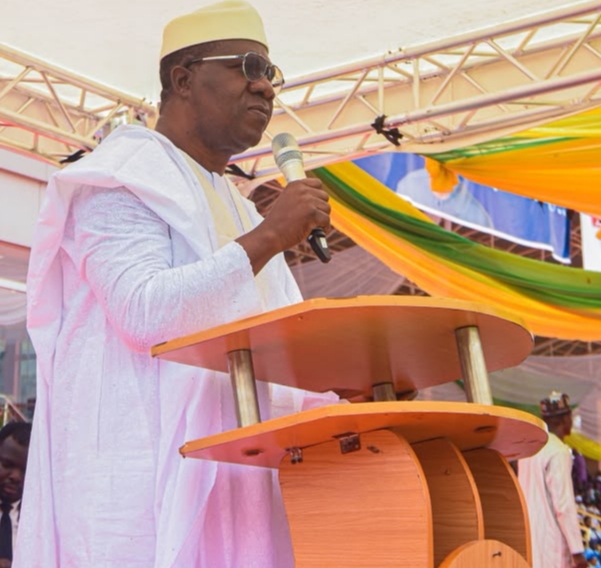
Ten of the 15 National Youth Service Corps (NYSC) members abducted by suspected bandits in Kogi State have been rescued, the state Police Command has confirmed.

The corps members were abducted along the Aloma–Egane Expressway in Ofu Local Government Area of the state.

The Commissioner of Police, Naziru Bello Kankarofi, disclosed that security operatives were currently combing surrounding forests and intensifying efforts to rescue the remaining five victims.

Kankarofi also dismissed reports suggesting that the 10 rescued NYSC members were among the 11 persons rescued during a joint security operation conducted last week.

According to him, the 11 persons rescued during the earlier operation were other travellers who were caught up in the kidnapping incident and were not members of the NYSC group.

The police commissioner further disclosed that several suspects had been arrested in connection with the attack.

He assured that security agencies were sustaining operations in the area to locate and rescue the remaining abducted corps members.

The development comes amid renewed security concerns along major roads in Kogi State, particularly routes linking communities in the state to neighbouring areas.

Continue Reading

News

“Government Should Create the Environment, Not Run the Ranches” — Aondoakaa

Published

on

Share

_PDP 2027 Benue Gov Candidate Advocates Private Sector-Led Ranching, Backs State Police With Safeguards_

The 2027 Governorship Candidate of the Peoples Democratic Party, PDP, in Benue State, Chief Michael Kaase Aondoakaa, SAN, has urged the Federal Government to adopt a private sector-driven approach to ranching, saying its role should be to provide an enabling environment rather than directly own and operate ranches.

Speaking on Monday during an interview on _Arise News_, the former Attorney General of the Federation and Minister of Justice also endorsed the establishment of State Police, while calling for strong legal and institutional safeguards to prevent political abuse.

Aondoakaa argued that treating livestock production as a government-run venture would create confusion and deepen suspicion between farmers and communities.

“Livestock owners are private businessmen engaging in farming activities. There will be a disconnect and there will be confusion because the ranches are established by government and then they are to service private sector holders of cattle,” he said.

He proposed that government should focus on supporting the value chain through improved cattle breeds, affordable financing, fodder production, irrigation, and rural infrastructure, in the same way it stimulated investment in rice and wheat production.

“My understanding is that ranching should be done the way the rice and wheat value chain was created. Government should create the environment and allow private investors to drive the business,” he stated.

The senior lawyer emphasized that genetic improvement of Nigeria’s cattle breeds is critical to making ranching commercially viable. He also called for access to single-digit loans for livestock entrepreneurs.
“First, let us crossbreed the cattle that we have now so that they can give sufficient milk for commercial trading. Then allow them to borrow at interest rates below five percent and approach ranching as a private sector business,” he said.

According to him, private sector-led ranching could foster new economic partnerships, with crop farmers producing specialized grass and feed for ranches, thereby creating additional income streams while ensuring a stable supply of fodder.

He further noted that the model would help address fears around land grabbing linked to government ranching proposals, by encouraging voluntary commercial agreements between livestock owners and host communities.
“If a private individual comes and says, give me 100 hectares of land, I want to put my cows there, and can you help me farm for it? That can be a mutual understanding between farmers and the owner of the cows,” he explained.

“Livestock is only one component of Nigeria’s agricultural economy. If we now decide to take one aspect of farming and make it a public sector issue, then there will be more agitation by farmers across the country,” he cautioned.

On security, Aondoakaa described State Police as a timely and necessary reform to address Nigeria’s policing challenges. He recalled that the concept was first introduced during the 2009 constitutional reforms under the late President Umaru Musa Yar’Adua.

He commended President Bola Tinubu’s administration for moving the initiative forward, calling it “a very good thing.”

However, he stressed that recruitment into State Police must be shielded from political interference.
“The issue of recruitment must be handled in a manner that politicians are not allowed to bring in people who are not worthy to be police officers,” he said.

He also warned against decentralized arms procurement, saying it could create chaos if all 36 states were allowed to import weapons independently.
“There should be a level of control. It will be a lot of confusion if the entire 36 states go to the market and import arms for their state police,” he said, recommending a federal regulatory framework, possibly under the Office of the National Security Adviser.

Despite the potential risks, Aondoakaa described State Police as “a laudable project” that can strengthen security nationwide if properly structured. He further called for stronger judicial oversight at the local level to ensure magistrates can effectively check the operations of State Police formations.

Continue Reading