Connect with us

Business & Economy

TINUBU: SECURITY, JOB CREATION, POVERTY REDUCTION TOP PRIORITIES OF 2024 BUDGET

Published

on

Asiwaju Bola Tinubu
President Bola Ahmed Tinubu
Share

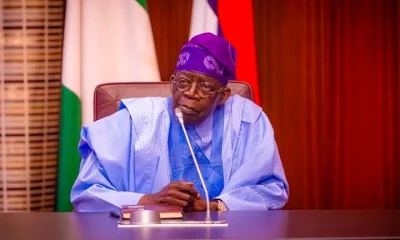
President Bola Tinubu says Nigeria’s national defence and internal security, local job creation, macro-economic stability, investment environment optimization, human capital development, poverty reduction, and social security are some of the top priorities of the 2024 Budget of Renewed Hope.

Addressing a joint session of the National Assembly on the 2024 Federal budget proposal on Wednesday in Abuja, President Tinubu said the nation’s internal security architecture will be overhauled to enhance law enforcement capabilities with a view to safeguarding lives, property, and investments across the country.

He said the proposed budget prioritizes human capital development, with particular attention given to children, because human capital remains the most critical resource for national development.

“To improve the effectiveness of our budget performance, the government will focus on ensuring value for money, greater transparency, and accountability. In this regard, we will work more closely with development partners and the private sector.

“To address long-standing issues in the education sector, a more sustainable model of funding tertiary education will be implemented, including the Student Loan Scheme scheduled to become operational by January 2024,” the President affirmed.

Speaking on the economy, President Tinubu said a stable macro-economic environment is crucial in his administration’s bid to catalyze private investment and accelerate economic growth; hence, his government shall continue to implement business and investment friendly measures for sustainable growth.

“We expect the economy to grow by a minimum of 3.76 percent, above the forecasted world average. Inflation is expected to moderate to 21.4 percent in 2024. In preparing the 2024 Budget, our primary objective has been to sustain our robust foundation for sustainable economic development. A critical focus of this budget and the medium-term expenditure framework is Nigeria’s commitment to a greener future.

“Emphasizing public-private partnerships, we have strategically made provisions to leverage private capital for big-ticket infrastructure projects in energy, transportation, and other sectors. This marks a critical step towards diversifying our energy mix, enhancing efficiency, and fostering the development of renewable energy sources. By allocating resources to support innovative and environmentally conscious initiatives, we aim to position Nigeria as a regional leader in the global movement towards clean and sustainable energy.

“As we approach the COP28 climate summit, a pivotal moment for global climate action, I have directed relevant government agencies to diligently work towards securing substantial funding commitments that will bolster Nigeria’s energy transition. It is imperative that we seize this opportunity to attract international partnerships and investments that align with our national goals. I call upon our representatives to engage proactively to showcase the strides we have made in the quest to create an enabling environment for sustainable energy projects.

“Together, we will strive for Nigeria to emerge from COP28 with tangible commitments, reinforcing our dedication to a future where energy is not only a catalyst for development but also a driver of environmental stewardship,” he said.

The President said a conservative oil price benchmark of 77.96 U.S. Dollars per barrel and a daily oil production estimate of 1.78 million barrels per day were adopted after a careful review of global oil market trends, and that a Naira to U.S. Dollar exchange rate of 750 naira per U.S. Dollar was adopted for 2024 as well.

Giving a breakdown of the 2024 Appropriation Bill, the President said: “Accordingly, an aggregate expenditure of 27.5 trillion naira is proposed for the Federal Government in 2024, of which the non-debt recurrent expenditure is 9.92 trillion naira while debt service is projected to be 8.25 trillion naira and capital expenditure is 8.7 trillion naira. Nigeria remains committed to meeting its debt obligations. Projected debt service is 45% of the expected total revenue.

“The budget deficit is projected at 9.18 trillion naira in 2024 or 3.88 percent of GDP. This is lower than the 13.78 trillion naira deficit recorded in 2023, which represented 6.11 percent of GDP. The deficit will be financed by new borrowings totaling 7.83 trillion naira, 298.49 billion naira from Privatization Proceeds, and 1.05 trillion naira draw down on multilateral and bilateral loans secured for specific development projects.”

President Tinubu said his administration remains committed to broad-based and shared economic prosperity, adding: “We are reviewing social investment programmes to enhance their implementation and effectiveness. In particular, the National Social Safety Net project will be expanded to provide targeted cash transfers to poor and vulnerable households.”

He also said efforts will be made to further contain financial leakages through the effective implementation of key public financial management reforms.

The President commended the patriotic resolve of the 10th National Assembly to collaborate with the Executive on the mission to renew the hope of Nigerians and deliver on the promises made to Africa’s largest population.

“As you consider the 2024 Budget estimates, we trust that the legislative review process will be conducted with a view to sustaining our desired return to a predictable January-December fiscal year. I have no doubt that you will be guided by the interest of all Nigerians. We must ensure that only projects and programs with equitable benefits are allowed into the 2024 Budget. Additionally, only projects and programs that are in line with the sectoral mandates of MDAs and those which are capable of realizing the vision of our administration should be included in the budget,” the President declared.

 

Continue Reading
Click to comment

Leave a Reply

Your email address will not be published. Required fields are marked *

Business & Economy

Oil Prices Rise Above $100 As Iran Tightens Grip On Strait Of Hormuz

Published

on

Crude oil
Share


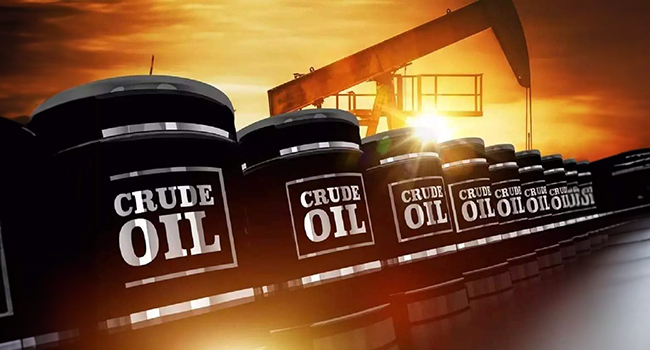
Oil prices rose above $100 per barrel on Thursday after Iran tightened restrictions on vessels passing through the Strait of Hormuz amid its ongoing war with the United States.

Brent crude, the international benchmark, stood at $101.28 per barrel in early Asian trading, after rising above $100 on Wednesday for the first time since July.

Iran’s Revolutionary Guards said they had attacked several vessels attempting to pass through the strategic waterway, including two US vessels, eight oil tankers and 10 other vessels described as “non-compliant.”

The Strait of Hormuz is one of the world’s most important oil shipping routes, normally carrying about one-fifth of global oil supplies.

The British maritime security agency UKMTO also reported that several merchant vessels in the Northern Arabian Gulf and Gulf of Oman had come under fire amid continuing military activities in the region.

Iran has now expanded its restricted area beyond the Strait of Hormuz, declaring parts of the Gulf of Oman and Arabian Sea a “prohibited zone.” Iranian authorities warned that vessels entering the area without coordination could face sanctions.

US President Donald Trump, however, said oil prices would eventually fall as the war ends. He claimed that the United States was winning the conflict and had control of the Strait of Hormuz.

Trump also suggested that the war could end after the US mid-term elections in November, saying Iran could no longer continue fighting.

However, reports indicate that some US officials privately believe the conflict could continue for much longer.

The Iranian Revolutionary Guards also claimed responsibility for an attack on a US military base in Jordan, describing it as retaliation for US forces destroying five Iranian oil tankers.

Jordan said its military intercepted 18 missiles fired toward the country.

Iran condemned the destruction of its oil tankers, describing the action as a threat to regional and international peace and security. Tehran said its attacks on US military facilities were carried out in self-defence.

The escalating conflict has increased concerns about global energy supplies, particularly if the disruption of shipping through the Strait of Hormuz continues.

Meanwhile, the International Atomic Energy Agency’s Board of Governors voted to refer Iran to the UN Security Council over its nuclear activities. The resolution reportedly passed by 23 votes to three, with eight countries abstaining.

Iran rejected the resolution, accusing the United States of pressuring the nuclear watchdog and insisting that the decision would produce no results.

Israeli Prime Minister Benjamin Netanyahu also maintained that Iran was close to collapse, saying the main objective was to bring down what he described as Iran’s “terror regime.”


Continue Reading

Business & Economy

Subsidy Removal Debate Is Over, Nigerians Must Now See Its Benefits — PENGASSAN

Published

on

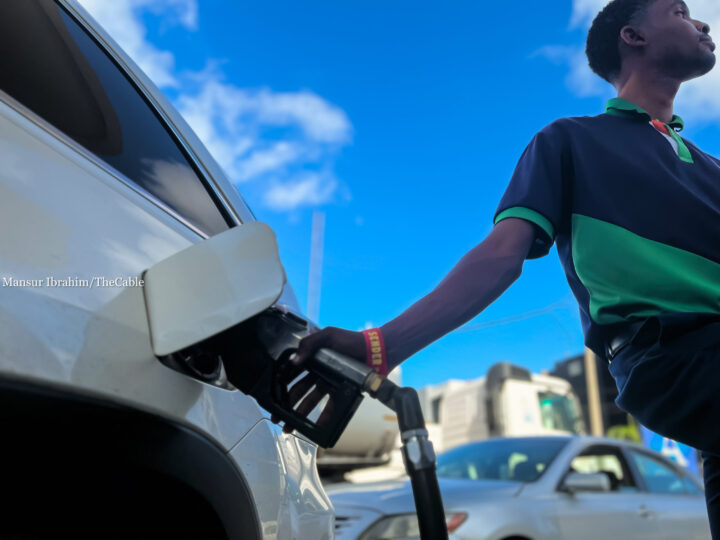
Fuel Station and Attendant
Share

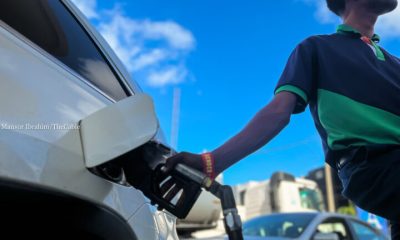
The Petroleum and Natural Gas Senior Staff Association of Nigeria (PENGASSAN) has called on the Federal Government to move beyond the debate over fuel subsidy removal and focus on ensuring that Nigerians begin to feel the benefits of the policy.

PENGASSAN President, Bosun Olabiyi-Agoro, made the call while speaking on Channels Television’s The Morning Brief on Friday.

According to him, the argument over whether fuel subsidy should have been removed or retained is now belated because the policy has already been implemented.

“I think the argument over whether to remove the subsidy or not to remove it is belated now. We have done it, but we need to start seeing the benefits of fuel subsidy removal in the lives of common Nigerians,” he said.

President Bola Tinubu announced the removal of the petrol subsidy shortly after assuming office in May 2023. Since then, the price of petrol has risen significantly, moving from about ₦200 per litre to around ₦1,300 per litre.

The policy has remained one of the most controversial economic decisions of the Tinubu administration, with critics and opposition figures blaming the removal of subsidy for part of the hardship and rising cost of living experienced by Nigerians.

Some opposition politicians have also promised to reverse the policy if elected, while the Federal Government has maintained that there is no going back on subsidy removal.

PENGASSAN Admits Policy Has Been Painful

Olabiyi-Agoro acknowledged that the removal of subsidy has been difficult for Nigerians and workers, describing the policy as painful.

He said the immediate consequences of the decision placed significant pressure on households and workers, many of whom are still struggling with the high cost of living more than three years after the policy was introduced.

However, he argued that the country should now concentrate on ensuring that the economic gains associated with the policy translate into tangible improvements in people’s lives.

Economic Growth Must Benefit Nigerians

The PENGASSAN president also reacted to Nigeria’s reported 4.43 per cent Gross Domestic Product (GDP) growth in the second quarter of 2026, saying that positive macroeconomic figures are welcome but should ultimately improve the living conditions of ordinary citizens.

He noted that indicators such as GDP growth, improved balance of trade and stronger foreign exchange reserves are positive developments for the economy.

However, he stressed that Nigerians need to see these improvements reflected in areas such as food prices, employment, wages and general living conditions.

According to him, economic growth should not remain confined to government statistics while ordinary Nigerians continue to struggle.

He said workers are prepared to contribute their own efforts to the country’s economic development and support whichever government is in power, but they also expect the benefits of economic reforms to reach the people.

Fuel Supply Has Improved

Olabiyi-Agoro also linked the improvement in the availability of petroleum products to the removal of the subsidy.

He explained that since government stopped making budgetary provisions for fuel subsidy, petroleum products are now being sold closer to their actual market prices without government bearing the cost of subsidising them.

He therefore argued that the country has moved beyond the question of whether subsidy should be removed.

For PENGASSAN, the priority now should be ensuring that the economic benefits of the policy are translated into better living conditions for Nigerians.

The association’s position reflects a growing call for the Federal Government to demonstrate that the sacrifices Nigerians have made since the removal of subsidy will ultimately produce measurable improvements in their standard of living.

Continue Reading

Business & Economy

Fubara Signs N1.85trn 2026 Rivers Budget, Targets Growth and Development

Published

on

Rivers State Governor, Siminalayi Fubara
Share


Rivers State Governor, Siminalayi Fubara, has signed the state’s N1.854 trillion 2026 Appropriation Bill into law, setting the stage for increased government spending on infrastructure, development and citizens’ welfare.

The budget, tagged “Budget of Resilience for Growth and Development,” was signed at a ceremony at the Government House in Port Harcourt on Wednesday, following its passage by the Rivers State House of Assembly.

Fubara described the signing as a “breath of fresh air”, saying it marked a new phase of cooperation, unity and economic development in the state after months of political tension between the executive and legislative arms.

The governor expressed appreciation to God, members of the state assembly and other stakeholders for facilitating the passage of the budget.

“I strongly believe that it is a breath of fresh air and a healthy relationship moving forward,” Fubara said.

The appropriation bill was presented by the governor to the Martin Amaewhule-led House of Assembly on July 10 and subsequently considered and passed before being transmitted to the governor for assent.

Fubara said the implementation of the 2026 budget would remain focused on the “Rivers first” agenda, with priority given to projects and programmes aimed at improving the welfare of residents and driving economic growth.

He commended the lawmakers for the speed and diligence with which they handled the budget, describing the development as significant given the state’s recent political challenges.

The governor also acknowledged Nyesom Wike, Minister of the Federal Capital Territory, for facilitating the process that culminated in the passage and signing of the appropriation bill.

With the budget now signed into law, attention is expected to shift to implementation, particularly the timely release of funds and execution of capital projects that can stimulate economic activity, create jobs and improve public infrastructure across Rivers State.

The signing ceremony was attended by members of the state executive council, principal officers of the state House of Assembly and other government officials.


Continue Reading