Politics
Tinubu offers clear directions on security, economy, foreign policy in UK
Published
4 years agoon
By
News Editor
…says FG fixing petrol price is a broken model
…Nigeria will advance democratic ideals in Africa
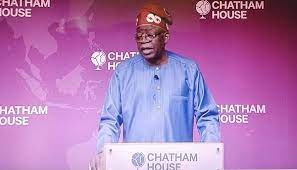
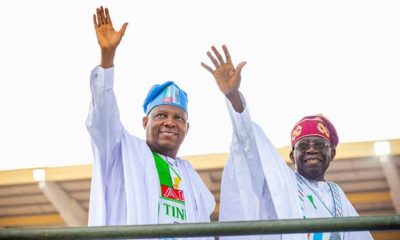
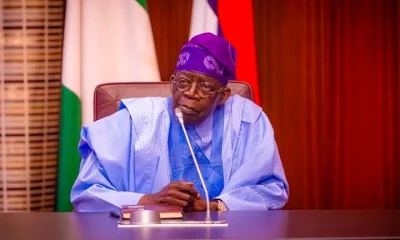
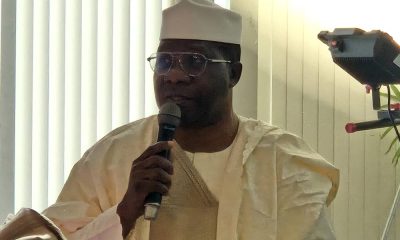
Presidential Candidate of the All-Progressives Congress Asiwaju Bola Ahmed Tinubu, on Monday at Chatham House in London spoke on a wide range of issues including security, economy and foreign policy, ahead of Nigeria’s presidential election in February next year.
Tinubu who has been addressing various stakeholders in Nigeria at various town hall meetings, travelled to the United Kingdom to share his thoughts and campaign plans at Chatham House -a globally admired and respected platform for intellectual engagement on different issues of contemporary interest to people around the world.
The APC candidate who addressed the distinguished Chatham House audience for the second time having first done it in 2011, emphasized Nigeria’s role in Africa as a big brother which has continued to be a beacon of hope to the continent and the ECOWAS sub-region through now entrenched democratic ideals, having run an unbroken democracy for over two decades.
He said when he becomes Nigeria’s president, his administration will continue to provide quality leadership to the sub-region, to ensure democratic ideal are formed in nations of the ECOWAS region.
The APC Presidential candidate in his address titled “Nigeria’s 2023 elections: Security, economic and foreign policy imperatives” vowed that as President, Nigeria will epitomise values of democracy during elections anywhere in Africa by ensuring that democratic ideals are followed and all forms of electoral violence rejected, allowing only the will of the people to prevail.
“Every election, wherever it is held, is important to the people or entity directly concerned. It is also important to the global democracy community as well. Equally, there are also countries whose elections, on account of their weight and influence, carry wider implications way beyond their immediate geographical boundaries. Nigeria is one of such countries.
“I stand firmly against all forms of electoral violence and intimidation. Having spent most of my career in the political opposition, I have long fought against electoral malpractice and any attempts to extinguish the legitimate choice of voters. I will continue to do so.
“And I urge all my fellow contestants in this election to do the same. Let the sovereign will of the people decide the path of our nation. And let this election be determined by voters making their choice freely rather than the domineering intimidation of the troublesome few.
“For one, as Africa’s most populous country and the continent’s largest economy, it is generally acknowledged that the fortunes of the African continent and indeed the Black race is tied directly to the health of Nigeria.
“Also the Nigerian elections of 2023 are coming up at a time when the country’s immediate geographical neighbourhood of West and Central Africa is undergoing serious political turmoil that has manifested itself in the incursion of the military to power in a number of countries. In spite of the legitimate concerns being expressed by observers, Nigerians are resolutely committed to democracy, regardless of their political differences.
“Nigeria shares direct land borders with four sister African countries with whose peoples Nigerians also share historical and cultural affinities,” Tinubu said.
He added: “This effectively means that the relationship between Nigeria and its immediate neighbours is much more than just a geographical expression.
“To be fully secure at home, Nigeria has always believed it must be the brothers’ keeper. It was out of this understanding that Africa’s premier regional economic community, ECOWAS, was established in 1975. Uniquely, ECOWAS had embedded in its mandate, the promotion of regional economic integration as a good in its own right and in addition undertook sub-regional peace and security.
“I am convinced, as I am sure most of us are, that the broad principles that enabled successive Nigerian governments to interface development and security, and establish an organic link between national security and economic development with regional peace and prosperity is both impeccable and remains relevant. It is an approach which I commit myself to upholding and advancing.”
His address was intermittently punctuated by thunderous applause by the impressive gathering.
On issue of security, which has continued to be a challenge at home despite the remarkable progress achieved by the current APC-led administration of President Muhammadu Buhari, Tinubu promised to tackle the situation the country is facing heads on, so that Nigeria can also effectively provide security supports for its neighbouring nations.
He noted, “The challenges which have manifested themselves with regard to our national and regional development and security trajectories are very well-known to all of us here: radical extremist violence, terrorism, banditry, kidnapping, human trafficking, trafficking in weapons, trafficking in drugs, climate change and resource driven conflicts etc.
Mostly manifesting initially as national problems, these challenges evolved over time into trans-border and multinational challenges.
“We see the thousands of people who have been internally displaced at home or forced into refugee camps abroad. With farming activities disrupted, we have seen shortages of basic food items and food price inflation that are further undermining human security.
“To respond meaningfully to the discontents and to redress the many dislocations arising from them, we must begin by reminding ourselves of that old dictum: Foreign policy is but a continuation of domestic policy.
“As a first step, we must recalibrate domestic policy in order to revamp the foundation on which our quest to pursue human security rests.”
The former Lagos State governor reiterated that effective energy generation and distribution will help build the economy of the nation, promising to improve the framework already in place to boost the generation and distribution of energy across the country.
He also said the nation under his watch would place emphasis on the use of technology to improve the agricultural sector for better production and contribution to the nation’s economy.
“The present administration has invested heavily in agriculture, providing loans and expanding the country’s total acreage of cultivated land. We will build on this, but our focus will be on using technology and expertise to accelerate growth and development by providing the critical infrastructure necessary to achieve the commodity transformations in the agriculture value chain.
“Roads, rail, access to ports, and storage infrastructure are what we require to radically transform the agriculture sector and increase its value to the nation. Providing these will be the areas of our focus so that the full potential of our agro economy can be achieved, and we can reap the benefits in jobs, improved economic opportunities and increased prosperity.
“Fixing the perennial riddle of energy supply is another priority. There is no version of the world where Nigeria’s ambitions for itself can be achieved without solving the problem of how to provide energy to homes and businesses across the country. It is time to recognise that the centralised approach to energy policy and infrastructure is not an optimal arrangement and is unlikely to improve by mere tinkering around the sides.
“The Federal government as regulator and operator, and price fixer is a broken model and one that we fully intend to fix if elected.
“We have privatised power distribution in Nigeria and generation to a certain degree. What we need to do, going forward, is to improve the enabling environment and further reform the legal and regulatory framework to attract more private investments in the sector as we have experienced in the telecom industry.”
He promised to engage the private sector to better drive economic development across the country.
“My belief that the private sector is the fulcrum of economic progress is evident and documented. However, fundamental flaws with the basic design of our national economy imperil the private sector from playing the role it ought to and adding the value it is capable of. In this instance, the government must act as a catalyst. We shall do this on all fronts. We will address the conflict between monetary and fiscal policies. Budgeting will be based on the projected spending levels needed to push real annual growth rate above 7 per cent while reducing the unemployment rate so that we can double the economy in ten years.”
Introducing the APC presidential candidate, the chairman of the event who is also the Managing Director, Ethics, Risk and Resilience of Chatham House and Director Africa Programme, Dr. Alex Vines OBE, described Tinubu as a former governor of Lagos and prominent politician who is no stranger to the House.
He also joked that “he has US visa,” apparently referring to the fake news being bandied by political opponents that Asíwájú was denied US visa.
Responding to a question on his age and identity, Tinubu said his birthday remains March 29, 1952 and his age and other records are with Chicago State University he attended and Mobil Oil that he worked with and left as Treasurer.
Taking another question on youth development, he said the youths are part of today and the future of the country who the nation needs to invest in for tomorrow.
He also singled out Lagos Governor Babajide Sanwo-olu, a youth who he said is running the state that is the 5th largest economy in Africa and who is actualising the legacies he left behind as governor.
Demonstrating his team spirit, he invited Governors Nasir el-Rufai and Ben Ayade, former Lagos Information Commissioner Dele Alake and APC National Woman Leader Dr Beta Edu to respond to questions that fell within their areas of core competence.
Tinubu was accompanied to the lecture by House of Representatives Speaker Femi Gbajabiamila, Governors El-Rufai (Kaduna), Abdullahi Umar Ganduje (Kano), Dapo Abiodun (Ogun), Sanwo-olu (Lagos), Abubakar Sani Bello (Niger), Ayade (Cross Rivers), Abubakar Badaru, (Jigawa) and David Umahi (Ebonyi) as well as former governor of Ekiti, Dr. Kayode Fayemi and his former Edo State counterpart, Comrade Adams Oshiomhole.
There were also members of APC National Working Committee particularly the Woman Leader Edu and her deputy, Hajiya Zainab Ibrahim, as well as former deputy governor of Lagos, Chief Femi Pedro, former Lagos Commissioner for Information Alake, his former Finance counterpart, Mr. Olawale Edun, Senator Tokunbo Abiru, Senator Fatai Buhari and Senator Adeola Olamilekan.
Others at the event included Senator Musiliu Obanikoro, Senator Tokunbo Afikuyomi, former deputy governor of Ogun State, Chief Segun Adesegun, Hadiza Bala-Usman and popular Lagos chieftain, Alhaji Mutiu Are.
After the lecture, the APC candidate had an interaction with the APC UK chapter.

You may like
-
Akpabio: No Vacancy in Aso Rock, Tinubu Still in Charge
-
Nigeria Open for Business, Tinubu Assures Investors
-
President Tinubu Swears In Enitan As New Head Of Civil Service Of The Federation
-
Tinubu Renews Tenure of NTA DG, NAN MD
-
2027 Presidency: Tinubu Unveils APC Campaign Council, Names Yari DG, Uzodimma Secretary
-
Tinubu Orders Arrest of Nwabueze, Suspends Three Permanent Secretaries Over Fake Agency in SGF Office
Politics
‘Exclusion of Tiv on Tinubu’s Campaign Council’ Deliberate – Hembe, Benue ADC Gov Candidate
Published
1 month agoon
August 26, 2026
African Democratic Congress (ADC) 2027 governorship candidate in Benue State, Rt. Hon. Herman Hembe, has kicked against the exclusion of the Tiv ethnic group from the presidential campaign council of the All Progressives Congress (APC).
This reaction trails the All Progressives Congress, Saturday release of the complete membership list of its 2027 Presidential Campaign Council without any member of the Tiv race, the highest in the Middle and the fourth most populated ethnic group in Nigeria.
Only three people from Benue State made the list. The three are former President of the Senate, Ameh Ebute; former Deputy Governor of the state, Steven Lawani; and Comrade Okpokwu Ogenyi.
According to a statement issued by the Hembe/Abba Gubernatorial Campaign Organisation, signed by Sir Peter Vande, which was made available to newsmen on Sunday night, said the development was a deliberate political decision.
The statement read in part:
“The recent release of the presidential campaign council list by the Tinubu APC has exposed a deliberate and calculated exclusion of the Tiv people from national reckoning.
“This is not an oversight. This is a message, and every Tiv person, every Benue son and daughter, must read it correctly. There will be no room for the Tiv if, God forbid, Tinubu is declared winner.”
The organisation said the Tiv people had contributed significantly to Nigeria’s unity and development and should not be treated as an afterthought in national political calculations.
“We are the fourth-largest tribe in Nigeria. We have shed blood for the unity of this country. We are, and have always been, a beautiful tribe that deserves to be courted diligently, not a bystander invited only when convenient.”
The statement, however, said the Tiv people should not be likened to someone seeking attention where none existed, stressing that the Tiv as one of Nigeria’s major ethnic groups deserved to be deliberately courted in the nation’s political process.
It further argued that the exclusion of Tiv APC members from the presidential campaign council should concern every serious-minded Tiv person and questioned whether the Tiv people could expect adequate representation in government if President Bola Tinubu wins the 2027 election.
The organisation said its governorship candidate, Herman Hembe, remained committed to the welfare, security and political interests of the people of Benue, adding that fair representation should be a major consideration in determining political loyalty and electoral support.
Hembe used the opportunity to urge the people of Benue to back the African Democratic Congress’ presidential candidate, Alhaji Atiku Abubakar, who he described as a politician familiar with the concerns of the Tiv people.
The organisation said an Atiku/Amaechi administration would restore the Tiv and Benue people to what it described as their rightful position in Nigeria’s political affairs, while also claiming that Atiku had better plans for improving the lives of Nigerians.
Similarly, the All Progressives Congress in the state has decried the exclusion of the Tiv ethnic group from the party’s presidential campaign council.
Daniel Ihomun, the state publicity secretary of the Agada-led faction loyal to the Secretary to the Government of the Federation, Senator George Akume, who spoke to our correspondent on Monday, argued that the majority of members who made the list, especially those from the North-Central, were Muslims.
He said, “We, the party in the state, are not happy with the list released in the President Bola Tinubu Campaign Council because Tiv people are excluded from the list.
“There are so many Muslims on the list, especially in North-Central. The former Director-General of the Tinubu campaign in 2023 was not on the list. We Christians are not happy; we have been shortchanged.
“With the Tiv population in Nigeria, you cannot neglect us like that. We contributed to Tinubu’s victory in 2023; it’s like we have been neglected.
“With what has happened, the President is making the job (campaign) difficult for us.”
Politics
Tinubu, Obi, Adebayo, Sowore: Sign Peace Pact to Shun Violence Ahead Of 2027 Poll
Published
1 month agoon
August 19, 2026
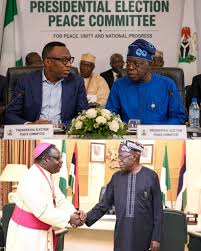
Political parties and presidential and National Assembly candidates on Tuesday signed the first National Peace Accord ahead of the 2027 general elections, pledging to shun violence, hate speech, misinformation and personal attacks during campaigns.
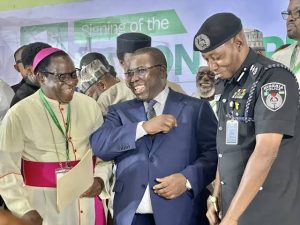
The ceremony, organized by the National Peace Committee in partnership with The Kukah Centre, was held in Abuja barely 24 hours before the statutory commencement of public campaigns on Wednesday, August 19, 2026.
Those who signed included President Bola Tinubu, represented by Secretary to the Government of the Federation, Senator George Akume; Nigeria Democratic Congress candidate Peter Obi; Social Democratic Party candidate Adewole Adebayo; and African Action Congress candidate Omoyele Sowore.
Also present were APC National Chairman Prof Nentawe Yilwatda; PRP presidential candidate Donald Duke; Labour Party’s Chibuzor Okereke; Deputy Senate President Barau Jibrin; PRP National Chairman Hakeem Baba-Ahmed; INEC Chairman Prof Joash Amupitan; and IGP Olatunji Disu.

Notable absentees were ADC presidential candidate Atiku Abubakar and APM candidate, Oyo State Governor Seyi Makinde.
General Abdulsalami Abubakar, Chairman of the National Peace Committee, was represented by former Chief of Defence Staff, General Martin Agwai.
Speaking through Akume, President Tinubu urged parties to prioritize national interest and campaign on ideas, not ethnicity or religion.
“Signing this peace accord is a solemn pledge to the Nigerian people that we, as leaders, will put the nation’s interests above personal or partisan ambitions,” he said.
The President said the APC rejects “violence, hate speech, the spread of misinformation, including through artificial intelligence, and all forms of incitement, especially via social media,” and called for peaceful, transparent elections.
INEC Chairman Prof Amupitan described the accord as an effort to define “the ethical boundaries of their contest” before campaigns begin. He warned of an “alarming resurgence” of hate speech, toxic polarization and AI-driven misinformation.
“Electoral contests in a constitutional democracy are not total wars; they are competitive job interviews before the electorate. Nigerians do not want insults; they want solutions,” Amupitan said.
He challenged candidates to focus on the economy, security, infrastructure, healthcare, education and social inclusion. The INEC boss also disclosed that the commission will deploy about 1.4 million ad hoc personnel across more than 176,000 polling units for the 2027 polls.
“Leadership attained at the expense of public peace, institutional integrity, or human life is a hollow victory,” he warned.
According to INEC’s revised timetable, presidential and National Assembly elections will hold on January 16, 2027, while governorship and State House of Assembly elections are scheduled for February 6, 2027.
The National Peace Committee said it has facilitated 30 peace accords since 2015 and established faith-based peace structures in 23 states to support peaceful elections.
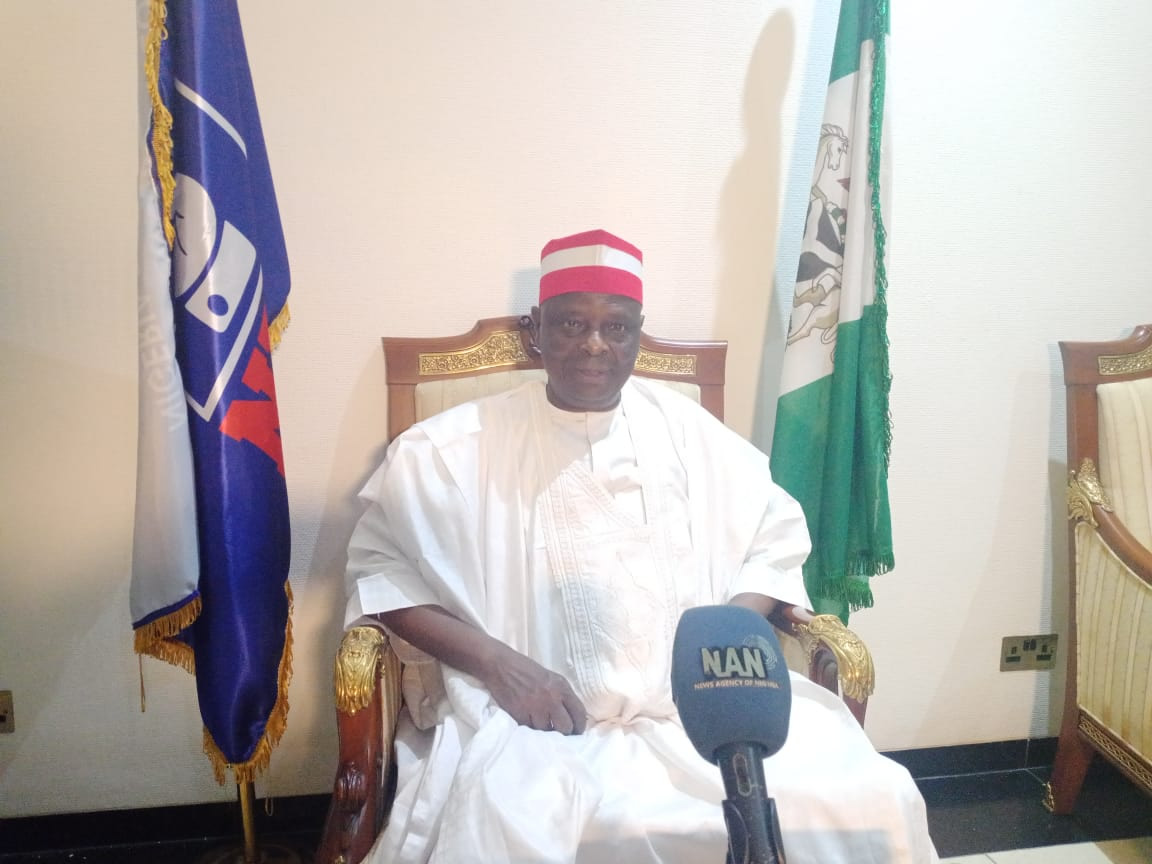
Vice-Presidential Candidate of National Democratic Congress (NDC), Sen. Rabiu Kwankwaso, says his decision to be running mate to Mr Peter Obi in the 2027 election is for national balance, equity and democratic change.
Kwankwaso said this when he featured on the News Agency of Nigeria (NAN) Personality Interview Series in Abuja on Sunday.
He explained that his experience from the 2023 election had helped him understand Obi better and that he was convinced that both of them could work together in the interest of the country.
Kwankwaso, a former Kano State governor, said the decision was also influenced by the need to allow the South to retain the presidency for another term after the completion of an eight-year tenure by former President Muhammadu Buhari.
“People learn every day and that is why experience is very important. In 2023, we attempted to work together and at that particular point, I knew little about Peter Obi.
“But over these last four years, I was able to learn a lot and realised that Peter is somebody that I could work together with,” he said.
He said that the decision was reached after consultations with members of the Kwankwasiyya Movement, supporters of the New Nigeria Peoples Party (NNPP) and the Obidient Movement.
He said that the groups believed that the country needed a balanced ticket capable of attracting support from both the North and the South.
Kwankwaso said the security challenges confronting the country, alongside declining agricultural productivity and deteriorating infrastructure further strengthened his resolve to support a political arrangement capable of bringing democratic change.
He said the economic hardship had particularly affected farmers, especially in Northern Nigeria, where agricultural production had become increasingly difficult and unprofitable.
The former Defence Minister said the dilapidation of infrastructure across the country, except in some areas such as Lagos, was another reason for accepting to pair with Obi.
He said the current situation required the kind of democratic change that Nigerians sought in 2015, adding that the need for such change was now greater.
Kwankwaso said the Obi-Kwankwaso ticket would provide a combination of regional balance, competence and credibility.
“Nobody, no ticket can beat our own in terms of credibility, in terms of capacity and of course, in terms of love for the country; even in terms of empathy for the poor that are suffering across the country today,” he said.
He explained that agreeing to serve as vice-president was not a setback for him, despite his extensive political experience, including serving as deputy speaker of the House of Representatives, governor, minister and senator.
“I have never been the vice-president. I think it is a step forward despite all the things you counted,” he said.
Kwankwaso said his decision was based on a broader national interest rather than personal ambition, stressing that public office should primarily be viewed as an opportunity to serve.
“To me, being in government is to serve. I don’t have to be president. I don’t have to even be vice-president. These are things that are in the hands of Almighty Allah.
“But the fact remains that the situation, as it is today, one has to look at it beyond your humble self,” he said.
He said the agreement with Obi was for the South to produce the president for one term, after which the political arrangement would return to the North.
Kwankwaso cited historical examples of political leaders who had accepted positions below what they could have attained, including Sir Ahmadu Bello, who chose to remain Premier of Northern Nigeria rather than becoming Prime Minister.
He also said Nigerians should understand that service could be rendered at different levels, including as councillor, local government chairman, legislator, governor, minister, vice-president or president.
According to him, political leaders should be prepared to serve wherever they are needed, rather than considering certain offices beneath them.
He dismissed claims by political opponents that his political engagements with the All Progressives Congress (APC) or other parties were contingent on securing either the presidential or vice-presidential ticket.
Kwankwaso said discussions he held with President Bola Tinubu after the 2023 election were about working together and not about abandoning NNPP or securing a particular position.
He said he had previously played a major role in the APC’s electoral victory, particularly through the votes recorded in Kano in 2015, but became disappointed with the party’s leadership after the election.
The former governor said his confidence in the Obi-Kwankwaso alliance was strengthened by what he described as Obi’s commitment to fairness, justice and national unity.
He said the arrangement would also ensure that the North would not be disadvantaged, stressing that the one-term understanding was important in securing the confidence of his supporters.
Kwankwaso said he was confident that Obi would respect the agreement and work with him as a partner rather than treat the vice-president as a “spare tyre.”
He said his experience as deputy speaker, minister and governor had taught him the importance of allowing deputies to function effectively.
According to him, a president or governor who gives his deputy meaningful responsibilities ultimately strengthens the government because the success of the deputy also benefits the principal.
He said he was therefore comfortable with the proposed arrangement and had confidence that Obi would allow him to contribute meaningfully to governance.
Kwankwaso said the alliance would prioritise competence in the appointment of ministers and other officials, with power shared according to the needs of the country rather than for political patronage.
“Power will be shared according to the needs of the country. We should not be in a hurry to go and take anybody on the streets or anybody we remember.
“We will make sure that we have competent people because from our experience, the president and vice-president cannot do it alone,” he said.
The former governor said an NDC administration would need technocrats, professionals and experienced politicians capable of addressing Nigeria’s complex challenges.
Source: NAN
Latest News
Benin-Asaba Road to Be Redesigned on Concrete Pavement
Share The Minister of Works, Dave Umahi, has said the 136-kilometre Benin-Asaba Road will be redesigned with reinforced concrete pavement...
NECO Releases 2026 SSCE Results, 58.67% Get Five Credits Including English, Maths
Share The National Examinations Council (NECO) has released the results of the 2026 Senior School Certificate Examination (SSCE) Internal, with...
Ogun, DP World Seal $7bn Port, Blue Marine SEZ Investment Deal
Share The Ogun State Government and DP World MEA FZE have signed Memoranda of Understanding (MoUs) for the development of...
FG Cuts Interest Rate on Late Tax Payments, New Order Takes Effect October 1
ShareThe Federal Government has introduced a new tax administration order reducing the interest rate charged on late payment of taxes....
Bamidele: Nigeria’s Full Potential Depends on Meaningful Gender Inclusion
Share The Leader of the Senate, Senator Opeyemi Bamidele, has called for greater and more meaningful inclusion of women in...