Connect with us

Politics

Three PDP Senators Defect to APC, Party’s Strength in Senate Drops to 14

Published

on

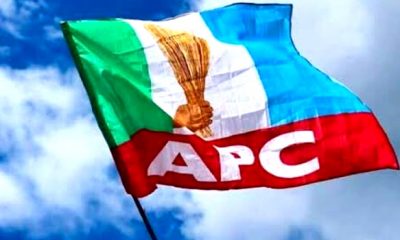
APC Flag
Share

Three senators elected on the platform of the Peoples Democratic Party (PDP) on Wednesday defected to the ruling All Progressives Congress (APC), further reducing the opposition party’s representation in the Senate.

The defecting lawmakers are Amos Yunana (Adamawa North), Aminu Iya Abbas (Adamawa Central), and Ikra Aliyu Bilbis (Zamfara Central).

Their defection came barely 24 hours after Senator Banigo Ipalibo (Rivers West) also announced her move to the APC.

With the latest development, the PDP’s membership in the Senate has dropped from 17 to 14, while the APC’s strength has increased from 81 to 84 members. The party had 35 senators at the inauguration of the 10th National Assembly in June 2023.

President of the Senate, Senator Godswill Akpabio, read the letters of defection during plenary and described the development as a reversal of the situation that played out in 2018.

Akpabio said, “What is happening now between PDP and APC senators is more of a 1–1 draw. In 2018, about 30 senators defected from APC to PDP in one day. Now it is the other way round, with PDP senators defecting en masse to APC, thanks to the good governance and bold reforms of President Bola Ahmed Tinubu.”

Also reacting, Senate Leader, Senator Opeyemi Bamidele, welcomed the lawmakers to the ruling party, saying their decision reflects growing confidence in the administration.

“The defectors are not daft; they have seen that something is working in the country for the good of all, and they want to be part of it,” Bamidele said.

The latest defections come amid recent political realignments ahead of the 2027 general elections and follow the reported defection of the governors of Adamawa State, Ahmadu Fintiri, and Zamfara State, Dauda Lawal, to the APC.

The PDP has continued to grapple with internal leadership disputes, which observers say have contributed to the growing wave of defections from the party.

Politics

Tinubu, Obi, Adebayo, Sowore: Sign Peace Pact to Shun Violence Ahead Of 2027 Poll

Published

on

Share

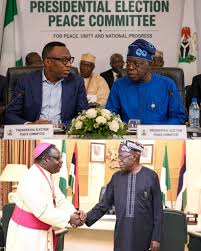
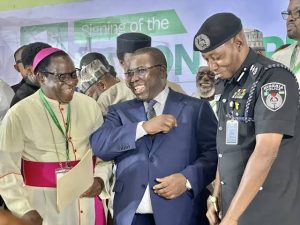
Political parties and presidential and National Assembly candidates on Tuesday signed the first National Peace Accord ahead of the 2027 general elections, pledging to shun violence, hate speech, misinformation and personal attacks during campaigns.

The ceremony, organized by the National Peace Committee in partnership with The Kukah Centre, was held in Abuja barely 24 hours before the statutory commencement of public campaigns on Wednesday, August 19, 2026.

Those who signed included President Bola Tinubu, represented by Secretary to the Government of the Federation, Senator George Akume; Nigeria Democratic Congress candidate Peter Obi; Social Democratic Party candidate Adewole Adebayo; and African Action Congress candidate Omoyele Sowore.

Also present were APC National Chairman Prof Nentawe Yilwatda; PRP presidential candidate Donald Duke; Labour Party’s Chibuzor Okereke; Deputy Senate President Barau Jibrin; PRP National Chairman Hakeem Baba-Ahmed; INEC Chairman Prof Joash Amupitan; and IGP Olatunji Disu.
Notable absentees were ADC presidential candidate Atiku Abubakar and APM candidate, Oyo State Governor Seyi Makinde.
General Abdulsalami Abubakar, Chairman of the National Peace Committee, was represented by former Chief of Defence Staff, General Martin Agwai.

Speaking through Akume, President Tinubu urged parties to prioritize national interest and campaign on ideas, not ethnicity or religion.
“Signing this peace accord is a solemn pledge to the Nigerian people that we, as leaders, will put the nation’s interests above personal or partisan ambitions,” he said.

The President said the APC rejects “violence, hate speech, the spread of misinformation, including through artificial intelligence, and all forms of incitement, especially via social media,” and called for peaceful, transparent elections.

INEC Chairman Prof Amupitan described the accord as an effort to define “the ethical boundaries of their contest” before campaigns begin. He warned of an “alarming resurgence” of hate speech, toxic polarization and AI-driven misinformation.

“Electoral contests in a constitutional democracy are not total wars; they are competitive job interviews before the electorate. Nigerians do not want insults; they want solutions,” Amupitan said.

He challenged candidates to focus on the economy, security, infrastructure, healthcare, education and social inclusion. The INEC boss also disclosed that the commission will deploy about 1.4 million ad hoc personnel across more than 176,000 polling units for the 2027 polls.

“Leadership attained at the expense of public peace, institutional integrity, or human life is a hollow victory,” he warned.

According to INEC’s revised timetable, presidential and National Assembly elections will hold on January 16, 2027, while governorship and State House of Assembly elections are scheduled for February 6, 2027.

The National Peace Committee said it has facilitated 30 peace accords since 2015 and established faith-based peace structures in 23 states to support peaceful elections.
Continue Reading

Politics

See Why Kwankwaso Chose to be Obi’s Running Mate

Published

on

Share

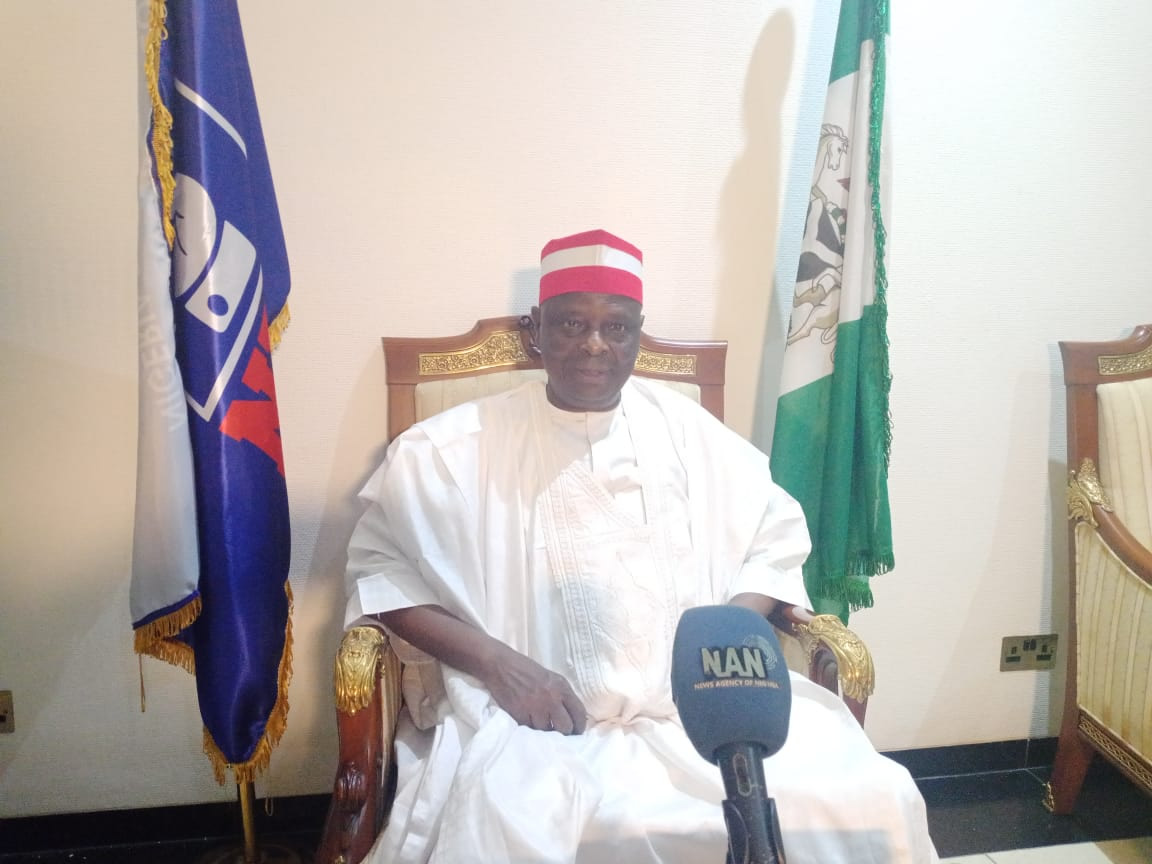
Vice-Presidential Candidate of National Democratic Congress (NDC), Sen. Rabiu Kwankwaso, says his decision to be running mate to Mr Peter Obi in the 2027 election is for national balance, equity and democratic change.

Kwankwaso said this when he featured on the News Agency of Nigeria (NAN) Personality Interview Series in Abuja on Sunday.

He explained that his experience from the 2023 election had helped him understand Obi better and that he was convinced that both of them could work together in the interest of the country.

Kwankwaso, a former Kano State governor, said the decision was also influenced by the need to allow the South to retain the presidency for another term after the completion of an eight-year tenure by former President Muhammadu Buhari.

“People learn every day and that is why experience is very important. In 2023, we attempted to work together and at that particular point, I knew little about Peter Obi.

“But over these last four years, I was able to learn a lot and realised that Peter is somebody that I could work together with,” he said.

He said that the decision was reached after consultations with members of the Kwankwasiyya Movement, supporters of the New Nigeria Peoples Party (NNPP) and the Obidient Movement.

He said that the groups believed that the country needed a balanced ticket capable of attracting support from both the North and the South.

Kwankwaso said the security challenges confronting the country, alongside declining agricultural productivity and deteriorating infrastructure further strengthened his resolve to support a political arrangement capable of bringing democratic change.

He said the economic hardship had particularly affected farmers, especially in Northern Nigeria, where agricultural production had become increasingly difficult and unprofitable.

The former Defence Minister said the dilapidation of infrastructure across the country, except in some areas such as Lagos, was another reason for accepting to pair with Obi.

He said the current situation required the kind of democratic change that Nigerians sought in 2015, adding that the need for such change was now greater.

Kwankwaso said the Obi-Kwankwaso ticket would provide a combination of regional balance, competence and credibility.

“Nobody, no ticket can beat our own in terms of credibility, in terms of capacity and of course, in terms of love for the country; even in terms of empathy for the poor that are suffering across the country today,” he said.

He explained that agreeing to serve as vice-president was not a setback for him, despite his extensive political experience, including serving as deputy speaker of the House of Representatives, governor, minister and senator.

“I have never been the vice-president. I think it is a step forward despite all the things you counted,” he said.

Kwankwaso said his decision was based on a broader national interest rather than personal ambition, stressing that public office should primarily be viewed as an opportunity to serve.

“To me, being in government is to serve. I don’t have to be president. I don’t have to even be vice-president. These are things that are in the hands of Almighty Allah.

“But the fact remains that the situation, as it is today, one has to look at it beyond your humble self,” he said.

He said the agreement with Obi was for the South to produce the president for one term, after which the political arrangement would return to the North.

Kwankwaso cited historical examples of political leaders who had accepted positions below what they could have attained, including Sir Ahmadu Bello, who chose to remain Premier of Northern Nigeria rather than becoming Prime Minister.

He also said Nigerians should understand that service could be rendered at different levels, including as councillor, local government chairman, legislator, governor, minister, vice-president or president.

According to him, political leaders should be prepared to serve wherever they are needed, rather than considering certain offices beneath them.

He dismissed claims by political opponents that his political engagements with the All Progressives Congress (APC) or other parties were contingent on securing either the presidential or vice-presidential ticket.

Kwankwaso said discussions he held with President Bola Tinubu after the 2023 election were about working together and not about abandoning NNPP or securing a particular position.

He said he had previously played a major role in the APC’s electoral victory, particularly through the votes recorded in Kano in 2015, but became disappointed with the party’s leadership after the election.

The former governor said his confidence in the Obi-Kwankwaso alliance was strengthened by what he described as Obi’s commitment to fairness, justice and national unity.

He said the arrangement would also ensure that the North would not be disadvantaged, stressing that the one-term understanding was important in securing the confidence of his supporters.

Kwankwaso said he was confident that Obi would respect the agreement and work with him as a partner rather than treat the vice-president as a “spare tyre.”

He said his experience as deputy speaker, minister and governor had taught him the importance of allowing deputies to function effectively.

According to him, a president or governor who gives his deputy meaningful responsibilities ultimately strengthens the government because the success of the deputy also benefits the principal.

He said he was therefore comfortable with the proposed arrangement and had confidence that Obi would allow him to contribute meaningfully to governance.

Kwankwaso said the alliance would prioritise competence in the appointment of ministers and other officials, with power shared according to the needs of the country rather than for political patronage.

“Power will be shared according to the needs of the country. We should not be in a hurry to go and take anybody on the streets or anybody we remember.

“We will make sure that we have competent people because from our experience, the president and vice-president cannot do it alone,” he said.

The former governor said an NDC administration would need technocrats, professionals and experienced politicians capable of addressing Nigeria’s complex challenges.

Source: NAN

Continue Reading

Politics

Osun Election: NYSC Commends Corps Member Over Discipline and Commitment to Duty

Published

on

Share

The Osun Coordinator of National Youth Service Corps (NYSC), Mr Ekeng Kubiangha, has commended corps members deployed as ad hoc staff for Saturday’s governorship election for their discipline and commitment to duty during the exercise.

This is contained in a statement made available to newsmen by the Spokesperson for the scheme, Mrs Catherine Otemuyiwa, on Sunday in Osogbo.

Otemuyiwa said that Kubiangha monitored some selected polling units across Ede South, Ede North, Olorunda, Osogbo and Egbedore Local Government Areas of the state where corps members were deployed.

She listed other polling units visited by the state coordinator to include Alajue 1 and Alajue 2, Akoda/Oloki, Isibo/Buhari-Isola wards and some parts of Osogbo, where he assessed the safety and welfare of the corps members.

Otemuyiwa quoted the state coordinator as expressing satisfaction with the conduct of the corps members.

He said that they adhered to instructions, operational guidelines and safety advisories issued during the sensitisation tour of the local government areas.

“I am glad that corps members also complied with directives from the NYSC National Directorate Headquarters and the South-West Area Office 1.

“Corps members were safe and discharged their responsibilities without fear, intimidation or undue interference,” he said.

Kubiangha commended the officers who manned the Situation Room as well as Zonal Inspectors and Local Government Inspectors for their effective coordination and monitoring of corps members throughout the exercise.

He also appreciated security agencies for their efforts in protecting corps members deployed for election duties across the state.

The state coordinator expressed appreciation to INEC officials for their prompt response to issues reported from the field.

He acknowledged the cooperation among the various stakeholders, particularly under the Inter-Consultative Committee on Election Security (ICCES), describing it as a significant factor in ensuring a peaceful and orderly election.

Kubiangha reiterated NYSC’s commitment to the safety and welfare of corps members, urging them to continue to uphold the ideals of the scheme, professionalism and national service in the discharge of their responsibilities.

Continue Reading